
Ezekiel 16:29
in Ezekiel 16So you extended your promiscuity to Chaldea, the land of merchants—but even with this you were not satisfied!
BSB
The same verse in ASV and KJV ▾
ASV
Thou hast moreover multiplied thy whoredom unto the land of traffic, unto Chaldea; and yet thou wast not satisfied herewith.
KJV
Thou hast moreover multiplied thy fornication in the land of Canaan unto Chaldea; and yet thou wast not satisfied herewith.
⋯
This verse in Ezekiel 16
Commentary
6 notes on this verseThou hast moreover multiplied thy fornication in the land of Canaan,.... Or, "with the land of Canaan" (l); with the inhabitants of it, doing the same evils, committing the same idolatries, as the old inhabitants of Canaan did; and so the Targum, "and thou hast multiplied thine idols, that thou mightest be joined to the people of Canaan:'' or, "to the land of Canaan" (m); like to the land of Canaan; according to the abominations of the Canaanites, doing as they did.
This site's exposition
And it came to pass after all thy wickedness
on Ezekiel 16:23-29
The chapter catalogues Jerusalem's foreign alliances as fornication in turn, Egypt, the Philistines, Assyria, and finally Chaldea, each treaty pictured as a paid affair that leaves her unsatisfied and reaching for the next. Jamieson, Fausset and Brown read the political history straight through the figure, every alliance of the late kings selling the nation's trust piece by piece. Wesley notes the repeated word unsatiable as the chapter's diagnosis, not merely its complaint; no foreign god or treaty could fill what only the covenant filled.
The record, by era
The Church Fathers1 voice
(Verse 28, 29.) And you have committed fornication with the sons of Assyria: because you were not yet satisfied, and after you committed fornication, you were still not satisfied. And you multiplied your fornication in the land of Canaan with the Chaldeans, and even then you were not satisfied.
The Puritans and the Awakening1 voice
When they had multiplied their idols and superstitious usages beyond measure, yet still they were enquiring after new gods and new fashions in worship. Those that in sincerity join themselves to the true God find enough in him for their satisfaction; and, though they still desire more of God, yet they never desire more than God.
The Nineteenth Century2 voices
A commentator
Albert Barnes1798–1870
Notes, Explanatory and Practical, on the Old and New Testaments (1832-1869)
In the land ... - Probably used in the restricted sense of the low lands on the coast of the western sea; occupied by Phoenician colonies. The children of Israel were brought into contact at first with pagans residing within their own borders. Then they extended their contact to foreign nations, trading and forming alliances with Chaldaea, and in so doing were attracted by the idolatries of those with whom they carried on commerce. Some render it: “with the merchants’ land, even with Chaldaea.” Compare Eze 17:4.
A commentator
Jamieson, Fausset & Brown1802–1910
Commentary Critical and Explanatory on the Whole Bible (1871)
proposed
The name "Canaan" is used to imply that they had made Judea as much the scene of abominations as it was in the days of the corrupt Canaanites. The land had become utterly Canaanitish (Eze 23:14, &c.).
The words behind it
11 Hebrew wordsEvery Hebrew word of this verse in the order it stands, with what it means and the door to its own study. The last column counts the times a word stands in the whole Bible: the rarer the word, the more the places it appears belong together.
| Hebrew | Sound | Meaning | Word study | In the Bible |
|---|---|---|---|---|
| וַתַּרְבִּ֧י | vatarbi | and you increased | H7235 → | 227 times |
| אֶת־ | ʾet- | <obj.> | H853 → | 10935 times |
| תַּזְנוּתֵ֛ךְ | taznutekh | prostitution your | H8457 → | 20 times |
| אֶל־ | ʾel- | to | H413 → | 5510 times |
| אֶ֥רֶץ | ʾeretz | a land of | H776 → | 2504 times |
| כְּנַ֖עַן | kenaan | merchant[s] | H3667 → | |
| כַּשְׂדִּ֑ימָה | kasdimah | Chaldea towards | H3778 → | 80 times |
| וְגַם־ | vegam- | and also | H1571 → | 769 times |
| בְּזֹ֖את | bezot | by this | H2063 → | 603 times |
| לֹ֥א | lo' | not | H3808 → | 5168 times |
| שָׂבָֽעַתְּ׃ | savaat | you were satisfied | H7646 → | 97 times |
וַתַּרְבִּ֧יand you increased
vatarbiH7235 →227 times
אֶת־<obj.>
ʾet-H853 →10935 times
תַּזְנוּתֵ֛ךְprostitution your
taznutekhH8457 →20 times
אֶל־to
ʾel-H413 →5510 times
אֶ֥רֶץa land of
ʾeretzH776 →2504 times
כְּנַ֖עַןmerchant[s]
kenaanH3667 →
כַּשְׂדִּ֑ימָהChaldea towards
kasdimahH3778 →80 times
וְגַם־and also
vegam-H1571 →769 times
בְּזֹ֖אתby this
bezotH2063 →603 times
לֹ֥אnot
lo'H3808 →5168 times
שָׂבָֽעַתְּ׃you were satisfied
savaatH7646 →97 times
A shaded row is a word that stands 400 times or fewer in the Bible.
The walk
5 stopsEach card is a verse this one points to, and under it the verses that one points to in turn. Where several paths arrive at the same place, that place is listed first: the text keeps returning to it.
Through
2 Kings 21:9But the people did not listen and Manasseh led them astray, so that they did greater evil than the nations that the LORD had destroyed before the Israelites.
it leads to
- Proverbs 29:12
If a ruler listens to lies, all his officials will be wicked.
- John 15:22
If I had not come and spoken to them, they would not be guilty of sin. Now, however, they have no excuse for their sin.
- Daniel 9:10–11
and have not obeyed the voice of the LORD our God to walk in His laws, which He set before us through His servants the prophets.
- 2 Chronicles 36:16
But they mocked the messengers of God, despising His words and scoffing at His prophets, until the wrath of the LORD against His people was stirred up beyond remedy.
- 2 Chronicles 33:9
So Manasseh led the people of Judah and Jerusalem astray, so that they did greater evil than the nations that the LORD had destroyed before the Israelites.
- Proverbs 29:12
Where this verse is studied
On this page
About Ezekiel
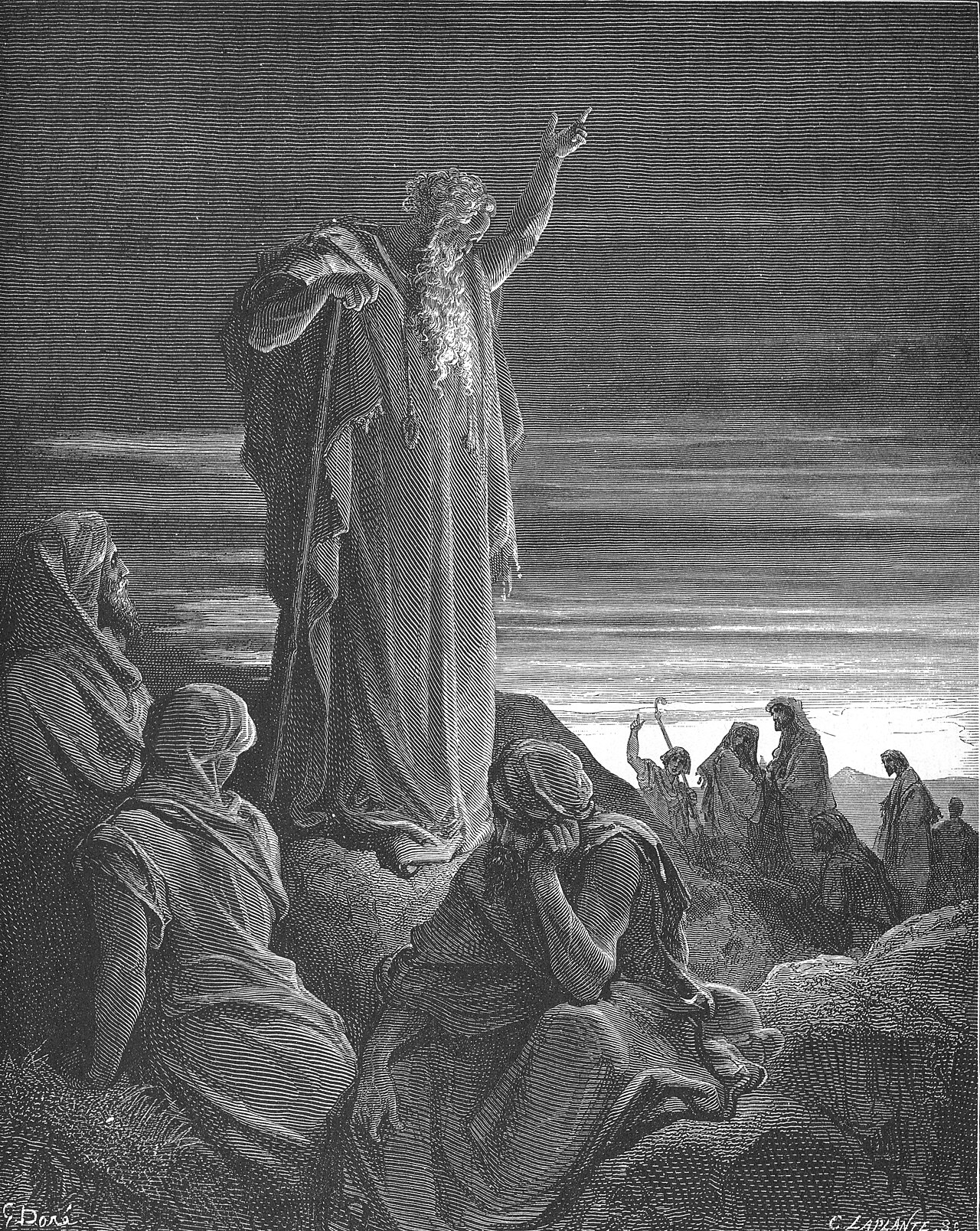
This page draws on Albert Barnes, Notes, Explanatory and Practical, on the Old and New Testaments (1832-1869); Jamieson, Fausset & Brown, Commentary Critical and Explanatory on the Whole Bible; Jamieson, Fausset and Brown, Commentary Critical and Explanatory on the Whole Bible; Jerome, Commentary on Ezekiel; John Gill, Exposition of the Old Testament (1748-1763); John Wesley, Explanatory Notes upon the Old Testament and Matthew Henry, Commentary on the Whole Bible.