
1 Samuel 15:24
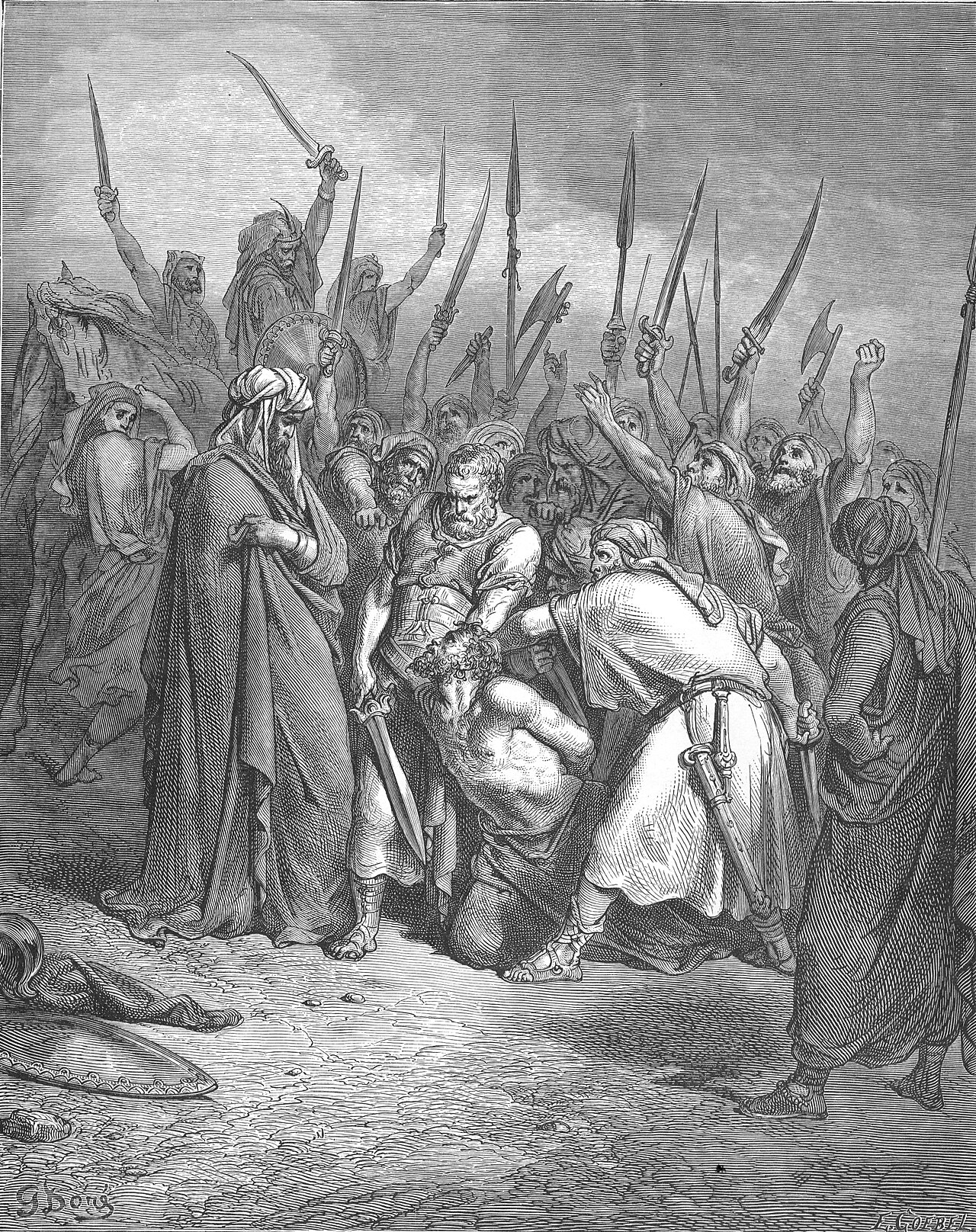
in 1 Samuel 15Then Saul said to Samuel, “I have sinned; I have transgressed the LORD’s commandment and your instructions, because I feared the people and obeyed their voice.
BSB
The same verse in ASV and KJV ▾
ASV
And Saul said unto Samuel, I have sinned; for I have transgressed the commandment of Jehovah, and thy words, because I feared the people, and obeyed their voice.
KJV
And Saul said unto Samuel, I have sinned: for I have transgressed the commandment of the Lord, and thy words: because I feared the people, and obeyed their voice.
⋯
This verse in 1 Samuel 15
Commentary
10 notes on this verse26. What does it mean that Saul is rebuked by the prophet for not having heard the voice of the Lord and for having done evil in His eyes, and yet he does not at all confess that he has sinned; but when he sees himself rejected from the kingdom, he confesses that he has sinned and transgressed the word of the Lord and His commands? It is because the proud are bold in despising the words of the humble, yet they cannot, in the manner of the elect, despise the honors they covet.
This site's exposition
because I feared the people and obeyed their voice
on 1 Samuel 15:24-25
Saul's confession names the sin, "I have sinned," and its cause in the same breath, "because I feared the people and obeyed their voice," a king ruled by his subjects. His request in verse 25 asks Samuel to return with him to worship, seeking restored standing before showing any change. Wesley and Gill read the confession as sincere in naming the act but shallow in what it asks.
The record, by era
The Church Fathers1 voice
A commentator
Augustine of HippoAGAINST FAUSTUS, A MANICHAEAN 22.67 · Written in the 5th century.
proposed
Saul, too, when he was reproved by Samuel, said, "I have sinned." Why, then, was he not considered fit to be told, as David was, that the Lord had pardoned his sin? Is there favoritism with God? Far from it. While to the human ear the words were the same, the divine eye saw a difference in the heart. The lesson for us to learn from these things is that the kingdom of heaven is within us and that we must worship God from our inmost feelings, that out of the abundance of the heart the mouth may speak, instead of honoring him with our lips, like the people of old, while our hearts are far from him. We may learn also to judge people, whose hearts we cannot see, only as God judges, who sees what we cannot, and who cannot be biased or misled.
The Puritans and the Awakening4 voices
I have sinned - It does by no means appear, that Saul acts the hypocrite herein, in assigning a false cause of his disobedience. Rather, he nakedly declares the thing as it was.
David, though convinced by the ministry of Nathan, yet, in his confession, has his eye to God alone, not to Nathan. 4 Against thee only have I sinned. But Saul, ignorantly enough, confesses his sin as a transgression of Samuel's word; whereas his word was no other than a declaration of the commandment of the Lord.
And Saul said unto Samuel, I have sinned,....
His confession was not free nor ingenuous, but extorted by the rack, and forced from him. We observe here several bad signs of the hypocrisy of his repentance, and that it came short even of Ahab's.
3 more voices on this verse
The Nineteenth Century3 voices
I have sinned - because I feared the people - This was the best excuse he could make for himself; but had he feared God more, he need have feared the People less.
A commentator
Jamieson, Fausset & Brown1802–1910
Commentary Critical and Explanatory on the Whole Bible (1871)
proposed
I have sinned . . . turn again with me, that I may worship the Lord--The erring, but proud and obstinate monarch was now humbled. He was conscience-smitten for the moment, but his confession proceeded not from sincere repentance, but from a sense of danger and desire of averting the sentence denounced against him.
A commentator
Albert Barnes1798–1870
Notes, Explanatory and Practical, on the Old and New Testaments (1832-1869)
proposed
I have sinned - Compare 1Sa 15:25, 1Sa 15:30. How was it that these repeated confessions were unavailing to obtain forgiveness, when David’s was? (See the marginal reference.) Because Saul only shrank from the punishment of his sin. David shrank in abhorrence from the sin itself Psa 51:4.
The words behind it
18 Hebrew wordsEvery Hebrew word of this verse in the order it stands, with what it means and the door to its own study. The last column counts the times a word stands in the whole Bible: the rarer the word, the more the places it appears belong together.
| Hebrew | Sound | Meaning | Word study | In the Bible |
|---|---|---|---|---|
| וַיֹּ֨אמֶר | vaiyomer | and he said | H559 → | 5305 times |
| שָׁא֤וּל | shaul | Saul | H7586 → | 402 times |
| אֶל־ | ʾel- | to | H413 → | 5510 times |
| שְׁמוּאֵל֙ | shemuel | Samuel | H8050 → | 141 times |
| חָטָ֔אתִי | chatati | I have sinned | H2398 → | 238 times |
| כִּֽי־ | ki- | for | H3588 → | 4482 times |
| עָבַ֥רְתִּי | ʾavarti | I have transgressed | H5674 → | 556 times |
| אֶת־ | ʾet- | <obj.> | H853 → | 10935 times |
| פִּֽי־ | pi- | [the] mouth of | H6310 → | 498 times |
| יְהוָ֖ה | yahweh | Yahweh | H3068 → | 6520 times |
| וְאֶת־ | veet | and <obj.> | H853 → | 10935 times |
| דְּבָרֶ֑יךָ | devareikha | words your | H1697 → | 1440 times |
| כִּ֤י | ki | for | H3588 → | 4482 times |
| יָרֵ֙אתִי֙ | yareti | I feared | H3372 → | 315 times |
| אֶת־ | ʾet- | <obj.> | H853 → | 10935 times |
| הָעָ֔ם | haam | the people | H5971 → | 1873 times |
| וָאֶשְׁמַ֖ע | vaeshma' | and I listened | H8085 → | 1159 times |
| בְּקוֹלָֽם׃ | bekolam | to voice their | H6963 → | 506 times |
וַיֹּ֨אמֶרand he said
vaiyomerH559 →5305 times
שָׁא֤וּלSaul
shaulH7586 →402 times
אֶל־to
ʾel-H413 →5510 times
שְׁמוּאֵל֙Samuel
shemuelH8050 →141 times
חָטָ֔אתִיI have sinned
chatatiH2398 →238 times
כִּֽי־for
ki-H3588 →4482 times
עָבַ֥רְתִּיI have transgressed
ʾavartiH5674 →556 times
אֶת־<obj.>
ʾet-H853 →10935 times
פִּֽי־[the] mouth of
pi-H6310 →498 times
יְהוָ֖הYahweh
yahwehH3068 →6520 times
וְאֶת־and <obj.>
veetH853 →10935 times
דְּבָרֶ֑יךָwords your
devareikhaH1697 →1440 times
כִּ֤יfor
kiH3588 →4482 times
יָרֵ֙אתִי֙I feared
yaretiH3372 →315 times
אֶת־<obj.>
ʾet-H853 →10935 times
הָעָ֔םthe people
haamH5971 →1873 times
וָאֶשְׁמַ֖עand I listened
vaeshma'H8085 →1159 times
בְּקוֹלָֽם׃to voice their
bekolamH6963 →506 times
A shaded row is a word that stands 400 times or fewer in the Bible.
The walk
8 stopsEach card is a verse this one points to, and under it the verses that one points to in turn. Where several paths arrive at the same place, that place is listed first: the text keeps returning to it.
Through
Galatians 1:10Am I now seeking the approval of men, or of God? Or am I striving to please men? If I were still trying to please men, I would not be a servant of Christ.
it leads to
- 1 Thessalonians 2:4
Instead, we speak as those approved by God to be entrusted with the gospel, not in order to please men but God, who examines our hearts.
- Acts 5:29
But Peter and the other apostles replied, “We must obey God rather than men.
- Ephesians 6:6
And do this not only to please them while they are watching, but as servants of Christ, doing the will of God from your heart.
- James 4:4
You adulteresses! Do you not know that friendship with the world is hostility toward God? Therefore, whoever chooses to be a friend of the world renders himself an enemy of God.
- 1 Thessalonians 2:4
Through
Proverbs 29:25The fear of man is a snare, but whoever trusts in the LORD is set securely on high.
it leads to
- Psalms 118:8
It is better to take refuge in the LORD than to trust in man.
- Luke 12:4
I tell you, My friends, do not be afraid of those who kill the body and after that can do no more.
- Proverbs 18:10
The name of the LORD is a strong tower; the righteous run to it and are safe.
- Psalms 91:14
“Because he loves Me, I will deliver him; because he knows My name, I will protect him.
- Psalms 118:8
Where this verse is studied
About 1 Samuel
Who and where
2 names in this verse with a page on the site.
- PersonJudges to monarchySamuelAsked of God by Hannah and lent to the LORD at Shiloh; the last judge and first of the prophets after Moses, who anointed both Sau…
- PersonUnited monarchySaulIsrael's first king, head and shoulders above the people; began in humility, ended in rejection — sparing what God devoted, consul…
This page draws on 9 works. Open the list of works
This page draws on Adam Clarke, Commentary on the Bible; Albert Barnes, Notes, Explanatory and Practical, on the Old and New Testaments (1832-1869); Augustine of Hippo, AGAINST FAUSTUS, A MANICHAEAN 22.67; Gregory the Dialogist, Commentary on 1 Kings, Book 6, Chapter 2; Jamieson, Fausset & Brown, Commentary Critical and Explanatory on the Whole Bible; John Gill, Exposition of the Old Testament; John Gill, Exposition of the Old Testament (1748-1763); John Wesley, Explanatory Notes upon the Old Testament and Matthew Henry, Commentary on the Whole Bible.