
1 Kings 2:19
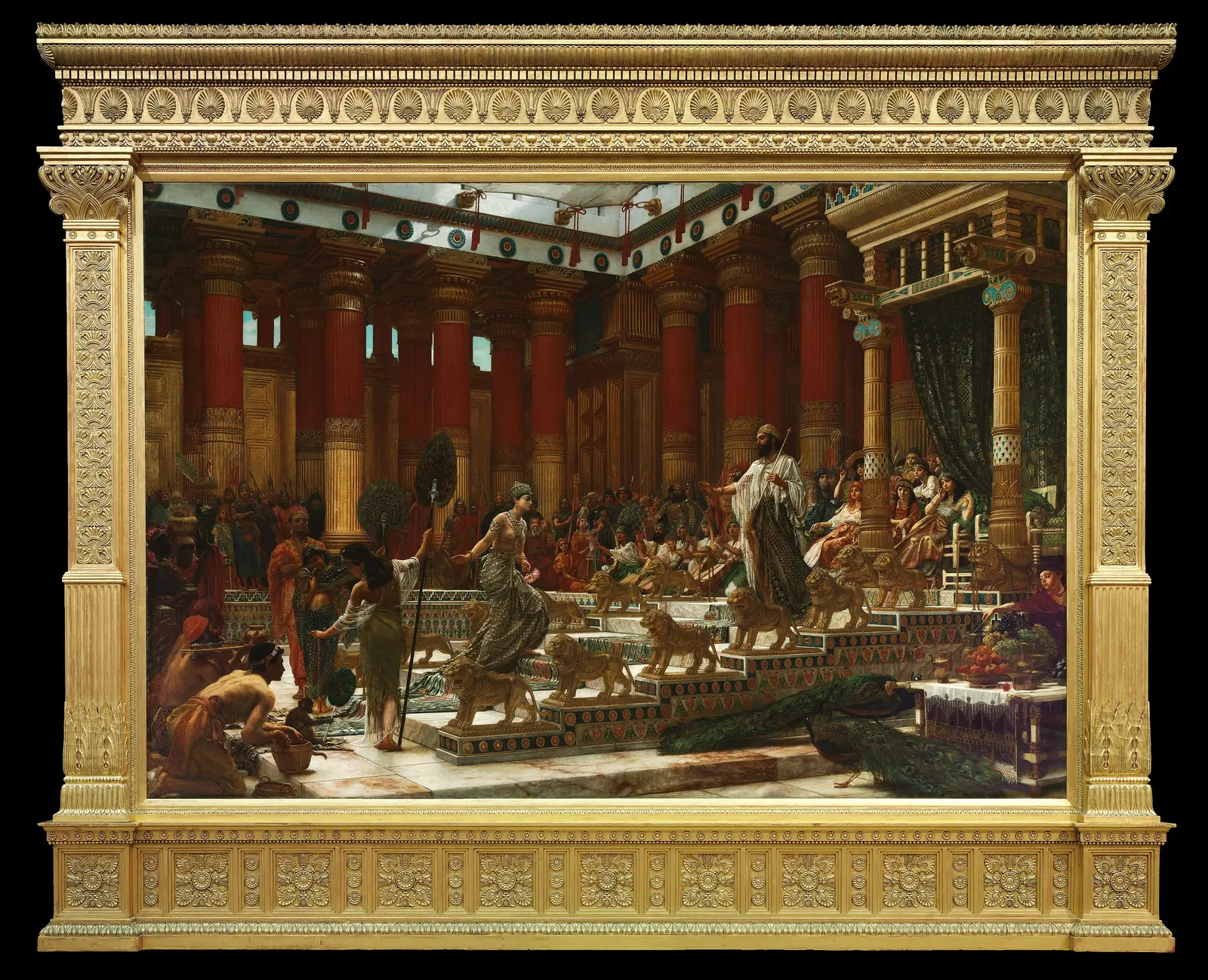
in 1 Kings 2So Bathsheba went to King Solomon to speak to him for Adonijah. The king stood up to greet her, bowed to her, and sat down on his throne. Then the king had a throne brought for his mother, who sat down at his right hand.
BSB
The same verse in ASV and KJV ▾
ASV
Bath-sheba therefore went unto king Solomon, to speak unto him for Adonijah. And the king rose up to meet her, and bowed himself unto her, and sat down on his throne, and caused a throne to be set for the king’s mother; and she sat on his right hand.
KJV
Bath–sheba therefore went unto king Solomon, to speak unto him for Adonijah. And the king rose up to meet her, and bowed himself unto her, and sat down on his throne, and caused a seat to be set for the king’s mother; and she sat on his right hand.
⋯
This verse in 1 Kings 2
Commentary
4 notes on this verseA commentator
Albert Barnes1798–1870
Notes, Explanatory and Practical, on the Old and New Testaments (1832-1869)
A seat - Or, “a throne.” We have here a proof of the high dignity of the Queen-mother. Compare also 1Ki 15:13; 2Ki 11:1-3. In the Persian court the Queen-mother had often the chief power.
This site's exposition
who sat down at his right hand
on 1 Kings 2:19-21
Solomon rises to meet his mother and seats her at his right hand, the one place in Scripture where a queen mother receives that honor. Solomon bows to Bathsheba before he refuses her request. The refusal is weighed on its own merits rather than on whose mouth carried it.
The record, by era
The Puritans and the Awakening2 voices
Solomon received her with all the respect that was due to a mother, though he himself was a king: He rose up to meet her, bowed himself to her, and caused her to sit on his right hand, according to the law of the fifth commandment.
Bathsheba therefore went unto King Solomon, to speak unto him for Adonijah,....
How the passage was read
What the Jewish commentators add
To speak to him. To speak on his behalf, on behalf of Adoniyahu. 11 Alternatively, on behalf of Shlomo, because she felt that Shlomo’s kingdom would be strengthened by granting Adoniyahu’s request.—Malbim.
This section is reception history: how the passage was read and kept in the Jewish tradition. Where a reading parts from an essential of the Christian faith, the section says so at that point.
Texts and citation data: Sefaria; each excerpt follows its version’s licence. 6 further sources are cited on this chapter that carry no English text this site may quote or only restate the verse.
The words behind it
24 Hebrew wordsEvery Hebrew word of this verse in the order it stands, with what it means and the door to its own study. The last column counts the times a word stands in the whole Bible: the rarer the word, the more the places it appears belong together.
| Hebrew | Sound | Meaning | Word study | In the Bible |
|---|---|---|---|---|
| וַתָּבֹ֤א | vatavo' | and she went | H935 → | 2568 times |
| בַת־ | vat- | Bath- | H1339 → | 20 times |
| שֶׁ֙בַע֙ | sheva' | -sheba | H1339 → | 20 times |
| אֶל־ | ʾel- | to | H413 → | 5510 times |
| הַמֶּ֣לֶךְ | hamelekh | the king | H4428 → | 2525 times |
| שְׁלֹמֹ֔ה | shelomoh | Solomon | H8010 → | 291 times |
| לְדַבֶּר־ | ledaber- | to speak | H1696 → | 1141 times |
| ל֖וֹ | lo | to him | ||
| עַל־ | ʾal- | on | H5921 → | 5755 times |
| אֲדֹנִיָּ֑הוּ | ʾadoniyahu | Adonijah | H138 → | 26 times |
| וַיָּקָם֩ | vaiyakam | and he rose | H6965 → | 628 times |
| הַמֶּ֨לֶךְ | hamelekh | the king | H4428 → | 2525 times |
| לִקְרָאתָ֜הּ | likratah | to meet her | H7122 → | 139 times |
| וַיִּשְׁתַּ֣חוּ | vaiyishtachu | and he bowed down | H7812 → | 172 times |
| לָ֗הּ | lah | to her | ||
| וַיֵּ֙שֶׁב֙ | vaiyeshev | and he sat | H3427 → | 1079 times |
| עַל־ | ʾal- | on | H5921 → | 5755 times |
| כִּסְא֔וֹ | kiso | throne his | H3678 → | 135 times |
| וַיָּ֤שֶׂם | vaiyasem | and he placed | H7760 → | 584 times |
| כִּסֵּא֙ | kise' | a throne | H3678 → | 135 times |
| לְאֵ֣ם | leem | for [the] mother of | H517 → | 220 times |
| הַמֶּ֔לֶךְ | hamelekh | the king | H4428 → | 2525 times |
| וַתֵּ֖שֶׁב | vateshev | and she sat | H3427 → | 1079 times |
| לִֽימִינֽוֹ׃ | limino | to right [hand] his | H3225 → | 140 times |
וַתָּבֹ֤אand she went
vatavo'H935 →2568 times
בַת־Bath-
vat-H1339 →20 times
שֶׁ֙בַע֙-sheba
sheva'H1339 →20 times
אֶל־to
ʾel-H413 →5510 times
הַמֶּ֣לֶךְthe king
hamelekhH4428 →2525 times
שְׁלֹמֹ֔הSolomon
shelomohH8010 →291 times
לְדַבֶּר־to speak
ledaber-H1696 →1141 times
ל֖וֹto him
lo
עַל־on
ʾal-H5921 →5755 times
אֲדֹנִיָּ֑הוּAdonijah
ʾadoniyahuH138 →26 times
וַיָּקָם֩and he rose
vaiyakamH6965 →628 times
הַמֶּ֨לֶךְthe king
hamelekhH4428 →2525 times
לִקְרָאתָ֜הּto meet her
likratahH7122 →139 times
וַיִּשְׁתַּ֣חוּand he bowed down
vaiyishtachuH7812 →172 times
לָ֗הּto her
lah
וַיֵּ֙שֶׁב֙and he sat
vaiyeshevH3427 →1079 times
עַל־on
ʾal-H5921 →5755 times
כִּסְא֔וֹthrone his
kisoH3678 →135 times
וַיָּ֤שֶׂםand he placed
vaiyasemH7760 →584 times
כִּסֵּא֙a throne
kise'H3678 →135 times
לְאֵ֣םfor [the] mother of
leemH517 →220 times
הַמֶּ֔לֶךְthe king
hamelekhH4428 →2525 times
וַתֵּ֖שֶׁבand she sat
vateshevH3427 →1079 times
לִֽימִינֽוֹ׃to right [hand] his
liminoH3225 →140 times
A shaded row is a word that stands 400 times or fewer in the Bible.
The walk
8 stopsEach card is a verse this one points to, and under it the verses that one points to in turn. Where several paths arrive at the same place, that place is listed first: the text keeps returning to it.
Through
Exodus 20:12Honor your father and mother, so that your days may be long in the land that the LORD your God is giving you.
it leads to
- Ephesians 6:1–3
Children, obey your parents in the Lord, for this is right.
Reached by 2 separate paths from here.
- Colossians 3:20
Children, obey your parents in everything, for this is pleasing to the Lord.
- Deuteronomy 5:16
Honor your father and your mother, as the LORD your God has commanded you, so that your days may be long and that it may go well with you in the land that the…
- Mark 7:10
For Moses said, ‘Honor your father and your mother’ and ‘Anyone who curses his father or mother must be put to death.’
- Proverbs 23:22–25
Listen to your father who gave you life, and do not despise your mother when she is old.
- Ephesians 6:1–3
Through
Leviticus 19:3Each of you must respect his mother and father, and you must keep My Sabbaths. I am the LORD your God.
it leads to
- Exodus 20:12
Honor your father and mother, so that your days may be long in the land that the LORD your God is giving you.
- Exodus 20:8
Remember the Sabbath day by keeping it holy.
- Exodus 20:12
Through
Leviticus 19:32You are to rise in the presence of the elderly, honor the aged, and fear your God. I am the LORD.
it leads to
- 1 Timothy 5:1
Do not rebuke an older man, but appeal to him as to a father. Treat younger men as brothers,
- 1 Timothy 5:1
Where this verse is studied
On this page
Studies1
About 1 Kings
Who and where
1 name in this verse with a page on the site.
This page draws on Albert Barnes, Notes, Explanatory and Practical, on the Old and New Testaments (1832-1869); Alfred Edersheim, Bible History: Old Testament; John Gill, Exposition of the Old Testament (1748-1763); Keil, The Books of the Kings and Matthew Henry, Commentary on the Whole Bible.