
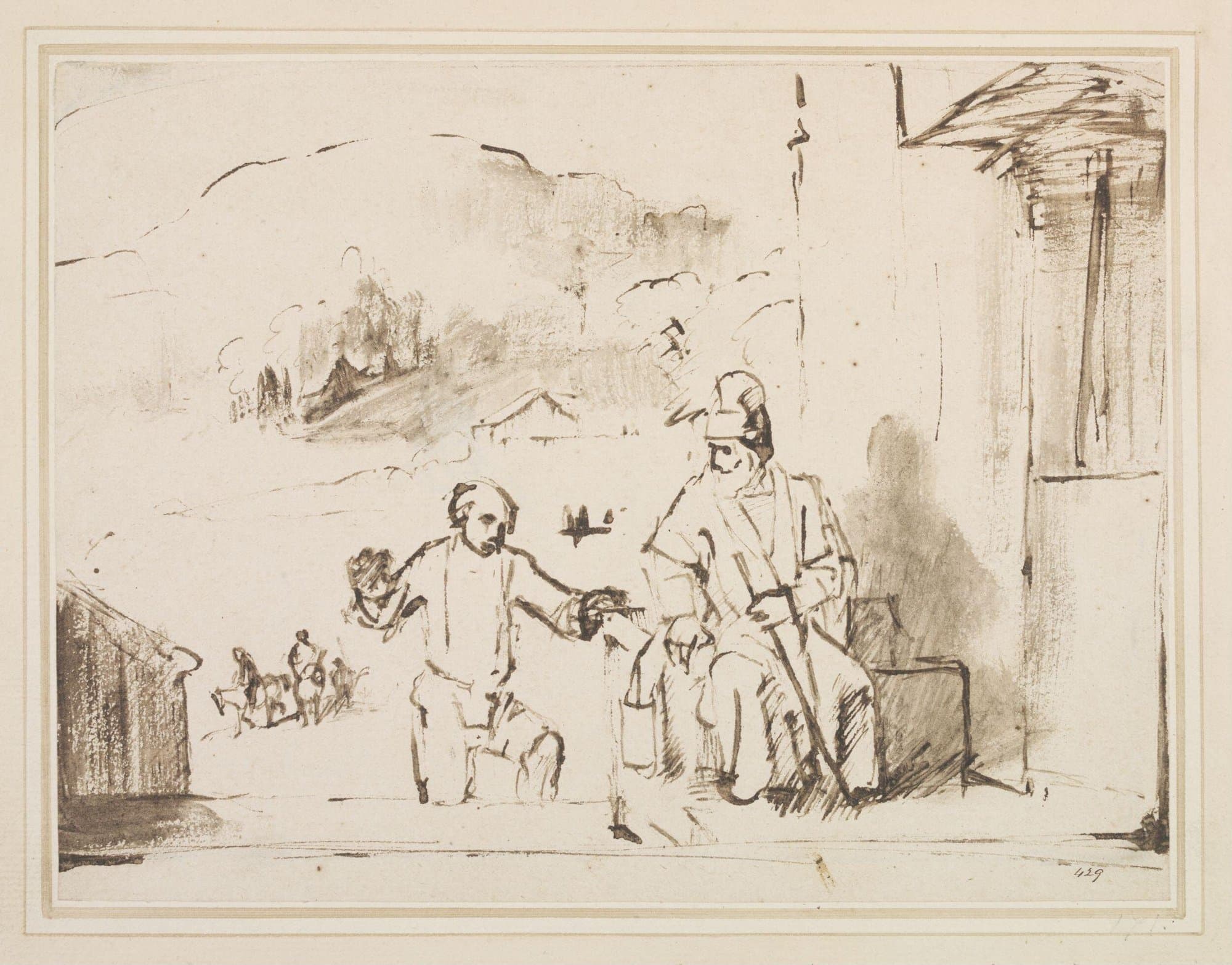
1 Samuel 2 and 4 · Story · Parenting and Its Trials
Eli and His Sons
Eli the priest rebuked his sons Hophni and Phinehas but did not restrain them, and the LORD judged his house.
The man of God told Eli that his descendants would one day beg the faithful priest for a piece of bread.
Why then do you kick at My sacrifice and offering that I have prescribed for My dwelling place? You have honored your sons more than Me by fattening yourselves with the best of all the offerings of My people Israel.’
- Where
- Shiloh
- Who
- Eli
- When
- The days of the judges, at the end of Eli's forty years (1 Samuel 4:18)
Summary
Eli was the priest at Shiloh and the judge of Israel, and his two sons served under him as priests. They despised the LORD's offerings and would not listen when their father rebuked them. The LORD sent a man of God to charge Eli himself, and later told the boy Samuel that He would judge Eli's house. The judgment fell when the Philistines took the ark.
- Eli had judged Israel forty years when he died at the age of ninety-eight (1 Samuel 4:15 and 1 Samuel 4:18).
- The charge against Eli was laid on him as a father and as the priest who held the LORD's altar.
- Readers differ on what Eli failed to do: whether he should have removed his sons, whether he shared in what they took, and why his sons would not listen.
The Sons of Eli
The account opens at the altar of Shiloh.
Eli and His Sons is a story of the trial of parenting from 1 Samuel 2 to 4. It asks what Eli did when his grown sons, priests at the LORD's altar, sinned in the sight of all Israel, and why the LORD held Eli to account for them.
The study follows the account from the sons' contempt for the offerings to the day the ark was taken. It reads the word of the man of God and the word given to the boy Samuel, and it sets Samuel's growth beside the ruin of Eli's house. It also weighs three readings of Eli's failure, with the holders of each and the objection to each.
Now the sons of Eli were wicked men; they had no regard for the LORDThe account gives its verdict on the sons before it tells a single deed, so the reader knows from the start what kind of men Eli had to deal with.
The law of the peace offering says, “All the fat is the LORD’s” (Leviticus 3:16).
The priest's servant demanded raw meat before the fat was burned, so the priests were served ahead of God at His own altar (1 Samuel 2:15).
Thus the sin of these young men was severe in the sight of the LORD, for they were treating the LORD’s offering with contempt.The verse names the sin as contempt for the LORD's offering, so the wrong was done to God before it was done to the worshippers.
The Account in Order
The fall of Eli's house runs from 1 Samuel 2 to 1 Samuel 4.
Eli, both his sons and his son's wife died on the day the ark was taken, as the sign given to Eli had warned.
- 1 Samuel 2:13 to 16The servant threatens force at the altar"I will take it by force!"1 Samuel 2:16
- 1 Samuel 2:22 to 25Eli hears the report and rebukes his sons"everything his sons were doing to all Israel"1 Samuel 2:22
- 1 Samuel 2:27 to 36The man of God gives Eli a sign"They will both die on the same day"1 Samuel 2:34
- 1 Samuel 3:11 to 14The LORD tells Samuel what He will do to Eli's house"from beginning to end"1 Samuel 3:12
- 1 Samuel 4:3 to 4The elders send for the ark, and Eli's sons come with it"they brought back the ark of the covenant"1 Samuel 4:4
- 1 Samuel 4:10 to 11Israel is defeated, the ark is taken and the two sons die"The ark of God was captured"1 Samuel 4:11
- 1 Samuel 4:12 to 18A Benjamite brings the news and Eli dies"he broke his neck and died"1 Samuel 4:18
- 1 Samuel 4:19 to 22Phinehas's wife names her son as she dies"she named the boy Ichabod"1 Samuel 4:21
A timeline of eight events in the order of 1 Samuel 2 to 4, each with its verses and a few of its Berean words.
1 Samuel 4:12 to 18, 1 Samuel 4:19 to 22
Why Are You Doing These Things?
Eli's words to his sons are the one rebuke the account records.
The report that reached the old priest included his sons sleeping with the women who served at the entrance to the Tent of Meeting (1 Samuel 2:22).
“Why are you doing these things?” Eli said to his sons. “I hear about your wicked deeds from all these people. No, my sons; it is not a good report I hear circulating among the LORD’s people. If a man sins against another man, God can intercede for him; but if a man sins against the LORD, who can intercede for him?” But they would not listen to their father, since the LORD intended to put them to death.Eli's own words show that he knew the report, named the sin, and warned his sons that no one could intercede for a man who sins against the LORD.
“Indeed, Eli did admonish them and say, ‘Nay, my sons, do not so; evil is the report that I hear of you.’ But subsequently the Scripture saith, that he did not admonish his sons: since he did not admonish them severely, or with threats. For is it not strange indeed, that in the synagogues of the Jews the laws are in such force, and whatever the teacher enjoins is performed; while here we are thus despised and rejected?”
John Chrysostom · Homily on Acts 8 · on 1 Samuel 2:24Patristic
Honoring His Sons More Than God
The LORD gave His reason for the judgment in His own words.
A man of God came to Eli and reminded him that the LORD had chosen his father's house out of all the tribes of Israel to serve as His priests (1 Samuel 2:27 to 28).
The LORD had also given that house the offerings made by fire, the very offerings Eli's sons were taking for themselves.
Therefore, the LORD, the God of Israel, declares: ‘I did indeed say that your house and the house of your father would walk before Me forever. But now the LORD declares: Far be it from Me! For I will honor those who honor Me, but those who despise Me will be disdained.The LORD takes back a promise made to the house of Eli's father and gives the rule by which He does it, honour for those who honour Him.
I told him that I would judge his house forever for the iniquity of which he knows, because his sons blasphemed God and he did not restrain them.The word to the boy repeats the judgment the man of God had announced and gives the LORD's reason for it in one clause.
Samuel in the House of Eli
Hannah's son grew up at Shiloh under the same old priest.
The boy Samuel ministered before the LORD in a linen ephod (1 Samuel 2:18).
Each year his mother Hannah made him a little robe and brought it when she came up with her husband to offer the yearly sacrifice (1 Samuel 2:19).
And the boy Samuel continued to grow in stature and in favor with the LORD and with man.The verse stands between Eli's failed rebuke and the man of God's word, so the growth of Hannah's son is set against the ruin of Eli's sons.
Charles Spurgeon, preaching in 1864, set Eli's sons beside the child he raised: “Eli failed to tutor his sons to be the willing servants and the attentive hearers of the Lord's Word”.
He went on, “In this he was without the excuse of inability since he successfully trained the child Samuel in reverent attention to the Divine will”.
A Faithful Priest
Two texts trace the end of the priesthood in Eli's line.
Then I will raise up for Myself a faithful priest. He will do whatever is in My heart and mind. And I will build for him an enduring house, and he will walk before My anointed one for all time.The promise of a faithful priest answers the unfaithful house of Eli, and the enduring house built for him stands against the house that is cut off.
So Solomon banished Abiathar from the priesthood of the LORD and thus fulfilled the word that the LORD had spoken at Shiloh against the house of Eli.Kings names Abiathar's banishment as the fulfilment of the word spoken at Shiloh, and so closes the account of Eli's house in the days of Solomon.
What Eli Failed to Do
Three readings weigh Eli's part in his sons' sin.
He rebuked his sons and left them in officeAdam Clarke
Adam Clarke (1832) wrote on 1 Samuel 2:23, “As judge, he had power to cast them immediately out of the vineyard, as wicked and unprofitable servants; this he did not”.
Against this reading, Hophni and Phinehas were grown men answerable for their own sin, and Ezekiel 18:20 says that “a father will not bear the iniquity of his son”.
He shared in what his sons tookMatthew Henry
Matthew Henry's Commentary on the Whole Bible (1710) read the charge of 1 Samuel 2:29 as reaching Eli himself.
He wrote, “It is to be feared that Eli himself, though he disliked and reproved the abuses they committed, yet did not forbear to eat of the roast meat they sacrilegiously got”.
Against this reading, the LORD's word to Samuel gives one reason for the judgment, that Eli did not restrain his sons, and it says nothing of what he ate (1 Samuel 3:13).
His sons' refusal was their ownJamieson, Fausset and Brown
Jamieson, Fausset and Brown's Commentary Critical and Explanatory (1871) read the last clause of 1 Samuel 2:25 as the sons' own doing.
They wrote, “It was not God's preordination, but their own wilful and impenitent disobedience which was the cause of their destruction”.
Against this reading, the verse itself gives the LORD's intent as the reason the sons would not listen to their father.
The Day the Ark Was Taken
Eli sat by the road watching, because his heart trembled for the ark of God.
The messenger answered, “Israel has fled before the Philistines, and there has been a great slaughter among the people. Your two sons, Hophni and Phinehas, are both dead, and the ark of God has been captured.”It stands here because one report carries the loss of both sons and of the ark together.
“Thus was the wickedness of those sons of his, whom he had indulged, his ruin. Thus does God sometimes set marks of his displeasure on good men, that others may hear and fear. Yet we must observe, it was the loss of the ark that was his death, and not the slaughter of his sons.”
John Wesley · Explanatory Notes upon the Old Testament · on 1 Samuel 4:18Evangelical
The account holds a father to account for sons he had warned but left at the altar, and it shows the LORD keeping His word against that house to its last priest.
Sources
Scripture is the Berean Standard Bible.
- John Wesley, Explanatory Notes upon the Old Testament (1765), on 1 Samuel 4:18.
- Adam Clarke, Commentary on the Bible (1832), on 1 Samuel 2:23.
- John Chrysostom, Homilies on the Acts of the Apostles, Homily 8, translated by J. Walker, J. Sheppard and H. Browne, revised by George B. Stevens, Nicene and Post-Nicene Fathers, First Series, volume 11 (Buffalo: Christian Literature Publishing Co., 1889)
- Matthew Henry, Commentary on the Whole Bible (1710), on 1 Samuel 2:29.
- Robert Jamieson, A. R. Fausset and David Brown, Commentary Critical and Explanatory on the Whole Bible (1871), on 1 Samuel 2:25.
- Charles Spurgeon, The Metropolitan Tabernacle Pulpit, Sermon No. 586, The Child Samuel's Prayer (1864), on 1 Samuel 3:9.
Keep Studying
Studies1
In this trial7
People and groups10