
1 Kings 2:21
in 1 Kings 2So Bathsheba said, “Let Abishag the Shunammite be given to your brother Adonijah as his wife.”
BSB
The same verse in ASV and KJV ▾
ASV
And she said, Let Abishag the Shunammite be given to Adonijah thy brother to wife.
KJV
And she said, Let Abishag the Shunammite be given to Adonijah thy brother to wife.
⋯
This verse in 1 Kings 2
Commentary
4 notes on this verseThis site's exposition
who sat down at his right hand
on 1 Kings 2:19-21
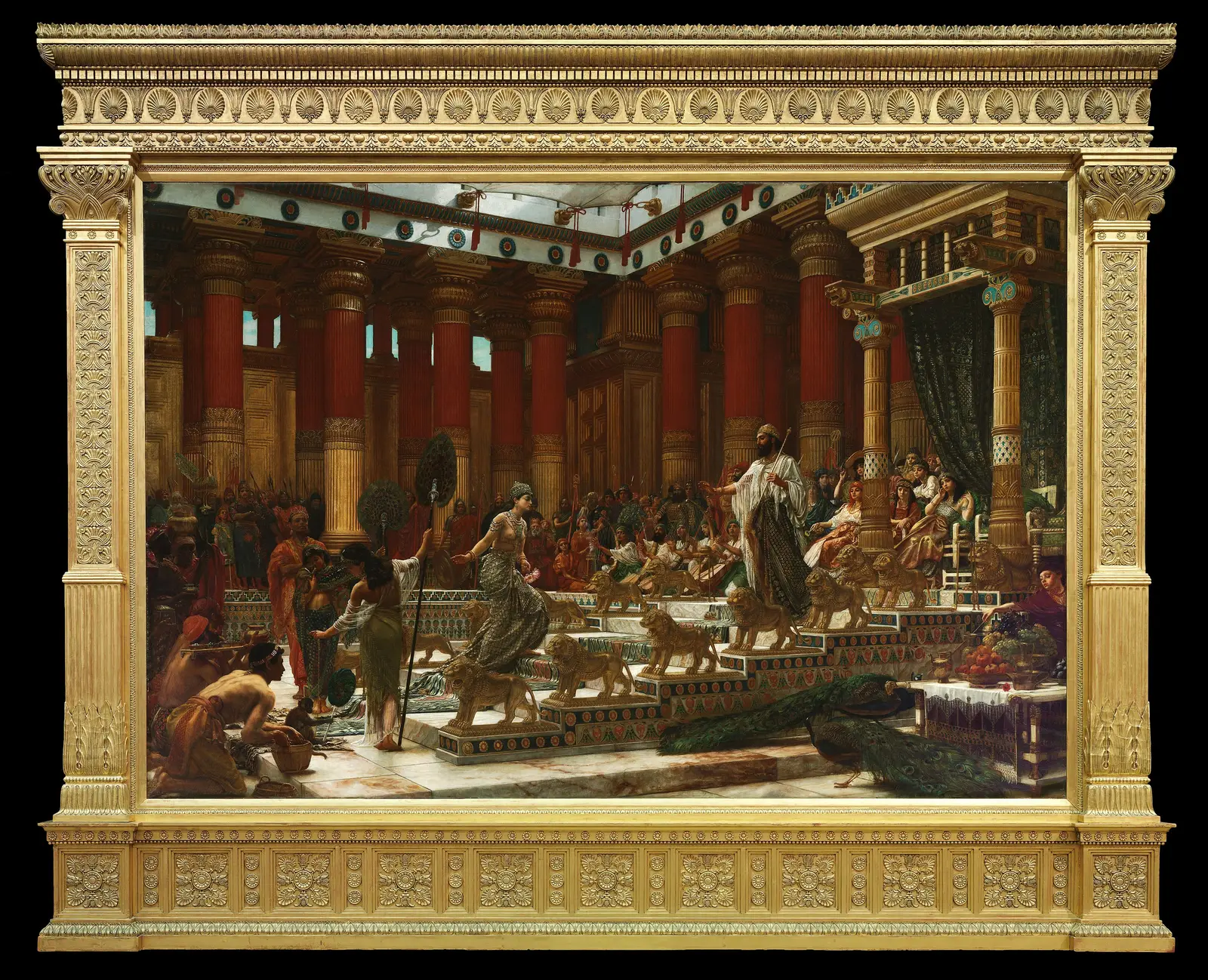
Solomon rises to meet his mother and seats her at his right hand, the one place in Scripture where a queen mother receives that honor. Solomon bows to Bathsheba before he refuses her request. The refusal is weighed on its own merits rather than on whose mouth carried it.
This site's exposition
your brother Adonijah as his wife
Bathsheba names Adonijah as the king's brother, and John Gill hears her using the family tie to move him. Matthew Henry holds that Solomon could refuse her and still keep his promise of verse 20. A general promise binds only to what is right.
The record, by era
The Puritans and the Awakening2 voices
And she said, let Abishag the Shunammite be given to Adonijah thy brother to wife. For so Adonijah was by his father's side; and Bathsheba makes use of the relation, the more to move upon him to grant the request.
It ill becomes a good man to prefer a bad request or appear in a bad cause. Solomon's just and judicious rejection of the request. Though his mother herself was the advocate, and called it a small petition, and perhaps it was the first she had troubled him with since he was king, yet he denied it, without violation of the general promise he had made,
The words behind it
8 Hebrew wordsEvery Hebrew word of this verse in the order it stands, with what it means and the door to its own study. The last column counts the times a word stands in the whole Bible: the rarer the word, the more the places it appears belong together.
| Hebrew | Sound | Meaning | Word study | In the Bible |
|---|---|---|---|---|
| וַתֹּ֕אמֶר | vatomer | and she said | H559 → | 5305 times |
| יֻתַּ֖ן | yutan | let it be given | H5414 → | 2011 times |
| אֶת־ | ʾet- | <obj.> | H853 → | 10935 times |
| אֲבִישַׁ֣ג | ʾavishag | Abishag | H49 → | 5 times |
| הַשֻּׁנַמִּ֑ית | hashunamit | the Shunammite | H7767 → | 8 times |
| לַאֲדֹנִיָּ֥הוּ | laadoniyahu | to Adonijah | H138 → | 26 times |
| אָחִ֖יךָ | ʾachikha | brother your | H251 → | 630 times |
| לְאִשָּֽׁה׃ | leishah | to a wife | H802 → | 781 times |
וַתֹּ֕אמֶרand she said
vatomerH559 →5305 times
יֻתַּ֖ןlet it be given
yutanH5414 →2011 times
אֶת־<obj.>
ʾet-H853 →10935 times
אֲבִישַׁ֣גAbishag
ʾavishagH49 →5 times
הַשֻּׁנַמִּ֑יתthe Shunammite
hashunamitH7767 →8 times
לַאֲדֹנִיָּ֥הוּto Adonijah
laadoniyahuH138 →26 times
אָחִ֖יךָbrother your
ʾachikhaH251 →630 times
לְאִשָּֽׁה׃to a wife
leishahH802 →781 times
A shaded row is a word that stands 400 times or fewer in the Bible.
The walk
5 stopsEach card is a verse this one points to, and under it the verses that one points to in turn. Where several paths arrive at the same place, that place is listed first: the text keeps returning to it.
Through
1 Kings 1:3Then they searched throughout Israel for a beautiful girl, and they found Abishag the Shunammite and brought her to the king.
it leads to
- Esther 2:4
Then let the young woman who pleases the king become queen in place of Vashti.” This suggestion pleased the king, and he acted accordingly.
- Joshua 19:18
Their territory included Jezreel, Chesulloth, Shunem,
- Esther 2:2
Then the king’s attendants proposed, “Let a search be made for beautiful young virgins for the king,
- 2 Kings 4:8
One day Elisha went to Shunem, and a prominent woman who lived there persuaded him to have a meal. So whenever he would pass by, he would stop there to eat.
- 1 Samuel 28:4
The Philistines came together and camped at Shunem, while Saul gathered all Israel and camped at Gilboa.
- Esther 2:4
Where this verse is studied
About 1 Kings
This page draws on Alfred Edersheim, Bible History: Old Testament; John Gill, Exposition of the Old Testament (1748-1763); Keil, The Books of the Kings and Matthew Henry, Commentary on the Whole Bible.