
1 Corinthians 15:46
in 1 Corinthians 15The spiritual, however, was not first, but the natural, and then the spiritual.
BSB
The same verse in ASV and KJV ▾
ASV
Howbeit that is not first which is spiritual, but that which is natural; then that which is spiritual.
KJV
Howbeit that was not first which is spiritual, but that which is natural; and afterward that which is spiritual.
⋯
This verse in 1 Corinthians 15
Commentary
17 notes on this verseFor the breath of life, which also rendered man an animated being, is one thing, and the vivifying Spirit another, which also caused him to become spiritual. And for this reason Isaiah said, "Thus saith the Lord, who made heaven and established it, who founded the earth and the things therein, and gave breath to the people upon it, and Spirit to those walking upon it;" thus telling us that breath is indeed given in common to all people upon earth, but that the Spirit is theirs alone who tread down earthly desires.
This site's exposition
And so it is written, The first man Adam was made a living soul
on 1 Corinthians 15:45-46
And so it is written, The first man Adam was made a living soul; the last Adam was made a quickening spirit: Paul cites Genesis 2:7 directly, keep-hard across the citation ledger, and sets the first Adam's created life beside the last Adam's life-giving power, Christ not merely restored to life but able to impart resurrection life to others. Verse 46 states the order the whole chapter has followed, that was not first which is spiritual, but that which is natural, and afterward that which is spiritual, natural life preceding spiritual glory in both individual growth and the history of redemption. The bench reads the title last Adam as Paul's own naming of Christ as humanity's second and final representative head, closing the argument begun at verse 21, by man came death.
The record, by era
The Church Fathers5 voices
First comes the clay that is only fit to be thrown away, with which we must begin but in which we need not remain. Afterward comes what is fit for us, that into which we can be gradually molded and in which, when molded, we may remain.
The spiritual body is understood as a body so subject to spirit that it may be suited to its celestial habitation, all earthly weakness and corruption and being changed and converted into celestial purity and stability.
First of all there comes the (natural) soul, that is to say, the breath, to the people that are on the earth,-in other words, to those who act carnally in the flesh; then afterwards comes the Spirit to those who walk thereon,-that is, who subdue the works of the flesh; because the apostle also says, that "that is not first which is spiritual, but that which is natural, (or in possession of the natural soul, ) and afterward that which is spiritual." For, inasmuch as Adam straightway predicted that "great mystery of Christ and the church," when he said, "This now is bone of my bones, and flesh of my flesh; therefore shall a man leave his father and his mother, and shall cleave unto his wife, and they two shall become one flesh," he experienced the influence of the Spirit.
In short, since it is not the soul, but the flesh which is "sown in corruption," when it turns to decay in the ground, it follows that (after such dissolution) the soul is no longer the natural body, but the flesh, which was the natural body, (is the subject of the future change), forasmuch as of a natural body it is made a spiritual body, as he says further down, "That was not first which is spiritual." For to this effect he just before remarked of Christ Himself: "The first man Adam was made a living soul, the last Adam was made a quickening spirit.
Accordingly the apostle goes on to say: "Howbeit that was not first which is spiritual, but that which is natural, and afterward that which is spiritual," as in the case of the two Adams.
10 more voices on this verse
The Church Fathers3 voices
This figure of corporeal healing sang of a spiritual healing, according to the rule by which things carnal are always antecedent as figurative of things spiritual.
But again: if the beginning passes on to the end (as Alpha to Omega), as the end passes back to the beginning (as Omega to Alpha), and thus our origin is transferred to Christ, the animal to the spiritual-inasmuch as "(that was) not first which is spiritual, but (that) which (is) animal; then what (is) spiritual," -let us, in like manner (as before), see whether you owe this very (same) thing to this second origin also: whether the last Adam also meet you in the selfsame form as the first; since the last Adam (that is, Christ) was entirely unwedded, as was even the first Adam before his exile.
"For that is not first," saith he, "which is spiritual, but that which is natural, then that which is spiritual." And he saith not, why, but is content with the ordinance of God, having the evidence from the facts testifying to that most excellent oeconomy of God, and implying that our state is always going forward to the better; at the same time by this also adding credibility to his argument. For if the lesser have come to pass, much more ought we to expect the better.
The Medieval Church3 voices
So that no one would say: why do we now have a natural body, an inferior one, while the spiritual one is only yet to come? he says: because the origins of the one and the other have been established in that order. Adam came …
What then is designated by John except the Synagogue, what by Peter except the Church? Nor should it seem strange that the Synagogue is said to be signified by the younger and the Church by the elder, because even if the Synagogue is prior to the Church of the Gentiles in the worship of God, nevertheless the multitude of the Gentiles is prior to the Synagogue in the practice of the world, as Paul attests when he says: "Because what is spiritual is not first, but what is natural." Therefore by the elder Peter is signified the Church of the Gentiles, but by the younger John the Synagogue of the Jews.
994. – But someone might say, If Christ was made a life-giving spirit, why is he called "last"? Therefore, accordingly, when he says, but it is not the spiritual which is first, he shows the order of principles. We see in nature that in one …
The Puritans and the Awakening1 voice
Howbeit, that was not first which is spiritual,....
The Nineteenth Century3 voices
That was not first which is spiritual - The natural or animal body, described 1Co 15:44, was the first; it was the body with which Adam was created. The spiritual body is the last, and is that with which the soul is to be clothed in the resurrection.
A commentator
Jamieson, Fausset & Brown1802–1910
Commentary Critical and Explanatory on the Whole Bible (1871)
proposed
afterward--Adam had a soul not necessarily mortal, as it afterwards became by sin, but "a living soul," and destined to live for ever, if he had eaten of the tree of life (Ge 3:22); still his body was but an animal-souled body, not a spiritual body, such as believers shall have; much less was he a "life-giving spirit," as Christ.
quarantine:debris (2026-07-29) — starts-lowercase
A commentator
Albert Barnes1798–1870
Notes, Explanatory and Practical, on the Old and New Testaments (1832-1869)
proposed
Howbeit - There is a due order observed, 1Co 15:23. The decaying, the dying, the weak, the corruptible, in the proper order of events, was first. This order was necessary, and this is observed everywhere. It is seen in the grain that dies in the ground, and in the resurrection of man. The imperfect is succeeded by the perfect; the impure by the pure; the vile and degraded by the precious and the glorious. The idea is, that there is a tendency toward perfection, and that God observes the proper order by which that which is most glorious shall be secured. It was not his plan that all things in the beginning should be perfect; but that perfection should be the work of time, and should be secured in an appropriate order of events. The design of Paul in this verse seems to be to vindicate the statement which he had made, by showing that it was in accordance with what was everywhere observed, that the proper order should be maintained. This idea is carried through the following verses.
The words behind it
11 Greek wordsEvery Greek word of this verse in the order it stands, with what it means and the door to its own study. The last column counts the times a word stands in the whole Bible: the rarer the word, the more the places it appears belong together.
| Greek | Sound | Meaning | Word study | In the Bible |
|---|---|---|---|---|
| ἀλλ᾽ | all᾽ | However | G235 → | 635 times |
| οὐ | ou | not | G3756 → | 1664 times |
| πρῶτον | proton | first [was] | G4413 → | 152 times |
| τὸ | to | the | G3588 → | 19766 times |
| πνευματικὸν | pneumatikon | spiritual | G4152 → | 26 times |
| ἀλλὰ | alla | but | G235 → | 635 times |
| τὸ | to | the | G3588 → | 19766 times |
| ψυχικόν, | psuchikon | natural, | G5591 → | 6 times |
| ἔπειτα | epeita | then | G1899 → | 16 times |
| τὸ | to | the | G3588 → | 19766 times |
| πνευματικόν.¶ | pneumatikon | spiritual. | G4152 → | 26 times |
ἀλλ᾽However
all᾽G235 →635 times
οὐnot
ouG3756 →1664 times
πρῶτονfirst [was]
protonG4413 →152 times
τὸthe
toG3588 →19766 times
πνευματικὸνspiritual
pneumatikonG4152 →26 times
ἀλλὰbut
allaG235 →635 times
τὸthe
toG3588 →19766 times
ψυχικόν,natural,
psuchikonG5591 →6 times
ἔπειταthen
epeitaG1899 →16 times
τὸthe
toG3588 →19766 times
πνευματικόν.¶spiritual.
pneumatikonG4152 →26 times
A shaded row is a word that stands 400 times or fewer in the Bible.
The walk
5 stopsEach card is a verse this one points to, and under it the verses that one points to in turn. Where several paths arrive at the same place, that place is listed first: the text keeps returning to it.
Through
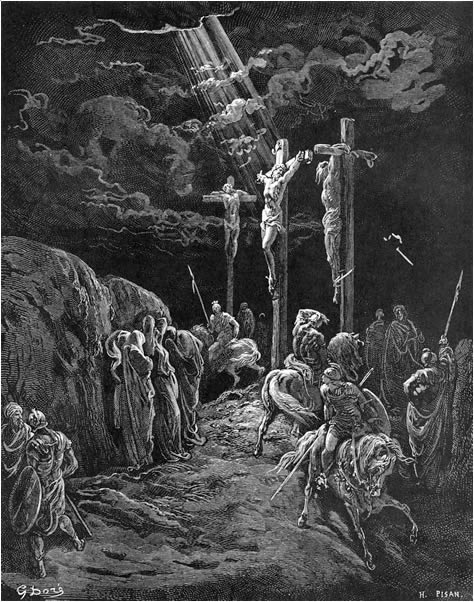
Romans 6:6We know that our old self was crucified with Him so that the body of sin might be rendered powerless, that we should no longer be slaves to sin.
it leads to
- Galatians 2:20
I have been crucified with Christ, and I no longer live, but Christ lives in me. The life I live in the body, I live by faith in the Son of God, who loved…
- Galatians 5:24
Those who belong to Christ Jesus have crucified the flesh with its passions and desires.
- Ephesians 4:22
to put off your former way of life, your old self, which is being corrupted by its deceitful desires;
- Galatians 6:14
But as for me, may I never boast, except in the cross of our Lord Jesus Christ, through which the world has been crucified to me, and I to the world.
- John 8:34–36
Jesus replied, “Truly, truly, I tell you, everyone who sins is a slave to sin.
- Galatians 2:20
Where this verse is studied
About 1 Corinthians
This page draws on 18 works. Open the list of works
This page draws on Adam Clarke, Commentary on the Bible; Albert Barnes, Notes, Explanatory and Practical, on the Old and New Testaments (1832-1869); Augustine of Hippo, City of God 15.1; Augustine of Hippo, On Faith and the Creed 6.13; Charles Hodge, An Exposition of the First Epistle to the Corinthians; Gregory the Dialogist, Forty Gospel Homilies, Homily 22; Irenaeus, Irenaeus Against Heresies Book 5; Jamieson, Fausset & Brown, Commentary Critical and Explanatory on the Whole Bible; John Chrysostom, Homily on 1 Corinthians 41; John Gill, Exposition of the New Testament (1746-1748); Matthew Henry, Commentary on the Whole Bible; Tertullian, A Treatise on the Soul; Tertullian, Against Marcion Book V; Tertullian, On the Resurrection of the Flesh; Tertullian, On Baptism; Tertullian, On Monogamy; Theophylact of Ohrid, Commentary on 1 Corinthians and Thomas Aquinas, Commentary on 1 Corinthians.