
Genesischapter 32
32 verses · Moses, by tradition · 15th to 13th century BC · The Law
In Jewish life
The reading
Weekly portion 7 of 54
וַיֵּצֵא Vayetzei, Genesis 28:10 to 32:3
Read with it: Hosea 12:13 to 14:10 in Ashkenazi use, and Hosea 11:7 to 12:12 in Sephardi use.
Weekly portion 8 of 54
וַיִּשְׁלַח Vayishlach, Genesis 32:4 to 36:43
Read with it: Obadiah 1:1 to 1:21.
The verse numbers here are the ones a Hebrew Bible carries, which differ from an English Bible by a verse or two in several places. The Sephardi reading is named only where this site records a difference; communities vary beyond what is listed. What these books are, and how a Christian reader meets them →
What is done
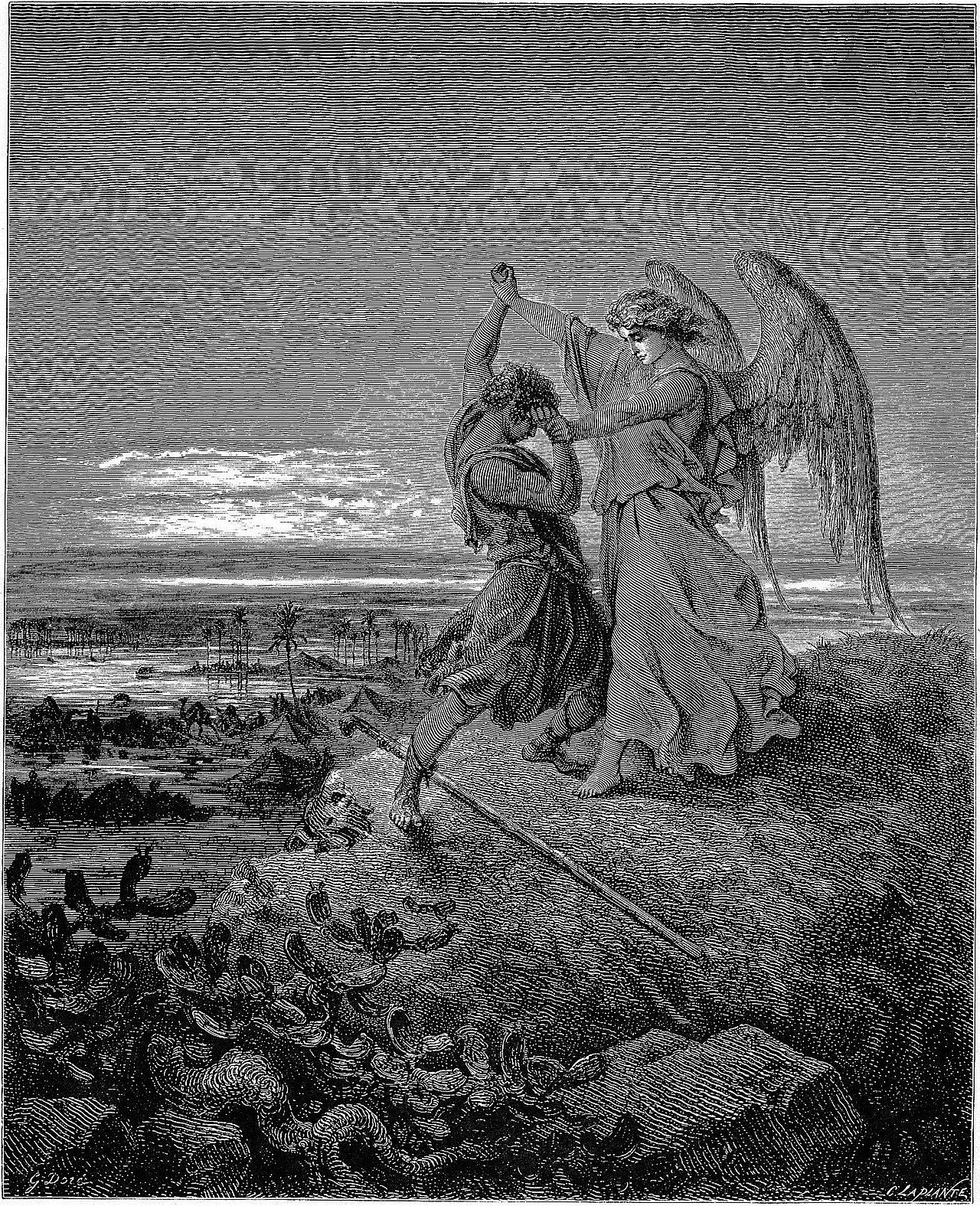
Two things a reader of an English Bible has to be told fall in this chapter. The first is a seam of the reading cycle: the portion Vayetzei ends and the portion Vayishlach begins inside it, so the chapter is heard across two Sabbaths (src/lib/hebraic/readings.ts, the entries for portions seven and eight). The second is that the seam sits at a place where the Hebrew and the English verse numbers part company. The same file records that Vayishlach opens at Genesis 32:4 in a Hebrew Bible and at 32:3 in an English one, and the corpus fetched for this chapter numbers its commentary by the Hebrew count throughout, so every reference below runs one verse ahead of an English Bible. The chapter also carries the oldest food custom in Scripture. This site's own pages record that Israel does not eat the sinew of the hip, that Genesis gives this night as the reason, and that Jewish practice later worked the custom out in detail, the sinew removed by a trained hand before the meat is used, and honoured it as usage rather than as a command written in the Torah (src/app/featured/jacob-wrestles-the-angel/page.tsx and scripts/data/historical-context/ch2-genesis-late.mjs).
How it is read
Rashi reads the chapter as a handover between two companies of angels and then as a night of fear honestly told. The angels who meet Jacob at the opening are "The angels who minister in the Land of Israel came to meet him in order to escort him into the Holy Land", on Genesis Rabbah 74:17, and the place name of the next verse he takes as the two camps of the escort leaving and the escort arriving, on Midrash Tanchuma, Vayishlach 3 (Rashi on Genesis 32:2:1 and 32:3:1, the Pentateuch with Rashi's commentary by M. Rosenbaum and A. M. Silbermann, 1929 to 1934, public domain). The messengers Jacob sends he takes as angels in the strict sense, on Genesis Rabbah 75:4. Jacob's own message he reads as a disclaimer of the blessing he had taken, a man saying that he had become a sojourner and no prince and that the blessing had not been fulfilled in him (Rashi on Genesis 32:5:1 and 32:6:1). The double word of the eighth verse he divides in two, "He was afraid lest he be killed, and he was distressed that he might have to kill someone", on Genesis Rabbah 76:2 (Rashi on Genesis 32:8:1). At the crossing he hands on the tradition that Dinah was not among the eleven children because Jacob had hidden her: "He placed her in a chest and locked her in so that Esau should not set his fancy upon her", and that Jacob was punished for keeping her from a brother she might have turned back to good (Rashi on Genesis 32:23:1). Of Jacob at the ford he says simply, "He acted as a ferry-man taking them from one side and setting them down on the other" (Rashi on Genesis 32:24:1). Ibn Ezra comments here at 32:1:1 and 32:20:1, and one further comment of Rashi at 32:15:1 stands without English in the corpus, so all three are citations.
What the rabbis say
The corpus records forty rabbinic locators on this chapter, thirty-eight of them Midrash and two Talmud. Bereshit Rabbah carries almost the whole chapter, and the run is nearly continuous: 74:16 and 74:17 at the meeting with the angels, 75:1, 75:5, 75:6, 75:7 and 75:12 through the message to Esau, 76:7, 76:8 and 76:9 through the prayer and the crossing, and 77:1, 78:1, 78:3, 78:4, 78:6 and 68:10 through the wrestling and the naming. Aggadat Bereshit is cited at 46:3, 54:2, 55:1, 58:3, 58:4 and 67:2, Midrash Aggadah at Genesis 32:16:1, 32:20:1, 32:22:1 and 32:24:1, Midrash Lekach Tov at Genesis 32:1:1, 32:19:1 and 32:21:1, Bamidbar Rabbah at 4:1, 15:12 and 18:21, and Bereshit Rabbati at Parashat Vayishlach 7 and 10. Sefer HaYashar is cited once, at the Book of Genesis, Vayetzei 5. The two Talmud locators stand at the new name and at the sinew, in the Hebrew numbering the twenty-ninth and thirty-third verses: Berakhot 13a:11 and Beitzah 12a:10. Rashi hands on further sayings with their locators, among them Genesis Rabbah 74:17, 75:4, 75:7, 76:2, 76:7 and 76:8 and Midrash Tanchuma, Vayishlach 3.
The text, verse by verse
Each word shows the Hebrew, the English under it, how it sounds and its Strong’s number. A rule between verses marks where the Hebrew manuscripts end a paragraph.
Esau Comes with Four Hundred Men
Ibn Ezra on Genesis 32:1
His grandsons, the sons of his daughters. 1 Laban was not bidding his sons adieu; hence his sons must refer to his grandsons.
Read it in full at Sefaria · Ibn Ezra's commentary on the Pentateuch, tran. and annot. by H. Norman Strickman and Arthur M. Silver. Menorah Pub., 1988-2004
Onkelos Genesis 32:1
Lavan rose early in the morning. He kissed his sons and daughters and blessed them. Lavan departed and returned to his place.
Read it in full at Sefaria · Metsudah Chumash, Metsudah Publications, 2009 [with Onkelos translation]
Jacob Prays for Deliverance
Ramban on Genesis 32:11
‘KATONTI’ OF ALL THE MERCIES, AND OF ALL THE TRUTH. “My merits have diminished as a consequence of all the kindness and truth which You have already shown me.
Read it in full at Sefaria · Commentary on the Torah by Ramban (Nachmanides). Translated and annotated by Charles B. Chavel. New York, Shilo Pub. House, 1971-1976
Ramban on Genesis 32:12
Commentators. Mentioned in Ibn Ezra. The verb “smite” thus applies to the beginning and end of the sentence. have explained it as meaning. “And he smite me and smite the mother with the children.” There are many similar verses.
Read it in full at Sefaria · Commentary on the Torah by Ramban (Nachmanides). Translated and annotated by Charles B. Chavel. New York, Shilo Pub. House, 1971-1976
A Present Sent Ahead in Droves
Ramban on Genesis 32:13
I WILL SURELY DO THEE GOOD. Even though he was afraid lest the sin cause him to lose that which he was promised, Jacob said: “You have done great kindnesses for me even though I was unworthy of them.
Read it in full at Sefaria · Commentary on the Torah by Ramban (Nachmanides). Translated and annotated by Charles B. Chavel. New York, Shilo Pub. House, 1971-1976
Wrestling Until the Break of Day
Hebrew words in this chapter
The 40 most used Hebrew words of the chapter, counted by lemma. The article, the object marker, the negatives and the common prepositions are left out.
| Word | Sense here | Uses | Strong’s |
|---|---|---|---|
| אָמַרʼâmar | to say | 24 | H559 |
| יַעֲקֹבYaʻăqôb | Jacob | 16 | H3290 |
| עֵשָׂוʻÊsâv | Esau | 9 | H6215 |
| עֶבֶדʻebed | servant your | 7 | H5650 |
| עָבַרʻâbar | to pass | 7 | H5674 |
| אֱלֹהִיםʼĕlôhîym | God | 6 | H430 |
| מַחֲנֶהmachăneh | camp | 6 | H4264 |
| שֵׁםshêm | name | 6 | H8034 |
| פָּנִיםpânîym | face | 6 | H6440 |
| הָלַךְhâlak | went | 5 | H1980 |
| שָׁלַחshâlach | and he sent | 5 | H7971 |
| אָחʼâch | brother | 5 | H251 |
| עֵדֶרʻêder | herd | 5 | H5739 |
| יָרֵךְyârêk | thigh | 5 | H3409 |
| רָאָהrâʼâh | to see | 4 | H7200 |
| בּוֹאbôwʼ | to come | 4 | H935 |
| שְׁנַיִםshᵉnayim | two | 4 | H8147 |
| יָדyâd | hand | 4 | H3027 |
| מִנְחָהminchâh | a gift | 4 | H4503 |
| כַּףkaph | socket of | 4 | H3709 |
| Word | Sense here | Uses | Strong’s |
|---|---|---|---|
| מֲלְאָךְmălʼâk | messenger | 3 | H4397 |
| צָוָהtsâvâh | to command | 3 | H6680 |
| אָדוֹןʼâdôwn | lord | 3 | H113 |
| מֵאָהmêʼâh | hundred | 3 | H3967 |
| יָטַבyâṭab | be good | 3 | H3190 |
| בֵּןbên | children | 3 | H1121 |
| לַיִלlayil | night | 3 | H3915 |
| לָקַחlâqach | and he took | 3 | H3947 |
| עֶשְׂרִיםʻesrîym | twenty | 3 | H6242 |
| שָׁאַלshâʼal | to ask | 3 | H7592 |
| קָרָאqârâʼ | to call | 2 | H7121 |
| מָקוֹםmâqôwm | place | 2 | H4725 |
| אֶרֶץʼerets | land | 2 | H776 |
| כֹּהkôh | thus | 2 | H3541 |
| עַתָּהʻattâh | now | 2 | H6258 |
| צֹאןtsôʼn | flock | 2 | H6629 |
| שִׁפְחָהshiphchâh | maidservant | 2 | H8198 |
| נָגַדnâgad | to tell | 2 | H5046 |
| מָצָאmâtsâʼ | to find | 2 | H4672 |
| שׁוּבshûwb | to return | 2 | H7725 |
Keep studying
Sources for this chapter
The Hebrew text
STEP Bible, the tagged Hebrew text and its English glosses and James Strong, Strong's Exhaustive Concordance.
In Jewish life
Rashi, Rashi on Genesis 32:2:1, 32:3:1, 32:4:1, 32:5:1, 32:6:1, 32:7:1, 32:8:1, 32:9:1, 32:10:1, 32:11:1, 32:12:1, 32:13:1, 32:14:1, 32:16:1, 32:17:1, 32:18:1, 32:19:1, 32:21:1, 32:22:1, 32:23:1 and 32:24:1, in the Hebrew verse numbering, the Pentateuch with Rashi's commentary by M. Rosenbaum and A. M. Silbermann, 1929 to 1934, public domain; Rashi on Genesis 32:15:1, cited only; Ibn Ezra, Ibn Ezra on Genesis 32:1:1 and 32:20:1, cited only, no English version in the corpus under a licence permitting quotation; Midrash, Bereshit Rabbah 65:13, 68:10, 74:16, 74:17, 75:1, 75:5, 75:6, 75:7, 75:12, 76:7, 76:8, 76:9, 77:1, 78:1, 78:3, 78:4, 78:6 and 79:5; Aggadat Bereshit 46:3, 54:2, 55:1, 58:3, 58:4 and 67:2; Midrash Aggadah, Genesis 32:16:1, 32:20:1, 32:22:1 and 32:24:1; Midrash Lekach Tov, Genesis 32:1:1, 32:19:1 and 32:21:1; Bamidbar Rabbah 4:1, 15:12 and 18:21; Bereshit Rabbati, Parashat Vayishlach 7 and 10; Sefer HaYashar (midrash), Book of Genesis, Vayetzei 5; Ein Yaakov (Glick Edition), Sanhedrin 4:26; Midrash Tanchuma, Vayishlach 3, as Rashi cites it; Babylonian Talmud, Berakhot 13a:11, Beitzah 12a:10 and MannaFest, the annual cycle table, src/lib/hebraic/readings.ts; the sinew of the hip, src/app/featured/jacob-wrestles-the-angel/page.tsx and scripts/data/historical-context/ch2-genesis-late.mjs.
The rabbinic texts
Ramban, Commentary on the Torah by Ramban (Nachmanides). Translated and annotated by Charles B. Chavel. New York, Shilo Pub. House, 1971-1976; Ibn Ezra, Ibn Ezra's commentary on the Pentateuch, tran. and annot. by H. Norman Strickman and Arthur M. Silver. Menorah Pub., 1988-2004; Targum, Metsudah Chumash, Metsudah Publications, 2009 [with Onkelos translation] and Sefaria, texts and citation data.