
John 10:17
in John 10The reason the Father loves Me is that I lay down My life in order to take it up again.
BSB
The same verse in ASV and KJV ▾
ASV
Therefore doth the Father love me, because I lay down my life, that I may take it again.
KJV
Therefore doth my Father love me, because I lay down my life, that I might take it again.
⋯
This verse in John 10
Commentary
18 notes on this verseIf we see ourselves in our own child, we are drawn to an intensity of love whenever we see that child. In the same way, I think God the Father is said to love his own Son, who lays down his own life for us and takes it again. For it is a work of love to have chosen to suffer—and to suffer shamefully—for the salvation of some.
This site's exposition
I lay down My life
on John 10:17-18
The death and the rising stand as one act, laid down in order to be taken up. No one takes the life from Him, and the Greek word for authority stands twice in verse 18, once over the laying down and once over the taking up. The charge came from the Father.
The record, by era
The Church Fathers4 voices
Hear also what follows. "Therefore doth my Father love me," He saith, "because I lay down my life. that I might take it again." What is this that He says? "Therefore doth my Father love me": because I die, that I may rise again. For the "I" is uttered with special emphasis: "Because I lay down," He saith, "I lay down my life," "I lay down." What is that "I lay down"? I Lay it down. Let the Jews no longer boast: they might rage, but they could have no power: let them rage as they can; if I were unwilling to lay down my life, what would all their raging effect? By one answer of His they were prostrated in the dust: when they were asked, "Whom seek ye?" they said, "Jesus;" and on His saying to them, "I am He, they went backward, and fell to the ground." Those who thus fell to the ground at one word of Christ when about to die, what will they do at the sound of His voice when coming to judgment? "This commandment," He says, "have I received of my Father." The Word received not the commandment in word, but in the only-begotten Word of the Father every commandment resides. But when the Son is said to receive of the Father what He possesses essentially in Himself, as it is said, "As the Father hath life in Himself, so hath He given to the Son to have life in Himself," while the Son is Himself the life, there is no lessening of His authority, but the setting forth of His generation. For the Father added not after-gifts as to a son whose state was imperfect at birth, but on Him whom He begat in absolute perfection He bestowed all gifts in begetting. In this manner He gave Him equality with Himself, and yet begat Him not in a state of inequality.
A commentator
Hippolytus of RomeHippolytus Refutation of All Heresies Book X · Written before 235.
proposed
Callistus corroborated the heresy of these Noetians, but we have already carefully explained the details of his life. And Callistus himself produced likewise a heresy, and derived its starting-points from these Noetians,-namely, so far as he acknowledges that there is one Father and God, viz., the Creator of the universe, and that this (God) is spoken of, and called by the name of Son, yet that in substance He is one Spirit. For Spirit, as the Deity, is, he says, not any being different from the Logos, or the Logos from the Deity; therefore this one person, (according to Callistus,) is divided nominally, but substantially not so. He supposes this one Logos to be God, and affirms that there was in the case of the Word an incarnation. And he is disposed (to maintain), that He who was seen in the flesh and was crucified is Son, but that the Father it is who dwells in Him. Callistus thus at one time branches off into the opinion of Noetus, but at another into that of Theodotus, and holds no sure doctrine. These, then, are the opinions of Callistus.
A commentator
Cyril of AlexandriaCommentary on the Gospel of John, Book 6 · Written before 444.
proposed
He replies oftentimes not only to the words uttered at the time with the tongue, but to the reasonings in the depth [of the heart]; for being Very God, He has a clear knowledge of all things. Accordingly, when the unholy Jews mocked at His words, especially because He promised that He would struggle on behalf of His own sheep to such a degree and so very earnestly that He was actually ready even to die for them, thinking that He now talked foolishly and deeming Him mad; forcibly now at length He shows those who were mockers, because of the ignorance and at the same time the unbounded impiety that was in them, that they are guilty both in words and in deeds of dishonouring that which God the Father recognises as worthy of great honour. For the Father loveth Me, He says, for this very thing that you through your great lack of understanding so utterly despise. Are ye not therefore arrogant and chargeable with gross impiety, when ye say that is a fit object for mockery which to God is most acceptable and well-pleasing? And somehow also He gives them to understand from these words, that they were greatly hated by God. For if God loves the One Who lays down His life for the sheep of the fold entrusted to His care, it is of course necessary to suppose that He holds in detestation the one who beholdeth the wolf coming and leaveth the herd [a prey] to the prowling and ravenous beast, and turneth to flight; just what Christ had convicted those, whose lot it was then to rule the people or flock of the Jews, of doing. At the same time therefore He reproves them both as hated by God and as being ungodly, because they did not shrink from laughing at what God honoured most highly. […]
"Therefore doth My Father love Me, because I lay down My life, that I might take it again." What could be more full of humanity than this saying, if so be that on our account our Lord shall be beloved, because He dieth for us? What then? tell me, was He not beloved during the time before this; did the Father now begin to love Him, and were we the causes of His love? Seest thou how He used condescension? But what doth He here desire to prove? Because they said that He was alien from the Father, and a deceiver, and had come to ruin and destroy He telleth them, "This if nothing else would persuade Me to love you, namely, your being so beloved by the Father, that I also am beloved by Him, because I die for you." Besides this He desireth also to prove that other point, that He came not to the action unwillingly, (for it unwillingly, how could what was done cause love?) and that this was especially known to the Father. And if He speaketh as a man, marvel not, for we have often mentioned the cause of this, and to say again the same things is superfluous and unpleasant.
The Medieval Church1 voice
The Father does not bestow His love on the Son as a reward for the death He suffered in our behalf; but He loves Him, as beholding in the Begotten His own essence, whence proceeded such love for mankind.
11 more voices on this verse
The Medieval Church3 voices
Since He was called alien to the Father, a deceiver and a destroyer, and not a Savior of souls, with these present words He declares: "I am not your destroyer, but am ready to endure everything for you, if for no other reason, then because …
"Therefore the Father loves me." Here Christ's munificence toward the sheep is noted, in this, that he himself, since he was not a debtor to death, not compelled by necessity, but by sheer liberality laid down his life for the sheep; and this at the …
Now our Lord explains his proof: first, he amplifies on the reason for the sign of his death for his sheep; secondly, he explains the sign, or the effect (v 18); thirdly, he shows that the reason is appropriate (v 18b). Our Lord says that …
The Puritans and the Awakening3 voices
I lay down my life that I may take it again - I cheerfully die to expiate the sins of men, to the end I may rise again for their justification.
Therefore doth my Father love me, that is, me, and all that by faith become one with me; me, and the mystical body, because I lay down my life. [ b. ] That his laying down his life was in order to his resuming it: I lay down my life, that I may receive it again. First, This was the effect of his Father's love, and the first step of his exaltation, the fruit of that love.
Therefore doth my Father love me,....
The Nineteenth Century5 voices
A commentator
Jamieson, Fausset & Brown1802–1910
Commentary Critical and Explanatory on the Whole Bible (1871)
It is the riches and the poverty of "the Word made flesh"--one glorious Person reaching at once up to the Throne and down even to the dust of death, "that we might live through Him." A candid interpretation of the words, "for the sheep," ought to go far to establish the special relation of the vicarious death of Christ to the Church.
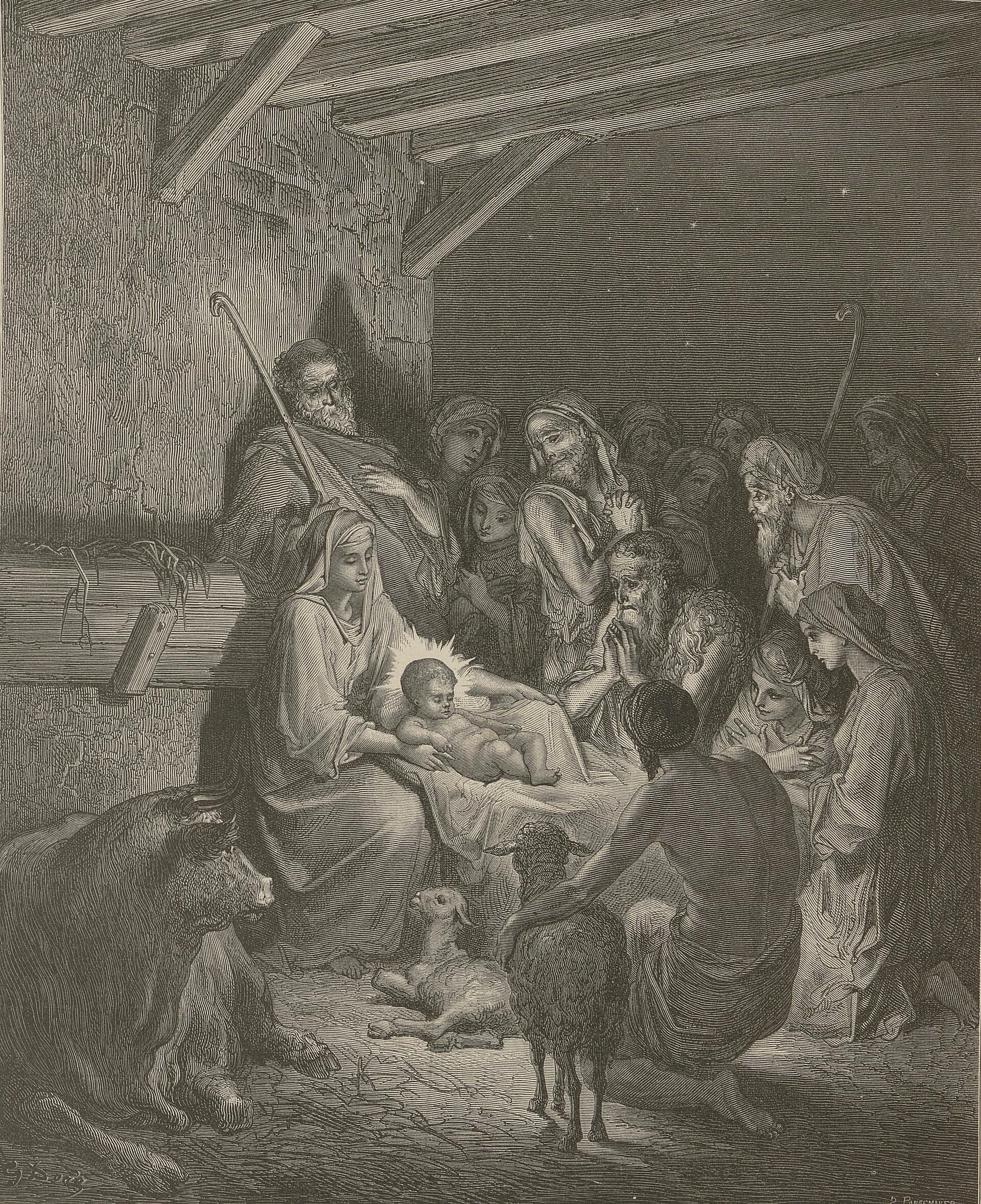
OUR Lord Jesus here speaks of Himself in His complex personality as God and Man, the Mediator between God and men. As such, He comes to us first at Bethlehem, "wrapped in swaddling clothes and lying in a manger." We behold Him a babe, a child, a man, a worker, a sufferer, a witness for the Truth of God and a victim condemned to die upon the tree. We behold Him dead in the grave and risen again as the Interposer between God and man. In that capacity we shall think of Him during this discourse.
OUR Lord Jesus here speaks of Himself in His complex personality as God and Man, the Mediator between God and men. As such, He comes to us first at Bethlehem, "wrapped in swaddling clothes and lying in a manger." We behold Him a babe, a child, a man, a worker, a sufferer, a witness for the Truth of God and a victim condemned to die upon the tree. We behold Him dead in the grave and risen again as the Interposer between God and man. In that capacity we shall think of Him during this discourse. It is the voice of the Man Christ Jesus, the eternal Son of God, which says, "Therefore does My Father love Me, because I lay down My life, that I might take it again." The Father feels boundless love to Him who, for us men, and for our redemption, came down from Heaven and took upon Himself our nature, and being found in fashion as a man, became obedient unto death, even the death of the Cross. "Therefore God also has highly exalted Him," or, to use His own words, "Therefore does My Father love Me." At this time we shall not keep strictly to the text but shall introduce other truths related to it. The run of our discourse will be somewhat as follows—First, consider the Father's love to Jesus because of His death and resurrection. Secondly, consider the Father's complacency in us on that account. Then, thirdly, consider our love to Jesus on this account. And, fourthly, consider our consequent fellowship with the Father. I. First, CONSIDER THE FATHER'S LOVE TO CHRIST JESUS BECAUSE OF HIS DEATH AND RESURRECTION. This love was exceedingly sweet to Jesus. Persecuted by men and sometimes depressed in His own spirit, He comforts Himself with this, "Therefore does My Father love Me, because I lay down My life, that I might take it again." To be well-pleasing to the Father was everything with our Lord Jesus Christ.
Therefore doth my Father love me - As I shall be shortly crucified by you, do not imagine that I am abandoned by my heavenly Father, and therefore fall thus into your hands. The Father loveth me particularly on this account, because I am going to lay down my life for the life of the world. Again, do not suppose that I shall be put to death by your rulers, because I have not strength to resist them. I Lay Down my life voluntarily and cheerfully; no one can take it away from me, see Joh 10:18; and I shall give you the fullest proof of my supreme power by raising, in three days, that very crucified, wounded body from the grave.
A commentator
Albert Barnes1798–1870
Notes, Explanatory and Practical, on the Old and New Testaments (1832-1869)
proposed
I lay down my life - I give myself to die for my people, in Jewish and pagan lands. I offer myself a sacrifice to show the willingness of my Father to save them; to provide an atonement, and thus to open the way for their salvation. This proves that the salvation of man was an object dear to God, and that it was a source of special gratification to him that his Son was willing to lay down his life to accomplish his great purposes of benevolence.
The words behind it
16 Greek wordsEvery Greek word of this verse in the order it stands, with what it means and the door to its own study. The last column counts the times a word stands in the whole Bible: the rarer the word, the more the places it appears belong together.
| Greek | Sound | Meaning | Word study | In the Bible |
|---|---|---|---|---|
| διὰ | dia | Because of | G1223 → | 664 times |
| τοῦτό | touto | this | G3778 → | 1381 times |
| με | me | Me | G3165 → | 1936 times |
| ὁ | ho | the | G3588 → | 19766 times |
| πατὴρ | pater | Father | G3962 → | 410 times |
| ἀγαπᾷ | agapa | loves | G25 → | 143 times |
| ὅτι | hoti | because | G3754 → | 1292 times |
| ἐγὼ | ego | I myself | G1473 → | 839 times |
| τίθημι | tithemi | lay down | G5087 → | 100 times |
| τὴν | ten | the | G3588 → | 19766 times |
| ψυχήν | psuchen | life | G5590 → | 103 times |
| μου, | mou | of Mine, | G3165 → | 1936 times |
| ἵνα | ina | that | G2443 → | 668 times |
| πάλιν | palin | again | G3825 → | 139 times |
| λάβω | labo | I may take | G2983 → | 257 times |
| αὐτήν. | auten | it. | G846 → | 5565 times |
διὰBecause of
diaG1223 →664 times
τοῦτόthis
toutoG3778 →1381 times
μεMe
meG3165 →1936 times
ὁthe
hoG3588 →19766 times
πατὴρFather
paterG3962 →410 times
ἀγαπᾷloves
agapaG25 →143 times
ὅτιbecause
hotiG3754 →1292 times
ἐγὼI myself
egoG1473 →839 times
τίθημιlay down
tithemiG5087 →100 times
τὴνthe
tenG3588 →19766 times
ψυχήνlife
psuchenG5590 →103 times
μου,of Mine,
mouG3165 →1936 times
ἵναthat
inaG2443 →668 times
πάλινagain
palinG3825 →139 times
λάβωI may take
laboG2983 →257 times
αὐτήν.it.
autenG846 →5565 times
A shaded row is a word that stands 400 times or fewer in the Bible.
The walk
8 stopsEach card is a verse this one points to, and under it the verses that one points to in turn. Where several paths arrive at the same place, that place is listed first: the text keeps returning to it.
Through
John 10:11I am the good shepherd. The good shepherd lays down His life for the sheep.
it leads to
- Psalms 23:1
The LORD is my shepherd; I shall not want.
- John 10:14–15
I am the good shepherd. I know My sheep and My sheep know Me,
- John 15:13
Greater love has no one than this, that he lay down his life for his friends.
- Revelation 7:17
For the Lamb in the center of the throne will be their shepherd. ‘He will lead them to springs of living water,’ and ‘God will wipe away every tear from their eyes.’”
- Isaiah 40:11
He tends His flock like a shepherd; He gathers the lambs in His arms and carries them close to His heart. He gently leads the nursing ewes.
- Psalms 23:1
Through
Hebrews 2:9But we see Jesus, who was made a little lower than the angels, now crowned with glory and honor because He suffered death, so that by the grace of God He might taste death…
it leads to
- Philippians 2:7–9
but emptied Himself, taking the form of a servant, being made in human likeness.
- Revelation 5:9
And they sang a new song: “Worthy are You to take the scroll and open its seals, because You were slain, and by Your blood You purchased for God those from every tribe and…
- Philippians 2:7–9
Through
John 10:18No one takes it from Me, but I lay it down of My own accord. I have authority to lay it down and authority to take it up again. This charge I have received…
it leads to
- Titus 2:14
He gave Himself for us to redeem us from all lawlessness and to purify for Himself a people for His own possession, zealous for good deeds.
- Titus 2:14
Where this verse is studied
On this page
Studies25
On this verse
About John
This page draws on 16 works. Open the list of works
This page draws on Adam Clarke, Commentary on the Bible; Albert Barnes, Notes, Explanatory and Practical, on the Old and New Testaments (1832-1869); Augustine of Hippo, Tractates on John 47; Bonaventure, Commentary on John, Chapter 10; Charles Spurgeon, The Metropolitan Tabernacle Pulpit, Sermon No. 2117: “The Father's Love to His Dying Son” (lightly modernized text, CCEL edition); Cyril of Alexandria, Commentary on the Gospel of John, Book 6; Frederic Godet, Commentary on the Gospel of John; Hippolytus of Rome, Hippolytus Refutation of All Heresies Book X; Jamieson, Fausset & Brown, Commentary Critical and Explanatory on the Whole Bible; John Chrysostom, Homily on the Gospel of John 60; John Gill, Exposition of the New Testament (1746-1748); John Wesley, Explanatory Notes upon the New Testament; Matthew Henry, Commentary on the Whole Bible; Theophylact of Ohrid, Catena Aurea by Aquinas; Theophylact of Ohrid, Commentary on John and Thomas Aquinas, Commentary on John.