

167–63 BC · Featured Study · The World Jesus Was Born Into
The Maccabean Revolt
For four hundred years, no prophet speaks. Malachi’s last word closes the Hebrew Bible, and between his voice and John the Baptist’s, Judea changes hands four times — Persia, Alexander, the Ptolemies, the Seleucids — each new king a little less patient than the last. Then, in 167 BC, a Seleucid king walks into the Holy of Holies, strips its gold, and has a pig sacrificed on the altar of the LORD. What happens next — an old priest’s refusal, his five sons’ revolt, a temple won back and rededicated in eight days — becomes a feast still kept generations later, the night Jesus himselfis found walking in that same temple, in winter, in Solomon’s colonnade. The four hundred silent years were not silent. They were the forge the world of the Gospels was made in.
Gustave Doré, Mattathias and the Apostate, 1866. Public domain.
Summary
This page tracks four centuries between Malachi and Matthew through two timelines, a desecrated altar, a family's revolt, and the fast that became Hanukkah. It closes on the same feast, five generations later, where Jesus makes His own claim in Solomon's colonnade.
- Two drawn-to-scale timelines set the revolt's 33 years against 400 years of foreign rule.
- Antiochus IV's altar desecration and the Daniel 11:36 reading split into two named positions.
- 2 Maccabees' martyrs, Eleazar and the mother with her seven sons, anchor a resurrection hope Hebrews later echoes.
- The Hasmonean century explains where the Pharisees, Sadducees, and Essenes came from.
- Five roster voices and four further books are named for going deeper.
Four Empires, One Silence
Judea changes hands four times before anyone touches the altar: drawn to scale
- 400+ yrsMalachi to Matthew
- 167 BCthe altar defiled
- 8 daysHanukkah's first feast
- 80 yrsHasmonean independence
- John 10:22Jesus at the feast
The King Who Touched the Altar
Antiochus IV Epiphanes, and the desecration of 167 BC
Antiochus III had ruled Judea lightly after winning it from the Ptolemies in 198 BC. His son took the throne calling himself Epiphanes— “God Manifest” — a title Judea’s own writers answered with a pun: Epimanes, “the Madman.” After a humiliating retreat from Egypt in 168 BC, Antiochus IV turned his frustration on Jerusalem. His soldiers plundered the Temple treasury, butchered thousands, and in December 167 BC erected an altar to Olympian Zeus over the altar of burnt offering — what 1 Maccabees, borrowing Daniel’s own phrase, calls the abomination that maketh desolate (1 Macc 1:54; Dan 11:31).
1 Maccabees describes swine and other unclean animals offered where they should never have been (1:47); Josephus is more exact — he names the animal outright, a pig sacrificed on the altar of the LORD (Antiquities 12.253). Sabbath-keeping, circumcision, and possession of the Torah were made capital crimes. It is the single most concentrated assault on the Jewish faith the Bible’s own timeline records — and it happens between the Testaments, where most readers never look.
“His forces will rise up and desecrate the temple fortress. They will abolish the daily sacrifice and set up the abomination of desolation.” Daniel 11:31 (BSB)
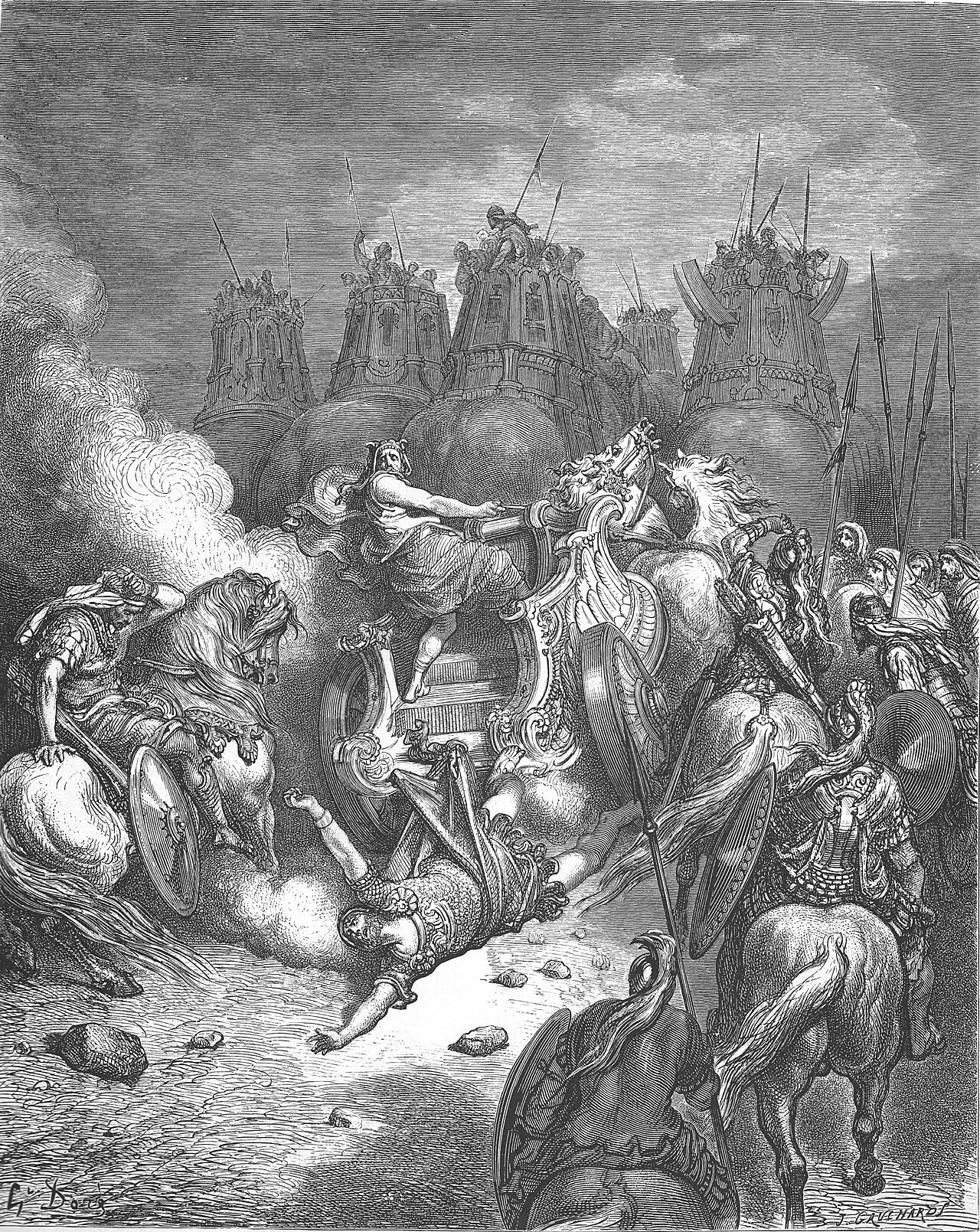
He did not go unanswered by history either. 1 Maccabees tells it plainly: on campaign in Persia, robbed of a temple he tried to plunder in Elymais and shaken by news of Judas’s victories, Antiochus fell ill and died in grief and remorse (1 Macc 6:1–16). 2 Maccabees tells the same death in its own, more theological register — a king eaten from within, forced at last to acknowledge the God he had defied (2 Macc 9). Doré painted the second account.
Daniel 8's little horn, and where readers part ways at 11:36positions, and who holds them
Daniel 8’s little horn — growing out of one of the Greek goat’s four horns, waxing great toward the glorious land (8:9) — is read almost universally, across confessional lines, as Antiochus IV Epiphanes. That much is the widely held historical reading, and it is not seriously disputed.
Daniel 11 is where the roads split, and it is worth naming both.
◈Where Daniel 11:36 onward is read to reachcontested
Antiochus, in full
Most historical-critical scholarship, and many evangelical commentators besides, read the chapter’s back half the same way as its front: Antiochus IV, verse by verse, to the end. On this reading Daniel 11:21–35’s precision about the Ptolemaic-Seleucid wars is the whole apologetic point, and 11:36–45 simply continues it.
Antiochus as the type: the site’s own frame
Dispensational premillennial readers — the frame this site works from — take the turn at verse 36 as deliberate. The chapter’s final verses describe a king camped between the seas and the sacred mountain, but Antiochus’s actual final campaign and death took place far off in Persia (1 Macc 6:1–16), not near Jerusalem. On this reading the text leaps forward to a still-future figure, with Antiochus standing as the type — the same pattern Jesus himself uses when he takes Daniel’s already-fulfilled abomination and applies it forward again (Matt 24:15). Chuck Missler’s Daniel(Koinonia House) teaches the chapter this way, reading 11:36–45 alongside 2 Thessalonians 2’s “man of sin.”
The Ones Who Would Not Bend
2 Maccabees 6-7: the persecution's human cost, and its witness
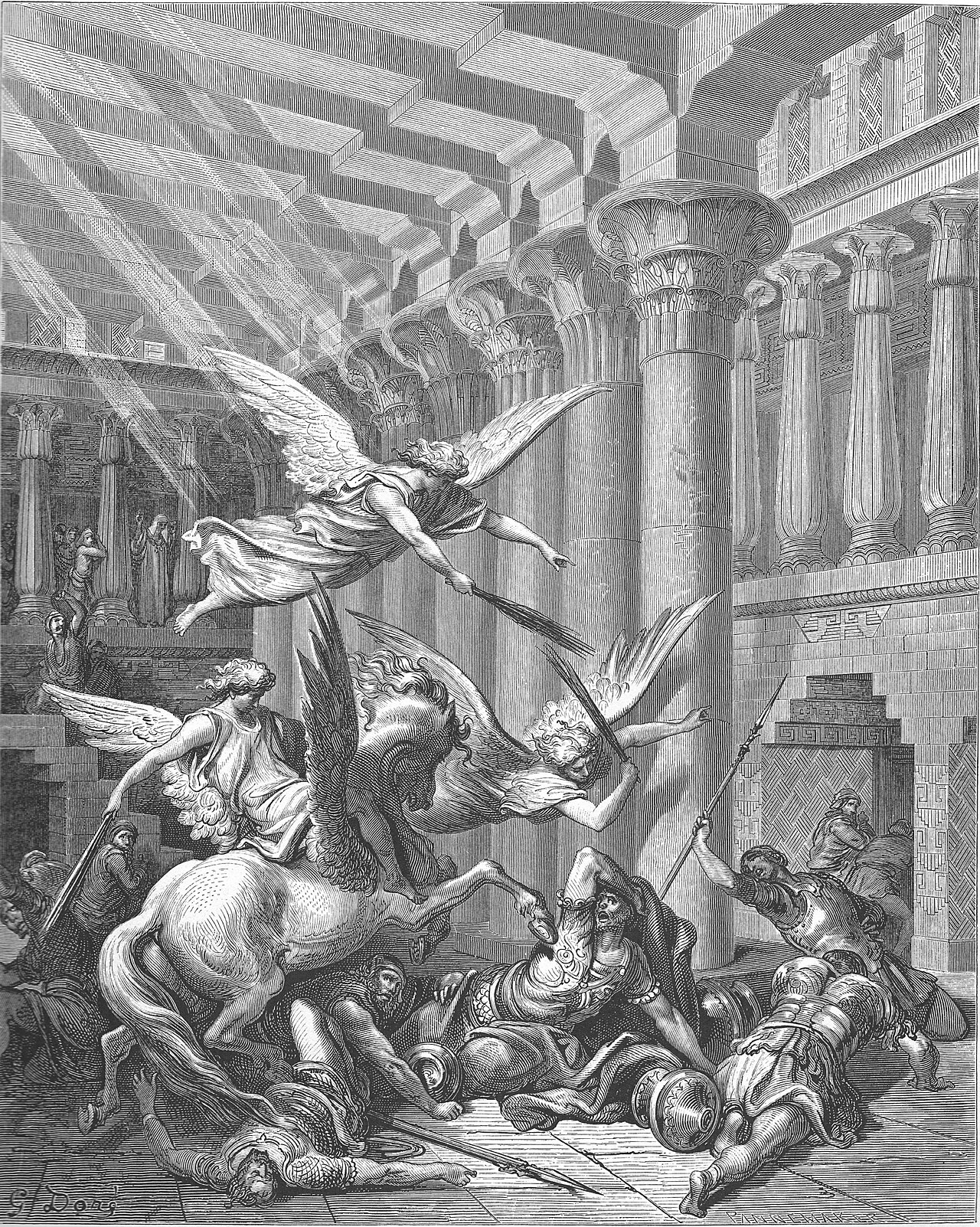
Before Antiochus ever reached the Temple, 2 Maccabees opens with a story that makes his later violation land harder: a royal official named Heliodorus, sent by the previous king to seize the treasury, is stopped inside it — struck down, the book says, by a rider and two young men, and leaves testifying to what he had tried to rob (2 Macc 3). The house had been guarded once. Then it was not.
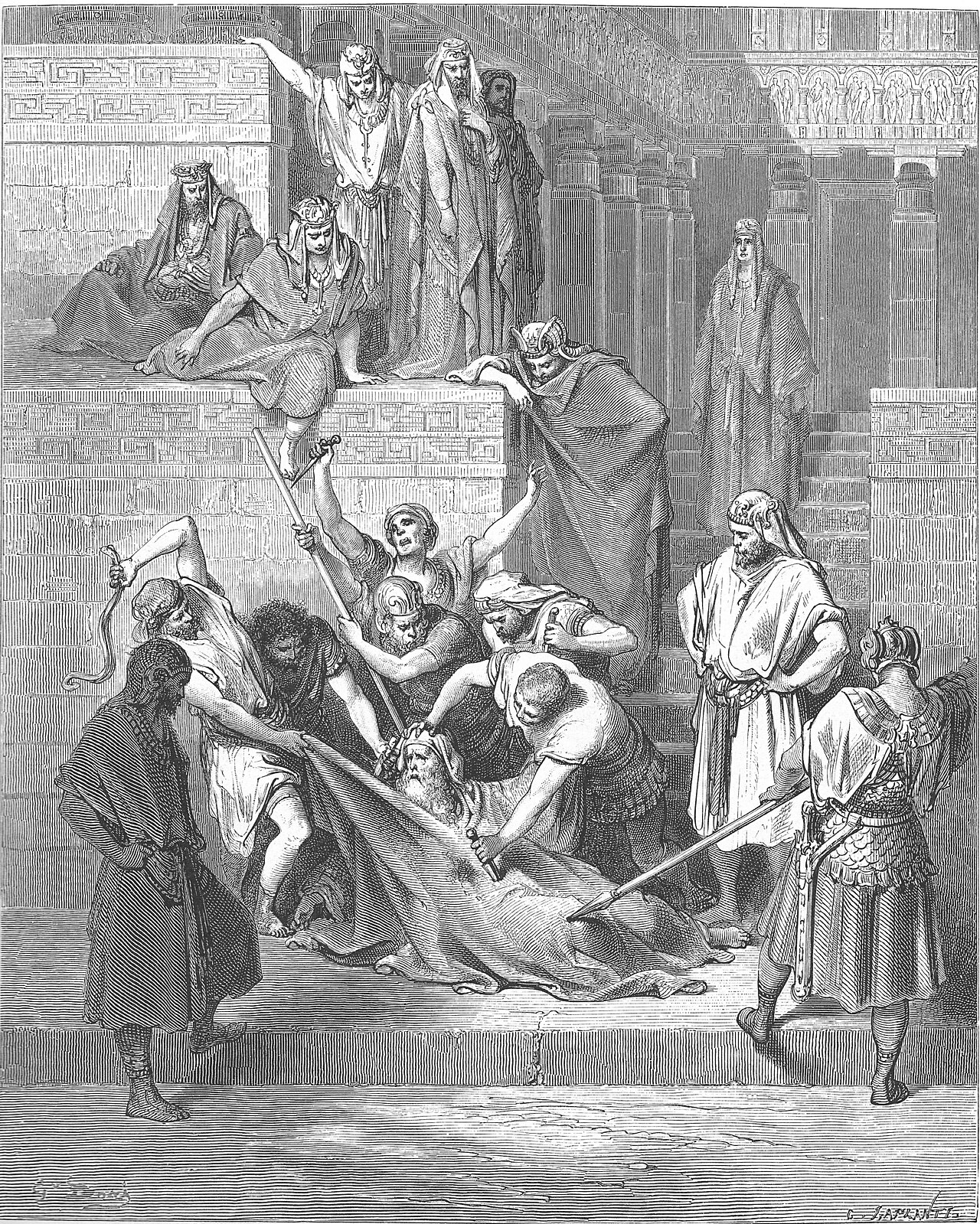
Under the persecution itself, an aged scribe named Eleazar is ordered to eat pork — or simply pretend to, and quietly eat something else while appearing to comply. He refuses even the pretense: the young are watching, he says, and would learn to compromise (2 Macc 6:18–31). Then comes the book’s theological center — a mother watching seven sons tortured to death one at a time rather than break the law, each answering the king with a confession that God will raise them again, because he made the world out of nothing (2 Macc 7:9, 28).
Women received back their dead, raised to life again. Others were tortured and refused their release, so that they might gain a better resurrection.
Hebrews 11:35 (BSB)
cf. 2 Maccabees 7
The combination — refusing an offered release, choosing death, hoping for a resurrection better than mere restoration to this life — matches the mother and her seven sons and is not found combined this way anywhere else in Second Temple literature (Harold W. Attridge, The Epistle to the Hebrews, Hermeneia, Fortress Press, 1989, ad loc. 11:35). This is a widely recognized allusion, not a formal quotation.
An Old Priest Says No
Mattathias and Judas: the revolt
In the village of Modein, a priest named Mattathias is ordered to offer a pagan sacrifice before his own people, as an example. He refuses, kills both the Jew who steps forward to comply and the royal officer who demanded it, tears down the altar, and flees to the hills with his five sons, calling out for anyone zealous for the law and the covenant to follow him (1 Macc 2:15–28). Nobody watching that day expects it to become a war, let alone a war Judea wins.
Mattathias dies within the year. His son Judas, nicknamed Maccabeus— “the Hammer” — takes command and wins one battle after another against Seleucid armies that badly outnumber him: Apollonius, Seron, then the generals Antiochus sends in his place while he campaigns in the east. By 164 BC the Temple mount is back in Jewish hands.
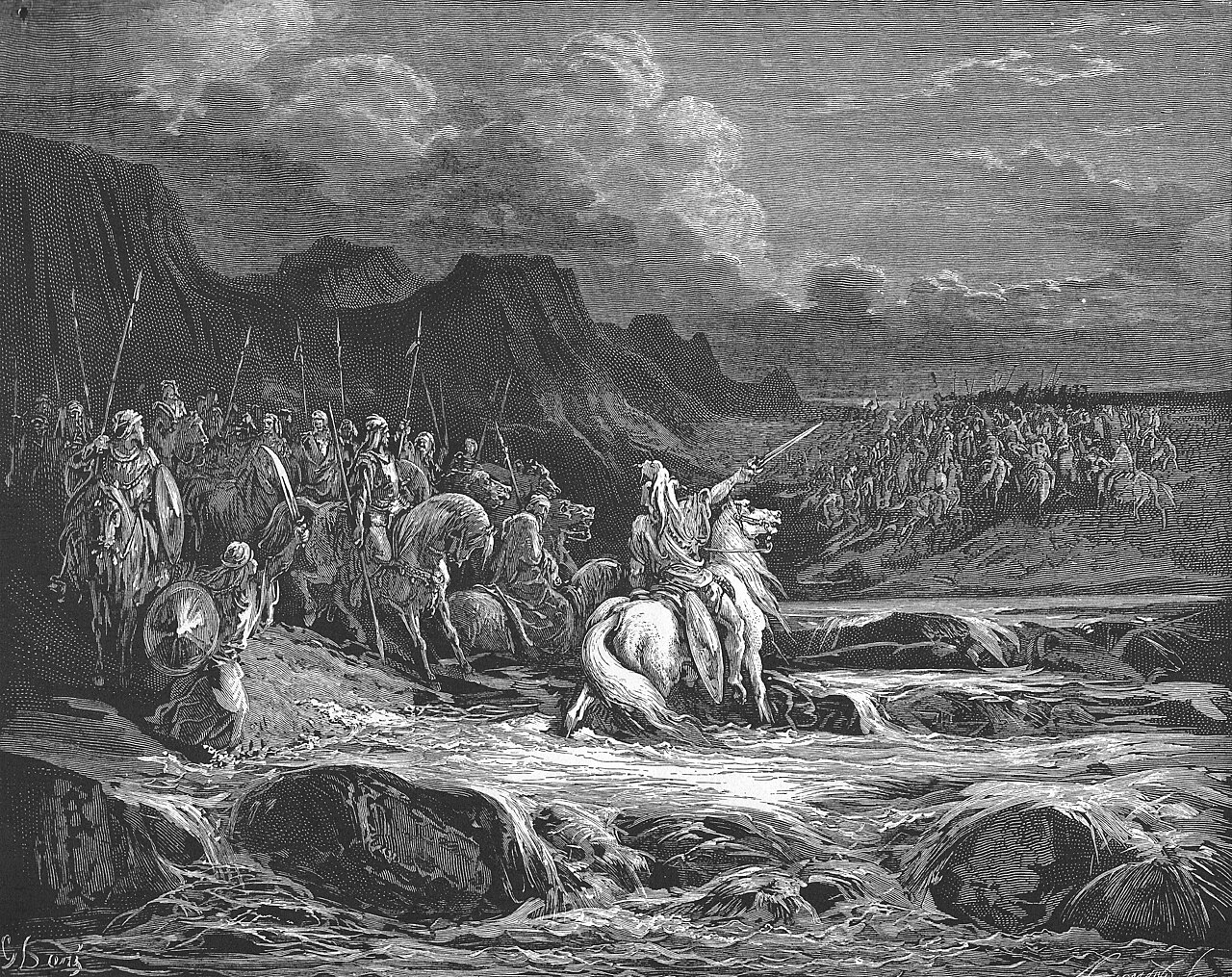
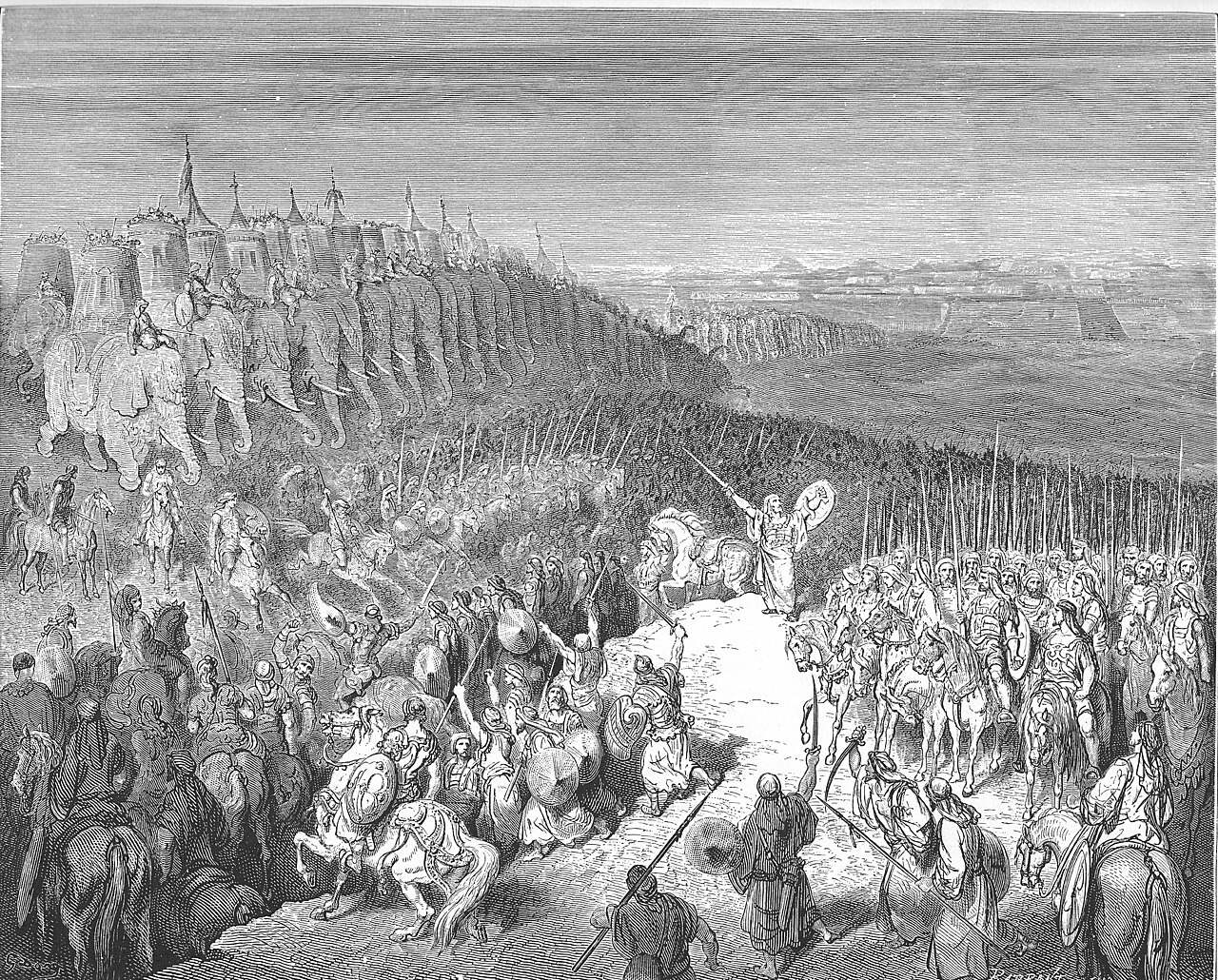
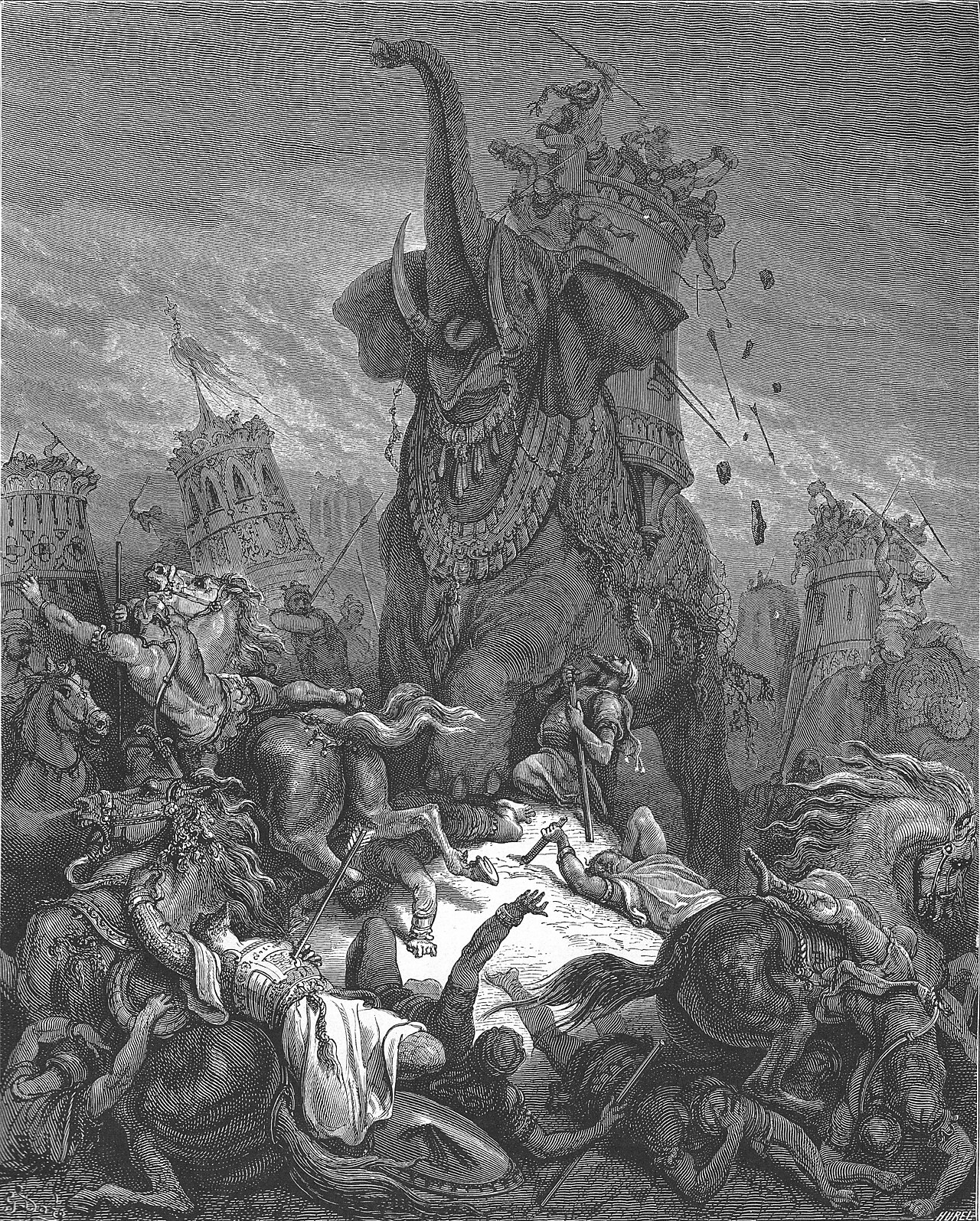
The revolt cost the family almost everything. Judas himself falls in battle at Elasa in 160 BC, badly outnumbered and refusing to retreat (1 Macc 9:1–22). His brothers Jonathan, then Simon, carry the fight on through both war and diplomacy until Judea stops paying tribute to anyone — real independence, the book says, dating from 142 BC (1 Macc 13:41).
Eight Days That Became a Festival
1 Maccabees 4: the rededication, and Hanukkah's real origin
When Judas retakes the Temple mount, he finds the sanctuary desolate, the altar profaned, and the gates burned. He tears down the defiled altar and stores its stones aside until a prophet should arise to say what to do with them (1 Macc 4:44–46) — a small line that shows the era knew exactly what it was still waiting for. New stones are cut, a new altar is built, and on the 25th of Kislev — the very anniversary of the desecration, three years to the day — the Temple is rededicated with sacrifices, singing, and lamps lit (1 Macc 4:52–59).
Judas and the whole assembly decree that the days of the rededication should be kept every year afterward, for eight days from the 25th of Kislev, with gladness and joy (1 Macc 4:59). 2 Maccabees explains the number of days: the fighters had been unable to keep the eight-day feast of Tabernacles while hiding in the hills, so they kept it now, belatedly, at the altar they had just won back (2 Macc 10:6–8). That is the festival’s own explanation for itself — a delayed Sukkot, not yet the miracle of the oil.
The famous story of one day’s oil lasting eight is a later rabbinic tradition (the Babylonian Talmud, tractate Shabbat 21b, redacted centuries afterward), not something either Maccabees book narrates. Naming that difference honestly is the site’s own handling rule for rabbinic tradition: real, worth knowing, and named for what it is and when it arose — not confused with the festival’s own founding account.
A name in the text itself
John 10:22 calls it ta enkainia— “the dedication” — the ordinary Greek word for a renewal or rededication, used nowhere else in the New Testament. The Gospel names the very feast this chapter of history created.
Priest-Kings, and the Parties They Left Behind
the Hasmonean century, 142-63 BC
Independence did not stay simple. Simon is confirmed high priest and ethnarch only until a trustworthy prophet should arise (1 Macc 14:41) — a provisional title, because the Hasmoneans were priests, not kings, by the Torah’s own line of David. His grandson Aristobulus I was the first to wear a crown anyway. Under this dynasty the priesthood and the throne fused into one office, and Judea’s religious life split in response: the Pharisees opposed the fusion of crown and altar even as they grew as popular teachers of the law; the Sadducees, priestly and aristocratic, generally supported the arrangement that kept them in power; the Essenes withdrew from the Temple altogether, judging the whole priestly line compromised (Josephus, Antiquities13.10.5–6).
By 63 BC two Hasmonean brothers were fighting each other for the throne, and one of them invited Rome in to settle it. Pompey took Jerusalem that year, entered the Holy of Holies himself, and ended Jewish sovereignty for good. The parties the revolt’s own success had hardened into — Pharisee, Sadducee, Essene — are exactly the parties the Gospels meet a century later.
Jesus at Hanukkah
John 10:22-23: the whole page lands here
A hundred and ninety years after Judas cleansed the altar, the feast his revolt created is still kept. John places Jesus in Jerusalem, in winter, walking the covered colonnade Solomon himself was said to have built on the Temple’s east side — the one part of Herod’s vastly rebuilt Temple popular memory still called by the old king’s name.
“At that time the Feast of Dedication took place in Jerusalem. It was winter, and Jesus was walking in the temple courts in Solomon’s Colonnade.” John 10:22-23 (BSB)
It is not incidental staging. At that same feast, standing where the memory of a defiled and reclaimed altar was thickest in the air, Jesus tells the crowd around him plainly: I and the Father are one(John 10:30) — and they pick up stones to kill him for it (10:31–33). The festival born from a fight over who may be worshiped at that altar becomes the setting where the true claim is made and rejected at the very same spot. Hanukkah asked who deserves the Temple. John 10 answers it.
Read John 10 in full →The Voices on This History
with the work named
Daniel (Koinonia House commentary)
Marcus Brown's formative teacher. Reads Daniel 11's Ptolemaic-Seleucid detail as prophecy written before the fact and matched against independently datable history, one of Scripture's clearest test cases for predictive prophecy, and reads 11:36 onward as the turn toward a still-future figure, Antiochus standing as the type.
The Unseen Realm (Lexham Press, 2015)
Cite-only, ≤50 words, per the modern-voice rule. Reads Daniel 10's “prince of Persia” and “prince of Grecia” as real spiritual powers contesting the nations behind the visible handovers this page's own timeline traces: the four empires as a war fought on two levels at once.
An Introduction to the Apocrypha (Oxford University Press, 1957)
Standard scholarly account of 1 and 2 Maccabees' composition, sources, and reception: the reference most later introductions to the Apocrypha build on.
Introducing the Apocrypha: Message, Context, and Significance (Baker Academic, 2002)
On 2 Maccabees' theology: its explicit bodily resurrection hope and creation-from-nothing statement (7:9, 7:28) as a landmark witness to beliefs the Gospels find already in place among the Pharisees.
Jewish Literature Between the Bible and the Mishnah (Fortress Press, 2005)
Places the Maccabean literature within the wider span of Second Temple Jewish writing: the same four centuries this page's timeline covers, read as a connected literary and theological development, not a gap.
Marcus Brown's own commentary leads above all; within a tier, all voices are equal.
Read the Great Books
the works that carry this history: go further than this page
1 Maccabees
c. 100 BC: a labeled study resource, not canon
The restrained, historiographic account of the revolt itself, from the desecration to John Hyrcanus’s succession — MannaFest’s own reader, full text.
READ IT →2 Maccabees
c. 124–100 BC: a labeled study resource, not canon
The theological telling — Heliodorus, the martyrs of chapters 6–7, the resurrection hope — MannaFest’s own reader, full text.
READ IT →Antiquities of the Jews, Book 12
Flavius Josephus, c. AD 94 · Whiston translation
An independent ancient historian narrating the same revolt from outside the Maccabees books — the source for the pig on the altar, named outright.
READ IT FREE →The Apocrypha and Pseudepigrapha of the Old Testament, vol. I
R. H. Charles, ed. · 1913
The standard early critical edition, with introductions and notes to both Maccabees books — still the citation point for later scholarship.
READ IT FREE →Jerome, translating the Vulgate around AD 391, noted plainly that the first book survives in Hebrew and the second only in Greek:
The first book of Maccabees is found in Hebrew, but the second is Greek, as can be proved from the very style.
Jerome · Prologus Galeatus (“the Helmeted Preface”), c. AD 391
Keep studying
Read it4
On this page
Studies7
People1
Go further1