
Genesis 3:17
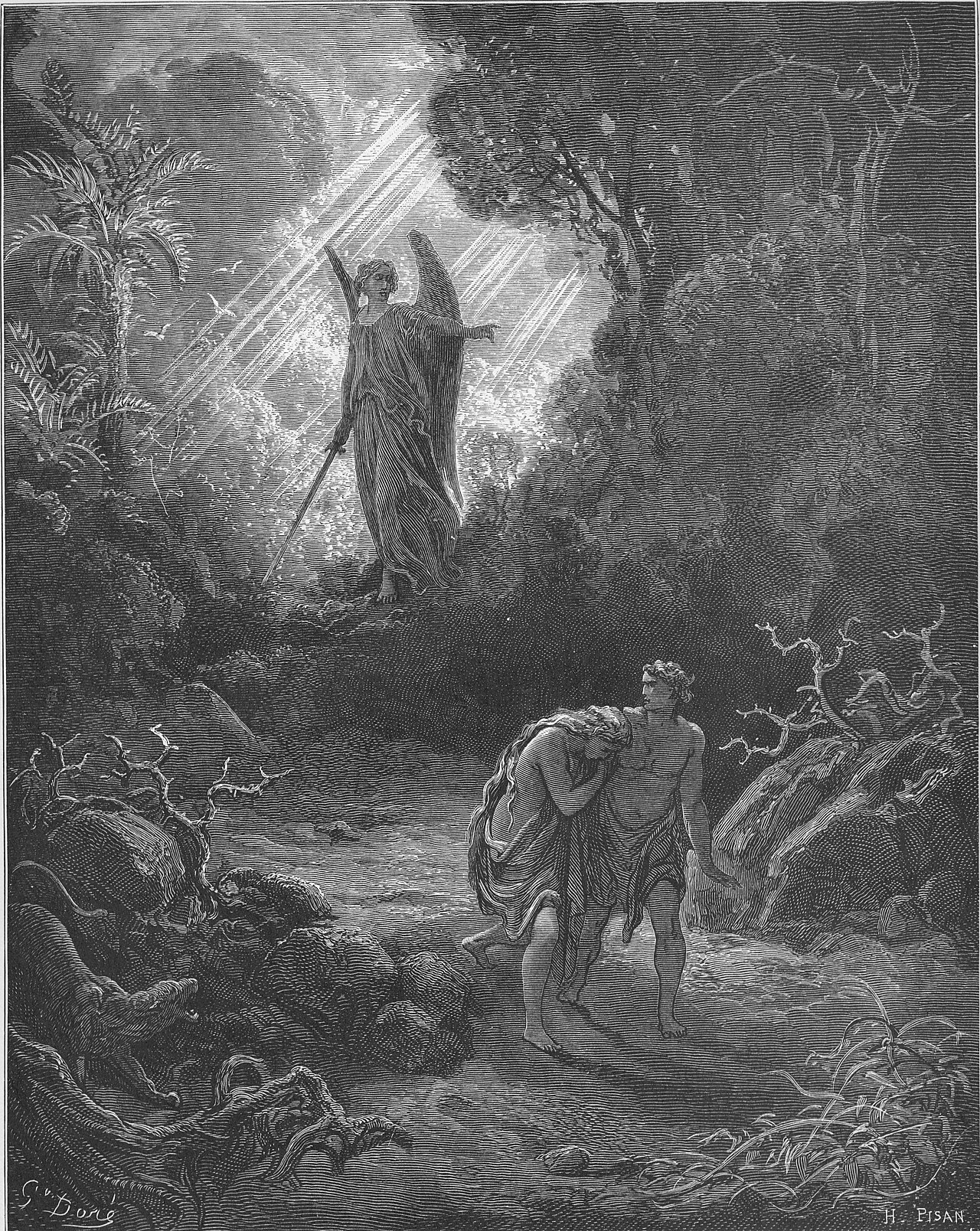
in Genesis 3And to Adam He said: “Because you have listened to the voice of your wife and have eaten from the tree of which I commanded you not to eat, cursed is the ground because of you; through toil you will eat of it all the days of your life.
BSB
The same verse in ASV and KJV ▾
ASV
And unto Adam he said, Because thou hast hearkened unto the voice of thy wife, and hast eaten of the tree, of which I commanded thee, saying, Thou shalt not eat of it: cursed is the ground for thy sake; in toil shalt thou eat of it all the days of thy life;
KJV
And unto Adam he said, Because thou hast hearkened unto the voice of thy wife, and hast eaten of the tree, of which I commanded thee, saying, Thou shalt not eat of it: cursed is the ground for thy sake; in sorrow shalt thou eat of it all the days of thy life;
⋯
This verse in Genesis 3
Commentary
17 notes on this verseThe two sentences seem to have a certain similarity, yet in that similarity there is a great difference. There is a difference in the way a person eats of the earth, as the serpent is related to have done and the manner in which this is recorded of the man: 'In sadness shall you eat.' That very phrase 'in sadness' makes the precise difference. Note how important this difference is.
This site's exposition
cursed is the ground because of you
on Genesis 3:17-18
The curse falls on the ground the man stands on. Spurgeon's sermon on this verse traces it there, glancing off the man onto the soil under his feet. Work stood before this at Genesis 2:15; what is added here is resistance, thorns and thistles, and toil for every meal.
The record, by era
The Church Fathers5 voices
Up to the fall of man, therefore, from the beginning God was simply good; after that He became a judge both severe and, as the Marcionites will have it, cruel. ... Immediately the earth is also cursed, which before was blessed. Immediately spring up briers and thorns, where once had grown grass, and herbs, and fruitful trees. Immediately arise sweat and labour for bread, where previously on every tree was yielded spontaneous food and untilled nourishment. Thenceforth it is "man to the ground," and not as before, "from the ground; to death thenceforth, but before, to life; thenceforth with coats of skins, but before, nakedness without a blush. Thus God's prior goodness was from nature, His subsequent severity from a cause. The one was innate, the other accidental; the one His own, the other adapted; the one issuing from Him, the other admitted by Him.
To what kind of a crown, I ask you, did Christ Jesus submit for the salvation of both sexes? He who is the head of man and the glory of woman and the husband of the church—what kind of crown? It was made from thorns and thistles. They stood as a symbol of the sins that the soil of the flesh brought forth for us but that the power of the cross removed, blunting every sting of death since the head of the Lord bore its pain. And beside the symbol, we are reminded also of the scornful abuse, the degradation and the vileness of his cruel tormentors.
(Verse 17.) Cursed is the ground because of your actions. The works here do not refer to cultivating the land, as many think, but rather sins are signified. As it is written in Hebrew: And Aquila does not disagree, saying: Cursed is the soil because of you. And Theodotion: Cursed is the earth because of your transgression.
l know that you are wearied by the excess of words, but stir yourselves a little, I beseech you, lest we leave the sentence incomplete and depart while the judge is still sitting. We are in fact close to the end now. So let us see what he says to the man after the woman, and what kind of punishment he inflicts on him. "Whereas to Adam he said: 'Because you listened to your wife's words and ate from this one tree I told you not to eat from, accursed shall be the soil as you till it. In pain may you eat from it all the days of your life. Thorns and thistles let it yield you, and you are to eat the grass of the field. In the sweat of your brow may you eat your bread until you return to the soil whence you were taken; for dust you are and to dust you are to return." [ Gen 3:17, Gen 3:18, Gen 3:19 ] Great is the Lord's care and beyond all telling displayed here for the human being but let us listen precisely to each word spoken. "Whereas to Adam he said: 'Because you listened to your wife's words and ate from this one tree I told you not to eat from." Since you listened to your wife, he is saying, and ate from the tree, and put the advice from her ahead of my command and weren't prepared to keep away from this one single tree which I told you not to eat from (surely, after all, I didn't bid you keep away from many? one only and yet you couldn't keep away from that, but forgot my commands and were overborne by your wife). Hence you are to learn through your very labors how much evil you have committed. Let men give good heed, let women give good heed the former, that they may have nothing to do with those people advising evil actions, and the latter, that they may ad vise nothing of the sort. […]
After all, you are head of your wife, and she has been created for your sake; but you have inverted the proper order: not only have you failed to keep her on the straight and narrow but you have been dragged down with her, and whereas the rest of the body should follow the head, the contrary has in fact occurred, the head following the rest of the body, turning things upside down.
10 more voices on this verse
The Church Fathers5 voices
Behold the reminders of the curse: thorns it will bring forth, he says, and thistles so as to give rise to great labor and discomfort, and I will ensure you pass the whole time with pain so that this experience may prove a brake on your getting ideas above your station, and you may instead have a thought to your own makeup and never again bear to be deceived in these matters."You are to eat of the grass of the field. In the sweat of your brow may you eat yourbread." See how after his disobedience everything is imposed on him in an opposite way to his former life style: My intention in bringing you into the world, he is saying, was that you should live your life without pain or toil, difficulty or sweat, and that you should be in a state of enjoyment and prosperity, and not be subject to the needs of the body but be free from all such and have the good fortune to experience complete freedom. Since, however, such indulgence was of no benefit to you, accordingly I curse the ground so that it will not in future yield its harvest as before without tilling and ploughing. Instead I invest you with great labor, toil and difficulty, and with unremitting pain and despair, and I am ensuring that everything you do is achieved only by sweat so that under pressure from these you may have continual guidance in keeping to limits and recognizing your own makeup.
Adam was created pure by God for his service. All these creatures were given to him to serve him. He was destined to be the lord and king of all creatures.
Since man had shown great disobedience, God cast him forth from his life in paradise. God curbed man's spirit for the future, so that he might not leap farther away. He condemned him to a life of toil and labor, speaking to him in some such fashion as this: "The ease and security that were yours in abundance led you to this great disobedience. They made you forget my commandments. You had nothing to do. That led you to think thoughts too haughty for your own nature.… Therefore, I condemn you to toil and labor, so that while tilling the earth, you may never forget your disobedience and the vileness of your nature."
A commentator
Augustine of HippoTWO BOOKS ON GENESIS AGAINST THE MANICHAEANS 2.20.30 · Written before 430.
proposed
What shall we say about the judgment pronounced against the man? Are we perhaps to think that the rich, for whom the necessities of life come easily and who do not labor on the earth, have escaped this punishment? It says, "The earth will be cursed for you in all your works, and you shall eat from it in sadness and groaning all the days of your life. It will bring forth thorns and thistles for you, and you will eat the grain of your field. In the sweat of your brow you will eat your bread until you return to the earth from which you were taken, for you are earth, and you will return to the earth." It is certainly clear that no one escapes this sentence. For anyone born in this life has difficulty in discovering the truth because of the corruptible body. For as Solomon says, "The body that is corrupted weighs down the soul, and the earthly habitation presses down the mind that thinks many thoughts." These are the labors and sorrows that man has from the earth. The thorns and thistles are the prickings of torturous questions or thoughts concerned with providing for this life.
After He had decreed concerning Eve and repentance failed to spring up in Adam, He then turned to him as well in punishment, saying, " Because you listened to the voice of your wife and were wheedled into eating of the Tree from which I …
The Medieval Church2 voices
By divine judgment, the man incurred the penalty of labor and anguish, the penalty of hunger and want, the penalty of death and dissolution into dust, as Scripture says: Cursed is the earth in your work.
But to Adam he said: Because you have listened to the voice of your wife and have eaten from the tree concerning which I commanded you not to eat, cursed is the ground because of you.
The Puritans and the Awakening1 voice
And unto Adam he said,....
The Nineteenth Century2 voices
Unto Adam he said - The man being the last in the transgression is brought up last to receive his sentence: Because thou hast hearkened unto the voice of thy wife - “thou wast not deceived, she only gave and counseled thee to eat; this thou shouldst have resisted;” and that he did not is the reason of his condemnation.
A commentator
Jamieson, Fausset & Brown1802–1910
Commentary Critical and Explanatory on the Whole Bible (1871)
proposed
unto Adam he said--made to gain his livelihood by tilling the ground; but what before his fall he did with ease and pleasure, was not to be accomplished after it without painful and persevering exertion.
quarantine:debris (2026-07-29) — starts-lowercase
The words behind it
23 Hebrew wordsEvery Hebrew word of this verse in the order it stands, with what it means and the door to its own study. The last column counts the times a word stands in the whole Bible: the rarer the word, the more the places it appears belong together.
| Hebrew | Sound | Meaning | Word study | In the Bible |
|---|---|---|---|---|
| וּלְאָדָ֣ם | uladam | and to Adam | H121 → | 12 times |
| אָמַ֗ר | ʾamar | he said | H559 → | 5305 times |
| כִּֽי־ | ki- | for | H3588 → | 4482 times |
| שָׁמַעְתָּ֮ | shama'ta | you listened | H8085 → | 1159 times |
| לְק֣וֹל | lekol | to [the] voice of | H6963 → | 506 times |
| אִשְׁתֶּךָ֒ | ʾishtekha | wife your | H802 → | 781 times |
| וַתֹּ֙אכַל֙ | vatokhal | and you ate | H398 → | 810 times |
| מִן־ | min- | from | H4480 → | 1188 times |
| הָעֵ֔ץ | haetz | the tree | H6086 → | 328 times |
| אֲשֶׁ֤ר | ʾasher | which | H834 → | 5497 times |
| צִוִּיתִ֙יךָ֙ | tzivitikha | I commanded you | H6680 → | 494 times |
| לֵאמֹ֔ר | lemor | <to> saying | H559 → | 5305 times |
| לֹ֥א | lo' | not | H3808 → | 5168 times |
| תֹאכַ֖ל | tokhal | you must eat | H398 → | 810 times |
| מִמֶּ֑נּוּ | mimenu | from it | H4480 → | 1188 times |
| אֲרוּרָ֤ה | ʾarurah | [is] cursed | H779 → | 63 times |
| הָֽאֲדָמָה֙ | haadamah | the ground | H127 → | 225 times |
| בַּֽעֲבוּרֶ֔ךָ | baavurekha | for sake of you | H5668 → | 49 times |
| בְּעִצָּבוֹן֙ | beitzavon | in pain | H6093 → | 3 times |
| תֹּֽאכֲלֶ֔נָּה | tokhalenah | you will eat it | H398 → | 810 times |
| כֹּ֖ל | kol | all | H3605 → | 5413 times |
| יְמֵ֥י | yemei | [the] days of | H3117 → | 2304 times |
| חַיֶּֽיךָ׃ | chaiyeikha | life your | H2416 → | 498 times |
וּלְאָדָ֣םand to Adam
uladamH121 →12 times
אָמַ֗רhe said
ʾamarH559 →5305 times
כִּֽי־for
ki-H3588 →4482 times
שָׁמַעְתָּ֮you listened
shama'taH8085 →1159 times
לְק֣וֹלto [the] voice of
lekolH6963 →506 times
אִשְׁתֶּךָ֒wife your
ʾishtekhaH802 →781 times
וַתֹּ֙אכַל֙and you ate
vatokhalH398 →810 times
מִן־from
min-H4480 →1188 times
הָעֵ֔ץthe tree
haetzH6086 →328 times
אֲשֶׁ֤רwhich
ʾasherH834 →5497 times
צִוִּיתִ֙יךָ֙I commanded you
tzivitikhaH6680 →494 times
לֵאמֹ֔ר<to> saying
lemorH559 →5305 times
לֹ֥אnot
lo'H3808 →5168 times
תֹאכַ֖לyou must eat
tokhalH398 →810 times
מִמֶּ֑נּוּfrom it
mimenuH4480 →1188 times
אֲרוּרָ֤ה[is] cursed
ʾarurahH779 →63 times
הָֽאֲדָמָה֙the ground
haadamahH127 →225 times
בַּֽעֲבוּרֶ֔ךָfor sake of you
baavurekhaH5668 →49 times
בְּעִצָּבוֹן֙in pain
beitzavonH6093 →3 times
תֹּֽאכֲלֶ֔נָּהyou will eat it
tokhalenahH398 →810 times
כֹּ֖לall
kolH3605 →5413 times
יְמֵ֥י[the] days of
yemeiH3117 →2304 times
חַיֶּֽיךָ׃life your
chaiyeikhaH2416 →498 times
A shaded row is a word that stands 400 times or fewer in the Bible.
The walk
8 stopsEach card is a verse this one points to, and under it the verses that one points to in turn. Where several paths arrive at the same place, that place is listed first: the text keeps returning to it.
Through
John 16:33I have told you these things so that in Me you may have peace. In the world you will have tribulation. But take courage; I have overcome the world!”
it leads to
- John 14:27
Peace I leave with you; My peace I give to you. I do not give to you as the world gives. Do not let your hearts be troubled; do not be afraid.
- 1 John 5:4
because everyone born of God overcomes the world. And this is the victory that has overcome the world: our faith.
- 2 Thessalonians 3:16
Now may the Lord of peace Himself give you peace at all times and in every way. The Lord be with all of you.
- 1 John 4:4
You, little children, are from God and have overcome them, because greater is He who is in you than he who is in the world.
- Philippians 4:7
And the peace of God, which surpasses all understanding, will guard your hearts and your minds in Christ Jesus.
- John 14:27
Through
Genesis 5:29And he named him Noah, saying, “May this one comfort us in the labor and toil of our hands caused by the ground that the LORD has cursed.”
it leads to
- Matthew 24:37
As it was in the days of Noah, so will it be at the coming of the Son of Man.
- 2 Peter 2:5
if He did not spare the ancient world when He brought the flood on its ungodly people, but preserved Noah, a preacher of righteousness, among the eight;
- Hebrews 11:7
By faith Noah, when warned about things not yet seen, in godly fear built an ark to save his family. By faith he condemned the world and became heir of the righteousness that comes…
- Matthew 24:37
Where this verse is studied
By subject
Creation34 verses
Suffering35 verses
On this page
Studies41
On this verse
On this chapter
Show the next 6 titles
About Genesis
Who and where
1 name in this verse with a page on the site.
This page draws on 18 works. Open the list of works
This page draws on Adam Clarke, Commentary on the Bible; Ambrose of Milan, On Paradise, 15.75; Augustine of Hippo, TWO BOOKS ON GENESIS AGAINST THE MANICHAEANS 2.20.30; Bede, Commentary on Genesis (Hexaemeron); Bonaventure, Breviloquium, Part 3, Chapter 4; Charles Spurgeon, The Metropolitan Tabernacle Pulpit, Sermon No. 2299: Thorns and Thistles; Ephrem the Syrian, Commentary (church-history corpus); Jamieson, Fausset & Brown, Commentary Critical and Explanatory on the Whole Bible; Jerome, Hebrew Questions on Genesis; John Chrysostom, Commentary (church-history corpus); John Chrysostom, HOMILIES ON GENESIS 17.18; John Chrysostom, HOMILIES ON GENESIS 17.40-41; John Chrysostom, BAPTISMAL INSTRUCTION 2.4-5; John Gill, Exposition of the Old Testament (1748-1763); Matthew Henry, Commentary on the Whole Bible; Pseudo-Macarius, FIFTY SPIRITUAL HOMILIES 11.5; Tertullian, Against Marcion Book II and Tertullian, ON THE CROWN 14.3.