
Genesis 3:21
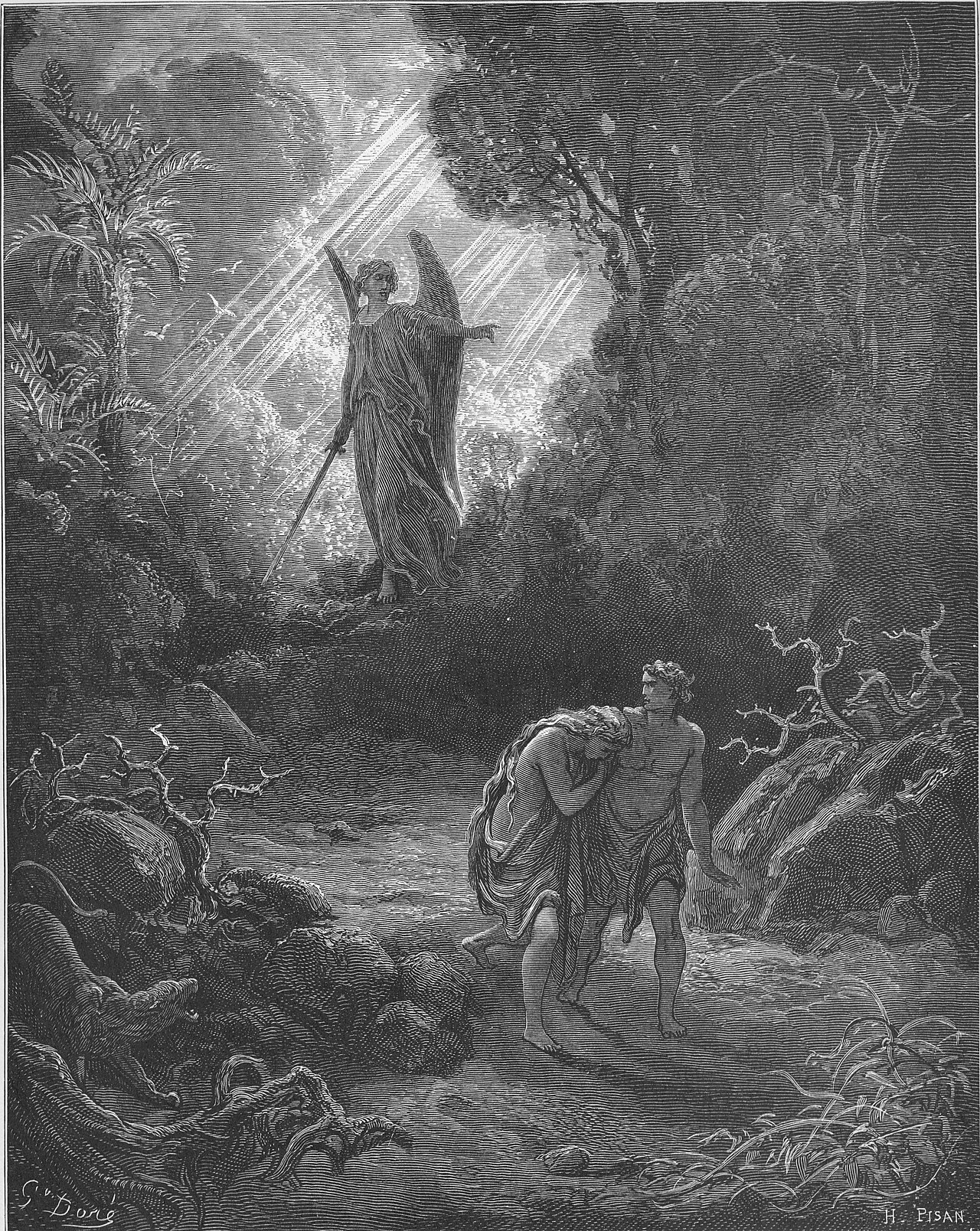
in Genesis 3And the LORD God made garments of skin for Adam and his wife, and He clothed them.
BSB
The same verse in ASV and KJV ▾
ASV
And Jehovah God made for Adam and for his wife coats of skins, and clothed them.
KJV
Unto Adam also and to his wife did the Lord God make coats of skins, and clothed them.
⋯
This verse in Genesis 3
Commentary
15 notes on this verseIt is said that God made those miserable garments with which the first man was clothed after he had sinned. "For God made skin tunics and clothed Adam and his wife." Therefore, those were tunics of skin taken from animals. For with such as these, it was necessary for the sinner to be dressed. It says, "with skin tunics," which are a symbol of the mortality that he received because of his skin and of his frailty that came from the corruption of the flesh.
This site's exposition
garments of skin
The LORD God makes garments of skin for the man and his wife and clothes them himself. Skin comes off an animal, so something died. Their own fig leaves at verse 7 were the work of their hands; this clothing is God's work, and He puts it on them.
The record, by era
The Church Fathers5 voices
For as a snake does not creep on with open steps, but advances by the very minutest efforts of its several scales; so the slippery motion of falling away [from what is good] takes possession of the negligent only gradually, and beginning from a perverse desire for the likeness of God, arrives in the end at the likeness of beasts. Hence it is that being naked of their first garment, they earned by mortality coats of skins. For the true honor of man is the image and likeness of God, which is not preserved except it be in relation to Him by whom it is impressed. The less therefore that one loves what is one's own, the more one cleaves to God. But through the desire of making trial of his own power, man by his own bidding falls down to himself as to a sort of intermediate grade. And so, while he wishes to be as God is, that is, under no one, he is thrust on, even from his own middle grade, by way of punishment, to that which is lowest, that is, to those things in which beasts delight: and thus, while his honor is the likeness of God, but his dishonor is the likeness of the beast, "Man being in honor abideth not: he is compared to the beasts that are foolish, and is made like to them."
Just so our nature, becoming passional, had to encounter all the necessary results of a life of passion: but when it shall have started back to that state of passionless blessedness, it will no longer encounter the inevitable results of evil tendencies. Seeing, then, that all the infusions of the life of the brute into our nature were not in us before our humanity descended through the touch of evil into passions, most certainly, when we abandon those passions, we shall abandon all their visible results. No one, therefore, will be justified in seeking in that other life for the consequences in us of any passion. Just as if a man, who, clad in a ragged tunic, has divested himself of the garb, feels no more its disgrace upon him, so we too, when we have cast off that dead unsightly tunic made from the skins of brutes and put upon us (for I take the "coats of skins" to mean that conformation belonging to a brute nature with which we were clothed when we became familiar with passionate indulgence), shall, along with the casting off of that tunic, fling from us all the belongings that were round us of that skin of a brute; and such accretions are sexual intercourse, conception, parturition, impurities, suckling, feeding, evacuation, gradual growth to full size, prime of life, old age, disease, and death. If that skin is no longer round us, how can its resulting consequences be left behind within us?
Were these garments from the skins of animals? Or were they created like the thistles and thorns that were created after the other works of creation had been completed?
In other words, take the case of a kindly father with a son of his own who was brought up with every care, who enjoyed every indulgence, had the run of a fine house, was clad in a silken tunic, and had free access to his father's substance and wealth; later, when he saw him tumble headlong from this great indulgence into an abyss of wickedness, he stripped him of all those assets, subjected him to his own authority and, divesting him of his clothes, clad him in a lowly garment usually worn by slaves lest he be completely naked and indecent. Well, in just the same way the loving God, when they rendered themselves unworthy of that gleaming and resplendent vesture in which they were adorned and which ensured they were prepared against bodily needs, stripped them of all that glory and the enjoyment they were partakers of before suffering that terrible fall. He showed them great pity and had mercy on their fall: seeing them covered in confusion and ignorant of what to do to avoid being naked and feeling ashamed, he makes garments of skin for them and clothes them in them. What I mean is that the machinations of the devil are quite different: when he finds people ready to do his will, he proves their undoing through some slight enjoyment, then drags them down to the very depths of wickedness and covers them in utter shame and degradation, leaving them prostrate, a piteous spectacle for all to see whereas the Guardian of our souls, seeing them in utter helplessness, doesn't allow himself to ignore their condition but devises a covering for them, while indicating to them through the frugality of the garment the sort of garments they have caused themselves to deserve. "The Lord God made garments of skin for Adam and his wife, and clad them in them." See the extent of the considerateness of Sacred Scripture.
Having spoken of the punishment which the tempter and those tempted received, Scripture describes how "the Lord made garments of skin for Adam and Eve, and clothed them.
8 more voices on this verse
The Medieval Church1 voice
And the Lord God made for Adam and his wife tunics of skins, and clothed them. And this was done for the sake of significance, yet it was indeed done.
The Puritans and the Awakening4 voices
The beasts whose skins they were, must be slain; slain before their eyes to shew them what death is. And probably 'tis supposed they were slain for sacrifice, to typify the great sacrifice which in the latter end of the world should be offered once for all. Thus the first thing that died was a sacrifice, or Christ in a figure.
The beasts whose skins they were, must be slain; slain before their eyes to shew them what death is. And probably 'tis supposed they were slain for sacrifice, to typify the great sacrifice which in the latter end of the world should be offered once for all. Thus the first thing that died was a sacrifice, or Christ in a figure.
A gracious promise is here made of Christ as the deliverer of fallen man from the power of Satan. By faith in this promise, our first parents, and the patriarchs before the flood, were justified and saved; and to this promise, and the benefit of it, instantly serving God day and night they hoped to come. Notice is here given them of three things concerning Christ.
Unto Adam also, and to his wife,....
The Nineteenth Century3 voices
God made coats of skins - It is very likely that the skins out of which their clothing was made were taken off animals whose blood had been poured out as a sin-offering to God; for as we find Cain and Abel offering sacrifices to God, we may fairly presume that God had given them instructions on this head; nor is it likely that the notion of a sacrifice could have ever occurred to the mind of man without an express revelation from God.
A commentator
Jamieson, Fausset & Brown1802–1910
Commentary Critical and Explanatory on the Whole Bible (1871)
God made coats of skins--taught them to make these for themselves. This implies the institution of animal sacrifice, which was undoubtedly of divine appointment, and instruction in the only acceptable mode of worship for sinful creatures, through faith in a Redeemer (Heb 9:22).
A commentator
Jamieson, Fausset & Brown1802–1910
Commentary Critical and Explanatory on the Whole Bible (1871)
proposed
God made coats of skins--taught them to make these for themselves. This implies the institution of animal sacrifice, which was undoubtedly of divine appointment, and instruction in the only acceptable mode of worship for sinful creatures, through faith in a Redeemer (Heb 9:22).
The words behind it
8 Hebrew wordsEvery Hebrew word of this verse in the order it stands, with what it means and the door to its own study. The last column counts the times a word stands in the whole Bible: the rarer the word, the more the places it appears belong together.
| Hebrew | Sound | Meaning | Word study | In the Bible |
|---|---|---|---|---|
| וַיַּעַשׂ֩ | vaiyaas | and he made | H6213 → | 2628 times |
| יְהוָ֨ה | yahweh | Yahweh | H3068 → | 6520 times |
| אֱלֹהִ֜ים | ʾelohim | God | H430 → | 2601 times |
| לְאָדָ֧ם | leadam | for Adam | H121 → | 12 times |
| וּלְאִשְׁתּ֛וֹ | ulishto | and for wife his | H802 → | 781 times |
| כָּתְנ֥וֹת | katenot | garments of | H3801 → | 29 times |
| ע֖וֹר | or | skin | H5785 → | |
| וַיַּלְבִּשֵֽׁם׃ פ | vaiyalbishem | and he clothed them | H3847 → | 110 times |
וַיַּעַשׂ֩and he made
vaiyaasH6213 →2628 times
יְהוָ֨הYahweh
yahwehH3068 →6520 times
אֱלֹהִ֜יםGod
ʾelohimH430 →2601 times
לְאָדָ֧םfor Adam
leadamH121 →12 times
וּלְאִשְׁתּ֛וֹand for wife his
ulishtoH802 →781 times
כָּתְנ֥וֹתgarments of
katenotH3801 →29 times
ע֖וֹרskin
orH5785 →
וַיַּלְבִּשֵֽׁם׃ פand he clothed them
vaiyalbishemH3847 →110 times
A shaded row is a word that stands 400 times or fewer in the Bible.
The walk
8 stopsEach card is a verse this one points to, and under it the verses that one points to in turn. Where several paths arrive at the same place, that place is listed first: the text keeps returning to it.
Through
2 Corinthians 5:21God made Him who knew no sin to be sin on our behalf, so that in Him we might become the righteousness of God.
it leads to
- 1 Peter 2:22–24
“He committed no sin, and no deceit was found in His mouth.”
- 1 Peter 3:18
For Christ also suffered for sins once for all, the righteous for the unrighteous, to bring you to God. He was put to death in the body but made alive in the Spirit,
- Romans 5:19
For just as through the disobedience of the one man the many were made sinners, so also through the obedience of the one man the many will be made righteous.
- Galatians 3:13
Christ redeemed us from the curse of the law by becoming a curse for us. For it is written: “Cursed is everyone who is hung on a tree.”
- 1 Corinthians 1:30
It is because of Him that you are in Christ Jesus, who has become for us wisdom from God: our righteousness, holiness, and redemption.
- 1 Peter 2:22–24
Through
Isaiah 61:10I will rejoice greatly in the LORD, my soul will exult in my God; for He has clothed me with garments of salvation and wrapped me in a robe of righteousness, as a bridegroom…
it leads to
- Revelation 19:7–8
Let us rejoice and be glad and give Him the glory. For the marriage of the Lamb has come, and His bride has made herself ready.
- Revelation 19:7–8
Through
Romans 3:22And this righteousness from God comes through faith in Jesus Christ to all who believe. There is no distinction,
it leads to
- Romans 10:12
For there is no difference between Jew and Greek: The same Lord is Lord of all, and gives richly to all who call on Him,
- Galatians 3:28
There is neither Jew nor Greek, slave nor free, male nor female, for you are all one in Christ Jesus.
- Romans 10:12
Where this verse is studied
On this page
Studies41
On this chapter
Show the next 6 titles
- David and Goliath
- Eden
- Eve: The Mother of All Living
- Fire
- God Dwelling with His People, from Eden to the New Jerusalem
- Heaven
Show the next 6 titles
- The New Jerusalem
- The Words Shama and Hypakoe
- Satan
- The Names of Satan
- Satan Across the Testaments
- The Seed Promise
Show the next 6 titles
Show the next 6 titles
About Genesis
Who and where
1 name in this verse with a page on the site.
This page draws on 13 works. Open the list of works
This page draws on Adam Clarke, Commentary on the Bible; Augustine of Hippo, On the Trinity 12.11.16; Bede, Commentary on Genesis (Hexaemeron); Ephrem the Syrian, COMMENTARY ON GENESIS 2.33.1; Ephrem the Syrian, Commentary (church-history corpus); Gregory of Nyssa, ON THE SOUL AND THE RESURRECTION; Jamieson, Fausset & Brown, Commentary Critical and Explanatory on the Whole Bible; John Chrysostom, Commentary (church-history corpus); John Gill, Exposition of the Old Testament; John Gill, Exposition of the Old Testament (1748-1763); John Wesley, Explanatory Notes upon the Old Testament; Matthew Henry, Commentary on the Whole Bible and Origen of Alexandria, HOMILIES ON LEVITICUS 6.2.7.