
Genesis 37:14
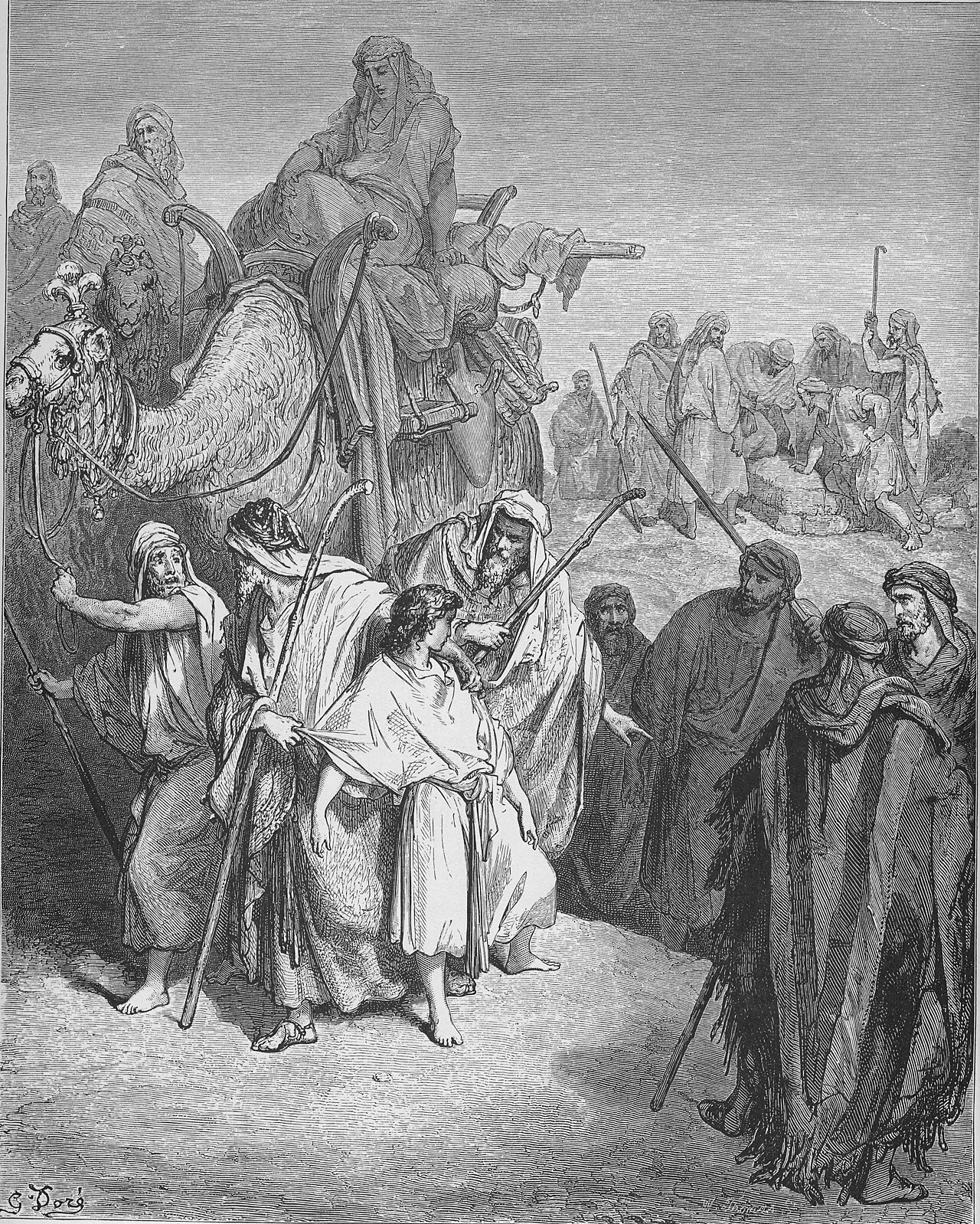
in Genesis 37Then Israel told him, “Go now and see how your brothers and the flocks are faring, and bring word back to me.” So he sent him off from the Valley of Hebron. And when Joseph arrived in Shechem,
BSB
The same verse in ASV and KJV ▾
ASV
And he said to him, Go now, see whether it is well with thy brethren, and well with the flock; and bring me word again. So he sent him out of the vale of Hebron, and he came to Shechem.
KJV
And he said to him, Go, I pray thee, see whether it be well with thy brethren, and well with the flocks; and bring me word again. So he sent him out of the vale of Hebron, and he came to Shechem.
⋯
This verse in Genesis 37
Commentary
6 notes on this verseTherefore the patriarch did not refuse to believe in a dream so mighty, for in a twofold prophecy he prophesied both together; that is, he represented and personified the just man and the people, because the Son of God was going to come to earth to be loved by just men and denied by unbelievers. And so Jacob, in sending his son to his brothers to see if it was well with the sheep, foresaw the mysteries of the incarnation that was to come.
This site's exposition
to pasture their father's flocks near Shechem
on Genesis 37:12-14
Shechem is the plot Jacob bought at Genesis 33:19, and it is the town where Simeon and Levi killed every male in Genesis 34. Israel sends the favored son there alone to see how his brothers are faring. Joseph answers that he is ready. His bones come back to that same ground at Joshua 24:32.
This site's exposition
see how your brothers and the flocks are faring
The Hebrew reads see the shalom of your brothers and the shalom of the flock, the word the brothers could not speak to him at verse 4. He sets out from the Valley of Hebron, where Abraham and Isaac had lived, and walks some fifty miles north. Joseph never brings that word back.
The record, by era
The Church Fathers1 voice
Now all this happened so that Joseph's regard for his brothers might be demonstrated and their murderous intent might come to light. On the other hand it happened also as a type of things to come, the outlines of truth being sketched out ahead of time in shadow. As Joseph went off to his brothers to visit them, to those who had no respect for brotherhood or for the reason of his coming and who first intended to do away with him and then sold him to foreigners, so too our Lord in fidelity to his characteristic love came to visit the human race. Taking flesh of the same source as ours and deigning to become our brother, he thus arrived among us. Paul too cries out in these words, "It is not the condition of angels he takes to himself but descent from Abraham. Hence the need for him to become like his brothers in everything."
The Puritans and the Awakening1 voice
And he said to him, go, I pray thee,....
The Nineteenth Century1 voice
Go - see whether it be well with thy brethren - Literally, Go, I beseech thee, and see the peace of thy brethren, and the peace of the flock. Go and see whether they are all in prosperity. See Clarke on Gen 37:4 (note).
How the passage was read
What the Jewish commentators add
Scripture mentions the place from which Joseph was sent, in order to indicate that there was a great distance between father and son, and that this was the reason why the brothers did him evil: they were distant far from their father.
This section is reception history: how the passage was read and kept in the Jewish tradition. Where a reading parts from an essential of the Christian faith, the section says so at that point.
Texts and citation data: Sefaria; each excerpt follows its version’s licence. 4 further sources are cited on this chapter that carry no English text this site may quote or only restate the verse.
The words behind it
18 Hebrew wordsEvery Hebrew word of this verse in the order it stands, with what it means and the door to its own study. The last column counts the times a word stands in the whole Bible: the rarer the word, the more the places it appears belong together.
| Hebrew | Sound | Meaning | Word study | In the Bible |
|---|---|---|---|---|
| וַיֹּ֣אמֶר | vaiyomer | and he said | H559 → | 5305 times |
| ל֗וֹ | lo | to <the> him | ||
| לֶךְ־ | lekh- | go | H1980 → | 1546 times |
| נָ֨א | na' | please | H4994 → | 404 times |
| רְאֵ֜ה | reeh | see | H7200 → | 1300 times |
| אֶת־ | ʾet- | <obj.> | H853 → | 10935 times |
| שְׁל֤וֹם | shelom | [the] welfare of | H7965 → | 236 times |
| אַחֶ֙יךָ֙ | ʾacheikha | brothers your | H251 → | 630 times |
| וְאֶת־ | veet | and <obj.> | H853 → | 10935 times |
| שְׁל֣וֹם | shelom | [the] welfare of | H7965 → | 236 times |
| הַצֹּ֔אן | hatzon | the flock | H6629 → | 274 times |
| וַהֲשִׁבֵ֖נִי | vahashiveni | and bring to me | H7725 → | 1056 times |
| דָּבָ֑ר | davar | word | H1697 → | 1440 times |
| וַיִּשְׁלָחֵ֙הוּ֙ | vaiyishlachehu | and he sent him | H7971 → | 845 times |
| מֵעֵ֣מֶק | meemek | from [the] valley of | H6010 → | 69 times |
| חֶבְר֔וֹן | chevron | Hebron | H2275 → | 72 times |
| וַיָּבֹ֖א | vaiyavo' | and he came | H935 → | 2568 times |
| שְׁכֶֽמָה׃ | shekhemah | Shechem towards | H7927 → | 63 times |
וַיֹּ֣אמֶרand he said
vaiyomerH559 →5305 times
ל֗וֹto <the> him
lo
לֶךְ־go
lekh-H1980 →1546 times
נָ֨אplease
na'H4994 →404 times
רְאֵ֜הsee
reehH7200 →1300 times
אֶת־<obj.>
ʾet-H853 →10935 times
שְׁל֤וֹם[the] welfare of
shelomH7965 →236 times
אַחֶ֙יךָ֙brothers your
ʾacheikhaH251 →630 times
וְאֶת־and <obj.>
veetH853 →10935 times
שְׁל֣וֹם[the] welfare of
shelomH7965 →236 times
הַצֹּ֔אןthe flock
hatzonH6629 →274 times
וַהֲשִׁבֵ֖נִיand bring to me
vahashiveniH7725 →1056 times
דָּבָ֑רword
davarH1697 →1440 times
וַיִּשְׁלָחֵ֙הוּ֙and he sent him
vaiyishlachehuH7971 →845 times
מֵעֵ֣מֶקfrom [the] valley of
meemekH6010 →69 times
חֶבְר֔וֹןHebron
chevronH2275 →72 times
וַיָּבֹ֖אand he came
vaiyavo'H935 →2568 times
שְׁכֶֽמָה׃Shechem towards
shekhemahH7927 →63 times
A shaded row is a word that stands 400 times or fewer in the Bible.
The walk
8 stopsEach card is a verse this one points to, and under it the verses that one points to in turn. Where several paths arrive at the same place, that place is listed first: the text keeps returning to it.
Through
Jeremiah 29:7Seek the prosperity of the city to which I have sent you as exiles. Pray to the LORD on its behalf, for if it prospers, you too will prosper.”
it leads to
- 1 Timothy 2:1–2
First of all, then, I urge that petitions, prayers, intercessions, and thanksgiving be offered for everyone—
- Ezra 6:10
Then they will be able to offer sacrifices of a sweet aroma to the God of heaven and to pray for the lives of the king and his sons.
- 1 Timothy 2:1–2
Through
Luke 19:42and said, “If only you had known on this day what would bring you peace! But now it is hidden from your eyes.
it leads to
- Deuteronomy 32:29
If only they were wise, they would understand it; they would comprehend their fate.
- Luke 1:77–79
to give to His people the knowledge of salvation through the forgiveness of their sins,
- Isaiah 48:18
If only you had paid attention to My commandments, your peace would have been like a river, and your righteousness like waves of the sea.
- Hebrews 10:26–29
If we deliberately go on sinning after we have received the knowledge of the truth, no further sacrifice for sins remains,
- 2 Corinthians 6:1–2
As God’s fellow workers, then, we urge you not to receive God’s grace in vain.
- Deuteronomy 32:29
Through
Psalms 125:5But those who turn to crooked ways the LORD will banish with the evildoers. Peace be upon Israel.
it leads to
- Isaiah 59:8
The way of peace they have not known, and there is no justice in their tracks. They have turned them into crooked paths; no one who treads on them will know peace.
- Isaiah 59:8
Where this verse is studied
On this page
Studies4
On this verse
About Genesis
Who and where
3 names in this verse with a page on the site.
- PersonPatriarchsJosephThe rejected-then-exalted son — Genesis's great Christ-type; preserver of his family and of Egypt; the bridge into Exodus.
- PlaceCentral hill countryShechemThe city between Ebal and Gerizim where Abram built his first altar in the land, where Joshua set the people to choose whom they w…
- PlaceJudean hill countryHebronThe city of the patriarchs, where Abraham bought the cave of Machpelah, Caleb took his inheritance, and David reigned seven years…
This page draws on Adam Clarke, Commentary on the Bible; Ambrose of Milan, On Joseph the Patriarch; John Calvin, Commentary on Genesis; John Chrysostom, HOMILIES ON GENESIS 61.10; John Gill, Exposition of the Old Testament; John Gill, Exposition of the Old Testament (1748-1763); Keil and Delitzsch, Biblical Commentary on the Old Testament and Matthew Henry, Commentary on the Whole Bible.