
Exodus 33:6
in Exodus 33So the Israelites stripped themselves of their jewelry from Mount Horeb onward.
BSB
The same verse in ASV and KJV ▾
ASV
And the children of Israel stripped themselves of their ornaments from mount Horeb onward.
KJV
And the children of Israel stripped themselves of their ornaments by the mount Horeb.
⋯
This verse in Exodus 33
Commentary
5 notes on this verseA commentator
Albert Barnes1798–1870
Notes, Explanatory and Practical, on the Old and New Testaments (1832-1869)
By the mount Horeb - From Mount Horeb onward. They ceased to wear their ornaments from the time they were at Mount Horeb.
This site's exposition
when the people heard these evil tidings
on Exodus 33:4-6
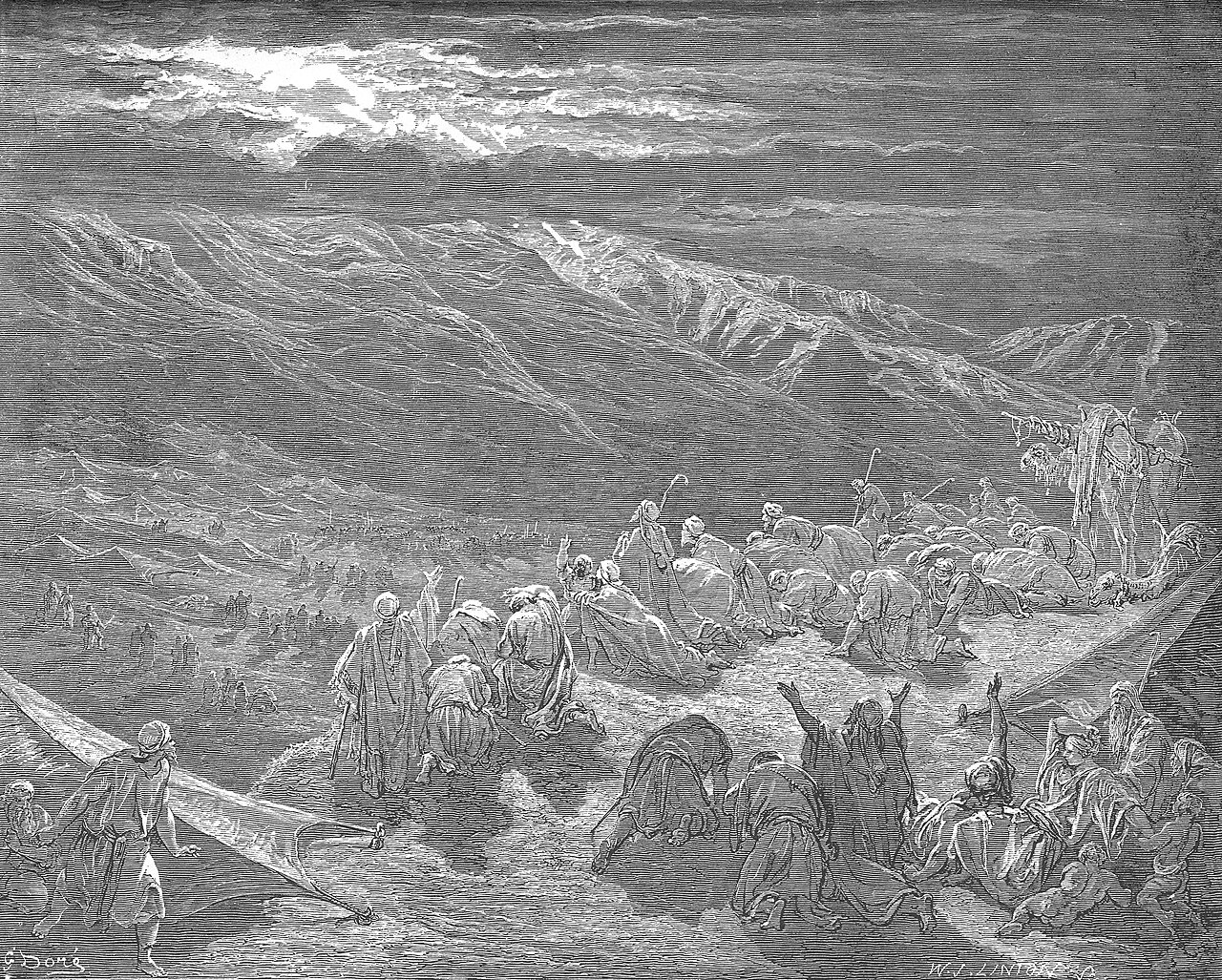
The people mourn at the withdrawal, and the sign of the mourning is that no man puts on his ornaments. God's own order at verse 5 leaves the outcome open, put off thy ornaments from thee, that I may know what to do unto thee, so the stripping is a posture taken before a decision rather than after one. The gold that went into the calf at 32:2 and 32:3 comes off here, and the same kind of freewill gold is brought for the tabernacle at 35:22. Verse 6 sets the scene by mount Horeb, the mountain of the bush at 3:1 and of the water from the rock at 17:6.
The record, by era
The Puritans and the Awakening3 voices
He settles a correspondence between God and them; and both God and the people signify their approbation of that correspondence, God by descending in a cloudy pillar, and the people by worshipping at the tent-doors, ver. 7-12. He is earnest with God in prayer, and prevails. (1.) For a promise of his presence with the people, ver.
And the children of Israel stripped themselves of their ornaments,....
He settles a correspondence between God and them, and both God and the people signify their approbation of that correspondence, God by descending in a cloudy pillar, and the people by worshipping at the tent doors,
The words behind it
7 Hebrew wordsEvery Hebrew word of this verse in the order it stands, with what it means and the door to its own study. The last column counts the times a word stands in the whole Bible: the rarer the word, the more the places it appears belong together.
| Hebrew | Sound | Meaning | Word study | In the Bible |
|---|---|---|---|---|
| וַיִּֽתְנַצְּל֧וּ | vaiyitnatzelu | and they stripped themselves | H5337 → | 212 times |
| בְנֵֽי־ | venei- | [the] people of | H1121 → | 4930 times |
| יִשְׂרָאֵ֛ל | yisrael | Israel | H3478 → | 2507 times |
| אֶת־ | ʾet- | <obj.> | H853 → | 10935 times |
| עֶדְיָ֖ם | ʾedyam | ornament[s] their | H5716 → | 14 times |
| מֵהַ֥ר | mehar | from [the] mountain of | H2022 → | 546 times |
| חוֹרֵֽב׃ | chorev | Horeb | H2722 → | 17 times |
וַיִּֽתְנַצְּל֧וּand they stripped themselves
vaiyitnatzeluH5337 →212 times
בְנֵֽי־[the] people of
venei-H1121 →4930 times
יִשְׂרָאֵ֛לIsrael
yisraelH3478 →2507 times
אֶת־<obj.>
ʾet-H853 →10935 times
עֶדְיָ֖םornament[s] their
ʾedyamH5716 →14 times
מֵהַ֥רfrom [the] mountain of
meharH2022 →546 times
חוֹרֵֽב׃Horeb
chorevH2722 →17 times
A shaded row is a word that stands 400 times or fewer in the Bible.
The walk
8 stopsEach card is a verse this one points to, and under it the verses that one points to in turn. Where several paths arrive at the same place, that place is listed first: the text keeps returning to it.
Through
Jeremiah 2:19Your own evil will discipline you; your own apostasies will reprimand you. Consider and realize how evil and bitter it is for you to forsake the LORD your God and to have no fear…
it leads to
- Isaiah 3:9
The expression on their faces testifies against them, and like Sodom they flaunt their sin; they do not conceal it. Woe to them, for they have brought disaster upon themselves.
- Psalms 36:1
An oracle is in my heart regarding the transgression of the wicked man: There is no fear of God before his eyes.
- Jeremiah 2:17
Have you not brought this on yourself by forsaking the LORD your God when He led you in the way?
- Jeremiah 4:18
“Your ways and deeds have brought this upon you. This is your punishment; how bitter it is, because it pierces to the heart!”
- Hosea 5:5
Israel’s arrogance testifies against them; Israel and Ephraim stumble in their iniquity; even Judah stumbles with them.
- Isaiah 3:9
Through
Exodus 33:4When the people heard these bad tidings, they went into mourning, and no one put on any of his jewelry.
it leads to
- Numbers 14:39
And when Moses relayed these words to all the Israelites, the people mourned bitterly.
- Leviticus 10:6
Then Moses said to Aaron and his sons Eleazar and Ithamar, “Do not let your hair become disheveled and do not tear your garments, or else you will die, and the LORD will be…
- Ezekiel 24:17
Groan quietly; do not mourn for the dead. Put on your turban and strap your sandals on your feet; do not cover your lips or eat the bread of mourners.”
- Numbers 14:39
Where this verse is studied
On this page
About Exodus
This page draws on Albert Barnes, Notes, Explanatory and Practical, on the Old and New Testaments (1832-1869); John Gill, Exposition of the Old Testament (1748-1763); John Wesley, Explanatory Notes upon the Old Testament; Keil and Delitzsch, Biblical Commentary on the Old Testament: The Pentateuch and Matthew Henry, Commentary on the Whole Bible.