
John 15:14 to 15 · Passage · Friendship
I Have Called You Friends
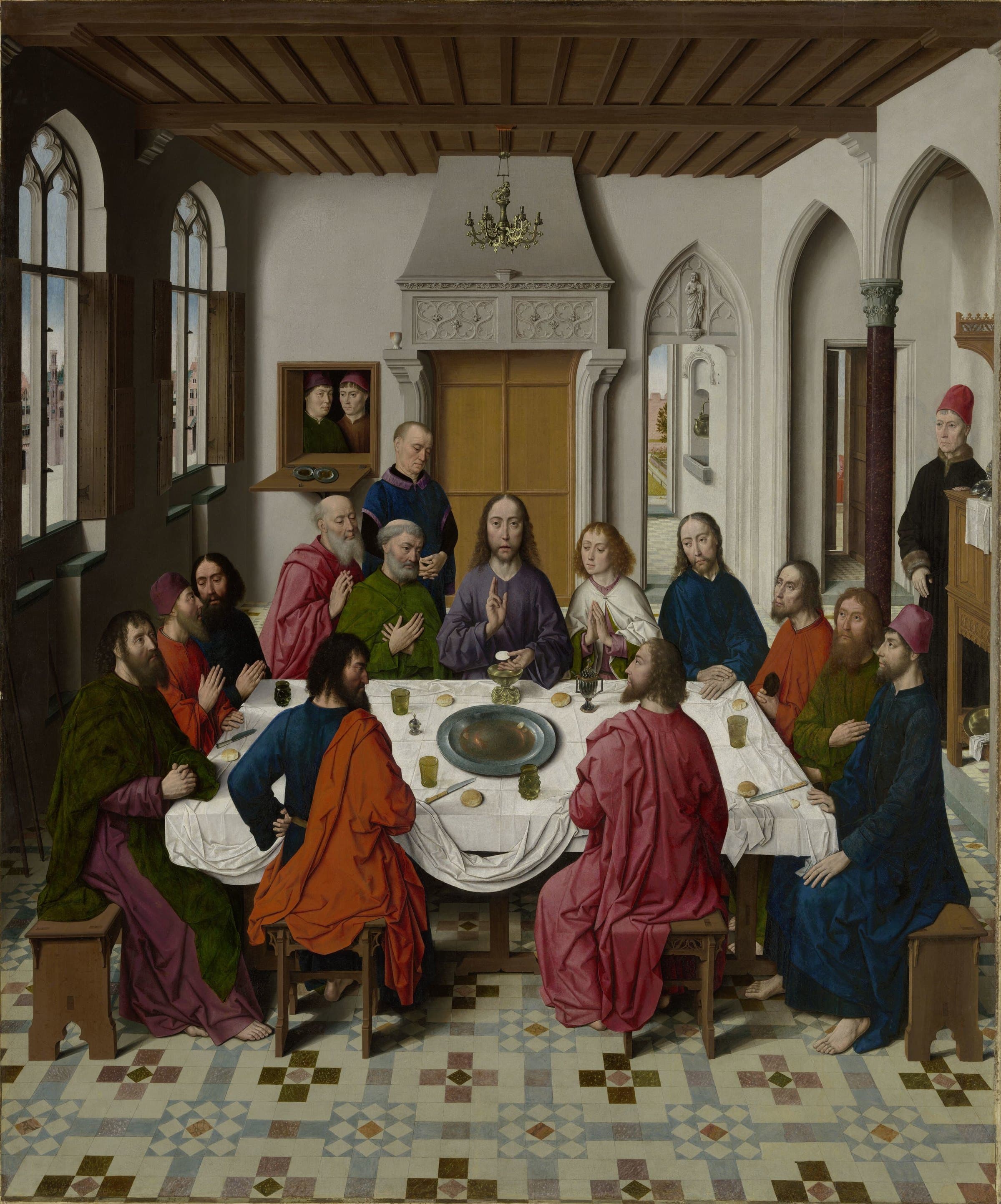
On the night before His death Jesus gave His disciples the name of friends in place of the name of servants.
Five verses after He called them friends, Jesus reminded the same men that no servant is greater than his master.
You are My friends if you do what I command you.
- The passage
- John 15:14 to 15, John 15:12 to 13, James 2:23, Exodus 33:11
- Books
- John, James, Exodus
- Hold in memory
- John 15:15, John 15:14
Summary
A servant carries out his master's orders without being told the purpose behind them, while a friend is told it. Jesus called the disciples friends because He had made known to them what He had learned from His Father. He tied the name to obedience to His commands, and He grounded it in the love He was about to show by laying down His life. The apostles still called themselves servants, so the new name stood beside the old one.
- Jesus spoke the saying to the eleven after Judas had gone out (John 13:30).
- Before John, Scripture gives Abraham the title friend of God and tells how the LORD talked with Moses face to face.
- Jesus said later the same night that He still had much to tell them (John 16:12).
Friends of the Master
The saying rests on the command and the measure of love that come just before it.
I Have Called You Friends studies John 15:14 to 15, the saying in which Jesus calls the eleven His friends. It belongs to the value of friendship, because it names the friendship Christ Himself offers and the terms on which He offers it.
The question it answers is what Jesus means when He calls His disciples friends and no longer servants. It reads the condition of John 15:14, the servant and the friend of John 15:15 in the Greek, and what the friend is told, and it sets the saying beside Abraham and Moses.
John sets the discourse after the supper of John 13:2, and the saying follows directly on the vine and the branches of John 15:1 to 11.
Love One Another teaches John 15:12 to 13 as the love commandment, and its section Friends, Not Servants gives the standing the command assumes.
From the Command to the New Name
The verses move from what Jesus commands to what He calls the ones who keep it.
Jesus sets the servant's name aside because the servant is kept from his master's purpose and the friend is told it.
| Step | Verse | The Berean words |
|---|---|---|
| The command | John 15:12 | This is My commandment, that you love one another as I have loved you. |
| The measure | John 15:13 | Greater love has no one than this, that he lay down his life for his friends. |
| The servant's name set aside | John 15:15 | No longer do I call you servants, for a servant does not understand what his master is doing. |
| The friend's name and its reason | John 15:15 | But I have called you friends, because everything I have learned from My Father I have made known to you. |
The Condition
John 15:14 names the friends of Jesus by what they do.
In John 15:14 the Greek reads humeis philoi mou este, "You are My friends", and the second half opens with ean poiete, "if you do", a condition with the subjunctive.
The same pairing of love and obedience runs through the discourse. Jesus had said, "If you love Me, you will keep My commandments" (John 14:15), and just before the saying on friends, "If you keep My commandments, you will remain in My love" (John 15:10).
John uses the noun philos in six verses of his Gospel. Three stand in John 15:13 to 15, and the others name the friend of the bridegroom (John 3:29), Lazarus and the friend of Caesar (John 19:12).
The Servant and the Friend
John 15:15 sets the Greek doulos, a servant, against philos, a friend.
In John 15:15 the servants are doulous and the servant is ho doulos, and the friends are philous in humas de eireka philous, "But I have called you friends".
Paul, a servant of Christ Jesus, called to be an apostle, and set apart for the gospel of God—Paul opens his letter to Rome under the servant's name, so the apostles kept that title beside the name of friend.
Everything Made Known
The friend is told what the Father told the Son, though Jesus said more remained to tell.
I still have much to tell you, but you cannot yet bear to hear it.Jesus says this later the same night, so it has to be read beside the promise of John 15:15 that everything was made known.
John Chrysostom, in his Homilies on the Gospel of John (homily 77), answered that by "all" Jesus showed "that He uttered nothing alien, but only what was of the Father". He added that "all" means "whatever things it was fit that they should hear".
Augustine of Hippo, in his Tractates on the Gospel of John (tractate 86), gave a second answer. He held that Jesus "declares that He has made known to the disciples all, that He knows He will yet make known in that fullness of knowledge" still to come.
Friends of God Before John
Abraham and Moses carried the name of friend of God long before the supper.
And the Scripture was fulfilled that says, “Abraham believed God, and it was credited to him as righteousness,” and he was called a friend of God.James joins the title friend of God to Abraham's faith, which is the title Jesus now gives His disciples.
God calls Abraham "My friend" in Isaiah 41:8, and Jehoshaphat calls him "Your friend" in 2 Chronicles 20:7. In Hebrew both are forms of 'ohev, one who loves, so God's friend is the one who loves Him.
Thus the LORD would speak to Moses face to face, as a man speaks to his friend. Then Moses would return to the camp, but his young assistant Joshua son of Nun would not leave the tent.The verse shows the LORD speaking with Moses in the way a man speaks with a friend, the openness John 15:15 promises.
The words for a friend in Hebrew and Greek, rea, 'ohev and philos, are taught in The Words Rea and Philos.
Voices on John 15:14 to 15
A father of the third century and a commentator of the eighteenth read the friends of Christ as those who obey Him.
died 215 · Clement of Alexandria
Clement of Alexandria, in the fourth book of his Stromata, sets the friends who obey against the enemies who refuse.
Read the page on Clement of Alexandria
“Now sinners are called enemies of God—enemies, that is, of the commands that they do not obey, just as those who obey become friends. The latter are named so from their fellowship; the former from their estrangement, which is freely chosen. For there is neither enmity nor sin without the enemy and the sinner.”
Clement of Alexandria · The Stromata Book 4 · on John 15:14Patristic
1662 to 1714 · Matthew Henry
Matthew Henry, in his Commentary on the Whole Bible (1710), reads the saying as an honour Christ gives His followers.
Read the page on Matthew Henry
“‘If you approve yourselves by your obedience my disciples indeed, you are my friends, and shall be treated as friends.’ Note, The followers of Christ are the friends of Christ, and he is graciously pleased to call and account them so.”
Matthew Henry · Commentary on the Whole Bible · on John 15:14 to 15Puritan
Is the Friendship Conditional?
John Wesley and Charles Spurgeon read a condition the friend must keep, and Augustine read the obedience as the mark of friends.
The question is whether obedience earns the name of friend or shows who already bears it.
A condition the friend keepsJohn Wesley; Charles Spurgeon
John Wesley, in his Explanatory Notes upon the New Testament (1755), wrote on John 15:14, "On this condition, not otherwise."
Charles Spurgeon, in his sermon The Friends of Jesus (1880), set love and friendship apart: "His love to us is entirely of Himself, but friendship needs something from us."
The objection: Jesus says next, "You did not choose Me, but I chose you" (John 15:16), so the friendship begins on His side.
The mark of friendsAugustine of Hippo
Augustine of Hippo, in his Tractates on the Gospel of John (tractate 85), held that the obedience which proves a good servant is the sign by which Christ's friends "should be known". He concluded, "One, therefore, who is a good servant, can be both servant and friend."
The objection: John 15:14 joins the doing to the name itself, so obedience is more than a sign of it.
My Friends in the Gospels
Jesus used the word friend of His disciples and of Lazarus before the night of John 15.
I tell you, My friends, do not be afraid of those who kill the body and after that can do no more.Jesus calls His disciples friends here as He warns them of persecution, so the name was His before the supper.
Before He went to Bethany He told the disciples, "Our friend Lazarus has fallen asleep" (John 11:11), and He raised Lazarus from the tomb.
Sources
Scripture is the Berean Standard Bible.
- STEP Bible, Translators Amalgamated Greek New Testament, the tagged Greek text (Tyndale House, Cambridge), CC BY 4.0.
- STEP Bible, Translators Amalgamated Hebrew Old Testament, the tagged Hebrew text from Tyndale House, licensed CC BY 4.0.
- STEP Bible TBESG lexicon of Extended Strongs for Greek (Tyndale House, Cambridge), CC BY 4.0, based on Abbott-Smith, Manual Greek Lexicon of the New Testament (1922)
- Augustine of Hippo, Tractates on the Gospel of John, tractate 85, Nicene and Post-Nicene Fathers, first series, vol. 7.
- Augustine of Hippo, Tractates on the Gospel of John, tractate 86, Nicene and Post-Nicene Fathers, first series, vol. 7.
- John Chrysostom, Homilies on the Gospel of John, homily 77.
- Clement of Alexandria, The Stromata, book 4.
- Matthew Henry, Commentary on the Whole Bible (1710), on John 15:14 to 15.
- John Wesley, Explanatory Notes upon the New Testament (1755), on John 15:14.
- Charles Haddon Spurgeon, The Friends of Jesus, sermon 1552 (1880), on John 15:14.
Keep Studying
Read it1
Studies1
In this value5
People and groups9
Doctrines1