
Deuteronomy 5:22
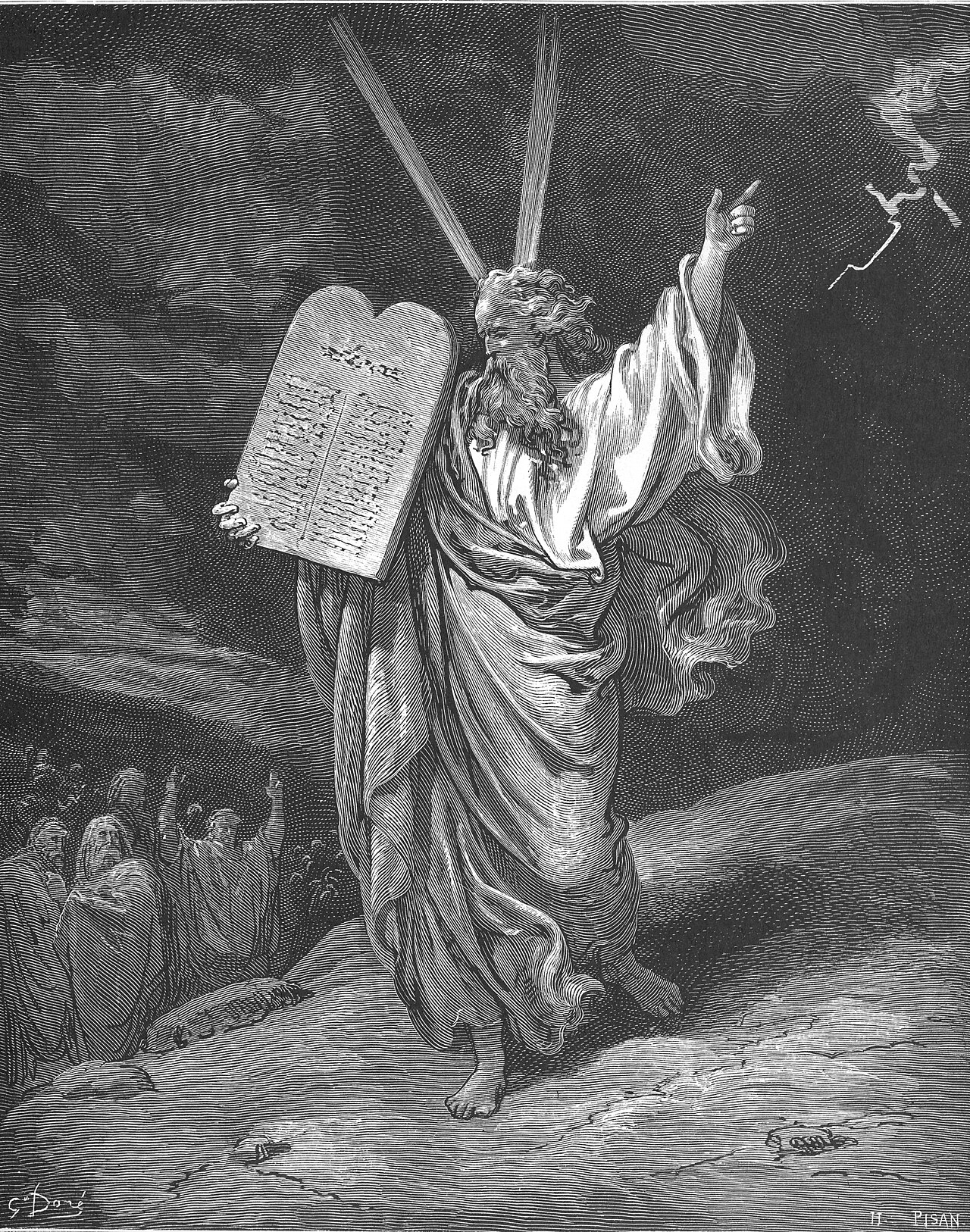
in Deuteronomy 5The LORD spoke these commandments in a loud voice to your whole assembly out of the fire, the cloud, and the deep darkness on the mountain; He added nothing more. And He wrote them on two tablets of stone and gave them to me.
BSB
The same verse in ASV and KJV ▾
ASV
These words Jehovah spake unto all your assembly in the mount out of the midst of the fire, of the cloud, and of the thick darkness, with a great voice: and he added no more. And he wrote them upon two tables of stone, and gave them unto me.
KJV
These words the Lord spake unto all your assembly in the mount out of the midst of the fire, of the cloud, and of the thick darkness, with a great voice: and he added no more. And he wrote them in two tables of stone, and delivered them unto me.
⋯
This verse in Deuteronomy 5
Commentary
8 notes on this verseA commentator
Albert Barnes1798–1870
Notes, Explanatory and Practical, on the Old and New Testaments (1832-1869)
He added no more - i. e., He spoke no more with the great voice directly to the people, but addressed all other communications to them through Moses. This unique and sublime phenomenon, followed up by the inscription of the Ten Words on the two tables by the finger of God, marks not only the holiness of God’s Law in general, but the special eminence and permanent obligation of the Ten Words themselves as compared with the rest of the Mosaic enactments.
This site's exposition
These words the Lord spake unto all your assembly
He added no more marks the end of what the whole nation heard directly. Albert Barnes reads it as the close of God's speech to the people at large, everything after it coming through Moses, and takes the two tables written by God as setting the ten words above the rest of the legislation. John Calvin fixes on the great voice and on the size of the crowd that heard it, since the witnesses cited are the whole assembly. Hebrews 12:18-21 looks back at this mountain and at the fear in it and sets Sinai against Zion.
The record, by era
The Church Fathers1 voice
A commentator
Augustine of HippoON THE SPIRIT AND THE LETTER 17.29 · Written in the 5th century.
proposed
There it was on tables of stone that the finger of God operated; here it was on the hearts of men. There the law was given outwardly, so that the unrighteous might be terrified; here it was given inwardly, so that they might be justified. For this, "Thou shalt not commit adultery, Thou shalt not kill, Thou shalt not covet; and if there be any other commandment,"—such, of course, as was written on those tables,—"it is briefly comprehended," says he, "in this saying, namely, Thou shalt love thy neighbour as thyself. Love worketh no ill to his neighbour: therefore love is the fulfilling of the law." Now this was not written on the tables of stone, but "is shed abroad in our hearts by the Holy Ghost, which is given unto us." God's law, therefore, is love. "To it the carnal mind is not subject, neither indeed can be;" but when the works of love are written on tables to alarm the carnal mind, there arises the law of works and "the letter which killeth" the transgressor; but when love itself is shed abroad in the hearts of believers, then we have the law of faith, and the spirit which gives life to him that loves.
The Reformation1 voice
He adds, that it was "a great voice," i.e., a voice which had, in an unwonted manner, penetrated far and wide. Nor are the witnesses few, whom he cites, but all that vast multitude, which for the most part would have been more disposed to extinguish the glory of God, unless it had been there made known by manifest proofs.
The Puritans and the Awakening3 voices
That was a dispensation of terror, designed to make the gospel of grace the more welcome, and to be a specimen of the terrors of the judgment-day, Ps. l. What other laws he gave them were sent by Moses, but no more were spoken in the same manner that the ten commandments were. He added no more, therefore we must not add: the law of the Lord is perfect.
These words the Lord spake unto all your assembly in the mount,.... The above ten words or commands, which were spoken so audibly and loudly by the Lord himself on Mount Sinai, that the whole congregation of the people of Israel heard them: out of the midst of the fire, of the cloud, and of the thick darkness; in which the Lord was; see Deu 4:11, with a great voice, and he added no more; ceased speaking; after he had delivered the ten commands, he said no more at that time.
The settling of the correspondence thenceforward between God and Israel, by the mediation and ministry of Moses. It was Israel's humble petition that it might be so,
1 more voice on this verse
The Nineteenth Century1 voice
A commentator
Jamieson, Fausset & Brown1802–1910
Commentary Critical and Explanatory on the Whole Bible (1871)
proposed
he added no more-- (Ex 20:1). The pre-eminence of these ten commandments was shown in God's announcing them directly: other laws and institutions were communicated to the people through the instrumentality of Moses.
quarantine:debris (2026-07-29) — starts-lowercase
The words behind it
24 Hebrew wordsEvery Hebrew word of this verse in the order it stands, with what it means and the door to its own study. The last column counts the times a word stands in the whole Bible: the rarer the word, the more the places it appears belong together.
| Hebrew | Sound | Meaning | Word study | In the Bible |
|---|---|---|---|---|
| אֶֽת־ | ʾet- | <obj.> | H853 → | 10935 times |
| הַדְּבָרִ֣ים | hadevarim | the words | H1697 → | 1440 times |
| הָאֵ֡לֶּה | haeleh | <the> these | H428 → | 746 times |
| דִּבֶּר֩ | diber | he spoke | H1696 → | 1141 times |
| יְהוָ֨ה | yahweh | Yahweh | H3068 → | 6520 times |
| אֶל־ | ʾel- | to | H413 → | 5510 times |
| כָּל־ | kol- | all | H3605 → | 5413 times |
| קְהַלְכֶ֜ם | kehalkhem | assembly your | H6951 → | 123 times |
| בָּהָ֗ר | bahar | at the mountain | H2022 → | 546 times |
| מִתּ֤וֹךְ | mitokh | from [the] middle of | H8432 → | 418 times |
| הָאֵשׁ֙ | haesh | the fire | H784 → | 378 times |
| הֶֽעָנָ֣ן | heanan | the cloud | H6051 → | 87 times |
| וְהָֽעֲרָפֶ֔ל | vehaarafel | and the thick darkness | H6205 → | |
| ק֥וֹל | kol | a voice | H6963 → | 506 times |
| גָּד֖וֹל | gadol | great | H1419 → | 526 times |
| וְלֹ֣א | velo' | and not | H3808 → | 5168 times |
| יָסָ֑ף | yasaf | he added | H3254 → | 212 times |
| וַֽיִּכְתְּבֵ֗ם | vaiyikhtevem | and he inscribed them | H3789 → | 224 times |
| עַל־ | ʾal- | on | H5921 → | 5755 times |
| שְׁנֵי֙ | shenei | two | H8147 → | 768 times |
| לֻחֹ֣ת | luchot | tablets of | H3871 → | 43 times |
| אֲבָנִ֔ים | ʾavanim | stone<s> | H68 → | 273 times |
| וַֽיִּתְּנֵ֖ם | vaiyitenem | and he gave them | H5414 → | 2011 times |
| אֵלָֽי׃ | ʾelai | to me | H413 → | 5510 times |
אֶֽת־<obj.>
ʾet-H853 →10935 times
הַדְּבָרִ֣יםthe words
hadevarimH1697 →1440 times
הָאֵ֡לֶּה<the> these
haelehH428 →746 times
דִּבֶּר֩he spoke
diberH1696 →1141 times
יְהוָ֨הYahweh
yahwehH3068 →6520 times
אֶל־to
ʾel-H413 →5510 times
כָּל־all
kol-H3605 →5413 times
קְהַלְכֶ֜םassembly your
kehalkhemH6951 →123 times
בָּהָ֗רat the mountain
baharH2022 →546 times
מִתּ֤וֹךְfrom [the] middle of
mitokhH8432 →418 times
הָאֵשׁ֙the fire
haeshH784 →378 times
הֶֽעָנָ֣ןthe cloud
heananH6051 →87 times
וְהָֽעֲרָפֶ֔לand the thick darkness
vehaarafelH6205 →
ק֥וֹלa voice
kolH6963 →506 times
גָּד֖וֹלgreat
gadolH1419 →526 times
וְלֹ֣אand not
velo'H3808 →5168 times
יָסָ֑ףhe added
yasafH3254 →212 times
וַֽיִּכְתְּבֵ֗םand he inscribed them
vaiyikhtevemH3789 →224 times
עַל־on
ʾal-H5921 →5755 times
שְׁנֵי֙two
sheneiH8147 →768 times
לֻחֹ֣תtablets of
luchotH3871 →43 times
אֲבָנִ֔יםstone<s>
ʾavanimH68 →273 times
וַֽיִּתְּנֵ֖םand he gave them
vaiyitenemH5414 →2011 times
אֵלָֽי׃to me
ʾelaiH413 →5510 times
A shaded row is a word that stands 400 times or fewer in the Bible.
The walk
8 stopsEach card is a verse this one points to, and under it the verses that one points to in turn. Where several paths arrive at the same place, that place is listed first: the text keeps returning to it.
Through
Exodus 31:18When the LORD had finished speaking with Moses on Mount Sinai, He gave him the two tablets of the Testimony, tablets of stone inscribed by the finger of God.
it leads to
- Exodus 32:15–16
Then Moses turned and went down the mountain with the two tablets of the Testimony in his hands. They were inscribed on both sides, front and back.
Reached by 2 separate paths from here.
- Deuteronomy 4:13
He declared to you His covenant, which He commanded you to follow—the Ten Commandments that He wrote on two tablets of stone.
- 2 Corinthians 3:3
It is clear that you are a letter from Christ, the result of our ministry, written not with ink but with the Spirit of the living God, not on tablets of stone but on…
Reached by 2 separate paths from here.
- Exodus 24:12
Then the LORD said to Moses, “Come up to Me on the mountain and stay here, so that I may give you the tablets of stone, with the law and commandments I have written…
- Exodus 32:15–16
Through
Deuteronomy 5:4The LORD spoke with you face to face out of the fire on the mountain.
it leads to
- Exodus 19:9
The LORD said to Moses, “Behold, I will come to you in a dense cloud, so that the people will hear when I speak with you, and they will always put their trust in…
Reached by 2 separate paths from here.
- Deuteronomy 4:33
Has a people ever heard the voice of God speaking out of the fire, as you have, and lived?
Reached by 2 separate paths from here.
- Exodus 19:18–19
Mount Sinai was completely enveloped in smoke, because the LORD had descended on it in fire. And the smoke rose like the smoke of a furnace, and the whole mountain quaked violently.
- Exodus 19:9
Through
Exodus 24:12Then the LORD said to Moses, “Come up to Me on the mountain and stay here, so that I may give you the tablets of stone, with the law and commandments I have written…
it leads to
- Exodus 31:18
When the LORD had finished speaking with Moses on Mount Sinai, He gave him the two tablets of the Testimony, tablets of stone inscribed by the finger of God.
- Exodus 31:18
About Deuteronomy
This page draws on Albert Barnes, Notes, Explanatory and Practical, on the Old and New Testaments (1832-1869); Albert Barnes, Notes on the Old Testament; Augustine of Hippo, ON THE SPIRIT AND THE LETTER 17.29; Jamieson, Fausset & Brown, Commentary Critical and Explanatory on the Whole Bible; John Calvin, Commentary on the Four Last Books of Moses Arranged in the Form of a Harmony; John Calvin, Commentaries; John Gill, Exposition of the Old Testament (1748-1763) and Matthew Henry, Commentary on the Whole Bible.