
1 Kings 11:4
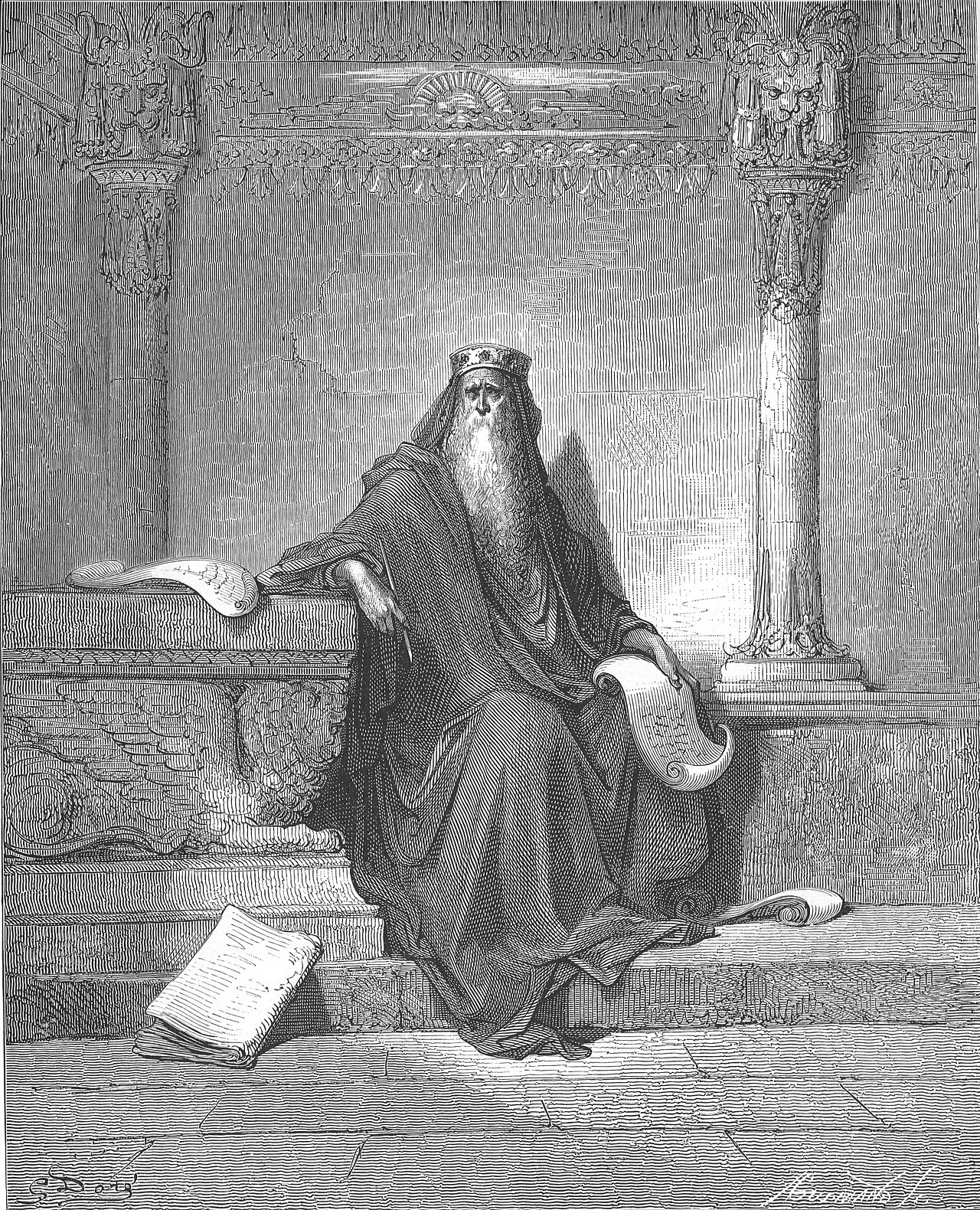
in 1 Kings 11For when Solomon grew old, his wives turned his heart after other gods, and he was not wholeheartedly devoted to the LORD his God, as his father David had been.
BSB
The same verse in ASV and KJV ▾
ASV
For it came to pass, when Solomon was old, that his wives turned away his heart after other gods; and his heart was not perfect with Jehovah his God, as was the heart of David his father.
KJV
For it came to pass, when Solomon was old, that his wives turned away his heart after other gods: and his heart was not perfect with the Lord his God, as was the heart of David his father.
⋯
This verse in 1 Kings 11
Commentary
7 notes on this verseA commentator
Albert Barnes1798–1870
Notes, Explanatory and Practical, on the Old and New Testaments (1832-1869)
Old - About fifty or fifty-five. From his age at his accession (1Ki 2:2 note) he could not have been more than about sixty at his death. The true nature of Solomon’s idolatry was neither complete apostasy - an apostasy from which there could be no recovery; nor a mere toleration, rather praise-worthy than blameable. Solomon did not ever openly or wholly apostatize. He continued his attendance on the worship of Yahweh, and punctually made his offerings three times a year in the temple 1Ki 9:25; but his heart was not “perfect” with God.
This site's exposition
his wives turned away his heart
on 1 Kings 11:4-6
The verdict is comparative rather than absolute: his heart was not perfect with the Lord his God, as was the heart of David his father, and Solomon went not fully after the Lord, as did David. David's own failures are on record earlier in the history, so the measure is not sinlessness but wholeness of devotion, a heart not divided between the Lord and Ashtoreth and Milcom. Old age is named as the setting, the slow accumulation of seven hundred compromises rather than one sudden fall.
The record, by era
The Puritans and the Awakening4 voices
Turned his heart - Not that they changed his mind about the true God, and idols, which is not credible; but they obtained from him a publick indulgence for their worship, and possibly persuaded him to join with them in the outward act of idol-worship; or, at least, in their feasts upon their sacrifices, which was a participation of their idolatry.
(1.) He grew cool and indifferent in his own religion and remiss in the service of the God of Israel: His heart was not perfect with the Lord his God (
quarantine:debris (2026-07-29) — unbalanced-parens
And it came to pass, when Solomon was old,....
What hurt could Hadad or Rezon have done to so great and powerful a king as Solomon was if he had not, by sin, made himself mean and weak? And then those little people menace and insult him.
The Nineteenth Century1 voice
A commentator
Jamieson, Fausset & Brown1802–1910
Commentary Critical and Explanatory on the Whole Bible (1871)
proposed
Hence that part of Olivet was called the high place of Tophet (Jer 7:30-34), and the hill is still known as the Mount of Offense, of the Mount of Corruption (2Ki 23:13).
The words behind it
21 Hebrew wordsEvery Hebrew word of this verse in the order it stands, with what it means and the door to its own study. The last column counts the times a word stands in the whole Bible: the rarer the word, the more the places it appears belong together.
| Hebrew | Sound | Meaning | Word study | In the Bible |
|---|---|---|---|---|
| וַיְהִ֗י | vayhi | and it was | H1961 → | 3559 times |
| לְעֵת֙ | leet | to [the] time of | H6256 → | 296 times |
| זִקְנַ֣ת | ziknat | [the] old age of | H2209 → | |
| שְׁלֹמֹ֔ה | shelomoh | Solomon | H8010 → | 291 times |
| נָשָׁיו֙ | nashav | wives his | H802 → | 781 times |
| הִטּ֣וּ | hitu | they turned aside | H5186 → | 214 times |
| אֶת־ | ʾet- | <obj.> | H853 → | 10935 times |
| לְבָב֔וֹ | levavo | heart his | H3824 → | 252 times |
| אַחֲרֵ֖י | ʾacharei | after | H310 → | 715 times |
| אֱלֹהִ֣ים | ʾelohim | gods | H430 → | 2601 times |
| אֲחֵרִ֑ים | ʾacherim | other | H312 → | 166 times |
| וְלֹא־ | velo'- | and not | H3808 → | 5168 times |
| הָיָ֨ה | hayah | it was | H1961 → | 3559 times |
| לְבָב֤וֹ | levavo | heart his | H3824 → | 252 times |
| שָׁלֵם֙ | shalem | complete | H8003 → | 28 times |
| עִם־ | ʾim- | with | H5973 → | 1050 times |
| יְהוָ֣ה | yahweh | Yahweh | H3068 → | 6520 times |
| אֱלֹהָ֔יו | ʾelohav | God his | H430 → | 2601 times |
| כִּלְבַ֖ב | kilvav | like [the] heart of | H3824 → | 252 times |
| דָּוִ֥יד | david | David | H1732 → | 999 times |
| אָבִֽיו׃ | ʾaviv | father his | H1 → | 1212 times |
וַיְהִ֗יand it was
vayhiH1961 →3559 times
לְעֵת֙to [the] time of
leetH6256 →296 times
זִקְנַ֣ת[the] old age of
ziknatH2209 →
שְׁלֹמֹ֔הSolomon
shelomohH8010 →291 times
נָשָׁיו֙wives his
nashavH802 →781 times
הִטּ֣וּthey turned aside
hituH5186 →214 times
אֶת־<obj.>
ʾet-H853 →10935 times
לְבָב֔וֹheart his
levavoH3824 →252 times
אַחֲרֵ֖יafter
ʾachareiH310 →715 times
אֱלֹהִ֣יםgods
ʾelohimH430 →2601 times
אֲחֵרִ֑יםother
ʾacherimH312 →166 times
וְלֹא־and not
velo'-H3808 →5168 times
הָיָ֨הit was
hayahH1961 →3559 times
לְבָב֤וֹheart his
levavoH3824 →252 times
שָׁלֵם֙complete
shalemH8003 →28 times
עִם־with
ʾim-H5973 →1050 times
יְהוָ֣הYahweh
yahwehH3068 →6520 times
אֱלֹהָ֔יוGod his
ʾelohavH430 →2601 times
כִּלְבַ֖בlike [the] heart of
kilvavH3824 →252 times
דָּוִ֥ידDavid
davidH1732 →999 times
אָבִֽיו׃father his
ʾavivH1 →1212 times
A shaded row is a word that stands 400 times or fewer in the Bible.
The walk
5 stopsEach card is a verse this one points to, and under it the verses that one points to in turn. Where several paths arrive at the same place, that place is listed first: the text keeps returning to it.
Through
1 Chronicles 28:9As for you, Solomon my son, know the God of your father and serve Him wholeheartedly and with a willing mind, for the LORD searches every heart and understands the intent of every thought.…
it leads to
- Jeremiah 29:13
You will seek Me and find Me when you search for Me with all your heart.
- James 4:8–11
Draw near to God, and He will draw near to you. Cleanse your hands, you sinners, and purify your hearts, you double-minded.
- Matthew 7:7–8
Ask, and it will be given to you; seek, and you will find; knock, and the door will be opened to you.
- Isaiah 55:6–7
Seek the LORD while He may be found; call on Him while He is near.
- Jeremiah 24:7
I will give them a heart to know Me, that I am the LORD. They will be My people, and I will be their God, for they will return to Me with all their…
- Jeremiah 29:13
Where this verse is studied
On this page
Studies1
About 1 Kings
Who and where
2 names in this verse with a page on the site.
This page draws on Albert Barnes, Notes, Explanatory and Practical, on the Old and New Testaments (1832-1869); Jamieson, Fausset & Brown, Commentary Critical and Explanatory on the Whole Bible; John Gill, Exposition of the Old Testament; John Gill, Exposition of the Old Testament (1748-1763); John Wesley, Explanatory Notes upon the Old Testament; Keil, The Books of the Kings and Matthew Henry, Commentary on the Whole Bible.