
1 Kings 11:30
in 1 Kings 11And Ahijah took hold of the new cloak he was wearing, tore it into twelve pieces,
BSB
The same verse in ASV and KJV ▾
ASV
And Ahijah laid hold of the new garment that was on him, and rent it in twelve pieces.
KJV
And Ahijah caught the new garment that was on him, and rent it in twelve pieces:
⋯
This verse in 1 Kings 11
Commentary
6 notes on this verseAnd Ahijah caught the new garment that was on him,.... This looks as if it was Jeroboam's garment, having got a new one to appear before the king in; though the sense may be this, that the prophet took hold of his own garment that was upon himself: and rent it in twelve pieces; as symbolical of the twelve tribes of Israel.
This site's exposition
the prophet Ahijah the Shilonite met Jeroboam on the road
on 1 Kings 11:29-31
Ahijah wraps himself “in a new cloak”, tears it “into twelve pieces” and says “Take ten pieces for yourself”, acting the sign before explaining it. The scene reverses 1 Samuel 15:27-28, where Saul tore Samuel's mantle and the prophet read the tear as the kingdom torn from Saul.
This site's exposition
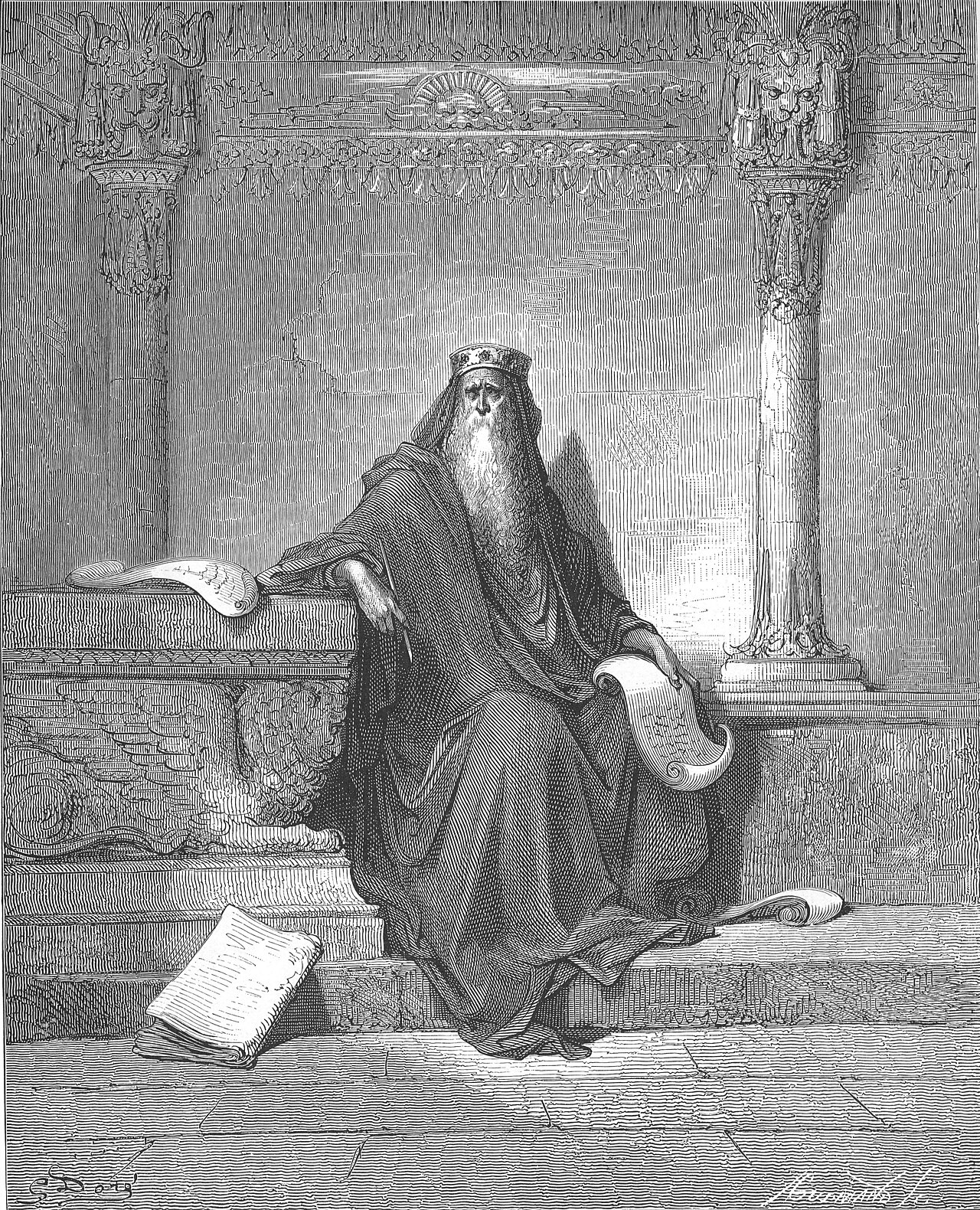
tore it into twelve pieces
John Gill leaves open whether the new cloak was Jeroboam's or the prophet Ahijah's own, and Matthew Henry judges it Ahijah's. Albert Barnes calls this the first acted parable. Cyprian read the coat of Christ, kept whole and never torn, as the sign of the church's unity.
The record, by era
The Puritans and the Awakening1 voice
It is not certain whether the garment was Jeroboam's, as is commonly taken for granted, or Ahijah's, which is more probable: He (that is, the prophet) had clad himself with a new garment, on purpose that he might with it give him a sign. The rending of the kingdom from Saul was signified by the rending of Samuel's mantle, not Saul's, 1 Sam. xv.
The Nineteenth Century2 voices
A commentator
Albert Barnes1798–1870
Notes, Explanatory and Practical, on the Old and New Testaments (1832-1869)
The first instance of the “acted parable.” Generally this mode was adopted upon express divine command (see Jer 13:1-11; Eze 3:1-3). A connection may be traced between the type selected and the words of the announcement to Solomon (1Ki 11:11-13. Compare 1Sa 15:26-28).
A commentator
Jamieson, Fausset & Brown1802–1910
Commentary Critical and Explanatory on the Whole Bible (1871)
He was a young man of talent and energy, who, having been appointed by Solomon superintendent of the engineering works projected around Jerusalem, had risen into public notice, and on being informed by a very significant act of the prophet Ahijah of the royal destiny which, by divine appointment, awaited him, his mind took a new turn.
The words behind it
10 Hebrew wordsEvery Hebrew word of this verse in the order it stands, with what it means and the door to its own study. The last column counts the times a word stands in the whole Bible: the rarer the word, the more the places it appears belong together.
| Hebrew | Sound | Meaning | Word study | In the Bible |
|---|---|---|---|---|
| וַיִּתְפֹּ֣שׂ | vaiyitpos | and he seized | H8610 → | 65 times |
| אֲחִיָּ֔ה | ʾachiyah | Ahijah | H281 → | 24 times |
| בַּשַּׂלְמָ֥ה | basalmah | <in> the cloak | H8008 → | 16 times |
| הַחֲדָשָׁ֖ה | hachadashah | <the> new | H2319 → | |
| אֲשֶׁ֣ר | ʾasher | which | H834 → | 5497 times |
| עָלָ֑יו | ʾalav | [was] on him | H5921 → | 5755 times |
| וַיִּ֨קְרָעֶ֔הָ | vaiyikraeha | and he tore it | H7167 → | 63 times |
| שְׁנֵ֥ים | sheneim | two [plus] | H8147 → | 768 times |
| עָשָׂ֖ר | ʾasar | ten | H6240 → | 338 times |
| קְרָעִֽים׃ | keraim | pieces | H7168 → |
וַיִּתְפֹּ֣שׂand he seized
vaiyitposH8610 →65 times
אֲחִיָּ֔הAhijah
ʾachiyahH281 →24 times
בַּשַּׂלְמָ֥ה<in> the cloak
basalmahH8008 →16 times
הַחֲדָשָׁ֖ה<the> new
hachadashahH2319 →
אֲשֶׁ֣רwhich
ʾasherH834 →5497 times
עָלָ֑יו[was] on him
ʾalavH5921 →5755 times
וַיִּ֨קְרָעֶ֔הָand he tore it
vaiyikraehaH7167 →63 times
שְׁנֵ֥יםtwo [plus]
sheneimH8147 →768 times
עָשָׂ֖רten
ʾasarH6240 →338 times
קְרָעִֽים׃pieces
keraimH7168 →
A shaded row is a word that stands 400 times or fewer in the Bible.
Where this verse is studied
On this page
Studies10
On this verse
About 1 Kings
This page draws on Albert Barnes, Notes, Explanatory and Practical, on the Old and New Testaments (1832-1869); Cyprian, Treatise I. On the Unity of the Church 7; Jamieson, Fausset & Brown, Commentary Critical and Explanatory on the Whole Bible; John Gill, Exposition of the Old Testament (1748-1763); Keil, The Books of the Kings and Matthew Henry, Commentary on the Whole Bible.