
1 Kings 11:8
in 1 Kings 11He did the same for all his foreign wives, who burned incense and sacrificed to their gods.
BSB
The same verse in ASV and KJV ▾
ASV
And so did he for all his foreign wives, who burnt incense and sacrificed unto their gods.
KJV
And likewise did he for all his strange wives, which burnt incense and sacrificed unto their gods.
⋯
This verse in 1 Kings 11
Commentary
8 notes on this verseThis site's exposition
on a hill east of Jerusalem, Solomon built a high place
on 1 Kings 11:7-8
Solomon builds a high place in sight of the temple, “for Chemosh the abomination of Moab and for Molech the abomination of the Ammonites”. These shrines stand until Josiah defiles them three centuries later at 2 Kings 23:13. A king's favor to his wives' gods became worship in Judah.
This site's exposition
burned incense and sacrificed to their gods
Matthew Henry sets this verse beside the prayer of chapter 8. The king who dedicated the house of the LORD built high places for his foreign wives, and Henry says no ship was ever so wrecked. John Wesley draws the lesson that the evening of a life commends its day.
The record, by era
The Church Fathers1 voice
Solomon was in his time David's son, a great man, through whom many holy precepts and healthful admonitions and divine mysteries have been wrought by the Holy Spirit in the Scriptures. Solomon himself was a lover of women and was rejected by God: and this lust was so great a snare to him that he was induced by women even to sacrifice to idols, as Scripture witnesses concerning him. But if, by his fall, what was delivered through him were blotted out, it would be judged that he had himself delivered these precepts and not that they were delivered through him. The mercy of God, therefore, and his Spirit, excellently wrought that whatever of good was declared through Solomon, might be attributed to God; and the man's sin, to the man. What marvel that Solomon fell among God's people? Did not Adam fall in paradise? Did not an angel fall from heaven and become the devil? We are thereby taught that no hope must be placed in any human being.
The Puritans and the Awakening4 voices
), maintained their priests, and occasionally did himself attend their altars, making a jest of it, asking, "What harm is there in it? Are not all religions alike?" which (says bishop Patrick) has been the disease of some great wits.
quarantine:debris (2026-07-29) — leading-punctuation+unbalanced-parens
And sacrificed, &c. - See what need those have to stand upon their guard, who have been eminent for religion. The devil will set upon them most violently: and if they miscarry, the reproach is the greater. It is the evening that commends the day.
And likewise did he for all his strange wives,....
(4.) That so good a man, so zealous for the worship of God, who had been so conversant with divine things, and who prayed that excellent prayer at the dedication of the temple, should do these sinful things. Have all his wisdom and devotion come to this at last? Never was gallant ship so wrecked; never was crown so profaned.
1 more voice on this verse
The Nineteenth Century1 voice
A commentator
Jamieson, Fausset & Brown1802–1910
Commentary Critical and Explanatory on the Whole Bible (1871)
proposed
burnt incense and sacrificed unto their gods--The first was considered a higher act of homage, and is often used as synonymous with worship (2Ki 22:17;
quarantine:debris (2026-07-29) — starts-lowercase+unbalanced-parens
The words behind it
8 Hebrew wordsEvery Hebrew word of this verse in the order it stands, with what it means and the door to its own study. The last column counts the times a word stands in the whole Bible: the rarer the word, the more the places it appears belong together.
| Hebrew | Sound | Meaning | Word study | In the Bible |
|---|---|---|---|---|
| וְכֵ֣ן | vekhen | and thus | H3651 → | 771 times |
| עָשָׂ֔ה | ʾasah | he did | H6213 → | 2628 times |
| לְכָל־ | lekhol | for all | H3605 → | 5413 times |
| נָשָׁ֖יו | nashav | wives his | H802 → | 781 times |
| הַנָּכְרִיּ֑וֹת | hanakheriyot | <the> foreign | H5237 → | 45 times |
| מַקְטִיר֥וֹת | maktirot | [who] made smoke | H6999 → | 116 times |
| וּֽמְזַבְּח֖וֹת | umezabechot | and [who] sacrificed | H2076 → | 134 times |
| לֵאלֹהֵיהֶֽן׃ | leloheihen | to gods their | H430 → | 2601 times |
וְכֵ֣ןand thus
vekhenH3651 →771 times
עָשָׂ֔הhe did
ʾasahH6213 →2628 times
לְכָל־for all
lekholH3605 →5413 times
נָשָׁ֖יוwives his
nashavH802 →781 times
הַנָּכְרִיּ֑וֹת<the> foreign
hanakheriyotH5237 →45 times
מַקְטִיר֥וֹת[who] made smoke
maktirotH6999 →116 times
וּֽמְזַבְּח֖וֹתand [who] sacrificed
umezabechotH2076 →134 times
לֵאלֹהֵיהֶֽן׃to gods their
leloheihenH430 →2601 times
A shaded row is a word that stands 400 times or fewer in the Bible.
The walk
5 stopsEach card is a verse this one points to, and under it the verses that one points to in turn. Where several paths arrive at the same place, that place is listed first: the text keeps returning to it.
Through
1 Kings 11:1King Solomon, however, loved many foreign women along with the daughter of Pharaoh—women of Moab, Ammon, Edom, and Sidon, as well as Hittite women.
it leads to
- Deuteronomy 17:17
He must not take many wives for himself, lest his heart go astray. He must not accumulate for himself large amounts of silver and gold.
- Proverbs 6:24
to keep you from the evil woman, from the smooth tongue of the adulteress.
- Nehemiah 13:23–27
In those days I also saw Jews who had married women from Ashdod, Ammon, and Moab.
- Proverbs 2:16
It will rescue you from the forbidden woman, from the stranger with seductive words
- Proverbs 7:5
that they may keep you from the adulteress, from the stranger with seductive words.
- Deuteronomy 17:17
Where this verse is studied
About 1 Kings
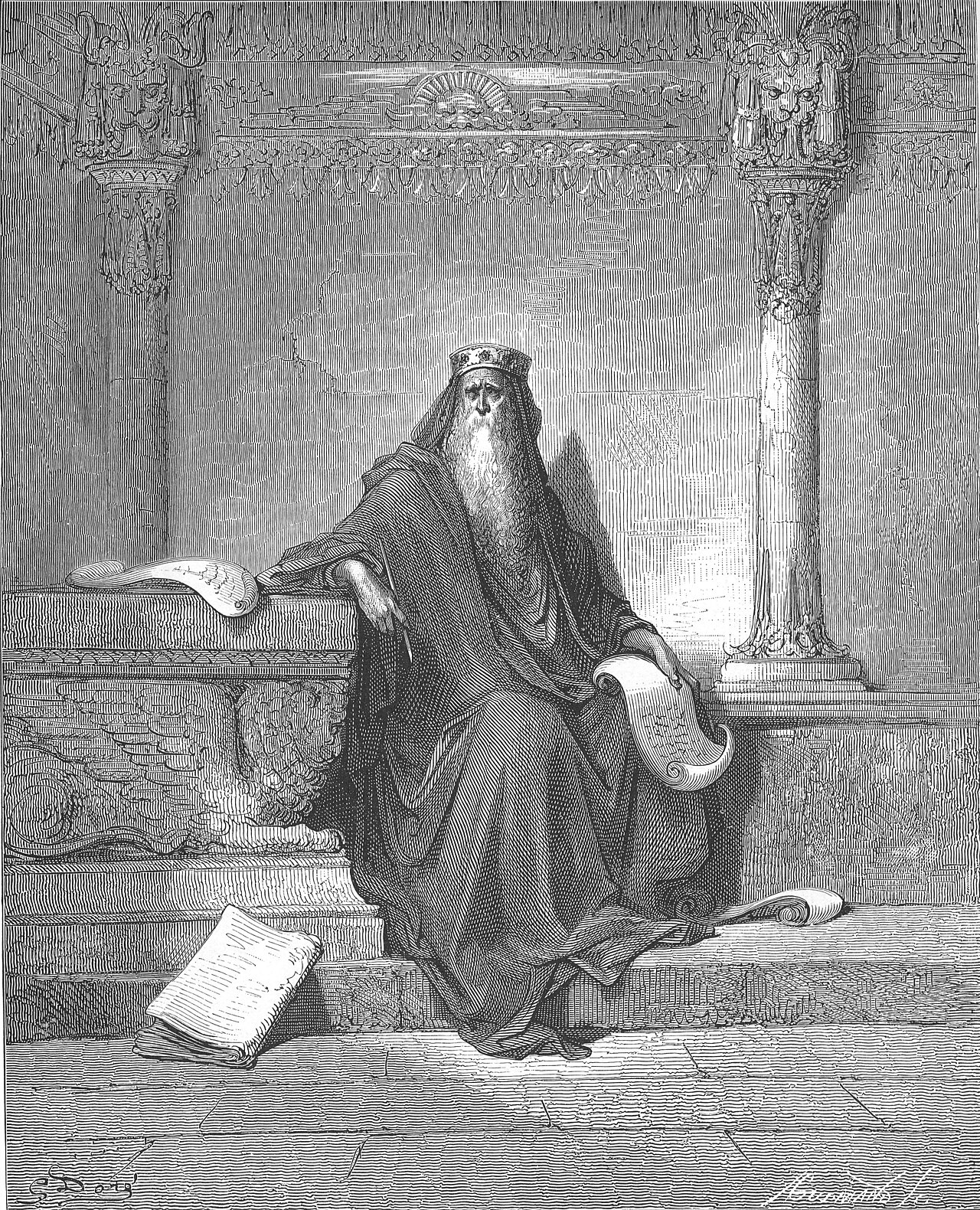
This page draws on Augustine of Hippo, EXPOSITIONS OF THE PSALMS 127.1; F. W. Farrar, The First Book of Kings (Expositor's Bible); Jamieson, Fausset & Brown, Commentary Critical and Explanatory on the Whole Bible; John Gill, Exposition of the Old Testament (1748-1763); John Wesley, Explanatory Notes upon the Old Testament; Keil, The Books of the Kings and Matthew Henry, Commentary on the Whole Bible.