
On this page, 6 sections
The one drawing
Across the canon
Old Testament
New Testament
The other 57 books of the canon carry none.
12 passages
Where Scripture speaks
The passages this subject stands on, in canon order.
but you must not eat from the tree of the knowledge of good and evil; for in the day that you eat of it, you will surely die.”By the sweat of your brow you will eat your bread, until you return to the ground—because out of it were you taken. For dust you are, and to dust you shall return.”But I know that my Redeemer lives, and in the end He will stand upon the earth.Even though I walk through the valley of the shadow of death, I will fear no evil, for You are with me; Your rod and Your staff, they comfort me.Precious in the sight of the LORD is the death of His saints.before the dust returns to the ground from which it came and the spirit returns to God who gave it.I will ransom them from the power of Sheol; I will redeem them from Death. Where, O Death, are your plagues? Where, O Sheol, is your sting? Compassion is hidden from My eyes.Jesus said to her, “I am the resurrection and the life. Whoever believes in Me will live, even though he dies.For the wages of sin is death, but the gift of God is eternal life in Christ Jesus our Lord.The last enemy to be destroyed is death.“Where, O Death, is your victory? Where, O Death, is your sting?”‘He will wipe away every tear from their eyes,’ and there will be no more death or mourning or crying or pain, for the former things have passed away.”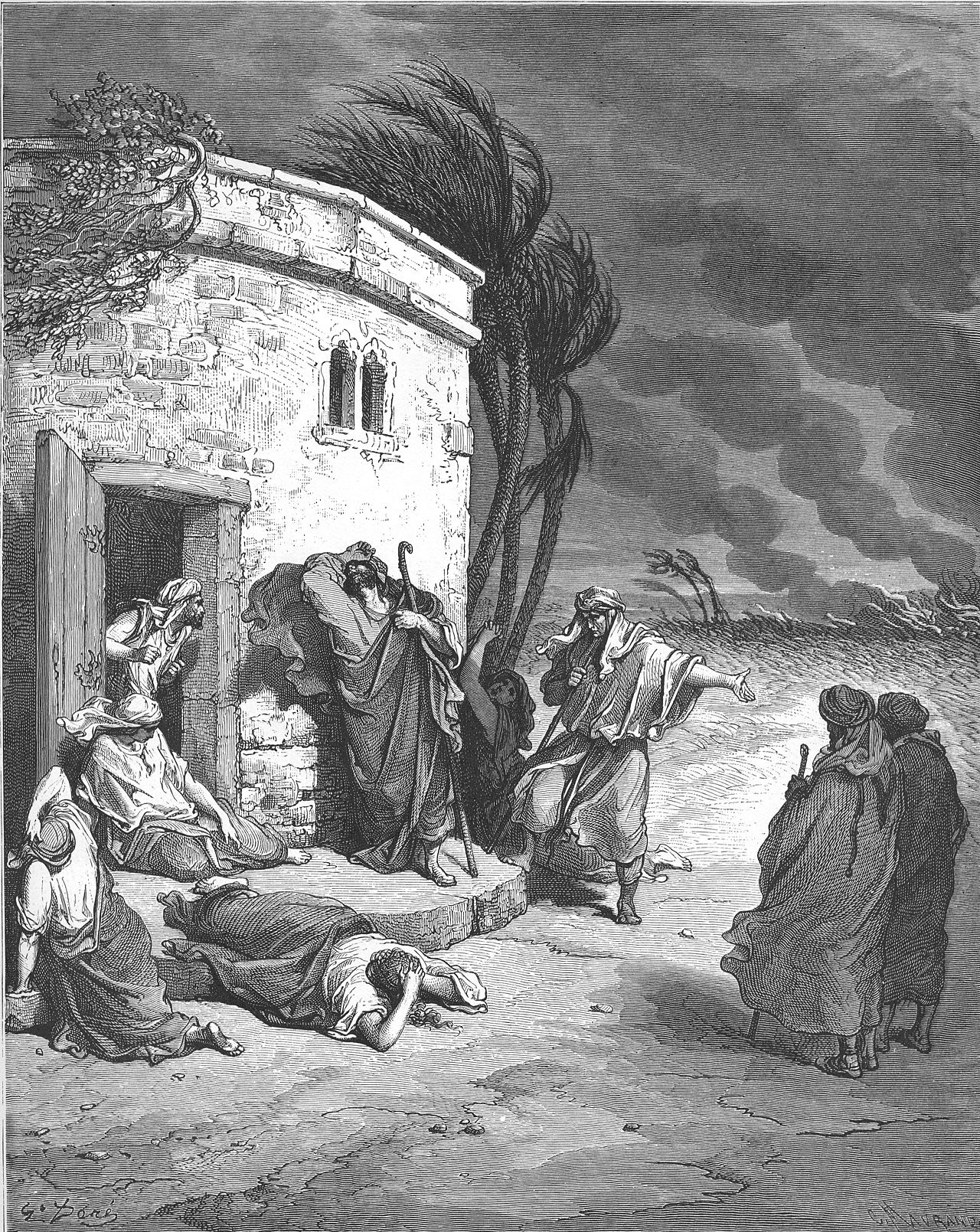
Death in Scripture, in full
Death entered the world as an intruder, not a design. When God finished creating, everything He had made was "very good" (Genesis 1:31). Death is not named among the good things. It shows up only after sin does, spoken as a warning before it ever becomes a fact: "in the day that thou eatest thereof thou shalt surely die" (Genesis 2:17).
Scripture treats death with total honesty. It never dresses it up as natural or neutral. Paul calls it flatly what it is ("the wages of sin is death" (Romans 6:23)) and traces its arrival to one man's disobedience, "for since by man came death" (1 Corinthians 15:21). Every grave since Eden is downstream of that first warning.
The Old Testament does not flinch from describing what dying feels like from the inside. Job, stripped of his children and his health in a single day, says of the grave that whoever goes down there does not come up again, not in this present order of things (Job 7:9). His words are not despair without hope; they are honesty about how final death looks from underneath it. The Psalms echo the same weight: in death there is no remembrance of God (Psalm 6:5), a cry from someone who knows exactly how much the grave silences.
Yet even inside the Old Testament, hope keeps surfacing. Job, in his lowest hour, still says, "I know that my redeemer liveth" (Job 19:25). The hope is not explained in full. It simply refuses to let the grave have the last word.
The New Testament explains why. Death is called "the last enemy that shall be destroyed" (1 Corinthians 15:26): an enemy, not a friend, and a defeated one. Jesus told Martha, grieving her brother, "I am the resurrection, and the life: he that believeth in me, though he were dead, yet shall he live" (John 11:25). Four days after Lazarus died, Jesus called him out of the tomb by name. It was a sign pointing past itself: to His own death and His own rising, which would settle the question for everyone who trusts Him.
Paul writes to a church frightened for loved ones who had already died, and tells them plainly not to sorrow as others which have no hope (1 Thessalonians 4:13). Christians grieve (Scripture never asks them not to) but they grieve toward a reunion, not into a void. Death for the believer is described as sleep, a word used nowhere for someone gone for good.
The strongest statement comes near the very end of the book. When death itself is finally undone, John sees it thrown into the lake of fire (Revelation 20:14) and hears the announcement that follows: "there shall be no more death, neither sorrow, nor crying" (Revelation 21:4). Death, which entered as an intruder in a garden, is evicted for good in a city.
None of this is possible apart from what happened at the cross and the empty tomb. Christ abolished death, and brought life and immortality to light through the gospel (2 Timothy 1:10). He did not merely teach about death from a safe distance; He walked into it Himself, and walked back out. That is why Paul can end his longest chapter on the subject not in dread but in a taunt aimed straight at the grave: "O death, where is thy sting?" (1 Corinthians 15:55). The sting is drawn because Christ absorbed it. For everyone joined to Him, death has become a doorway rather than a wall.
4 voices
What teachers have said
For since by man came death - Mortality came by Adam, immortality by Christ; so sure as all have been subjected to natural death by Adam, so sure shall all be raised again by Christ Jesus.
Adam Clarke · Commentary on the Bible
Written before 1832.
"From Adam to Moses death reigned"; but the presence of the Word abolished death. No longer in Adam are we all dying. In Christ we are all reviving.
Athanasius of Alexandria · Discourses Against the Arians 1.59.8
Written before 373.
Man indeed brought death to himself and to the Son of Man. But the Son of Man, by dying and rising again, brought life to man.
Augustine of Hippo · Letter 140, to Honoratus 9
Written before 430.
He who now gives true palms to the victors was beaten in the face with hostile palms; he who clothes all others with the garment of immortality was stripped of his earthly garment.
Cyprian · Treatise IX. On the Advantage of Patience 7
Written before 258.
The words underneath
Each card is one Hebrew or Greek word behind death. It gives the sense, the count across the canon, and the number in Strong's 1890 concordance.
maveth: death
Hebrew · H4194Strong's entry: death (natural or violent); concretely, the dead, their place or state (hades); figuratively, pestilence, ruin
also the unseen realm, the grave itself
156 times in the Old Testament · maveth, in full →
thanatos: death
Greek · G2288Strong's entry: (properly, an adjective used as a noun) death (literally or figuratively)
the noun behind every NT mention of the last enemy
120 times in the New Testament · thanatos, in full →
anastasis: resurrection
Greek · G386Strong's entry: a standing up again, i.e. (literally) a resurrection from death (individual, genitive case or by implication, (its author)), or (figuratively) a (moral) recovery (of spiritual truth)
anástasis — resurrection, a standing up again from death — mâveth's answer
42 times in the New Testament · anastasis, in full →
aphtharsia: incorruptibility
Greek · G861Strong's entry: incorruptibility; genitive, unending existence; (figuratively) genuineness
the immortality the gospel brings to light
8 times in the New Testament · aphtharsia, in full →
Life questions