
Hebrews 2 · Passage · Death and Dying
The Fear of Death Destroyed
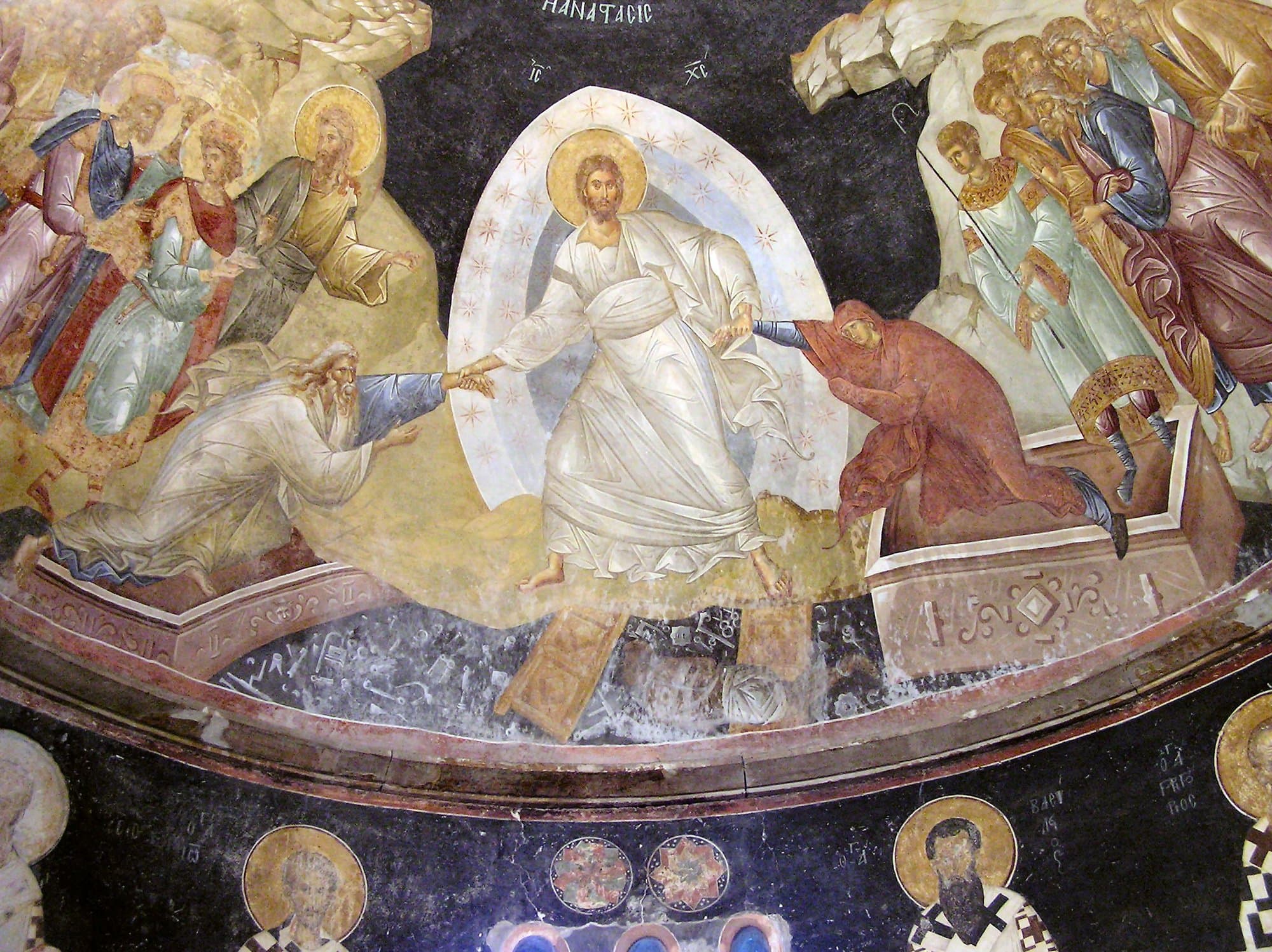
Hebrews 2:14 to 15 says that Jesus took on human nature in order to die, and that His death frees those held all their lives by the fear of death.
Charles Spurgeon told his hearers that it is natural for man to fear dying, because man was not originally created to die.
and free those who all their lives were held in slavery by their fear of death.
- The passage
- Hebrews 2:14 to 15
- Book
- Hebrews
- Hold in memory
- Hebrews 2:15, Hebrews 2:18
Summary
Hebrews 2:14 to 15 gives the reason for the incarnation. The argument runs from Hebrews 2:9 to Hebrews 2:18, and these two verses give its turn from the suffering of the Son to the freedom of His people. The writer goes on to say that the same likeness to His brothers makes Him a merciful high priest who helps the tempted.
- The Greek verb for destroying the devil, katargeo, stands 27 times in the New Testament, and Paul uses it when he writes that Christ Jesus abolished death.
- Albert Barnes and John Wesley differ over whether the devil's power of death means that he brought death into the world or that God permits him a power over the ungodly.
- Jewish writings called Satan the angel of death, as John Gill notes on this verse.
How the Argument Runs
Each link of the argument rests on the one before it.
Hebrews 2 moves from the Son's sharing of flesh and blood to His death, from His death to the devil's defeat, and from that defeat to the freeing of those who feared death.
| The link | Verse | The Berean words |
|---|---|---|
| The Son shares their nature | Hebrews 2:14 | “He too shared in their humanity” |
| The Son dies for them | Hebrews 2:9 | “so that by the grace of God He might taste death for everyone” |
| The devil's power is broken | Hebrews 2:14 | “so that by His death He might destroy him who holds the power of death” |
| The slaves are freed | Hebrews 2:15 | “held in slavery” |
| The Son becomes their priest | Hebrews 2:17 | “a merciful and faithful high priest” |
Destroy, Power and Slavery
The Greek words of the two verses say what the death of the Son did to the devil and for the slaves.
The verb rendered “destroy” is katargeo, which Strong's gives as “to be (render) entirely idle (useless)”.
The word for the devil's power is kratos, which the gloss renders “power”. The writer says that the children share flesh and blood and that the Son “likewise” took part in the same. Jamieson, Fausset and Brown gloss the word “in a somewhat similar manner”, and add that He, unlike them, “was conceived and born not in sin”.
The verb for setting free in Hebrews 2:15 is apallasso, glossed “may set free” and used three times in the New Testament. The slavery is douleia, a word of five uses. Romans 8:15 ties slavery to fear in the same way: “For you did not receive a spirit of slavery that returns you to fear.”
The Angel of Death and the Serpent's Head
John Gill read the verse against Jewish teaching about death and against the first promise of Genesis.
John Gill, in his Exposition of the New Testament, wrote that “The apostle here speaks in the language of the Jews”. He said that the Jews “often call Samael, or Satan,” the angel of death in their Targums, Talmud and other writings. He added that the same writings say this angel “will cease in the time to come; that is, in the days of the Messiah”.
And I will put enmity between you and the woman, and between your seed and her seed. He will crush your head, and you will strike his heel.”The verse stands here because Gill read Hebrews 2:14 as the fulfilment of this first promise.
Gill wrote that the Messiah “has destroyed him, not as to his being, but as to his power; he has bruised his head”.
Free from the Fear of Death
The deliverance of Hebrews 2:15 reaches the fear of death now and death itself at the last.
Albert Barnes read the deliverance in two parts, first “To the dread of death”, and then “From death itself”, that is, “ultimately to bring them to a world where death shall be unknown.”
Because He Himself suffered when He was tempted, He is able to help those who are being tempted.The verse stands here because it gives the present help of the high priest who shared the flesh of those He frees, for those who still face trial and death.
Scripture calls the freeing of slaves at a price redemption.
How the Text Has Been Taught
John Chrysostom in a fifth-century homily and Adam Clarke in his nineteenth-century commentary read the bondage of the verse.
died 407 · John Chrysostom
John Chrysostom, in his fourth homily on Hebrews, gave three meanings of the bondage. It could mean that one who fears death is a slave, that all were slaves of death, or that people lived in continual fear of dying. He asked why his hearers should still fear the one “brought to nought”, and said that the devil “is no longer terrible, but has been trodden under foot”.
1762 to 1832 · Adam Clarke
Adam Clarke, in his Commentary on the Bible, thought it “very likely that the apostle has the Gentiles here principally in view”, since they had “no certainty of immortality”.
In What Sense the Devil Holds the Power of Death
Commentators of the eighteenth and nineteenth centuries give two readings of the devil's hold on death.
The devil brought death into the world, and death is his dominionAlbert Barnes
Albert Barnes read the phrase as “meaning that the devil was the cause of death in this world”, and held that it says nothing of “his power of inflicting death in particular instances”.
The objection: the Greek gives the devil's power with a present participle, “holding”.
The devil holds death by God's permission and uses it against the ungodlyJohn Wesley; John Gill
John Wesley wrote of “the tyranny of him that had, by God's permission, the power of death with regard to the ungodly”, and called death “the devil's servant and serjeant”. John Gill held that the devil “by divine permission has inflicted it, and will be the executioner of the second death”.
The objection: the risen Christ says, “I hold the keys of Death and of Hades” (Revelation 1:18).
The reading of the cross as a victory over the devil and death is one of the readings of the atonement.
A Death That Ends the Fear
The passage answers the fear of death with the death of the Son.
For the one who faces death, Hebrews offers a Brother who has gone through death first and a priest who helps on the way.
Sources
Scripture is the Berean Standard Bible.
- STEP Bible, Translators Brief lexicon of Extended Strongs for Greek (TBESG) and the Translators Amalgamated Greek New Testament (TAGNT), Tyndale House, Cambridge, CC BY 4.0.
- James Strong, A Concise Dictionary of the Words in the Greek Testament (1890), entry 2673.
- Robert Jamieson, A. R. Fausset and David Brown, Commentary Critical and Explanatory on the Whole Bible (1871), on Hebrews 2:14.
- John Gill, Exposition of the New Testament (1746 to 1748), on Hebrews 2:14.
- Albert Barnes, Notes, Explanatory and Practical, on the Old and New Testaments (1832 to 1869), on Hebrews 2:14 and Hebrews 2:15.
- John Wesley, Explanatory Notes upon the New Testament (1755), on Hebrews 2:14 and Hebrews 2:15.
- Adam Clarke, Commentary on the Bible (1832), on Hebrews 2:15.
- John Chrysostom, Homilies on Hebrews, homily 4, in Nicene and Post-Nicene Fathers, first series, volume 14.
- Charles Spurgeon, Fear of Death, Sermon 3125, The Metropolitan Tabernacle Pulpit (1909)
Keep Studying
Read it1
Studies1
In this trial6
People and groups7