
Place
Sea of Galilee
Also known as Lake Kinneret · Lake Tiberias · Sea of Chinnereth · Sea of Gennesaret
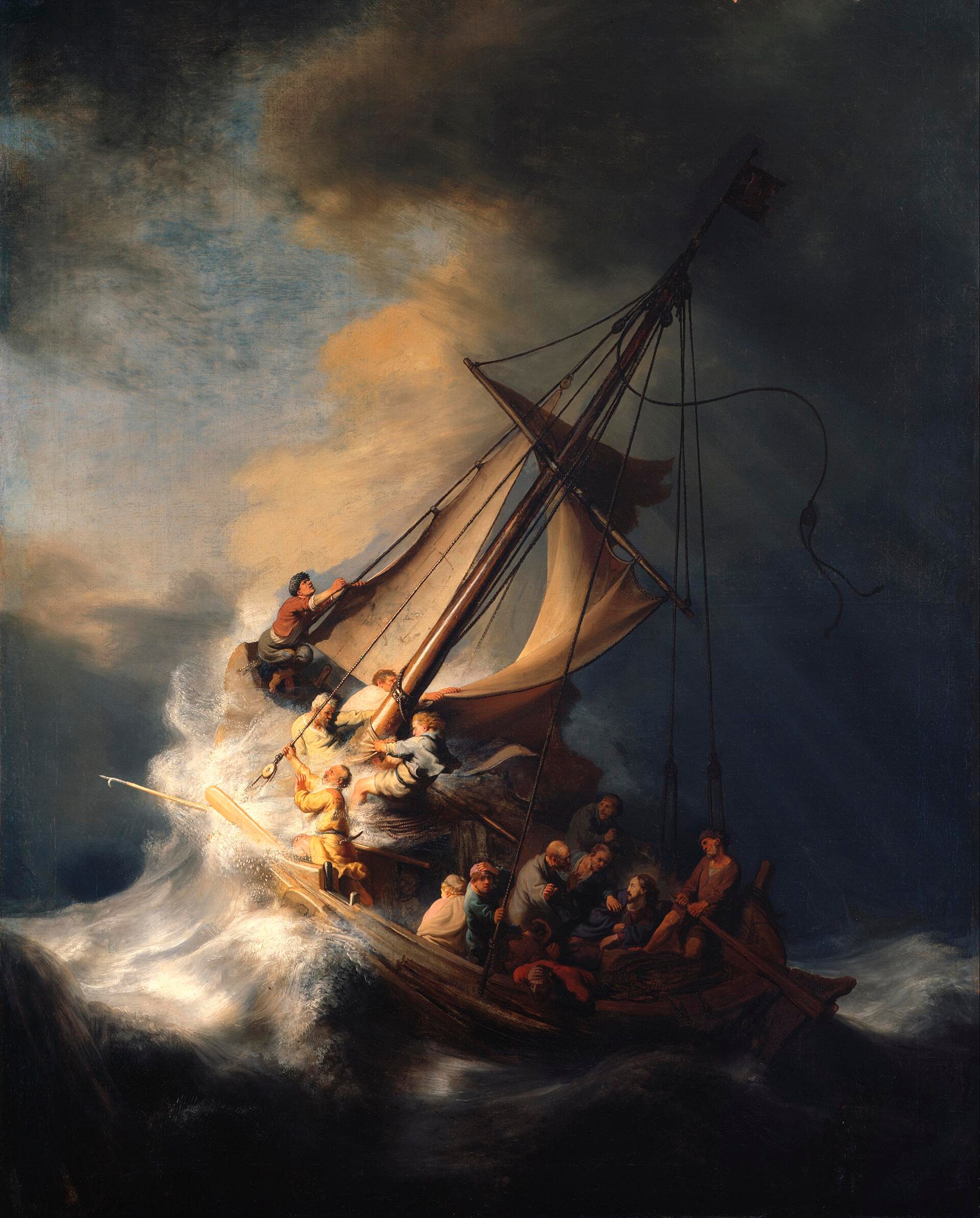
Rembrandt van Rijn, 1633. Public domain.
Summary
A freshwater lake in northern Israel; the setting for much of Jesus' Galilean ministry.
- Scripture calls this one lake by four names: Chinnereth, Galilee, Gennesaret, and Tiberias.
- Jesus called his first disciples away from their nets on this shore, and later stilled a storm that terrified them.
- On the far shore he freed a man ruled by a legion of demons, and the man went home to tell the whole region.
- Peter walked on this water toward Jesus, then began to sink the moment he looked at the wind.
- After the resurrection, Jesus met his disciples again on this same shore and asked Peter three times whether he loved him.
On this page
In Scripture
- Verses
- 8
- Books
- 5
Near Sea of Galilee
- Capernaum7.1 km · 4.4 mi N
- Mount Tabor23 km · 14 mi SW
- Cana of Galilee24 km · 15 mi W
- Nazareth29 km · 18 mi SW
- Nain30 km · 19 mi SW
- Shunem33 km · 21 mi SW
Straight-line distances, computed from the gazetteer coordinates.
Where it is
the country around it
- Modern name
- Lake Kinneret
- Country
- Israel
- Coordinates
- 32.8167° N, 35.5833° Efind it on the Atlas →
- Region
- Lower Galilee
- Kind of place
- Body of water
- Era
- Ancient and modern
- Located: the gazetteer fixes one site
- Placed: the point stands for an area, or is rounded
Why Sea of Galilee matters
The storm stilled, then the walk on the water
Mark 4:35-41 and Matthew 14:22-33, in the order they happen
Read Mark 4:35-41 and Matthew 14:22-33, in the order they happen
- "Let us cross to the other side"Mark 4:35When that evening came, He said to His disciples, “Let us cross to the other side.”
- A violent windstorm swamps the boatMark 4:37Soon a violent windstorm came up, and the waves were breaking over the boat, so that it was being swamped.
- Jesus asleep in the sternMark 4:38But Jesus was in the stern, sleeping on the cushion. So they woke Him and said, “Teacher, don’t You care that we are perishing?”
- "Silence! Be still!"Mark 4:39Then Jesus got up and rebuked the wind and the sea. “Silence!” He commanded. “Be still!” And the wind died down, and it was perfectly calm.
- "Who is this, that even the wind and the sea obey Him?"Mark 4:41Overwhelmed with fear, they asked one another, “Who is this, that even the wind and the sea obey Him?”
- Jesus comes to them, walking on the seaMatthew 14:25During the fourth watch of the night, Jesus went out to them, walking on the sea.
- Peter asks to come to Him on the waterMatthew 14:29“Come,” said Jesus. Then Peter got down out of the boat, walked on the water, and came toward Jesus.
- "Lord, save me!"Matthew 14:30But when he saw the strength of the wind, he was afraid, and beginning to sink, cried out, “Lord, save me!”
- "Truly You are the Son of God"Matthew 14:33Then those who were in the boat worshiped Him, saying, “Truly You are the Son of God!”
The two crossings are separated by other events in the Gospels, but both put the same question in front of the disciples: what kind of man commands wind and water, and what kind of man can be walked toward on top of it.
Calming the Storm: the full studyWhat happened here, in order
in the order the canon tells it
- Named Chinnereth, in Israel's eastern borderNumbers 34:11then go down from Shepham to Riblah on the east side of Ain and continue along the slopes east of the Sea of Chinnereth.
- The border runs to the edge of the Sea of ChinnerethJoshua 13:27and in the valley, Beth-haram, Beth-nimrah, Succoth, and Zaphon, with the rest of the kingdom of Sihon king of Heshbon (the territory on the east side of the Jordan up to the edge of the Sea of Chinnereth).
- Jesus calls Peter and Andrew from their netsMatthew 4:18As Jesus was walking beside the Sea of Galilee, He saw two brothers, Simon called Peter and his brother Andrew. They were casting a net into the sea, for they were fishermen.
- James and John leave their father's boatMatthew 4:21Going on from there, He saw two other brothers, James son of Zebedee and his brother John. They were in a boat with their father Zebedee, mending their nets. Jesus called them,
- Jesus teaches beside the Lake of GennesaretLuke 5:1On one occasion, while Jesus was standing by the Lake of Gennesaret with the crowd pressing in on Him to hear the word of God,
- The catch tears the netsLuke 5:6When they had done so, they caught such a large number of fish that their nets began to tear.
- "Go away from me, Lord, for I am a sinful man"Luke 5:8When Simon Peter saw this, he fell at Jesus’ knees. “Go away from me, Lord,” he said, “for I am a sinful man.”
- The Gerasene man with the unclean spiritMark 5:2As soon as Jesus got out of the boat, He was met by a man with an unclean spirit, who was coming from the tombs.
- The herd of pigs rushes into the seaMark 5:13He gave them permission, and the unclean spirits came out and went into the pigs, and the herd of about two thousand rushed down the steep bank into the sea and drowned in the water.
- The healed man proclaims it through the DecapolisMark 5:20So the man went away and began to proclaim throughout the Decapolis how much Jesus had done for him. And everyone was amazed.
- Jesus crosses to feed the five thousandJohn 6:1After this, Jesus crossed to the other side of the Sea of Galilee (that is, the Sea of Tiberias).
- The disciples see Jesus walking on the seaJohn 6:19When they had rowed about three or four miles, they saw Jesus approaching the boat, walking on the sea—and they were terrified.
- The risen Jesus appears again by the Sea of TiberiasJohn 21:1Later, by the Sea of Tiberias, Jesus again revealed Himself to the disciples. He made Himself known in this way:
- "It is the Lord!" and Peter jumps into the seaJohn 21:7Then the disciple whom Jesus loved said to Peter, “It is the Lord!” As soon as Simon Peter heard that it was the Lord, he put on his outer garment (for he had removed it) and jumped into the sea.
- "Do you love Me?" a third time, and "Feed My sheep"John 21:17Jesus asked a third time, “Simon son of John, do you love Me?” Peter was deeply hurt that Jesus had asked him a third time, “Do you love Me?” “Lord, You know all things,” he replied. “You know I love You.” Jesus said to him, “Feed My sheep.
Sea of Galilee in Scripture
8 verses name it, or one of its other names (Lake Kinneret, Lake Tiberias, Sea of Chinnereth), in 5 books
Open a book to read its mentions here. Text: Berean Standard Bible.
Old TestamentNew Testamentsegment width = share of mentions
Old Testament2 books · 3 mentions
Numbers1 mention
Joshua2 mentions
- Joshua 12:3as well as the Arabah east of the Sea of Chinnereth to the Sea of the Arabah (the Salt Sea), eastward through Beth-jeshimoth, and southward below the slopes of Pisgah.
- Joshua 13:27and in the valley, Beth-haram, Beth-nimrah, Succoth, and Zaphon, with the rest of the kingdom of Sihon king of Heshbon (the territory on the east side of the Jordan up to the edge of the Sea of Chinnereth).
New Testament3 books · 5 mentions
Matthew2 mentions
- Matthew 4:18As Jesus was walking beside the Sea of Galilee, He saw two brothers, Simon called Peter and his brother Andrew. They were casting a net into the sea, for they were fishermen.
- Matthew 15:29Moving on from there, Jesus went along the Sea of Galilee. Then He went up on a mountain and sat down.
Mark2 mentions
The account
Read the account as one telling
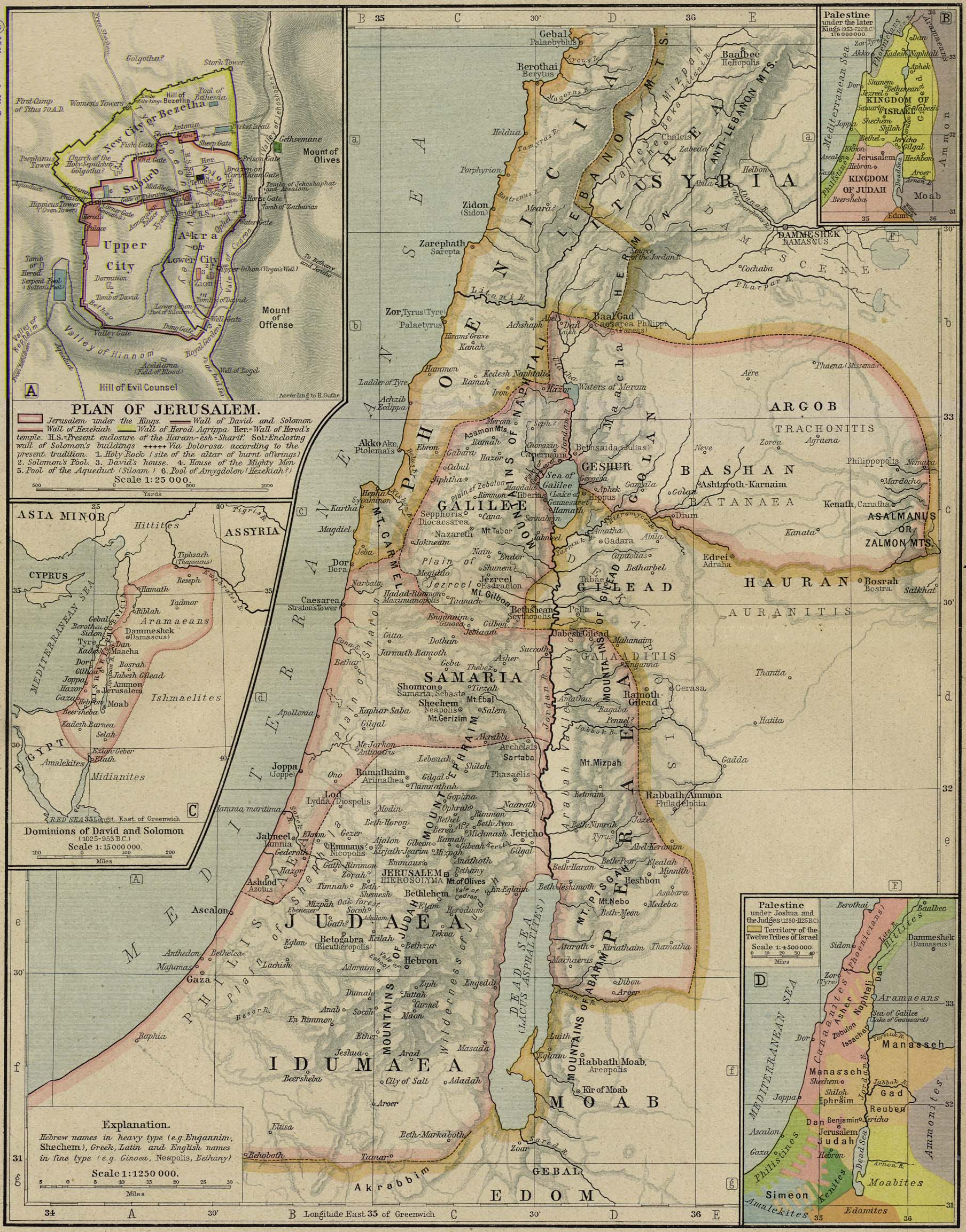
The Sea of Galilee is a freshwater lake roughly 13 miles long and 8 miles wide in the north of modern Israel, fed and drained by the Jordan River. In the Old Testament it is called the Sea of Chinnereth (Numbers 34:11).
The Gospels call it the Sea of Galilee (Matthew 4:18), Lake of Gennesaret (Luke 5:1), and Sea of Tiberias (John 21:1).
Most of Jesus' early public ministry takes place on or around its shores: Capernaum, Bethsaida, Chorazin, Magdala, and the traditional sites of the Sermon on the Mount and feeding of the 5,000 are all in the immediate region.
Notable Gospel events on the lake itself include the calling of the first disciples (Matthew 4:18–22), the calming of the storm (Mark 4:35–41), walking on water (Matthew 14:22–33), and the post-resurrection appearance to the disciples (John 21:1–14).
Common questions
Why were experienced fishermen terrified by this particular storm?
Several of the disciples had fished this lake their whole working lives, so they knew what an ordinary squall felt like. Mark says the waves were already breaking over the boat and swamping it, which meant they judged the boat was going down. Their fear was not inexperience. It was a trained read of a genuinely dangerous situation, which is what makes the calm that follows so plainly not a natural lull.
Why does Mark say Jesus was asleep, and what does that add to the story?
Mark places Jesus asleep on a cushion in the stern while the storm builds, a small, human detail that shows real physical exhaustion. The contrast is the point: a man tired enough to sleep through a swamping storm speaks two words and the same storm goes perfectly calm. His humanity and his authority sit in the same verse.
What does the healing of the Gerasene man have to do with this lake?
The healing happens on the lake's far shore, reached by the same crossing where the storm was stilled. The unclean spirits ask to enter a herd of pigs, and the herd rushes down the bank into the sea and drowns there, so the lake itself becomes part of how the account shows the spirits are truly gone. The healed man is then sent home to tell the story throughout the surrounding region, the Decapolis.
Why did Peter begin to sink after he had already been walking on the water?
Matthew's account says Peter saw the strength of the wind and was afraid, and it was at that point that he began to sink. He had been walking toward Jesus while his attention stayed fixed on him; the moment his attention moved to the storm around him, he lost what had been holding him up. Jesus reaches out and catches him at once, and asks him why he doubted.
Why does John set a resurrection appearance at this same lake, and what does the threefold question to Peter answer?
John records Jesus meeting the disciples again on this shore after the resurrection, cooking them breakfast after another great catch of fish. He then asks Peter three times whether Peter loves him, matching the three times Peter had denied him before the crucifixion. Each answer is met with the same charge, to feed and shepherd his people, restoring Peter to the work he had been called to at this lake in the first place.
Sources cited
- Easton's Bible Dictionary (1897): Galilee, Sea ofread 2026-04-17Public domain.
- ISBE (1915): Galilee, Sea ofread 2026-04-17Public domain.
- Wikipedia: Sea of Galileeread 2026-04-17CC-BY-SA.
- Berean Standard BiblePublic domain since 2023. All Scripture quoted on this page, from the site's own verse store.
Keep studying
On this page
Studies6
Lives that run through it2
Doorway2
Keep this page