
Place
Mount Tabor
Also known as Jebel et-Tur · Itabyrium
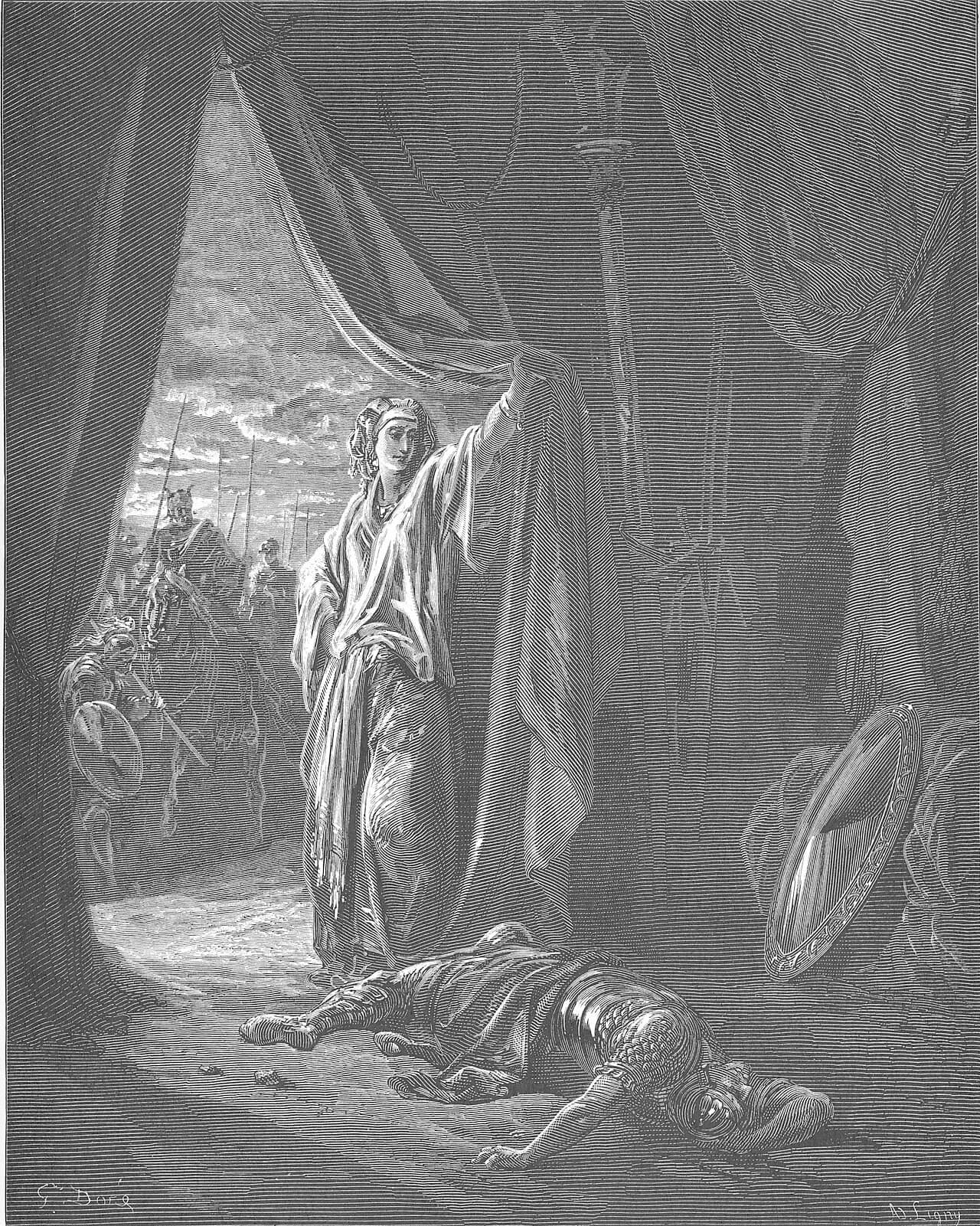
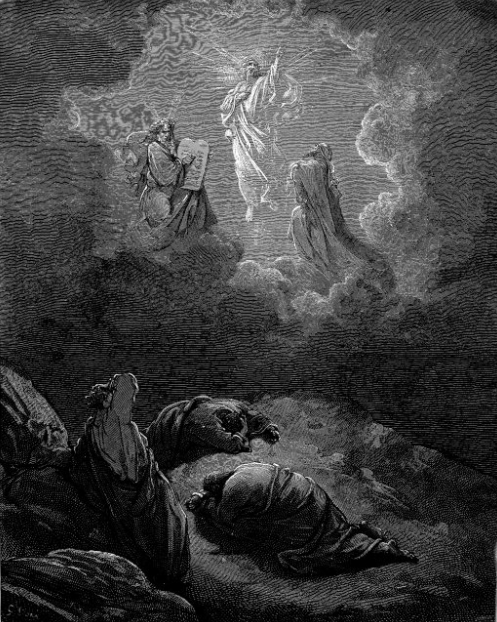
Gustave Doré, La Sainte Bible (Tours: Alfred Mame et fils, 1866). Public domain.
Summary
The rounded mountain on the Jezreel plain where Deborah and Barak gathered against Sisera, and which tradition since the fourth century has named as the mount of transfiguration.
- Tabor stands by itself out of the Jezreel plain, and its broad flat top is why the book of Judges puts an army on it.
- Deborah sent Barak up Tabor with ten thousand men of Naphtali and Zebulun, and the fighting happened in the plain below at the Kishon.
- Coming down off the mountain into nine hundred iron chariots was the act of faith, and the climb was only the preparation.
- Gideon learned at Judges 8:18 that two Midianite kings had killed his brothers at Tabor, and Scripture never tells the story.
- Christian tradition from the fourth century names Tabor as the mount of transfiguration, and no Gospel names any mountain at all.
On this page
In Scripture
- Verses
- 3
- Books
- 1
Near Mount Tabor
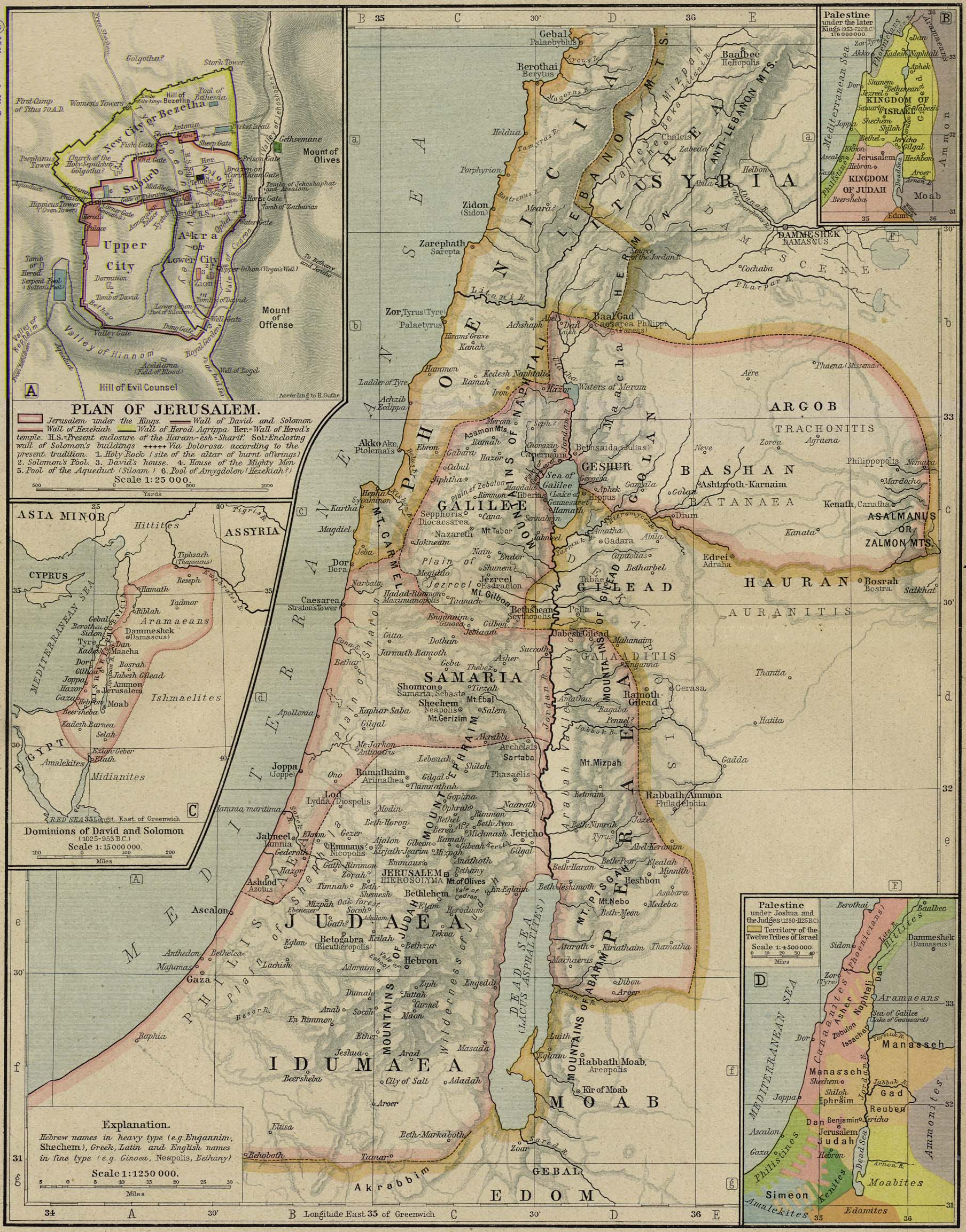
- Nain7.4 km · 4.6 mi SW
- Cana of Galilee8.3 km · 5.1 mi NW
- Nazareth8.6 km · 5.4 mi W
- Shunem10 km · 6.5 mi SW
- Jezreel16 km · 9.7 mi S
- Mount Gilboa20 km · 12 mi S
Straight-line distances, computed from the gazetteer coordinates.
Where it is
the country around it
- Coordinates
- 32.6870° N, 35.3909° Efind it on the Atlas →
- Region
- Jezreel Valley, Lower Galilee
- Kind of place
- Mountain
- Located: the gazetteer fixes one site
Why Mount Tabor matters
What has been found
the evidence, and where it is disputed
Deborah, Barak and the chariots of Sisera
Judges 4 and 5, in the order the text tells it
Read Judges 4 and 5, in the order the text tells it
- Nine hundred chariots of ironJudges 4:3Then the Israelites cried out to the LORD, because Jabin had nine hundred chariots of iron, and he had harshly oppressed the Israelites for twenty years.
- A prophetess judging IsraelJudges 4:4Now Deborah, a prophetess, the wife of Lappidoth, was judging Israel at that time.
- The command names the mountainJudges 4:6She summoned Barak son of Abinoam from Kedesh in Naphtali and said to him, “Surely the LORD, the God of Israel, is commanding you: ‘Go and march to Mount Tabor, taking with you ten thousand men of Naphtali and Zebulun.
- Barak's one conditionJudges 4:8Barak said to her, “If you will go with me, I will go; but if you will not go with me, I will not go.”
- The honor will go to a womanJudges 4:9“I will certainly go with you,” Deborah replied, “but the road you are taking will bring you no honor, because the LORD will be selling Sisera into the hand of a woman.” So Deborah got up and went with Barak to Kedesh,
- Sisera is told Barak has gone up TaborJudges 4:12When Sisera was told that Barak son of Abinoam had gone up Mount Tabor,
- Down off the mountainJudges 4:14Then Deborah said to Barak, “Arise, for this is the day that the LORD has delivered Sisera into your hand. Has not the LORD gone before you?” So Barak came down from Mount Tabor with ten thousand men following him.
- The LORD routs the armyJudges 4:15And in front of him the LORD routed with the sword Sisera, all his charioteers, and all his army. Sisera abandoned his chariot and fled on foot.
- Jael and the tent pegJudges 4:21But as he lay sleeping from exhaustion, Heber’s wife Jael took a tent peg, grabbed a hammer, and went silently to Sisera. She drove the peg through his temple and into the ground, and he died.
- The song remembers the riverJudges 5:21The River Kishon swept them away, the ancient river, the River Kishon. March on, O my soul, in strength!
Nothing in the account happens on the summit. Tabor is where Israel gathers, and the Kishon in the plain below is where the day is decided.
Deborah and Jael: the full studyWhat happened here, in order
in the order the canon tells it
- Zebulun's border passes Chisloth-taborJoshua 19:12From Sarid it turned eastward along the border of Chisloth-tabor and went on to Daberath and up to Japhia.
- Issachar's border reaches TaborJoshua 19:22The border reached Tabor, Shahazumah, and Beth-shemesh, and ended at the Jordan. There were sixteen cities, along with their villages.
- Naphtali's border turns at Aznoth-taborJoshua 19:34Then the border turned westward to Aznoth-tabor and ran from there to Hukkok, touching Zebulun on the south side, Asher on the west, and Judah at the Jordan on the east.
- Deborah sends Barak up Mount TaborJudges 4:6She summoned Barak son of Abinoam from Kedesh in Naphtali and said to him, “Surely the LORD, the God of Israel, is commanding you: ‘Go and march to Mount Tabor, taking with you ten thousand men of Naphtali and Zebulun.
- Sisera is told Barak has gone up the mountainJudges 4:12When Sisera was told that Barak son of Abinoam had gone up Mount Tabor,
- The nine hundred chariots come to the KishonJudges 4:13he summoned all nine hundred of his iron chariots and all the men with him, from Harosheth-hagoyim to the River Kishon.
- Barak comes down from Mount TaborJudges 4:14Then Deborah said to Barak, “Arise, for this is the day that the LORD has delivered Sisera into your hand. Has not the LORD gone before you?” So Barak came down from Mount Tabor with ten thousand men following him.
- The LORD routs Sisera and his armyJudges 4:15And in front of him the LORD routed with the sword Sisera, all his charioteers, and all his army. Sisera abandoned his chariot and fled on foot.
- Issachar rushes into the valley at Barak's heelsJudges 5:15The princes of Issachar were with Deborah, and Issachar was with Barak, rushing into the valley at his heels. In the clans of Reuben there was great indecision.
- The Kishon sweeps the army awayJudges 5:21The River Kishon swept them away, the ancient river, the River Kishon. March on, O my soul, in strength!
- Gideon asks what men were killed at TaborJudges 8:18Next, Gideon asked Zebah and Zalmunna, “What kind of men did you kill at Tabor?” “Men like you,” they answered, “each one resembling the son of a king.”
- They were Gideon's own brothersJudges 8:19“They were my brothers,” Gideon replied, “the sons of my mother! As surely as the LORD lives, if you had let them live, I would not kill you.”
- The Oak of Tabor, a different place far to the south1 Samuel 10:3Then you will go on from there until you come to the Oak of Tabor. Three men going up to God at Bethel will meet you there, one carrying three young goats, another carrying three loaves of bread, and another carrying a skin of wine.
- The town of Tabor given to the Merarite Levites1 Chronicles 6:77The Merarites (the rest of the Levites) received the following: From the tribe of Zebulun they were given Rimmono and Tabor, together with their pasturelands.
- Tabor and Hermon shout for joyPsalms 89:12North and south You created; Tabor and Hermon shout for joy at Your name.
- Like Tabor among the mountainsJeremiah 46:18As surely as I live, declares the King, whose name is the LORD of Hosts, there will come one who is like Tabor among the mountains and like Carmel by the sea.
- A net spread out on TaborHosea 5:1“Hear this, O priests! Take heed, O house of Israel! Give ear, O royal house! For this judgment is against you because you have been a snare at Mizpah, a net spread out on Tabor.
- A high mountain, and the Gospel gives it no nameMatthew 17:1After six days Jesus took with Him Peter, James, and John the brother of James, and led them up a high mountain by themselves.
- Barak named in the roll of faithHebrews 11:32And what more shall I say? Time will not allow me to tell of Gideon, Barak, Samson, Jephthah, David, Samuel, and the prophets,
- Peter calls it the holy mountain2 Peter 1:18And we ourselves heard this voice from heaven when we were with Him on the holy mountain.
Where it points
The voices
each quoted from the work named
Hath not the Lord God of Israel commanded?--a Hebrew form of making an emphatic communication. Go and draw toward mount Tabor--an isolated mountain of Galilee, northeast corner of the plain of Esdraelon. It was a convenient place of rendezvous, and the enlistment is not to be considered as limited to ten thousand, though a smaller force would have been inadequate.
Mount Tabor - “Mount Tabor,” says Maundrell, “stands by itself, about two or three furlongs within the plains of Esdraelon. It has a plain area at the top, both fertile and delicious of an oval figure, extending about one furlong in breadth, and two in length.
The brook or stream Kishon (Nahr Mukutta), so called from its winding course, caused by the dead level of the plain of Esdraelon through which it flows, rises, in respect to one of its sources or feeders, in Mount Tabor, and flows nearly due west through the plain, under Mount Carmel, and into the Bay of Acre.
4 more teachers on these versesJamieson, Fausset & Brown · Ambrose of Milan · R. C. Sproul · Hilary of Arles
Barak went down from mount Tabor--It is a striking proof of the full confidence Barak and his troops reposed in Deborah's assurance of victory, that they relinquished their advantageous position on the hill and rushed into the plain in face of the iron chariots they so much dreaded.
So, then, it is not nature which is answerable for the fault or which is liable to weakness. It is not sex but valor which makes strong.
Under the impetus of the Spirit of God, Deborah led the people to freedom.
Tradition says that the transfiguration took place on Mt. Tabor.
Mount Tabor in Scripture
3 verses name it, or one of its other names (Jebel et-Tur, Itabyrium), in 1 book
Open a book to read its mentions here. Text: Berean Standard Bible.
Old Testament1 book · 3 mentions
Judges3 mentions
- Judges 4:6She summoned Barak son of Abinoam from Kedesh in Naphtali and said to him, “Surely the LORD, the God of Israel, is commanding you: ‘Go and march to Mount Tabor, taking with you ten thousand men of Naphtali and Zebulun.
- Judges 4:12When Sisera was told that Barak son of Abinoam had gone up Mount Tabor,
- Judges 4:14Then Deborah said to Barak, “Arise, for this is the day that the LORD has delivered Sisera into your hand. Has not the LORD gone before you?” So Barak came down from Mount Tabor with ten thousand men following him.
The account
Read the account as one telling
Mount Tabor enters the record in the survey of the land. Three of Joshua's border descriptions run to it or to towns named after it. Zebulun's border passes Chisloth-tabor, Issachar's border reaches Tabor, and Naphtali's turns at Aznoth-tabor, so the mountain sits at the meeting point of three allotments. That fact stands behind the battle. The two tribes Deborah calls up, Naphtali and Zebulun, are the two whose land touches the mountain, and Issachar, named in the song, holds the plain the fighting crosses. Moses blesses Zebulun and Issachar together in Deuteronomy 33:18 and 33:19 and says they will call peoples to the mountain and offer sacrifices there. Some readers take that mountain to be Tabor, since it sits where the two tribes meet; others take it for Mount Moriah. Scripture does not name the mountain, and this page does not choose between the readings.
A settlement of the same name stood on or beside the hill. 1 Chronicles 6:77 lists Tabor as a town with pasturelands, given to the Merarite clan of Levi. Albert Barnes reads Joshua 19:22 the same way and says the Tabor named there is probably the town rather than the famous mountain. A careful reader checks which of the two a given verse means.
In the days of the judges, Jabin king of Canaan held Israel down for twenty years through his commander Sisera, who had nine hundred chariots of iron. Deborah was a prophetess and she was judging Israel, sitting under the Palm of Deborah between Ramah and Bethel. She summoned Barak from Kedesh in Naphtali and gave him a command from the LORD: go to Mount Tabor with ten thousand men of Naphtali and Zebulun, and the LORD would draw Sisera and his chariots to the River Kishon. Barak would go only if Deborah went with him, and she went, and told him first that the honor of the day would go to a woman.
Sisera was told that Barak had gone up Mount Tabor, and he brought all nine hundred chariots to the Kishon. Then Deborah gave the word and Barak came down off the high ground with ten thousand men behind him. Judges 4:15 says the LORD routed Sisera and his army, and it says so before it describes a single Israelite blow. Sisera left his chariot and fled on foot, and he died in the tent of Jael the wife of Heber the Kenite.
Judges 5 is the older telling of the same day. It never names Tabor. It names the descent into the valley, at verse 15, and that is the mountain's part in it. What the song adds is the sky and the water. The stars fight from their courses against Sisera, and the Kishon, an ordinary seasonal stream, sweeps a chariot army away. It also records which tribes came and which stayed home, and it blesses Jael above all tent-dwelling women.
The mountain surfaces once more in Judges, and only inside a question. Gideon asks Zebah and Zalmunna what kind of men they killed at Tabor, they answer that each one resembled the son of a king, and Gideon tells them those men were his own brothers. Scripture never narrates that killing anywhere. Albert Barnes says plainly that this is the only hint preserved, and that the event cannot be placed within Gideon's campaign. It is a silence, and this page leaves it as one.
The Oak of Tabor in 1 Samuel 10:3 is a different place. Samuel gives Saul three signs along a walk that begins at Rachel's tomb on the border of Benjamin and ends at Gibeah, well to the south of Galilee. Jamieson, Fausset and Brown settle it in one clause: this is the oak of Tabor, not the celebrated mount, for that was far distant. The Hebrew helps as well. The lexicon entry h8396 covers a mountain and a city adjacent to it, and two compound place names are built on the same word, Chisloth-tabor and Aznoth-tabor. The name attaches to a hill, to a town, and to the ground on its shoulders.
The poets and the prophets use the mountain as a figure. Psalm 89:12 pairs Tabor with Hermon, and Spurgeon, Wesley and Clarke all read the pairing as west and east, which is the geography: Tabor west of the Jordan in lower Galilee, Hermon on the northern border beyond it. Jeremiah 46:18 says a coming conqueror will be like Tabor among the mountains and like Carmel by the sea, one hill that stands out from the hills and one headland that stands out from the coast. Hosea 5:1 charges the priests and the royal house with being a snare at Mizpah and a net spread out on Tabor, and Adam Clarke explains that both places were known for hunting, which is why the figure lands. Jerome's commentary on the verse records what the Septuagint made of it, and the Greek reading parts company with the Hebrew at that point.
Common questions
Was Jesus transfigured on Mount Tabor?
Readers differ; the positions are named
No Gospel names the mountain. Matthew and Mark say a high mountain, Luke says a mountain, and 2 Peter 1:18 says the holy mountain, so every identification is an inference from what stands around the passage.
Tabor is the oldest identification on record. Cyril of Jerusalem names it in his twelfth catechetical lecture around 350, Hilary of Arles about 449 says in so many words that tradition places it there, churches were built on the summit, and pilgrims have gone ever since. Readers who prefer Mount Hermon point to Caesarea Philippi at Hermon's foot in the scene six days earlier, and to the report that a town and a garrison stood on Tabor's summit in the first century, which sits awkwardly with going up by themselves. Tabor stands about 69 kilometers from Caesarea Philippi in a straight line, a real journey either way and not itself an argument for one mountain over the other.
Adam Clarke laid out Tabor, Hermon and a hill near Caesarea Philippi in 1832 and chose none of them. This page does the same.
What actually happened at Mount Tabor in the book of Judges?
Deborah sent Barak a command from the LORD: go to Mount Tabor with ten thousand men of Naphtali and Zebulun, and God would draw Sisera and his nine hundred iron chariots to the River Kishon. Barak went up, Sisera was told he was there, and Sisera brought the chariots to the river.
Then Deborah gave the word and Barak came down off the mountain into the plain. Jamieson, Fausset and Brown call that a striking proof of confidence, because it meant giving up the one position the chariots could not reach. Judges 4:15 says the LORD routed them.
Why did the army gather on a mountain and then leave it?
Because the mountain was the assembly point and the plain was the trap. Tabor stands alone out of the Jezreel plain with a broad level top, which Albert Barnes describes as nearly a mile round and out of reach of Sisera's chariots. Ten thousand men could form there in the open where chariots were useless.
The victory required them to come down, and the song says what met them at the bottom. The stars fought from their courses and the Kishon swept the army away.
Why is the River Kishon in the story at all?
Because it starts at the mountain. Albert Barnes notes that the Kishon rises, in respect of one of its feeders, in Mount Tabor, and runs west across the flat plain under Carmel to the bay. Deborah names the mountain in one verse and the river in the next, and they are two ends of the same ground.
The song then says the river swept the army away. Matthew Henry reasons that a stream ordinarily shallow, whose fords the men would have known in any other season, could drown them when it ran in flood.
Is the Oak of Tabor in 1 Samuel 10:3 this mountain?
No, and the text is what shows it. Samuel gives Saul three signs along a walk that starts at Rachel's tomb on the border of Benjamin and ends at Gibeah, well to the south of Galilee, while Mount Tabor stands far to the north of that road.
Jamieson, Fausset and Brown say it directly: this is the oak of Tabor, not the celebrated mount, for that was far distant. Albert Barnes adds that some have conjectured the name here is a form of Deborah, and he calls that a conjecture, which is how this page carries it.
Who were the brothers killed at Tabor in Judges 8?
Gideon's own brothers, sons of his mother, and the whole record is four verses long. The killing is never narrated. It surfaces when Gideon asks Zebah and Zalmunna what kind of men they killed at Tabor, they answer that each one resembled the son of a king, and Gideon tells them the men were his brothers.
Albert Barnes says plainly that this is the only hint preserved, and that the event cannot be placed within Gideon's campaign. Scripture is silent about it, and this page leaves the silence alone.
Was Deborah really a judge, or did she only give advice?
Judges 4:4 calls her a prophetess and says she was judging Israel, both in the same sentence, before the campaign begins. Israel went up to her for judgment under the Palm of Deborah, and Judges 5:7 has her call herself a mother in Israel.
In the campaign itself she delivers the command from the LORD that names the mountain, she goes with the army when Barak will not go without her, and she gives the order to attack. Ambrose of Milan wrote in the fourth century that it is not sex but valor which makes strong. This page says what the text says and takes the wider question to its own study.
Does 1 Enoch connect Mount Tabor to the fallen angels?
No. The Watchers' oath in 1 Enoch is sworn on Mount Hermon, and the book explains the name Hermon from that oath. A search of the whole of 1 Enoch in this site's own store returns no occurrence of Tabor at all.
Tabor and Hermon do stand together in one verse of Scripture, Psalm 89:12, where both shout for joy at the name of the LORD. That psalm is about God creating the ends of the earth, and not about anything on either summit.
Notable art
1 verified piece depicting Mount Tabor
Sources cited
- OpenBible.info Bible Geocoding: Mount Taborread 2026-09-02The coordinates on this page. Used under CC-BY with attribution to OpenBible.info.
- Berean Standard BibleEvery verse quoted on this page, from the site's own verse store. Public domain since 2023.
- Gustave Doré, La Sainte Bible (Tours: Alfred Mame et fils, 1866)The two engravings on this page. Public domain.
- Albert Barnes, Notes, Explanatory and Practical, on the Old and New Testaments (1832 to 1869)The summit, the Kishon, the town on the mountain, the storm reported from Josephus, and the silence over Judges 8:18. Public domain.
- Adam Clarke, Commentary on the Bible (1832)Maundrell on the summit, the hunting figure in Hosea, and the three positions on the mountain of the transfiguration. Public domain.
- Robert Jamieson, A. R. Fausset and David Brown, Commentary Critical and Explanatory on the Whole Bible (1871)The rendezvous, the descent, the Kishon in flood with Van de Velde's reconstruction, and the oak of Tabor. Public domain.
- Matthew Henry, Commentary on the Whole Bible (1710)The Kishon in flood, and the reading of Psalm 89:12 with his own hedge. Public domain.
- John Wesley, Explanatory Notes upon the Old Testament (1765)Tabor and Hermon as the two sides of the Jordan in Psalm 89:12. Public domain.
- Charles H. Spurgeon, The Treasury of David, Vol. 4 (1874)Tabor and Hermon read as east and west in Psalm 89:12. Public domain.
- Ambrose of Milan, Concerning Widows (about 377)The fourth-century reading of Deborah's judgeship. The pool's stored year for this quote, 397, is Ambrose's death year rather than the work's date; corrected here per the pool hygiene rule. Public domain.
- Jerome, Commentary on Matthew (about 398) and Commentary on HoseaThe reading of Matthew 17:8, and the Septuagint reading of Hosea 5:1. The Judges 5:20 quote on the stars as angels is drawn from the site's pool under the title Commentary on the Song of Deborah; the pool's year for it (420) is Jerome's death year, not a composition date, so no year is printed for that quote. Public domain.
- Cyril of Jerusalem, Catechetical Lecture 12:16 (about 350)The earliest dated witness on this site naming Tabor as the mountain of the transfiguration, and the same citation the Mount Hermon page carries. Public domain.
- Hilary of Arles, Introductory Commentary on 2 Peter (about 449)The one sentence that calls the Tabor identification a tradition. Public domain.
- Hilary of Poitiers, in the Catena Aurea of Thomas Aquinas (about 355)Christ standing in His kingdom between the Law and the Prophets. Public domain.
- Henry Maundrell, A Journey from Aleppo to Jerusalem at Easter, A.D. 1697The description of the summit, cited here only as Adam Clarke gives it inside his own note.
- R. C. Sproul, Who Was Deborah?In copyright, cited only, quoted at thirteen words.
- R. H. Charles, The Book of Enoch (London: SPCK, 1917)The public-domain translation of 1 Enoch this site carries, searched for this page and returning no occurrence of Tabor. A Second Temple study resource, never Scripture.
- Flavius Josephus, The Jewish War, Book 4Cited at book level, as this site's transfiguration study cites it, for a town and a garrison on Tabor's summit in the first century. The passage is not quoted here.
- Flavius Josephus, Antiquities of the Jews, Book 5, Chapter 5, Paragraph 4 (Whiston translation)The passage Barnes says he draws on for the storm at the battle. Quoted in substance on the storm driving into the Canaanites' faces.
- Studylight.org, on Albert Barnes's note at Jeremiah 46:18Confirms Barnes's figure for Tabor's height, about 1,805 feet above the sea and about 1,350 feet above the plain, quoted on this page.
- This site's Mount Hermon research brief, on the straight-line distance from Banias to Mount TaborAbout 69 km, computed from this site's own stored coordinates. Used for the distance figure on this page rather than the wider range given by travel-distance websites.
- Custodia di Terra Santa, on the Basilica of the Transfiguration and Antonio BarluzziThe 1921 to 1924 construction, the architect, and the Byzantine and Crusader remains beneath it.
- BibleWalks and New World Encyclopedia, on Mount Tabor's Hellenistic and Roman fortificationThe Hellenistic name Itabyrion, the fortress taken by Antiochus III in 218 BC, and traces of Hellenistic and Roman-period walling on the summit. No excavation report itself was found in this pass, so these summaries are cited directly.
Keep studying
On this page
Studies12
Every page that names it1
Books that name it1
Doorway2
Keep this page