
Matthew 17:1
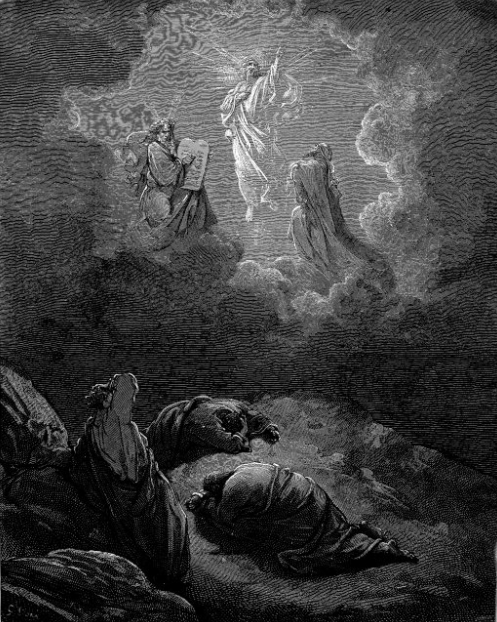
in Matthew 17After six days Jesus took with Him Peter, James, and John the brother of James, and led them up a high mountain by themselves.
BSB
The same verse in ASV and KJV ▾
ASV
And after six days Jesus taketh with him Peter, and James, and John his brother, and bringeth them up into a high mountain apart:
KJV
And after six days Jesus taketh Peter, James, and John his brother, and bringeth them up into an high mountain apart,
⋯
This verse in Matthew 17
Commentary
22 notes on this verse(Chapter 17 - Verse 1) And after six days, Jesus took Peter and James, and John his brother. Why Peter, James, and John are separated from the others in some places in the Gospels, or what privilege they have over the other apostles, we have frequently discussed. Now it is asked how he assumed them after six days, and led them to a high mountain apart: since the evangelist Luke mentions the number eight (Luke 9). But the answer is easy, because here the intermediate days are placed, the first and the last are added.
This site's exposition
a high mountain by themselves
on Matthew 17:1-2
Six days after Peter's confession, Jesus takes Peter, James and John up a high mountain. The Greek for transfigured is metamorphothe. His face shone like the sun, which echoes Moses' radiant face in Exodus 34 and the promise of Daniel 12:3 that the wise will shine.
The record, by era
The Church Fathers5 voices
In this Transfiguration undergone on the mount, the Lord fulfilled within six days the promise made to His disciples, that they should have a sight of His glory; as it is said, And after six days he took Peter, and James, and John his brother. When the Lord was about to show His disciples the glory of His brightness, He led them into the mountain, as it follows, And he took them up into a high mountain apart. Herein teaching, that it is necessary for all who seek to contemplate God, that they should not grovel in weak pleasures, but by love of things above should be ever raising themselves towards heavenly things; and to show His disciples that they should not look for the glory of the divine brightness in the gulph of the present world, but in the kingdom of the heavenly blessedness. He leads them apart, because the saints are separated from the wicked by their whole soul and devotion of their faith, and shall be utterly separated in the future; or because many are called, but few chosen, It follows, And he was transfigured before them.
What man, then, of sound mind can possibly suppose that they were ignorant of anything, whom the Lord ordained to be masters (or teachers), keeping them, as He did, inseparable (from Himself) in their attendance, in their discipleship, in their society, to whom, "when they were alone, He used to expound" all things which were obscure, telling them that "to them it was given to know those mysteries," which it was not permitted the people to understand? Was anything withheld from the knowledge of Peter, who is called "the rock on which the church should be built," who also obtained "the keys of the kingdom of heaven," with the power of "loosing and binding in heaven and on earth? " Was anything, again, concealed from John, the Lord's most beloved disciple, who used to lean on His breast to whom alone the Lord pointed Judas out as the traitor, whom He commended to Mary as a son in His own stead? Of what could He have meant those to be ignorant, to whom He even exhibited His own glory with Moses and Elias, and the Father's voice moreover, from heaven? Not as if He thus disapproved of all the rest, but because "by three witnesses must every word be established.
But further, if Christ reproves the scribes and Pharisees, sitting in the official chair of Moses, but not doing what they taught, what kind of (supposition) is it that He Himself withal should set upon His own official chair men who were mindful rather to enjoin-(but) not likewise to practise-sanctity of the flesh, which (sanctity) He had in all ways recommended to their teaching and practising?-first by His own example, then by all other arguments; while He tells (them) that "the kingdom of heavens" is "children's; " while He associates with these (children) others who, after marriage, remained (or became)virgins; " while He calls (them) to (copy) the simplicity of the dove, a bird not merely innocuous, but modest too, and whereof one male knows one female; while He denies the Samaritan woman's (partner to be) a husband, that He may show that manifold husbandry is adultery; while, in the revelation of His own glory, He prefers, from among so many saints and prophets, to have with him Moses and Elias -the one a monogamist, the other a voluntary celibate (for Elias was nothing else than John, who came "in the power and spirit of Elias" ); while that "man gluttonous and toping," the "frequenter of luncheons and suppers, in the company of publicans and sinners," sups once for all at a single marriage, though, of course, many were marrying (around Him); for He willed to attend (marriages) only so often as (He willed) them to be.
On the other hand, he whose "heart" was habitually found "lifted up" rather than fattened up, who in forty days and as many nights maintained a fast above the power of human nature, while spiritual faith subministered strength (to his body), both saw with his eyes God's glory, and heard with his ears God's voice, and understood with his heart God's law: while He taught him even then (by experience) that man liveth not upon bread alone, but upon every word of God; in that the People, though fatter than he, could not constantly contemplate even Moses himself, fed as he had been upon God, nor his leanness, sated as it had been with His glory! Deservedly, therefore, even while in the flesh, did the Lord show Himself to him, the colleague of His own fasts, no less than to Elijah. For Elijah withal had, by this fact primarily, that he had imprecated a famine, already sufficiently devoted himself to fasts: "The Lord liveth," he said, "before whom I am standing in His sight, if there shall be dew in these years, and rain-shower.
It is made a question how it could be after six days that He took them, when Luke says eight. (Luke 9:28.) The answer is easy, that here one reckoned only the intervening days, there the first and the last are also added.
15 more voices on this verse
The Church Fathers4 voices
"And after six days He taketh with Him Peter and James and John." Now another says, "after eight," not contradicting this writer, but most fully agreeing with him. For the one expressed both the very day on which He spake, and that on which He led them up; but the other, the days between them only. But mark thou, I pray thee, the severe goodness of Matthew, not concealing those who were preferred to himself. This John also often doth, recording the peculiar praises of Peter with great sincerity. For the choir of these holy men was everywhere pure from envy and vainglory. Wherefore doth He take with Him these only? Because these were superior to the rest. And Peter indeed showed his superiority by exceedingly loving Him; but John by being exceedingly loved of Him; and James again by his answer which he answered with his brother, saying, "We are able to drink the cup;" nor yet by his answer only, but also by his works; both by the rest of them, and by fulfilling, what he said. For so earnest was he, and grievous to the Jews, that Herod himself supposed that he had bestowed herein a very great favor on the Jews, I mean in slaying him. But wherefore doth He not lead them up straightway? To spare the other disciples any feeling of human weakness: for which cause He omits also the names of them that are to go up. And this, because the rest would have desired exceedingly to have followed, being to see a pattern of that glory; and would have been pained, as overlooked. For though it was somewhat in a corporeal way that He made the disclosure, yet nevertheless the thing had much in it to be desired. Wherefore then doth He at all foretell it? That they might be readier to seize the high meaning, by His foretelling it; and being filled with the more vehement desire in that round of days, might so be present with their mind quite awake and full of care.
Or because in six days this whole visible world was made; so he who is above all the things of this world, may ascend into the high mountain, and there see the glory of the Word of God.
Indeed, in this type of event, reason, harmony and example are served. For after six days the appearance of the Lord's glory is revealed. No doubt, with the cycles of six thousand years having unfolded, the glory of the heavenly kingdom is prefigured. And the three were taken up in analogy to the descent of the three, Shem, Ham and Japheth. By this the coming election to divine favor of the people is shown.
In the three thus taken up with Him, the election of people out of the three stocks of Sem, Cam, and Japhet is figured.
The Medieval Church4 voices
(e Bed.) Justly was it after six days that He showed His glory, because after six ages is to be the resurrectiond. (e Bed.) Or; He took only three disciples with Him, because many are called but few chosen. Or because they who now hold in incorrupt mind the faith of the Holy Trinity, shall then joy in the everlasting beholding of it.
And after six days Jesus taketh Peter, James, and John his brother. This does not contradict what Luke says, "And it came to pass about eight days after these sayings" (Lk 9:28). For Luke counts both the first day and the last day on which …
A commentator
BonaventureItinerarium Mentis in Deum, Chapter 1 · Written in the 13th century.
proposed
Just as God completed the whole world in six days and rested on the seventh, so the lesser world may be led in most orderly fashion through six stages of successive illuminations to the repose of contemplation. As a figure of this, one ascended by …
In the preceding part he showed the power of the Gospel teaching, etc.; here he shows the end, which is future glory. And concerning this he does two things. First, he shows how it was demonstrated in the transfiguration; secondly, how one can arrive at …
The Reformation1 voice
And Peter answering said to Jesus, Lord, it is good for us to be here: if thou wilt, let us make here three tabernacles; one for thee, and one for Moses, and one for Elijah. While he was speaking, lo, a bright cloud overshadowed them; and, lo, a voice out of the cloud, which said, This is my beloved Son, in whom I am well pleased; hear him.
quarantine:scripture (2026-07-29) — scripture-overlap:90%@v4-5
The Puritans and the Awakening2 voices
That is, so long after Christ's conversation with his disciples at Caesarea Philippi, Peter's confession of him, and the reproof he gave him, upon his intimating that he should suffer and die, and Christ's resentment of it; after he had discoursed about his disciples taking up their cross, and following him; and of men's losing and finding their lives; and after the promise, or prophecy, that he had given out, that some then present should not die, until he came into his kingdom.
They were present when he raised the damsel to life, Mark v. 37 . They were afterward to be the witnesses of his agony, and this was to prepare them for that. Note, A sight of Christ's glory, while we are here in this world, is a good preparative for our sufferings with him, as these are preparatives for the sight of his glory in the other world.
The Nineteenth Century4 voices
A commentator
Albert Barnes1798–1870
Notes, Explanatory and Practical, on the Old and New Testaments (1832-1869)
Mat 17:1-9. See also Mar 9:2-10; Luk 9:28-36. And after six days - That is, six days from the conversation recorded in the last chapter. Luke Luk 9:28 says, about an eight days after. Matthew mentions the six days that intervened between the day of the conversation and the transfiguration. Luke includes both those days, and thus reckons eight. Besides, Luke does not pretend to fix the precise time. He says, “about an eight days after.” Taketh Peter, and James, and John - These three disciples were with him, also, in the garden of Gethsemane, Mar 14:
These verses contain one of the most remarkable events in our Lord’s earthly ministry, the event commonly called the transfiguration. The order in which it is recorded is beautiful and instructive. The latter part of the last chapter showed us the cross; here we are graciously allowed to see something of the coming reward. The hearts which have just been saddened by a plain statement of Christ’s sufferings are at once gladdened by a vision of Christ’s glory. Let us mark this. We often lose much by not tracing the connection between chapter and chapter in the Word of God.
These verses contain one of the most remarkable events in our Lord’s earthly ministry, the event commonly called the transfiguration. The order in which it is recorded is beautiful and instructive. The latter part of the last chapter showed us the cross; here we are graciously allowed to see something of the coming reward. The hearts which have just been saddened by a plain statement of Christ’s sufferings are at once gladdened by a vision of Christ’s glory. Let us mark this. We often lose much by not tracing the connection between chapter and chapter in the Word of God. There are some mysterious things, no doubt, in the vision here described. It must needs be so. We are yet in the body. Our senses are conversant with gross and material things; our ideas and perceptions about glorified bodies and dead saints must necessarily be vague and imperfect. Let us content ourselves with endeavoring to mark out the practical lessons which the transfiguration is meant to teach us. In the first place we have in these verses a striking pattern of the glory in which Christ and his people will appear when he comes the second time. There can be little question that this was one main object of this wonderful vision. It was meant to encourage the disciples by giving them a glimpse of good things yet to come. That face “shining as the sun” and that raiment “white as the light” were intended to give the disciples some idea of the majesty in which Jesus will appear to the world when he comes the second time, and all his saints with him. The corner of the veil was lifted up to show them their Master’s true dignity. They were taught that if he did not yet appear to the world in the guise of a King, it was only because the time for putting on his royal apparel was not yet come. It is impossible to draw any other conclusion from St. Peter’s language when writing on the subject.
After six days - Mar 9:2, has the same number; but Luke says, Luk 9:28, after eight days. The reason of this difference seems to be the following: Matthew and Mark reckon the days from that mentioned in the preceding chapter, to that mentioned in this; Luke includes both days, as well as the six intermediate: hence, the one makes eight, the other six, without any contradiction. Peter, James, and John - He chose those that they might be witnesses of his transfiguration: two or three witnesses being required by the Scripture to substantiate any fact. Eminent communications of the Divine favor prepare for, and entitle to, great services and great conflicts. The same three were made witnesses of his agony in the garden, Mat 26:37. A high mountain - This was one of the mountains of Galilee; but whether Mount Tabor or not, is uncertain. Some think it was Mount Hermon. St. Luke says, Christ and his disciples went up into the mountain to pray, Luk 9:28.
The words behind it
24 Greek wordsEvery Greek word of this verse in the order it stands, with what it means and the door to its own study. The last column counts the times a word stands in the whole Bible: the rarer the word, the more the places it appears belong together.
| Greek | Sound | Meaning | Word study | In the Bible |
|---|---|---|---|---|
| Καὶ | kai | And | G2532 → | 9120 times |
| μεθ᾽ | meth᾽ | after | G3326 → | 461 times |
| ἡμέρας | hemeras | days | G2250 → | 389 times |
| ἓξ | hex | six | G1803 → | |
| παραλαμβάνει | paralambanei | takes with [Him] | G3880 → | 49 times |
| ὁ | ho | <the> | G3588 → | 19766 times |
| Ἰησοῦς | iesous | Jesus | G2424 → | 908 times |
| τὸν | ton | <the> | G3588 → | 19766 times |
| Πέτρον | petron | Peter | G4074 → | 155 times |
| καὶ | kai | and | G2532 → | 9120 times |
| Ἰάκωβον | iakobon | James | G2385 → | 42 times |
| καὶ | kai | and | G2532 → | 9120 times |
| Ἰωάννην | ioannen | John | G2491 → | 134 times |
| τὸν | ton | the | G3588 → | 19766 times |
| ἀδελφὸν | adelphon | brother | G80 → | 343 times |
| αὐτοῦ | autou | of him | G846 → | 5565 times |
| καὶ | kai | and | G2532 → | 9120 times |
| ἀναφέρει | anapherei | brings up | G399 → | |
| αὐτοὺς | autous | them | G846 → | 5565 times |
| εἰς | eis | into | G1519 → | 1755 times |
| ὄρος | oros | a mountain | G3735 → | 62 times |
| ὑψηλὸν | hupselon | high | G5308 → | |
| κατ᾽ | kat᾽ | on | G2596 → | 468 times |
| ἰδίαν. | idian | [their] own. | G2398 → | 114 times |
ΚαὶAnd
kaiG2532 →9120 times
μεθ᾽after
meth᾽G3326 →461 times
ἡμέραςdays
hemerasG2250 →389 times
ἓξsix
hexG1803 →
παραλαμβάνειtakes with [Him]
paralambaneiG3880 →49 times
ὁ<the>
hoG3588 →19766 times
ἸησοῦςJesus
iesousG2424 →908 times
τὸν<the>
tonG3588 →19766 times
ΠέτρονPeter
petronG4074 →155 times
καὶand
kaiG2532 →9120 times
ἸάκωβονJames
iakobonG2385 →42 times
καὶand
kaiG2532 →9120 times
ἸωάννηνJohn
ioannenG2491 →134 times
τὸνthe
tonG3588 →19766 times
ἀδελφὸνbrother
adelphonG80 →343 times
αὐτοῦof him
autouG846 →5565 times
καὶand
kaiG2532 →9120 times
ἀναφέρειbrings up
anaphereiG399 →
αὐτοὺςthem
autousG846 →5565 times
εἰςinto
eisG1519 →1755 times
ὄροςa mountain
orosG3735 →62 times
ὑψηλὸνhigh
hupselonG5308 →
κατ᾽on
kat᾽G2596 →468 times
ἰδίαν.[their] own.
idianG2398 →114 times
A shaded row is a word that stands 400 times or fewer in the Bible.
The walk
8 stopsEach card is a verse this one points to, and under it the verses that one points to in turn. Where several paths arrive at the same place, that place is listed first: the text keeps returning to it.
Through
2 Corinthians 13:1This is the third time I am coming to you. “Every matter must be established by the testimony of two or three witnesses.”
it leads to
- Matthew 18:16
But if he will not listen, take one or two others along, so that ‘every matter may be established by the testimony of two or three witnesses.’
- Deuteronomy 19:15
A lone witness is not sufficient to establish any wrongdoing or sin against a man, regardless of what offense he may have committed. A matter must be established by the testimony of two or…
- Deuteronomy 17:6
On the testimony of two or three witnesses a man shall be put to death, but he shall not be executed on the testimony of a lone witness.
- John 8:17–18
Even in your own Law it is written that the testimony of two men is valid.
- Numbers 35:30
If anyone kills a person, the murderer is to be put to death on the testimony of the witnesses. But no one is to be put to death based on the testimony of a…
- Matthew 18:16
Through
2 Peter 1:18And we ourselves heard this voice from heaven when we were with Him on the holy mountain.
it leads to
- Matthew 17:6
When the disciples heard this, they fell facedown in terror.
- Matthew 17:6
Through
Matthew 26:37He took with Him Peter and the two sons of Zebedee and began to be sorrowful and deeply distressed.
it leads to
- Matthew 4:21
Going on from there, He saw two other brothers, James son of Zebedee and his brother John. They were in a boat with their father Zebedee, mending their nets. Jesus called them,
- Matthew 4:21
Through
Mark 5:37And He did not allow anyone to accompany Him except Peter, James, and John the brother of James.
it leads to
- Acts 9:40
Then Peter sent them all out of the room. He knelt down and prayed, and turning toward her body, he said, “Tabitha, get up!” She opened her eyes, and seeing Peter, she sat up.
- Acts 9:40
Where this verse is studied
On this page
Studies11
About Matthew
This page draws on 21 works. Open the list of works
This page draws on Adam Clarke, Commentary on the Bible; Albert Barnes, Notes, Explanatory and Practical, on the Old and New Testaments (1832-1869); Bonaventure, Itinerarium Mentis in Deum, Chapter 1; Hilary of Poitiers, Commentary on Matthew 17.2; Hilary of Poitiers, Catena Aurea by Aquinas; J.C. Ryle, Expository Thoughts on the Gospels: Matthew; Jerome, Commentary on Matthew; Jerome, Catena Aurea by Aquinas; John Calvin, Commentary on a Harmony of the Evangelists; John Calvin, Commentaries; John Chrysostom, Homily on the Gospel of Matthew 56; John Gill, Exposition of the New Testament (1746-1748); Matthew Henry, Commentary on the Whole Bible; Origen of Alexandria, Catena Aurea by Aquinas; Rabanus Maurus, Catena Aurea by Aquinas; Remigius of Rheims, Catena Aurea by Aquinas; Tertullian, The Prescription Against Heretics; Tertullian, On Monogamy; Tertullian, On Fasting; Theophylact of Ohrid, Commentary on Matthew and Thomas Aquinas, Commentary on Matthew.