
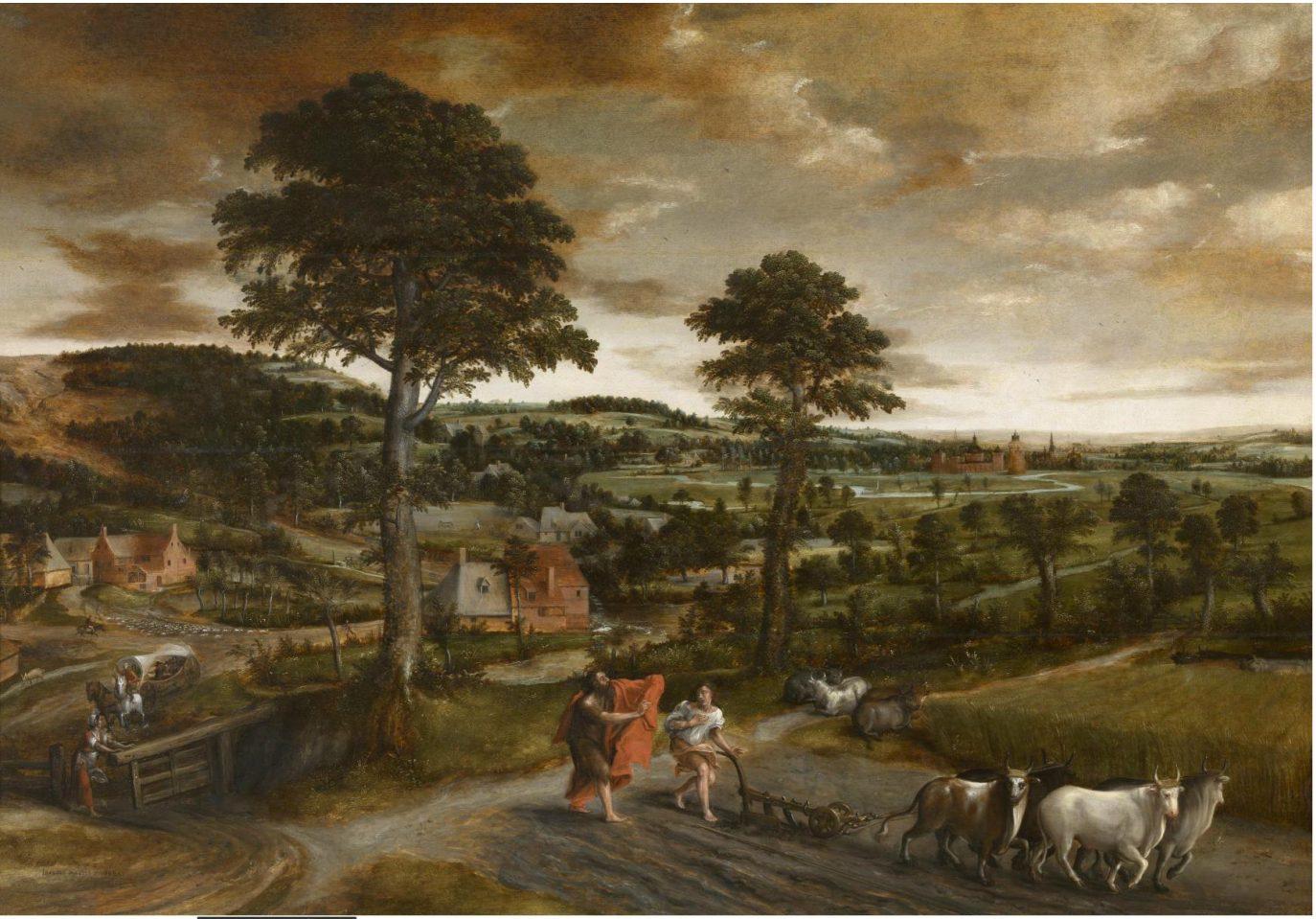
Jan Matsys, The Calling of Elisha, 1572. Public domain.
1 Kings 19 and 2 Kings 2 to 13 · Person · Featured Study
Elisha
Elisha son of Shaphat followed Elijah and prophesied in Israel until the reign of Jehoash.
When the sons of the prophets who were facing him from Jericho saw what had happened, they said, “The spirit of Elijah rests on Elisha.” And they went to meet him and bowed down to the ground before him.
- Family
- father: Shaphat
- Places
- The Jordan River, Jericho, Bethel, Carmel, Samaria, Shunem, Dothan, Gilgal, Damascus
- First named
- 1 Kings 19:16 “…as king over Israel and Elisha son of…”
- Last named
- Luke 4:27 “…Israel in the time of Elisha the prophet.…”
Elisha left twelve teams of oxen to follow Elijah, and a king later wept at his sickbed.
Summary
Elisha was ploughing when Elijah threw his cloak around him. He served Elijah until Elijah was taken, and then carried the prophet's office in Israel. Kings of Israel, Judah, Edom and Aram sought his word. He died in the reign of Jehoash.
- He sent the oil that made Jehu king over Israel.
- He wept before Hazael at Damascus over the evil Hazael would do.
- He gave King Jehoash the arrow of victory over Aram from his sickbed.
Where Elisha Stands in Scripture
He stands in 1 Kings 19, in 2 Kings 2 to 13, and once in Luke.
Elisha is first named in the word the LORD gave Elijah at Horeb. His story runs from the plough in 1 Kings 19 to his tomb in 2 Kings 13.
In the New Testament he is named once, in Luke 4:27.
You are also to anoint Jehu son of Nimshi as king over Israel and Elisha son of Shaphat from Abel-meholah to succeed you as prophet.Hazael and Jehu are named in the same charge to Elijah.
His Life, Turn by Turn
Each turn carries the place where it happened.
His turns run from Jericho and Bethel to Samaria and Damascus.
- Called by Elijah's cloak at the plougha ploughed field1 Kings 19:19
- Slaughters his oxen and follows Elijahthe same field1 Kings 19:21
- Takes up Elijah's cloak and parts the riverthe Jordan2 Kings 2:13 to 14
- Heals the city's spring with saltJericho2 Kings 2:21
- Curses the boys who jeer at himthe road to Bethel2 Kings 2:23 to 24
- Promises water to three kingsthe Desert of Edom2 Kings 3:16 to 17
- Foretells the end of the famineSamaria2 Kings 7:1
- Foresees the evil Hazael will doDamascus2 Kings 8:11 to 12
- Sends a young prophet to anoint JehuRamoth-gilead2 Kings 9:1 to 3
- Has the king shoot from the east windowhis sickbed2 Kings 13:17
- Dies and is burieda tomb in Israel2 Kings 13:20
Eleven turns of his life, each with its verse.
Foretells the end of the famine, Foresees the evil Hazael will do, Sends a young prophet to anoint Jehu, Has the king shoot from the east window, Dies and is buried
The Prophet and the Kings
Kings sought his word in war, in siege and in sickness.
One king of Israel swore to take his head.
The call at the plough1 Kings 19:19 to 21; Matthew Henry
Elisha asked leave to kiss his father and mother goodbye.
So Elisha turned back from him, took his pair of oxen, and slaughtered them. With the oxen’s equipment, he cooked the meat and gave it to the people, and they ate. Then he set out to follow and serve Elijah.He is remembered in 2 Kings 3:11 as the man who poured water on Elijah's hands.
Matthew Henry drew a lesson for any who leave their work to follow a call.
“It was a discouraging time for prophets to set out in. A man that had consulted with flesh and blood would not be fond of Elijah's mantle, nor willing to wear his coat; yet Elisha cheerfully, and with a great deal of satisfaction, leaves all to accompany him. Thus Matthew made a great fast when he left the receipt of custom to follow Christ.”
Matthew Henry · Commentary on the Whole Bible · on 1 Kings 19:21Puritan
The cloak at the Jordan2 Kings 2:1 to 15
Elisha also picked up the cloak that had fallen from Elijah, and he went back and stood on the bank of the Jordan.He had asked Elijah for a double portion of his spirit.
Water for three kings2 Kings 3:4 to 27; John Wesley
Jehoram of Israel, Jehoshaphat of Judah and the king of Edom marched seven days against Moab and ran out of water. Elisha answered for Jehoshaphat's sake.
and he said, “This is what the LORD says: ‘Dig this valley full of ditches.’ For the LORD says, ‘You will not see wind or rain, but the valley will be filled with water, and you will drink—you and your cattle and your animals.’Water came the next morning from the direction of Edom.
In his Explanatory Notes, John Wesley held that Elisha called for a harpist to quiet a mind troubled by the sight of Jehoram.
The siege of Samaria2 Kings 6:24 to 7:20
Ben-hadad besieged Samaria, and the city starved.
He announced, “May God punish me, and ever so severely, if the head of Elisha son of Shaphat remains on his shoulders through this day!”The king had heard a woman's cry on the city wall.
Hazael at Damascus2 Kings 8:7 to 15; Matthew Henry
Ben-hadad lay sick and sent Hazael with forty camel loads of gifts to ask whether he would recover.
“Why is my lord weeping?” asked Hazael. “Because I know the evil you will do to the Israelites,” Elisha replied. “You will set fire to their fortresses, kill their young men with the sword, dash their little ones to pieces, and rip open their pregnant women.”Hazael killed Ben-hadad the next day and reigned in his place.
Matthew Henry drew a lesson from the prophet's foresight.
“The man of God could outface the man of war. It was not in Hazael's countenance that Elisha read what he would do, but God did, at this time, reveal it to him, and it fetched tears from his eyes. The more foresight men have the more grief they are liable to.”
Matthew Henry · Commentary on the Whole Bible · on 2 Kings 8:11Puritan
The oil for Jehu2 Kings 9:1 to 13
Elisha sent one of the sons of the prophets with a flask of oil to the army camp at Ramoth-gilead.
Then take the flask of oil, pour it on his head, and declare, ‘This is what the LORD says: I anoint you king over Israel.’ Then open the door and run. Do not delay!”Jehu was a commander of the army there.
The arrows at the sickbed2 Kings 13:14 to 25
When Elisha lay sick, King Jehoash came down and wept over him. Elisha laid his hands on the king's hands on the bow.
Then Elisha said, “Take the arrows!” So he took them, and Elisha said to the king of Israel, “Strike the ground!” So he struck the ground three times and stopped. But the man of God was angry with him and said, “You should have struck the ground five or six times. Then you would have struck down Aram until you had put an end to it. But now you will strike down Aram only three times.”Hazael's son Ben-hadad was king of Aram after him.
Two Royal Houses
He served under the house of Ahab and the house of Jehu.
And you are to strike down the house of your master Ahab, so that I may avenge the blood of My servants the prophets and the blood of all the servants of the LORD shed by the hand of Jezebel.The young prophet spoke this charge to Jehu at Ramoth-gilead.
The Circle of Elisha
Nine of the people in his story stand closest to him.
His circle reached from his father's field to the throne of Aram.
Generation 1
Generation 2
- GehaziHis servant
- The Shunammite womanHis host at Shunem
- NaamanThe commander of Aram he sent to the Jordan
- Jehoram of IsraelAhab's son, king in Samaria
- HazaelThe servant he foresaw as king of Aram
- JehuThe commander he sent the oil to anoint
Generation 3
- JehoashJehu's grandson, king in his last illness
Four of the nine were kings or would become kings.
The Places of His Ministry
Ten places mark his ministry, from Abel-meholah to Damascus.
Elisha's ministry crossed Israel and reached the capital of Aram.
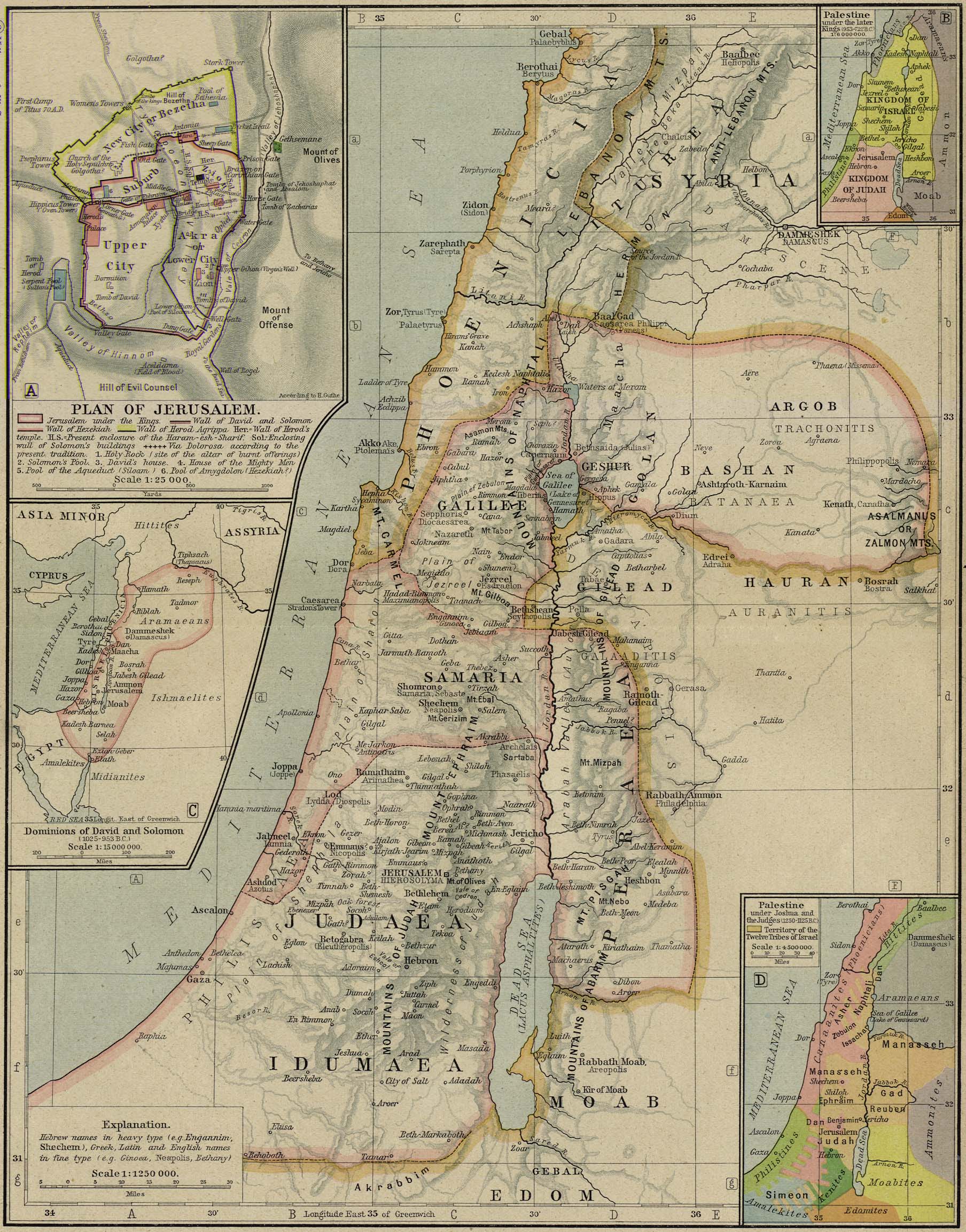
- Located: the site is known
- Identified: the point stands for an area, or is rounded
- 1Abel-meholah, The home named beside his father's name. 1 Kings 19:16
- 2The Jordan, The river Elijah and Elisha crossed on dry ground. 2 Kings 2:8
- 3Jericho, The city whose men told him its water was bad. 2 Kings 2:19
- 4Bethel, A city with a company of the sons of the prophets. 2 Kings 2:3
- 5Mount Carmel, The mountain where the Shunammite woman found him. 2 Kings 4:25
- 6Samaria, The capital where he had a house. 2 Kings 6:32
Shunem, Gilgal, Dothan, Damascus
- 7Shunem, The town where a room was kept for him. 2 Kings 4:10
- 8Gilgal, The Gilgal C. F. Keil places at Jiljilia, southwest of Shiloh. 2 Kings 4:38
- 9Dothan, The town an army of Aram surrounded by night. 2 Kings 6:13 to 14
- 10Damascus, The capital of Aram, where Ben-hadad lay sick. 2 Kings 8:7
Not placed: Abel-meholah (1), Gilgal (8).
Base map: Reference map of ancient Palestine, Rand McNally reference map (1926), public domain. Each place stands at its place page's coordinates, set on the plate by Jerusalem and Damascus, as the plate prints them.
Two of the ten, Abel-meholah and Elisha's Gilgal, are not placed on the map.
Questions His Life Raises
Three questions are answered here from the text and its commentators.
Were the boys at Bethel small children?2 Kings 2:23 to 24; Wesley and Keil
John Wesley held that the Hebrew word can name young men grown to maturity, old enough to know good from evil.
C. F. Keil calls them small boys. He holds that they voiced the contempt of Bethel, the chief seat of the calf worship, for the prophet of the LORD.
How long did Elisha serve?2 Kings 13:14; Keil and Henry
The text gives no years for his ministry. C. F. Keil reckons that he lived fifty years after the day at Bethel.
Matthew Henry counted about sixty years from his call to his last sickness.
Why did the arrows matter?2 Kings 13:15 to 19; Jamieson, Fausset and Brown
Jamieson, Fausset and Brown read Elisha's hands on the king's hands as a sign that the power of the shot came from the LORD. They read the arrow shot east as a declaration of war on Aram.
Then Jehoash son of Jehoahaz took back from Ben-hadad son of Hazael the cities that Hazael had taken in battle from his father Jehoahaz. Jehoash defeated Ben-hadad three times, and so recovered the cities of Israel.The three victories came after Elisha's death.
What the Text Leaves Unsaid
The text leaves three things about him untold.
The text gives no age for him at his call or at his death.
It does not name the place of his tomb.
It records no wife or child of his.
The Title Elijah Bore
A king gave him the title he had given Elijah.
When Elisha had fallen sick with the illness from which he would die, Jehoash king of Israel came down to him and wept over him, saying, “My father, my father, the chariots and horsemen of Israel!”Elisha had cried the same words in 2 Kings 2:12.
Voices on Elisha
One early church voice is given on the man raised at his tomb.
Apostolic Constitutions (died 380)
CONSTITUTIONS OF THE HOLY APOSTLES 6.30
The Constitutions of the Holy Apostles cited the dead man revived at Elisha's tomb to teach honour for the bodies of the saints.
“Wherefore, of those that live with God, even their very relics are not without honor. For even Elisha the prophet, after he was fallen asleep, raised up a dead man who was slain by the pirates of Syria. For his body touched the bones of Elisha, and he arose and revived. Now this would not have happened unless the body of Elisha were holy.”
on 2 Kings 13:21Patristic
What Did Elisha Tell Hazael?
The Hebrew of 2 Kings 8:10 has a written text and a margin.
Elisha answered, “Go and tell him, ‘You will surely recover.’ But the LORD has shown me that in fact he will die.”He told him to say the king would recoverJohn Wesley; Jamieson, Fausset and Brown
This reading follows the Hebrew margin and the ancient versions, as the Berean text does. John Wesley and Jamieson, Fausset and Brown hold that the illness was not mortal, so the first words answered the king's question.
C. F. Keil objects that a prophet does not speak an untruth, and that Ben-hadad never recovered from the illness.
He said the king would not liveC. F. Keil
C. F. Keil keeps the written Hebrew, which reads that the king would not live. He holds that Hazael brought back a false answer because he meant to kill the king.
Most commentators, Keil reports, follow the margin with the ancient versions, since the Masoretes read the word as "to him" here and in fourteen other places.
Books to Read Next
One work in the public domain, with a free copy to read.
The Books of the Kings
C. F. Keil · 1872
Keil discusses the boys at Bethel and the reading of 2 Kings 8:10 in his notes on 2 Kings 2 and 8.
Read at the Internet ArchiveThe Victories After His Death
Elisha's last word to a king promised victory over Aram, and it came after he was buried.
But the LORD was gracious to Israel and had compassion on them, and He turned toward them because of His covenant with Abraham, Isaac, and Jacob. And to this day, the LORD has been unwilling to destroy them or cast them from His presence.This verse stands between his burial and the three victories.
Sources
Scripture is the Berean Standard Bible.
- C. F. Keil, The Books of the Kings, translated by James Martin, T. and T. Clark, 1872, pp. 291, 299 to 300 and 334 to 335.
- Matthew Henry, Commentary on the Whole Bible, 1710, on 1 Kings 19:21 and 2 Kings 8:11 and 13:14.
- John Wesley, Explanatory Notes upon the Old Testament, 1765, on 2 Kings 2:23 to 24, 3:15 and 8:10.
- Jamieson, Fausset and Brown, Commentary Critical and Explanatory on the Whole Bible, 1871, on 2 Kings 8:10 and 13:15 to 18.
- Constitutions of the Holy Apostles, Book 6, Chapter 30.
Keep Studying
Read it4
Studies10
People and groups10
Places8
Symbols1