
2 Kings 6:8 to 23 · Story · Fear
Elisha at Dothan
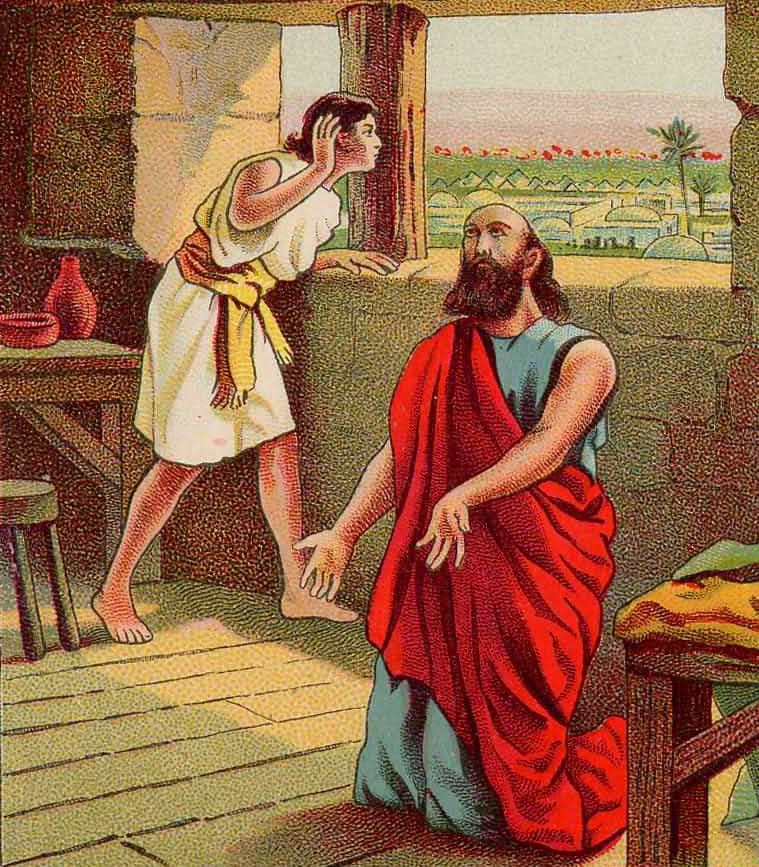
In 2 Kings 6 the servant of Elisha woke to an army around Dothan and was shown that the hills were full of fire.
The king of Aram sent horses, chariots and a great army by night to capture one prophet.
“Do not be afraid,” Elisha answered, “for those who are with us are more than those who are with them.”
- Where
- Dothan, Samaria
- Who
- Elisha
- When
- The days of Elisha's ministry in Israel (2 Kings 6:8)
Summary
Second Kings 6:8 to 23 is one episode of a border war between Aram and Israel in the days of Elisha. The war turned on the prophet, since he warned the king of Israel of each raid before it came. At Dothan Elisha met his servant's fear first with a word and then with a prayer.
- Elisha's prayer for opened eyes stands twice in the account, for his servant at Dothan and for the blinded Arameans inside Samaria (2 Kings 6:17 and 2 Kings 6:20).
- Elisha refused to let the king of Israel kill the captives, and after that the raiding bands of Aram stayed out of the land (2 Kings 6:21 to 23).
- Readers differ on whether the opened eyes saw a vision, the sight of the Spirit, or a host already present on the hills.
The Raids and the Warnings
The account opens in the war council of the king of Aram.
Elisha at Dothan is a story of the trial of fear, told in 2 Kings 6:8 to 23. It asks how Elisha met his servant's fear when the danger was real and close, and what the LORD gave the frightened young man.
The study tells the account in its order and reads the servant's cry and the opened eyes. It sets the story in the border war with Aram and follows it to the feast in Samaria. It also weighs who the servant was and how readers have understood what he saw.
Then the man of God sent word to the king of Israel: “Be careful passing by this place, for the Arameans are going down there.” So the king of Israel sent word to the place the man of God had pointed out. Time and again Elisha warned the king, so that he was on his guard in such places.The danger at Dothan grew out of these warnings, so the story of fear begins with them.
For this reason the king of Aram became enraged and called his servants to demand of them, “Tell me, which one of us is on the side of the king of Israel?” But one of his servants replied, “No one, my lord the king. For Elisha, the prophet in Israel, tells the king of Israel the very words you speak in your bedroom.”The reply turns the king against Elisha himself, which is why an army comes to Dothan in the verses that follow.
Nine Scenes from the Raids to the Feast
The scenes run in the order of the text, from the first raid to the meal that ended the raids.
The servant's fear came at the height of the danger, between the army's night march and the prayer that opened his eyes.
- The king of Aram plans where to camp"My camp will be in such and such a place"2 Kings 6:8
- The army surrounds Dothan in the dark"They went there by night"2 Kings 6:14
- The servant sees the army at dawn"what are we to do?"2 Kings 6:15
- Elisha prays for his servant"Then Elisha prayed"2 Kings 6:17
- The servant sees the hills"horses and chariots of fire all around Elisha"2 Kings 6:17
- The Arameans are struck blind"Please strike these people with blindness"2 Kings 6:18
- Elisha leads the army into the capital"And he led them to Samaria"2 Kings 6:19
- The soldiers see where they have been led"they were in Samaria"2 Kings 6:20
- The king feeds them and sends them back"the king prepared a great feast"2 Kings 6:23
A timeline of nine scenes in 2 Kings 6:8 to 23, each with a phrase of the Berean text and its verse.
Elisha leads the army into the capital, The soldiers see where they have been led, The king feeds them and sends them back
The Servant's Cry at Dawn
The servant's question at dawn is the fear the story turns on.
Elisha answered with a command and a reason (2 Kings 6:16). He gave the reason before the young man could see it, so for a moment the command rested on his master's word alone.
Matthew Henry, in his Commentary on the Whole Bible (1710), wrote, “The eyes of his body were open, and with them he saw the danger.”
Henry gave the sense of the prayer as “Lord, open the eyes of his faith, that with them he may see the protection we are under.”
Eyes Opened to the Hills
Second Kings ties the fire at Dothan to Elijah's parting and to Elisha's death.
As they were walking along and talking together, suddenly a chariot of fire with horses of fire appeared and separated the two of them, and Elijah went up into heaven in a whirlwind.Elisha had seen horses and chariots of fire before, so the servant was shown what his master already knew.
At that parting Elisha cried, “My father, my father, the chariots and horsemen of Israel” (2 Kings 2:12), and King Jehoash cried the same words over the dying Elisha (2 Kings 13:14).
Dothan and the Raiding Bands
Dothan was a town of Israel's hill country, and the war around it was fought by bands of raiders.
Dothan appears in two stories of Scripture. Joseph found his brothers there (Genesis 37:17), and centuries later the king of Aram's men brought him the report, “Elisha is in Dothan” (2 Kings 6:13).
The chapter before tells how the Arameans had gone out in bands and taken a young girl from Israel to serve Naaman's wife (2 Kings 5:2).
Blinded, Led into Samaria and Fed
The second half of the account turns the danger at Dothan into a meal in Israel's capital.
As the Arameans came down, Elisha prayed again, and the LORD struck them with blindness (2 Kings 6:18). Elisha led them to Samaria, where the LORD opened their eyes in the middle of Israel's capital (2 Kings 6:19 to 20). Told to set food and water before them, the king of Israel prepared a great feast and sent them back to their master (2 Kings 6:22 to 23).
John Wesley wrote in his Explanatory Notes upon the Old Testament (1765), “Elijah gave a specimen of Divine justice, when he called for flames of fire on the heads of his persecutors to consume them. Elisha gives a specimen of Divine mercy, in heaping coals of fire on the heads of his persecutors to melt them.”
The Servant Without a Name
Second Kings leaves him unnamed, and readers have guessed who he was.
Ambrose of Milan, in On the Duties of the Clergy (1.29.140), took the young man for Gehazi: “And Gehazi, the prophet's servant, seeing the army, began to fear that his life was in danger.”
Therefore, the leprosy of Naaman will cling to you and your descendants forever!” And as Gehazi left his presence, he was leprous—as white as snow.Gehazi left Elisha's presence a leper in the chapter before, yet 2 Kings 8:4 still calls him “the servant of the man of God”, so the text leaves the young man's name open.
Two Armies Around Dothan
Elisha counted two forces around the town, and at first only one of them could be seen.
The army of Aram still stood around the town when the young man's fear was answered, so the answer came as sight and the danger remained.
Jesus spoke of the same unseen help on the night of His arrest, when He said that His Father would at once put at His disposal “more than twelve legions of angels” (Matthew 26:53).
How Readers Have Understood the Story
Readers differ on what the opened eyes saw and on what kind of record the Elisha stories are.
The servant was given a visionAlbert Barnes
Albert Barnes, in his Notes, wrote that the servant "may be given a vision of the spiritual world, and see, as if with the bodily eye, the angelic host".
Against this reading, the text says the hills were full, and it uses the same words of the Arameans, whose opened eyes saw the real Samaria (2 Kings 6:20).
The eyes opened were the eyes of the SpiritJamieson, Fausset and Brown
Jamieson, Fausset and Brown, in their Commentary Critical and Explanatory (1871), wrote that "The opening of the eyes, which Elisha prayed for, were those of the Spirit, not of the body".
Against this reading, the text reports a sight of horses and chariots in a place, the hills around Elisha.
The host was there before the prayerAdam Clarke
Adam Clarke, in his Commentary on the Bible (1832), wrote, "The horses and chariots of fire were there, before the eyes of Elisha's servant were opened."
Against this reading, the text tells only what the young man saw after the prayer and says nothing of the hills before it.
The Elisha narrative is confused, and some of its miracles double Elijah'sWilliam Robertson Smith and Stanley Arthur Cook
In the Encyclopaedia Britannica (1911), William Robertson Smith and Stanley Arthur Cook held that “the narrative as we now have it is confused and incomplete”. They added that this may “throw some light on the altogether exceptional character of the miraculous element in Elisha’s history”. In their view several of his miracles “were merely repetitions or doubles of those of his predecessor”.
Against this reading, the text marks its own sequence, since the siege of Samaria follows the feast "Some time later" (2 Kings 6:24).
The story is the record of a campaignJohn Gill
John Gill's Exposition (1748 to 1763) read the siege that follows as the same king's next move, "not at all softened by the kind and humane treatment his forces had met with".
Against this reading, 2 Kings 6:8 to 23 names neither the king of Aram nor the king of Israel, so the episode cannot be dated from its own words.
The Hills Were Full
Elisha's prayer is one a frightened believer can still pray.
You, little children, are from God and have overcome them, because greater is He who is in you than he who is in the world.John gives the church the reckoning Elisha gave his servant, counting the One with them greater than the one against them.
Fear can press on the body and the mind, and prayer of this kind belongs beside medical care, never in its place.
Sources
Scripture is the Berean Standard Bible.
- Matthew Henry, Commentary on the Whole Bible (1710), on 2 Kings 6:17.
- John Wesley, Explanatory Notes upon the Old Testament (1765), on 2 Kings 6:17.
- Ambrose of Milan, On the Duties of the Clergy, book 1, chapter 29, section 140.
- Albert Barnes, Notes, Explanatory and Practical, on the Old and New Testaments (1832 to 1869), on 2 Kings 6:17.
- Robert Jamieson, A. R. Fausset and David Brown, Commentary Critical and Explanatory on the Whole Bible (1871), on 2 Kings 6:17.
- Adam Clarke, Commentary on the Bible (1832), on 2 Kings 6:17.
- John Gill, Exposition of the Old Testament (1748 to 1763), on 2 Kings 6:24.
- William Robertson Smith and Stanley Arthur Cook, "Elisha", Encyclopaedia Britannica, eleventh edition (1911)
Keep Studying
Studies1
People and groups13
Show the next 6 titles
Show the next 1 title
Symbols1