
2 Kings 2:15
in 2 Kings 2When the sons of the prophets who were facing him from Jericho saw what had happened, they said, “The spirit of Elijah rests on Elisha.” And they went to meet him and bowed down to the ground before him.
BSB
The same verse in ASV and KJV ▾
ASV
And when the sons of the prophets that were at Jericho over against him saw him, they said, The spirit of Elijah doth rest on Elisha. And they came to meet him, and bowed themselves to the ground before him.
KJV
And when the sons of the prophets which were to view at Jericho saw him, they said, The spirit of Elijah doth rest on Elisha. And they came to meet him, and bowed themselves to the ground before him.
⋯
This verse in 2 Kings 2
Commentary
7 notes on this verseI have thought it necessary to dwell some time on the examination of the doctrine of transmigration, because of the suspicion of some who suppose that the soul under consideration was the same in Elijah and in John, being called in the former case Elijah, and in the second case John; and that, not apart from God, had he been called John, as is plain from the saying of the angel who appeared to Zacharias, "Fear not, Zacharias, for thy supplication is heard, and thy wife Elisabeth shall bear thee a son, and thou shalt call his name John;" and from the fact that Zacharias regained his speech after he had written in the tablet, that he who had been born should be called John.
This site's exposition
The spirit of Elijah doth rest on Elisha
The sons of the prophets watching from Jericho draw the plain conclusion from the parted river: the spirit of Elijah doth rest on Elisha, and they come to meet him and bow to the ground before him. Their submission answers Joshua 1, where Israel obeyed Joshua once they saw that the LORD was with him as he had been with Moses; a school trained under one master transfers its loyalty the moment it sees the same power at work in his successor. Nothing in the verse rests on Elisha's own claim; the school reaches its verdict from the evidence of the crossed river alone.
The record, by era
The Puritans and the Awakening3 voices
They were trained up in the schools; Elisha was taken from the plough; yet when they perceived that God was with him, and that this was the man whom he delighted to honour, they readily submitted to him as their head and father, as the people to Joshua when Moses was dead, Josh. i.
Yet, when they perceive, that God is with him, and that this is the man whom he delights to honour, they readily submit to him as their head and father, as the people to Joshua when Moses was dead. "Those that appear to have God's Spirit and presence with them, ought to have our esteem and best affections, notwithstanding the meanness of their extraction and education."
And when the sons of the prophets, which were to view at Jericho, saw him,....
The Nineteenth Century2 voices
A commentator
Jamieson, Fausset & Brown1802–1910
Commentary Critical and Explanatory on the Whole Bible (1871)
proposed
smote the waters--The waving of the mantle on the river, and the miraculous division of the waters consequent upon it, was an evidence that the Lord God of Elijah was with him, and as this miracle was witnessed by the scholars of the prophets from Jericho, they forthwith recognized the pre-eminence of Elisha, as now the prophet of Israel.
quarantine:debris (2026-07-29) — starts-lowercase
The spirit of Elijah doth rest on Elisha - This was a natural conclusion, from seeing him with the mantle, and working the same miracle. This disposed them to yield the same obedience to him they had done to his master: and in token of this, they went out to meet him, and bowed themselves to the ground before him.
How the passage was read
What the Jewish commentators add
On the verses either side of this one
Where is Adonoy, the God of Eliyahu? That I was promised that a double portion of his spirit would rest upon me. 9 Alternatively, where is God who does not show me His sign as He showed Eliyahu is the splitting of the water?”—Ralbag
This section is reception history: how the passage was read and kept in the Jewish tradition. Where a reading parts from an essential of the Christian faith, the section says so at that point.
Texts and citation data: Sefaria; each excerpt follows its version’s licence. 5 further sources are cited on this chapter that carry no English text this site may quote or only restate the verse.
The words behind it
17 Hebrew wordsEvery Hebrew word of this verse in the order it stands, with what it means and the door to its own study. The last column counts the times a word stands in the whole Bible: the rarer the word, the more the places it appears belong together.
| Hebrew | Sound | Meaning | Word study | In the Bible |
|---|---|---|---|---|
| וַיִּרְאֻ֨הוּ | vaiyiruhu | and they saw him | H7200 → | 1300 times |
| בְנֵֽי־ | venei- | [the] sons of | H1121 → | 4930 times |
| הַנְּבִיאִ֤ים | haneviim | the prophets | H5030 → | 314 times |
| אֲשֶׁר־ | ʾasher- | who | H834 → | 5497 times |
| בִּֽירִיחוֹ֙ | biricho | [were] at Jericho | H3405 → | 57 times |
| מִנֶּ֔גֶד | mineged | from before | H5048 → | 151 times |
| וַיֹּ֣אמְר֔וּ | vaiyomeru | and they said | H559 → | 5305 times |
| נָ֛חָה | nachah | it has rested | H5117 → | 142 times |
| ר֥וּחַ | ruach | [the] spirit of | H7307 → | 378 times |
| אֵלִיָּ֖הוּ | ʾeliyahu | Elijah | H452 → | 71 times |
| עַל־ | ʾal- | on | H5921 → | 5755 times |
| אֱלִישָׁ֑ע | ʾelisha' | Elisha | H477 → | 58 times |
| וַיָּבֹ֙אוּ֙ | vaiyavou | and they came | H935 → | 2568 times |
| לִקְרָאת֔וֹ | likrato | to meet him | H7122 → | 139 times |
| וַיִּשְׁתַּחֲווּ־ | vaiyishtachavu- | and they bowed down | H7812 → | 172 times |
| ל֖וֹ | lo | to him | ||
| אָֽרְצָה׃ | ʾaretzah | [the] ground towards | H776 → | 2504 times |
וַיִּרְאֻ֨הוּand they saw him
vaiyiruhuH7200 →1300 times
בְנֵֽי־[the] sons of
venei-H1121 →4930 times
הַנְּבִיאִ֤יםthe prophets
haneviimH5030 →314 times
אֲשֶׁר־who
ʾasher-H834 →5497 times
בִּֽירִיחוֹ֙[were] at Jericho
birichoH3405 →57 times
מִנֶּ֔גֶדfrom before
minegedH5048 →151 times
וַיֹּ֣אמְר֔וּand they said
vaiyomeruH559 →5305 times
נָ֛חָהit has rested
nachahH5117 →142 times
ר֥וּחַ[the] spirit of
ruachH7307 →378 times
אֵלִיָּ֖הוּElijah
ʾeliyahuH452 →71 times
עַל־on
ʾal-H5921 →5755 times
אֱלִישָׁ֑עElisha
ʾelisha'H477 →58 times
וַיָּבֹ֙אוּ֙and they came
vaiyavouH935 →2568 times
לִקְרָאת֔וֹto meet him
likratoH7122 →139 times
וַיִּשְׁתַּחֲווּ־and they bowed down
vaiyishtachavu-H7812 →172 times
ל֖וֹto him
lo
אָֽרְצָה׃[the] ground towards
ʾaretzahH776 →2504 times
A shaded row is a word that stands 400 times or fewer in the Bible.
The walk
8 stopsEach card is a verse this one points to, and under it the verses that one points to in turn. Where several paths arrive at the same place, that place is listed first: the text keeps returning to it.
Through
2 Corinthians 12:9But He said to me, “My grace is sufficient for you, for My power is perfected in weakness.” Therefore I will boast all the more gladly in my weaknesses, so that the power of…
it leads to
- Philippians 4:13
I can do all things through Christ who gives me strength.
- 2 Corinthians 12:10
That is why, for the sake of Christ, I delight in weaknesses, in insults, in hardships, in persecutions, in difficulties. For when I am weak, then I am strong.
- Isaiah 40:29–31
He gives power to the faint and increases the strength of the weak.
- Ephesians 3:16
I ask that out of the riches of His glory He may strengthen you with power through His Spirit in your inner being,
- Joshua 1:9
Have I not commanded you to be strong and courageous? Do not be afraid; do not be discouraged, for the LORD your God is with you wherever you go.”
- Philippians 4:13
Through
Acts 1:8But you will receive power when the Holy Spirit comes upon you, and you will be My witnesses in Jerusalem, and in all Judea and Samaria, and to the ends of the earth.”
it leads to
- Matthew 28:19
Therefore go and make disciples of all nations, baptizing them in the name of the Father, and of the Son, and of the Holy Spirit,
- Mark 16:15
And He said to them, “Go into all the world and preach the gospel to every creature.
- Romans 15:19
by the power of signs and wonders, and by the power of the Spirit of God. So from Jerusalem all the way around to Illyricum, I have fully proclaimed the gospel of Christ.
- Matthew 28:19
Where this verse is studied
On this page
Studies3
On this verse
On this chapter
About 2 Kings
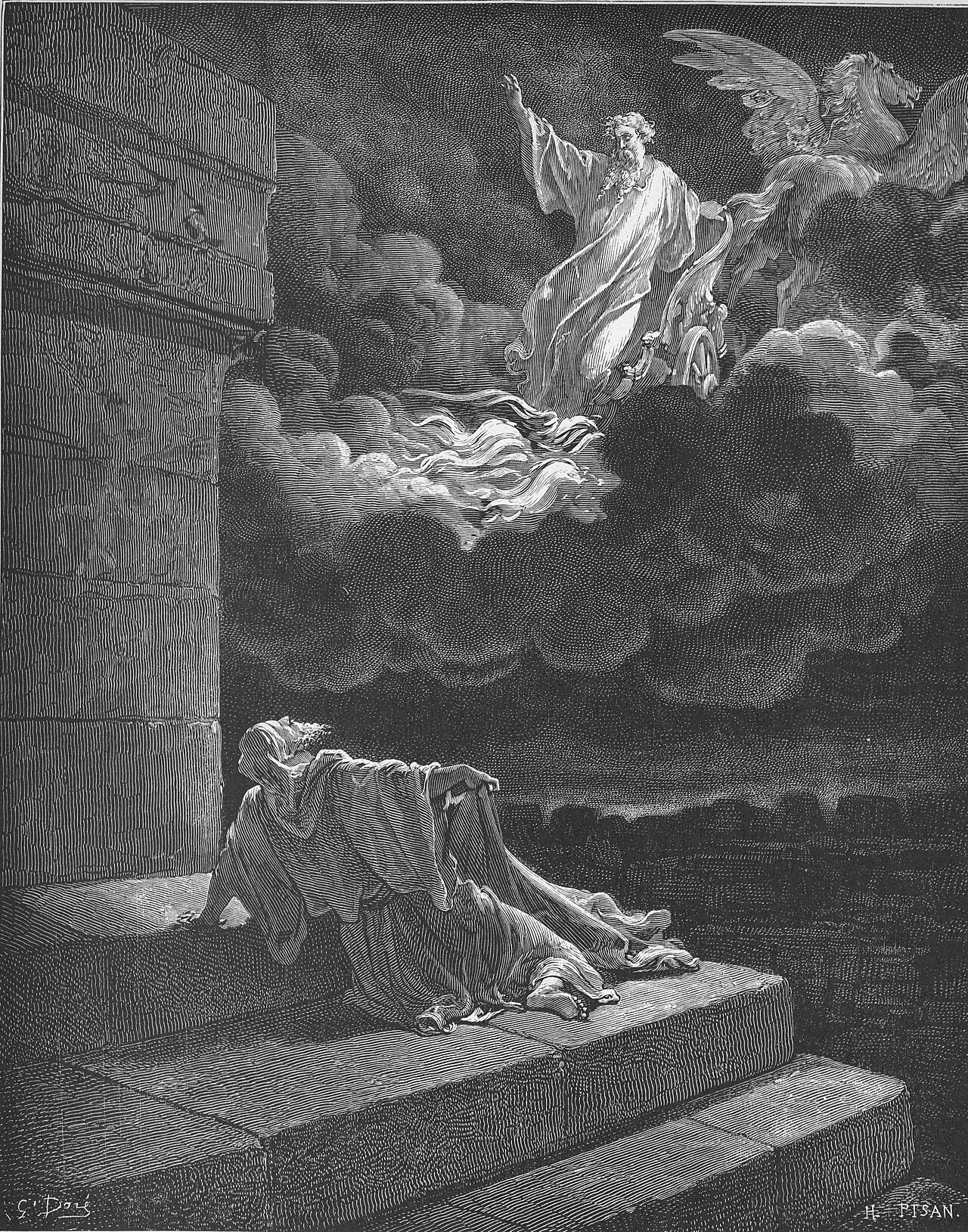
Who and where
3 names in this verse with a page on the site.
- PersonDivided kingdomElijahThe Tishbite who shut heaven for three years and a half, called down fire on Carmel, heard the still small voice at Horeb, and wen…
- PersonDivided kingdomElishaElijah's successor with the firstborn's double portion; the prophet of the healed spring, the widow's oil, the Shunammite's son, N…
- PlaceJordan valleyJerichoThe city of palms whose walls fell flat at the seventh trumpet-circuit; Rahab's city, later rebuilt under a curse, and the road do…
This page draws on Adam Clarke, Commentary on the Bible; Jamieson, Fausset & Brown, Commentary Critical and Explanatory on the Whole Bible; John Gill, Exposition of the Old Testament (1748-1763); John Wesley, Explanatory Notes upon the Old Testament; Matthew Henry, Commentary on the Whole Bible and Origen of Alexandria, COMMENTARY ON THE GOSPEL OF MATTHEW 13.2.