
1 Kings 19:21
in 1 Kings 19So Elisha turned back from him, took his pair of oxen, and slaughtered them. With the oxen’s equipment, he cooked the meat and gave it to the people, and they ate. Then he set out to follow and serve Elijah.
BSB
The same verse in ASV and KJV ▾
ASV
And he returned from following him, and took the yoke of oxen, and slew them, and boiled their flesh with the instruments of the oxen, and gave unto the people, and they did eat. Then he arose, and went after Elijah, and ministered unto him.
KJV
And he returned back from him, and took a yoke of oxen, and slew them, and boiled their flesh with the instruments of the oxen, and gave unto the people, and they did eat. Then he arose, and went after Elijah, and ministered unto him.
⋯
This verse in 1 Kings 19
Commentary
10 notes on this verse"He slaughtered the oxen." He did that not [as a sacrifice] to God, because Elisha was not a priest, but he killed them for a banquet which he offered to his people. From now on, he was lifted above earthly things and did not make …
This site's exposition
plowing with twelve yoke of oxen
on 1 Kings 19:19-21
Twelve yoke of oxen sets the same number before the reader that stood in Elijah's own altar of twelve stones on Carmel, all Israel counted out again in Elisha's field. The mantle Elijah wrapped around his own face at Horeb is now cast on a successor without a word of instruction, and Elisha's one request, to kiss his father and mother, is granted where Elijah's own request to die was not. He answers the call by slaughtering the ox he plowed with and burning the plow's own wood to boil it, a farewell feast that leaves nothing of the old life to return to.
This site's exposition
took his pair of oxen, and slaughtered them
Albert Barnes compares the word serve with Joshua, who served Moses at Exodus 24:13 and later succeeded him, as Elisha will follow Elijah. Matthew Henry sets the feast beside the great banquet Levi gave for Jesus at Luke 5:29 when he left his tax work. Ishodad of Merv reads the slaughter as a meal.
The record, by era
The Puritans and the Awakening5 voices
It was a discouraging time for prophets to set out in. A man that had consulted with flesh and blood would not be fond of Elijah's mantle, nor willing to wear his coat; yet Elisha cheerfully, and with a great deal of satisfaction, leaves all to accompany him. Thus Matthew made a great fast when he left the receipt of custom to follow Christ.
That queen-consort, it seems, was in effect queen-regent, as she was afterwards when she was queen-dowager, an imperious woman that managed king and kingdom and did what she would. Ahab's conscience would not let him persecute Elijah (some remains he had in him of the blood and spirit of an Israelite, which tied his hands), but he told Jezebel all that Elijah had done (
quarantine:debris (2026-07-29) — unbalanced-parens
The instruments - That is, with the wood belonging to the plow, &c. to which more was added, as occasion required. But that he burned, to shew his total relinquishing of his former employment. And gave - That is, he made thereof a feast for his servants who had been ploughing with him, and for him, and his other friends and neighbours who came to take their leave of him.
And he returned back from him,....
Idleness is no man's honour, nor is husbandry any man's disgrace. An honest calling in the world does not at all put us out of the way of our heavenly calling, any more than it did Elisha, who was taken from following the plough the feed Israel and to sow the seed of the word, as the apostles were taken from fishing to catch men.
2 more voices on this verse
The Nineteenth Century2 voices
A commentator
Albert Barnes1798–1870
Notes, Explanatory and Practical, on the Old and New Testaments (1832-1869)
Elisha returns to his oxen and laborers. He indicates his relinquishment of his home and calling by the slaughter of the particular yoke of oxen with which he had himself been plowing, probably the best beasts of the twelve, and by burning the “instruments,” the p oughs and yokes, both made of wood. Next he feasts his people to show his gratitude for his call, Elijah apparently remaining the while; and then, leaving father and mother, cattle and land, good position and comfortable home, Elisha became the “minister” to the wanderer. Compare Exo 24:13; Jos 1:1.
He returned back - He went home to his house; probably he yet lived with his parents, for it appears he was a single man: and he slew a yoke of the oxen - he made a feast for his household, having boiled the flesh of the oxen with his agricultural implements, probably in token that he had abandoned secular life: then, having bidden them an affectionate farewell, he arose, went after Elijah, who probably still awaited his coming in the field or its vicinity, and ministered unto him. On the call of Elisha, I may make a few remarks. 1. Elijah is commanded, 1Ki 19:16, to anoint Elisha prophet in his room. Though it is generally believed that kings, priests, and prophets, were inaugurated into their respective offices by the right of unction, and this I have elsewhere supposed; yet this is the only instance on record where a prophet is commanded to be anointed; and even this case is problematical, for it does not appear that Elijah did anoint Elisha. Nothing is mentioned in his call to the prophetic office, but the casting the mantle of Elijah upon him; wherefore it is probable that the word anoint, here signifies no more than the call to the office, accompanied by the simple rite of having the prophet’s mantle thrown over his shoulders. 2. A call to the ministerial office, though it completely sever from all secular occupations, yet never supersedes the duties of filial affection. Though Elisha must leave his oxen, and become a prophet to Israel: yet he may first go home, eat and drink with his parents and relatives, and bid them an affectionate farewell. 3. We do not find any attempt on the part of his parents to hinder him from obeying the Divine call: they had too much respect for the authority of God, and they left their son to the dictates of his conscience. […]
The words behind it
19 Hebrew wordsEvery Hebrew word of this verse in the order it stands, with what it means and the door to its own study. The last column counts the times a word stands in the whole Bible: the rarer the word, the more the places it appears belong together.
| Hebrew | Sound | Meaning | Word study | In the Bible |
|---|---|---|---|---|
| וַיָּ֨שָׁב | vaiyashov | and he turned back | H7725 → | 1056 times |
| מֵאַחֲרָ֜יו | meacharav | from after him | H310 → | 715 times |
| וַיִּקַּ֣ח | vaiyikach | and he took | H3947 → | 966 times |
| אֶת־ | ʾet- | <obj.> | H853 → | 10935 times |
| צֶ֧מֶד | tzemed | [the] pair of | H6776 → | |
| הַבָּקָ֣ר | habakar | the ox[en] | H1241 → | 183 times |
| וַיִּזְבָּחֵ֗הוּ | vaiyizbachehu | and he sacrificed it | H2076 → | 134 times |
| וּבִכְלִ֤י | uvikhli | and with [the] equipment of | H3627 → | 325 times |
| הַבָּקָר֙ | habakar | the ox[en] | H1241 → | 183 times |
| בִּשְּׁלָ֣ם | bishelam | he cooked them | H1310 → | |
| הַבָּשָׂ֔ר | habasar | the flesh | H1320 → | 270 times |
| וַיִּתֵּ֥ן | vaiyiten | and he gave [it] | H5414 → | 2011 times |
| לָעָ֖ם | laam | to the people | H5971 → | 1873 times |
| וַיֹּאכֵ֑לוּ | vaiyokhelu | and they ate | H398 → | 810 times |
| וַיָּ֗קָם | vaiyakom | and he arose | H6965 → | 628 times |
| וַיֵּ֛לֶךְ | vaiyelekh | and he went | H1980 → | 1546 times |
| אַחֲרֵ֥י | ʾacharei | after | H310 → | 715 times |
| אֵלִיָּ֖הוּ | ʾeliyahu | Elijah | H452 → | 71 times |
| וַיְשָׁרְתֵֽהוּ׃ פ | vaysharetehu | and he served him | H8334 → | 97 times |
וַיָּ֨שָׁבand he turned back
vaiyashovH7725 →1056 times
מֵאַחֲרָ֜יוfrom after him
meacharavH310 →715 times
וַיִּקַּ֣חand he took
vaiyikachH3947 →966 times
אֶת־<obj.>
ʾet-H853 →10935 times
צֶ֧מֶד[the] pair of
tzemedH6776 →
הַבָּקָ֣רthe ox[en]
habakarH1241 →183 times
וַיִּזְבָּחֵ֗הוּand he sacrificed it
vaiyizbachehuH2076 →134 times
וּבִכְלִ֤יand with [the] equipment of
uvikhliH3627 →325 times
הַבָּקָר֙the ox[en]
habakarH1241 →183 times
בִּשְּׁלָ֣םhe cooked them
bishelamH1310 →
הַבָּשָׂ֔רthe flesh
habasarH1320 →270 times
וַיִּתֵּ֥ןand he gave [it]
vaiyitenH5414 →2011 times
לָעָ֖םto the people
laamH5971 →1873 times
וַיֹּאכֵ֑לוּand they ate
vaiyokheluH398 →810 times
וַיָּ֗קָםand he arose
vaiyakomH6965 →628 times
וַיֵּ֛לֶךְand he went
vaiyelekhH1980 →1546 times
אַחֲרֵ֥יafter
ʾachareiH310 →715 times
אֵלִיָּ֖הוּElijah
ʾeliyahuH452 →71 times
וַיְשָׁרְתֵֽהוּ׃ פand he served him
vaysharetehuH8334 →97 times
A shaded row is a word that stands 400 times or fewer in the Bible.
The walk
8 stopsEach card is a verse this one points to, and under it the verses that one points to in turn. Where several paths arrive at the same place, that place is listed first: the text keeps returning to it.
Through
2 Timothy 4:11Only Luke is with me. Get Mark and bring him with you, because he is useful to me in the ministry.
it leads to
- Acts 12:12
And when he had realized this, he went to the house of Mary the mother of John, also called Mark, where many people had gathered together and were praying.
- Philemon 1:24
as do Mark, Aristarchus, Demas, and Luke, my fellow workers.
- Acts 12:25
When Barnabas and Saul had fulfilled their mission to Jerusalem, they returned, bringing with them John, also called Mark.
- 2 Timothy 1:15
You know that everyone in the Province of Asia has deserted me, including Phygelus and Hermogenes.
- Colossians 4:14
Luke, the beloved physician, and Demas send you greetings.
- Acts 12:12
Through
Exodus 24:13So Moses set out with Joshua his attendant and went up on the mountain of God.
it leads to
- Numbers 11:28
Joshua son of Nun, the attendant to Moses since youth, spoke up and said, “Moses, my lord, stop them!”
- Exodus 33:11
Thus the LORD would speak to Moses face to face, as a man speaks to his friend. Then Moses would return to the camp, but his young assistant Joshua son of Nun would not…
- Numbers 11:28
Through
2 Samuel 24:22Araunah said to David, “My lord the king may take whatever seems good and offer it up. Here are the oxen for a burnt offering and the threshing sledges and ox yokes for the…
it leads to
- 1 Samuel 6:14
The cart came to the field of Joshua of Beth-shemesh and stopped there near a large rock. The people chopped up the cart and offered the cows as a burnt offering to the LORD.
- 1 Samuel 6:14
Where this verse is studied
On this page
Studies4
About 1 Kings
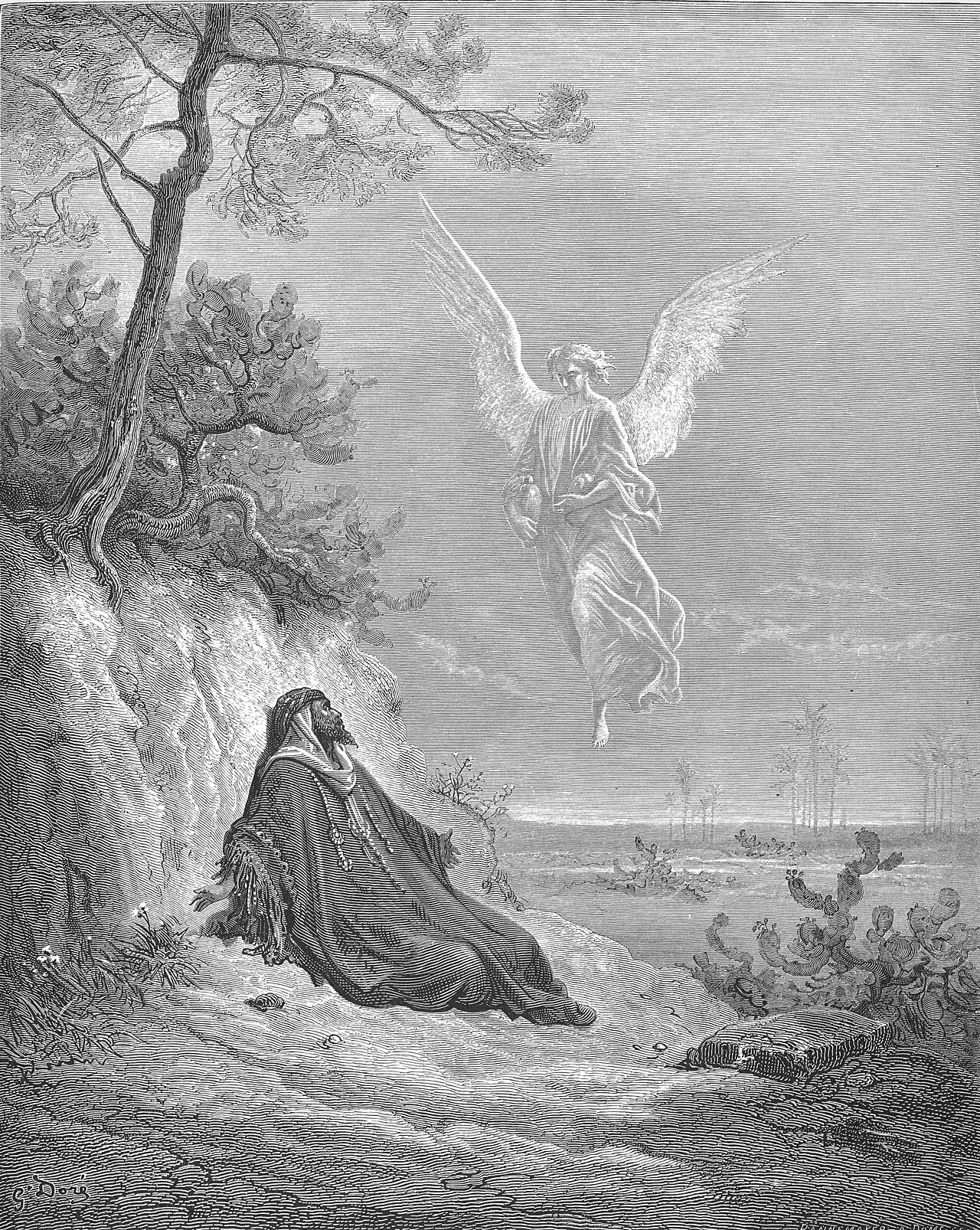
Who and where
2 names in this verse with a page on the site.
- PersonDivided kingdomElijahThe Tishbite who shut heaven for three years and a half, called down fire on Carmel, heard the still small voice at Horeb, and wen…
- PersonDivided kingdomElishaElijah's successor with the firstborn's double portion; the prophet of the healed spring, the widow's oil, the Shunammite's son, N…
This page draws on Adam Clarke, Commentary on the Bible; Albert Barnes, Notes, Explanatory and Practical, on the Old and New Testaments (1832-1869); Ishodad of Merv, BOOKS OF SESSIONS 1 KINGS 19:21; Ishodad of Merv, BOOKS OF SESSIONS 1 KINGS 14:13; Jamieson Fausset and Brown, Commentary Critical and Explanatory on the Whole Bible; John Gill, Exposition of the Old Testament (1748-1763); John Wesley, Explanatory Notes upon the Old Testament and Matthew Henry, Commentary on the Whole Bible.