
Matthew 27:55
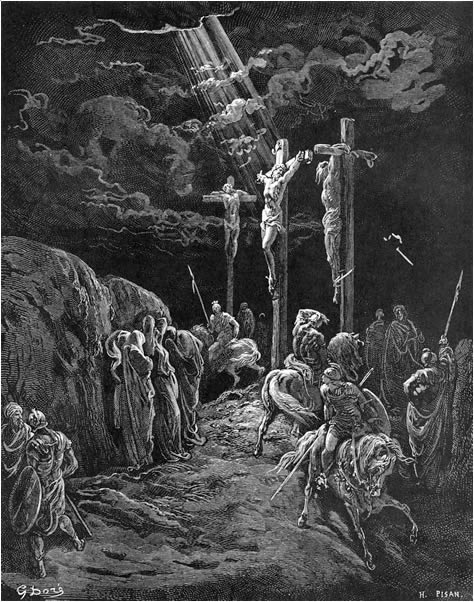
in Matthew 27And many women were there, watching from a distance. They had followed Jesus from Galilee to minister to Him.
BSB
The same verse in ASV and KJV ▾
ASV
And many women were there beholding from afar, who had followed Jesus from Galilee, ministering unto him:
KJV
And many women were there beholding afar off, which followed Jesus from Galilee, ministering unto him:
⋯
This verse in Matthew 27
Commentary
13 notes on this verse(Verse 55, 56.) And there were many women there from afar who had followed Jesus from Galilee, ministering to him; among whom were Mary Magdalene, and Mary the mother of James, and Joseph's mother, and the mother of the sons of Zebedee. It was a Jewish custom, and it was not considered wrong according to the ancient customs of the gentiles, for women to provide food and clothing to their teachers out of their own means. Paul mentioned that he had rejected this because it could cause scandal among the nations.
The record, by era
The Church Fathers5 voices
Isaiah is said to have prophesied concerning these women when he wrote, "Women are coming to the spectacle, for this is not a wise people." He calls women who had been distant and were looking upon Jesus from afar. He calls them to the Word, that they might abandon a foolish, forsaken people and come to the new covenant. I consider these women blessed who were elevated to beatitude by their vision of the Word and by the bodily death of Jesus; for everything in Christ, if seen truly, beatifies the beholder.
Nor indeed, if, among the Greeks, in accordance with the carelessness of custom, women and wives are classed under a common name-however, there is a name proper to wives-shall we therefore so interpret Paul as if he demonstrates the apostles to have had wives? For if he were disputing about marriages, as he does in the sequel, where the apostle could better have named some particular example, it would appear right for him to say, "For have we not the power of leading about wives, like the other apostles and Cephas? "But when he subjoins those (expressions)which show his abstinence from (insisting on) the supply of maintenance, saying, "For have we not the power of eating and drinking? "he does not demonstrate that "wives" were led about by the apostles, whom even such as have not still have the power of eating and drinking; but simply "women," who used to minister to them in the stone way (as they did) when accompanying the Lord. But further, if Christ reproves the scribes and Pharisees, sitting in the official chair of Moses, but not doing what they taught, what kind of (supposition).
It was a Jewish custom, and held no disgrace, according to the manners of the people of old, for women to minister of their substance, food, and clothing to their teachers. This Paul says, that he refused, because it might occasion scandal among the Gentiles. They ministered to the Lord of their substance, that He might reap their carnal things, of whom they reaped spiritual things. Not that the Lord needed food of the creature, but that He might set an example for the teacher, that He should be content to receive food and clothing from His disciples. But let us see what sort of attendants He had; Among whom was Mary Magdalene, and Mary the mother of James and Joseph, and the mother of Zebedee's children.
A commentator
John ChrysostomHomily on the Gospel of Matthew 88 · Written in the 5th century.
proposed
"And many women were there beholding afar off, which had followed Him, ministering unto Him, Mary Magdalene, and Mary the mother of James, and Joses, and the mother of Zebedee's sons." These things the women see done, these who were most inclined to feel for Him, who were most of all bewailing Him. And mark how great their assiduity. They had followed Him ministering to Him, and were present even unto the time of the dangers. Wherefore also they saw all; how He cried, how He gave up the ghost, how the rocks were rent, and all the rest. And these first see Jesus; and the sex that was most condemned, this first enjoys the sight of the blessings, this most shows its courage. And when the disciples had fled, these were present. But who were these? His mother, for she is called mother of James, and the rest. But another evangelist saith, that many also lamented over the things that were done, and smote their breasts, which above all shows the cruelty of the Jews, for that they gloried in things for which others were lamenting, and were neither moved by pity, nor checked by fear. For indeed the things that were done were of great wrath, and were not merely signs, but signs of anger all of them, the darkness, the cloven rocks, the veil rent in the midst, the shaking of the earth, and great was the excess of the indignation.
(ubi sup.) We might have supposed that some of the women stood afar off, as three Evangelists say, and others near the cross, as John says, had not Matthew and Mark reckoned Mary Magdalen among those that stood afar off, while John puts her among those that stood near. This is reconciled if we understand the distance at which they were to be such that they might be said to be near, because they were in His sight; but far off in comparison of the crowd who stood nearer with the centurion and soldiers. We might also suppose that they who were there together with the Lord's mother, began to depart after He had commended her to the disciple, that they might extricate themselves from the crowd, and looked on from a distance at the other things which were done, so that the Evangelists, who speak of them after the Lord's death, speak of them as standing afar off.
7 more voices on this verse
The Medieval Church2 voices
There follows the devotion of the women: "and there were there many women etc." And first, they are described as to the past, and as to the present. In which it should be considered that when the people withdrew, the women remained, so that what …
And many women were there beholding afar off, who had followed Jesus from Galilee, ministering unto Him. The women who beheld these events, who were the most tender of all in their compassion [and so ought to have been less able to endure the sight …
The Puritans and the Awakening1 voice
And many women were there,.... At the cross of Christ, at some little distance from it; but where was Peter, who had declared he would never be offended, though all men were; and would die with Christ, rather than deny him? and where were the rest of the disciples, who said the same things?
The Nineteenth Century4 voices
A commentator
Albert Barnes1798–1870
Notes, Explanatory and Practical, on the Old and New Testaments (1832-1869)
Beholding afar off - These women were probably not suffered to come near the cross because it was surrounded by soldiers. They witnessed with intense feelings his sufferings from some convenient place as near as they could approach. Ministering unto him - Attending him and providing for his wants. While multitudes of people joined in the cry, “Crucify him!” and forsook him in his trying moments, it does not appear that any of his female followers were thus unfaithful. In the midst of all his trials, and all the Contempt poured upon him, they adhered to their Redeemer.
In these verses we read the conclusion of our Lord Jesus Christ’s passion. After six hours of agonizing suffering, he became obedient even unto death, and “yielded up the ghost.” Three points in the narrative demand a special notice: to them let us confine our attention. Let us observe in the first place the remarkable words which Jesus uttered shortly before his death: “My God, my God, why hast thou forsaken me?” There is a deep mystery in these words, which no mortal man can fathom.
In these verses we read the conclusion of our Lord Jesus Christ’s passion. After six hours of agonizing suffering, he became obedient even unto death, and “yielded up the ghost.” Three points in the narrative demand a special notice: to them let us confine our attention. Let us observe in the first place the remarkable words which Jesus uttered shortly before his death: “My God, my God, why hast thou forsaken me?” There is a deep mystery in these words, which no mortal man can fathom. No doubt they were not wrung from our Lord by mere bodily pain: such an explanation is utterly unsatisfactory, and dishonorable to our blessed Saviour. They were meant to express the real pressure on his soul of the enormous burden of a world’s sins; they were meant to show how truly and literally he was our substitute—was made sin, and a curse for us, and endured God’s righteous anger against a world’s sin in his own person. At that awful moment the iniquity of us all was laid on him to the uttermast. It pleased the Lord to bruise him and put him to grief ( Isaiah 53:10 ). He bore our sins: he carried our transgressions. Heavy must have been that burden, real and literal must have been our Lord’s substitution for us when he, the eternal Son of God, could speak of himself as for a time “forsaken.” Let the expression sink down into our hearts, and not be forgotten. We can have no stronger proof of the sinfulness of sin, or of the vicarious nature of Christ’s sufferings, than his cry, “My God, my God, why hast thou forsaken me?” It is a cry that should stir us up to hate sin, and encourage us to trust in Christ. Let us observe in the second place how much is contained in the words which describe our Lord’s end. We are simply told, “he yielded up the ghost.” There never was a last breath drawn of such deep import as this. There never was an event on which so much depended.
Many women - To their everlasting honor, these women evidenced more courage, and affectionate attachment to their Lord and Master, than the disciples did, who had promised to die with him rather than forsake him. Beholding afar off - At a distance - απο μακροθεν. Though this expression may be understood to refer, rather to the distance from which they came, (viz. from Galilee), than the distance they stood from the cross; yet, as all malefactors were crucified naked, perhaps this may account for the distance at which these modest women stood.
The words behind it
17 Greek wordsEvery Greek word of this verse in the order it stands, with what it means and the door to its own study. The last column counts the times a word stands in the whole Bible: the rarer the word, the more the places it appears belong together.
| Greek | Sound | Meaning | Word study | In the Bible |
|---|---|---|---|---|
| Ἦσαν | esan | They were | G1510 → | 2333 times |
| δὲ | de | now | G1161 → | 2765 times |
| ἐκεῖ | ekei | there | G1563 → | 105 times |
| γυναῖκες | gunaikes | women | G1135 → | 211 times |
| πολλαὶ | pollai | many | G4183 → | 367 times |
| ἀπὸ | apo | from | G575 → | 640 times |
| μακρόθεν | makrothen | afar off | G3113 → | |
| θεωροῦσαι | theorousai | looking on | G2334 → | |
| αἵτινες | aitines | who | G3748 → | 144 times |
| ἠκολούθησαν | ekolouthesan | followed | G190 → | 90 times |
| τῷ | to | <the> | G3588 → | 19766 times |
| Ἰησοῦ | iesou | Jesus | G2424 → | 908 times |
| ἀπὸ | apo | from | G575 → | 640 times |
| τῆς | tes | <the> | G3588 → | 19766 times |
| Γαλιλαίας | galilaias | Galilee | G1056 → | 61 times |
| διακονοῦσαι | diakonousai | ministering | G1247 → | 37 times |
| αὐτῷ, | auto | to Him, | G846 → | 5565 times |
ἮσανThey were
esanG1510 →2333 times
δὲnow
deG1161 →2765 times
ἐκεῖthere
ekeiG1563 →105 times
γυναῖκεςwomen
gunaikesG1135 →211 times
πολλαὶmany
pollaiG4183 →367 times
ἀπὸfrom
apoG575 →640 times
μακρόθενafar off
makrothenG3113 →
θεωροῦσαιlooking on
theorousaiG2334 →
αἵτινεςwho
aitinesG3748 →144 times
ἠκολούθησανfollowed
ekolouthesanG190 →90 times
τῷ<the>
toG3588 →19766 times
ἸησοῦJesus
iesouG2424 →908 times
ἀπὸfrom
apoG575 →640 times
τῆς<the>
tesG3588 →19766 times
ΓαλιλαίαςGalilee
galilaiasG1056 →61 times
διακονοῦσαιministering
diakonousaiG1247 →37 times
αὐτῷ,to Him,
autoG846 →5565 times
A shaded row is a word that stands 400 times or fewer in the Bible.
Where this verse is studied
On this page
Studies14
On this verse
About Matthew
This page draws on 12 works. Open the list of works
This page draws on Adam Clarke, Commentary on the Bible; Albert Barnes, Notes, Explanatory and Practical, on the Old and New Testaments (1832-1869); Augustine of Hippo, Catena Aurea by Aquinas; J.C. Ryle, Expository Thoughts on the Gospels: Matthew; Jerome, Commentary on Matthew; Jerome, Catena Aurea by Aquinas; John Chrysostom, Homily on the Gospel of Matthew 88; John Gill, Exposition of the New Testament (1746-1748); Origen of Alexandria, COMMENTARY ON MATTHEW 141.76; Tertullian, On Monogamy; Theophylact of Ohrid, Commentary on Matthew and Thomas Aquinas, Commentary on Matthew.