
Genesis 27:4
in Genesis 27Then prepare a tasty dish that I love and bring it to me to eat, so that I may bless you before I die.”
BSB
The same verse in ASV and KJV ▾
ASV
and make me savory food, such as I love, and bring it to me, that I may eat; that my soul may bless thee before I die.
KJV
And make me savoury meat, such as I love, and bring it to me, that I may eat; that my soul may bless thee before I die.
⋯
This verse in Genesis 27
Commentary
7 notes on this verseSavory meat - מטעמים matammim, from טעם taam, to taste or relish; how dressed we know not, but its name declares its nature. That I may eat - The blessing which Isaac was to confer on his son was a species of Divine right, and must be communicated with appropriate ceremonies.
This site's exposition
hunt some game for me
on Genesis 27:3-4
Isaac ties the blessing to a meal he wants first. The narrator had already said at 25:28 that Isaac loved Esau for the game he brought home. Food had cost this family once before, when Esau sold his birthright for bread and lentil stew at 25:29 to 34.
This site's exposition
so that I may bless you
Jamieson, Fausset and Brown suggest that Isaac may not have known Esau had sold the birthright at 25:34. Adam Clarke took the meal as part of the ceremony. The Hebrew has Isaac's soul as the one who blesses, and John Wesley took that to mean a blessing from the heart.
The record, by era
The Puritans and the Awakening3 voices
That my soul may bless thee before I die - Prayer is the work of the soul, and not of the lips only; as the soul must be employed in blessing God, Psalm ciii, 1, so it must be in blessing ourselves and others: the blessing will not go to the heart, if it do not come from the heart.
Note, It is fit, if the less be blessed of the greater, that the greater should be served and honoured by the less. He says, That my soul may bless thee before I die. Note, (1.) Prayer is the work of the soul, and not of the lips only; as the soul must be employed in blessing God ( Ps. ciii.
quarantine:debris (2026-07-29) — unbalanced-parens
And make me savoury meat, such as I love,....
The Nineteenth Century1 voice
A commentator
Jamieson, Fausset & Brown1802–1910
Commentary Critical and Explanatory on the Whole Bible (1871)
But natural affection, prevailing through age and infirmity, prompted him to entail the honors and powers of the birthright on his elder son; and perhaps he was not aware of what Esau had done (Ge 25:34).
The words behind it
13 Hebrew wordsEvery Hebrew word of this verse in the order it stands, with what it means and the door to its own study. The last column counts the times a word stands in the whole Bible: the rarer the word, the more the places it appears belong together.
| Hebrew | Sound | Meaning | Word study | In the Bible |
|---|---|---|---|---|
| וַעֲשֵׂה־ | vaaseh- | and prepare | H6213 → | 2628 times |
| לִ֨י | li | for <the> me | ||
| מַטְעַמִּ֜ים | matamim | savory food<s> | H4303 → | 8 times |
| כַּאֲשֶׁ֥ר | kaasher | just as | H834 → | 5497 times |
| אָהַ֛בְתִּי | ʾahavti | I love | H157 → | 211 times |
| וְהָבִ֥יאָה | vehaviah | and bring [it] ! | H935 → | 2568 times |
| לִּ֖י | li | to <the> me | ||
| וְאֹכֵ֑לָה | veokhelah | so let me eat [it] | H398 → | 810 times |
| בַּעֲב֛וּר | baavur | inorder that | H5668 → | 49 times |
| תְּבָרֶכְךָ֥ | tevarekha | it may bless you | H1288 → | 330 times |
| נַפְשִׁ֖י | nafshi | self my | H5315 → | 754 times |
| בְּטֶ֥רֶם | beterem | <in> before | H2962 → | 56 times |
| אָמֽוּת׃ | ʾamut | I will die | H4191 → | 839 times |
וַעֲשֵׂה־and prepare
vaaseh-H6213 →2628 times
לִ֨יfor <the> me
li
מַטְעַמִּ֜יםsavory food<s>
matamimH4303 →8 times
כַּאֲשֶׁ֥רjust as
kaasherH834 →5497 times
אָהַ֛בְתִּיI love
ʾahavtiH157 →211 times
וְהָבִ֥יאָהand bring [it] !
vehaviahH935 →2568 times
לִּ֖יto <the> me
li
וְאֹכֵ֑לָהso let me eat [it]
veokhelahH398 →810 times
בַּעֲב֛וּרinorder that
baavurH5668 →49 times
תְּבָרֶכְךָ֥it may bless you
tevarekhaH1288 →330 times
נַפְשִׁ֖יself my
nafshiH5315 →754 times
בְּטֶ֥רֶם<in> before
beteremH2962 →56 times
אָמֽוּת׃I will die
ʾamutH4191 →839 times
A shaded row is a word that stands 400 times or fewer in the Bible.
The walk
8 stopsEach card is a verse this one points to, and under it the verses that one points to in turn. Where several paths arrive at the same place, that place is listed first: the text keeps returning to it.
Through
Hebrews 11:20By faith Isaac blessed Jacob and Esau concerning the future.
it leads to
- Genesis 27:27–40
So he came near and kissed him. When Isaac smelled his clothing, he blessed him and said: “Ah, the smell of my son is like the smell of a field that the LORD has…
- Genesis 27:27–40
Through
Luke 24:51While He was blessing them, He left them and was carried up into heaven.
it leads to
- Acts 1:9
After He had said this, they watched as He was taken up, and a cloud hid Him from their sight.
- Mark 16:19
After the Lord Jesus had spoken to them, He was taken up into heaven and sat down at the right hand of God.
- John 20:17
“Do not cling to Me,” Jesus said, “for I have not yet ascended to the Father. But go and tell My brothers, ‘I am ascending to My Father and your Father, to My God…
- 2 Kings 2:11
As they were walking along and talking together, suddenly a chariot of fire with horses of fire appeared and separated the two of them, and Elijah went up into heaven in a whirlwind.
- Acts 1:9
Through
Genesis 49:28These are the tribes of Israel, twelve in all, and this was what their father said to them. He blessed them, and he blessed each one with a suitable blessing.
it leads to
- Esther 8:11
By these letters the king permitted the Jews in each and every city the right to assemble and defend themselves, to destroy, kill, and annihilate all the forces of any people or province hostile…
- Revelation 7:4
And I heard the number of those who were sealed, 144,000 from all the tribes of Israel:
- Ezekiel 39:8–10
Yes, it is coming, and it will surely happen, declares the Lord GOD. This is the day of which I have spoken.
- Esther 8:11
Where this verse is studied
On this page
About Genesis
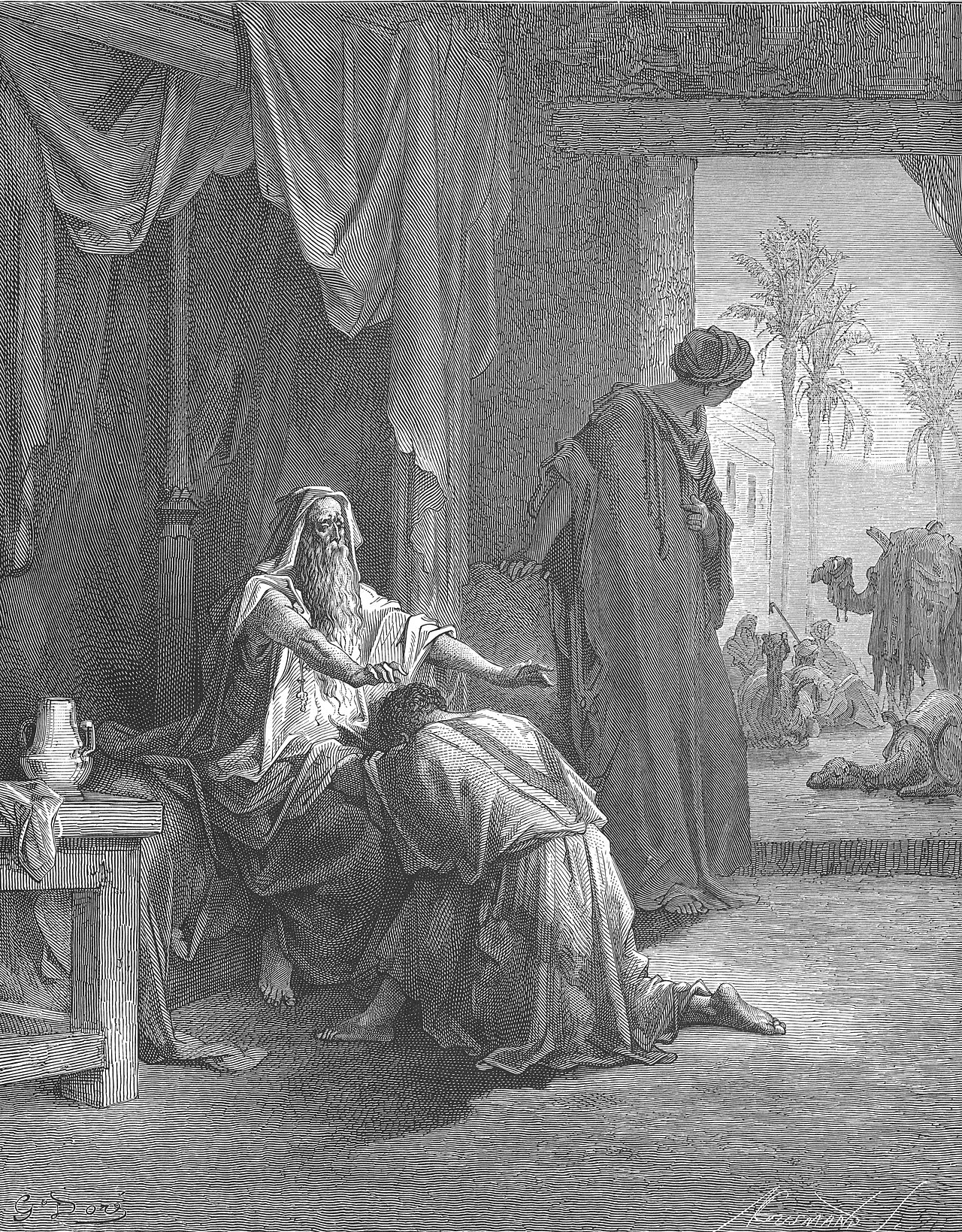
This page draws on Adam Clarke, Commentary on the Bible; Jamieson, Fausset & Brown, Commentary Critical and Explanatory on the Whole Bible; John Gill, Exposition of the Old Testament (1748-1763); John Wesley, Explanatory Notes upon the Old Testament and Matthew Henry, Commentary on the Whole Bible.