
Genesis 27:23
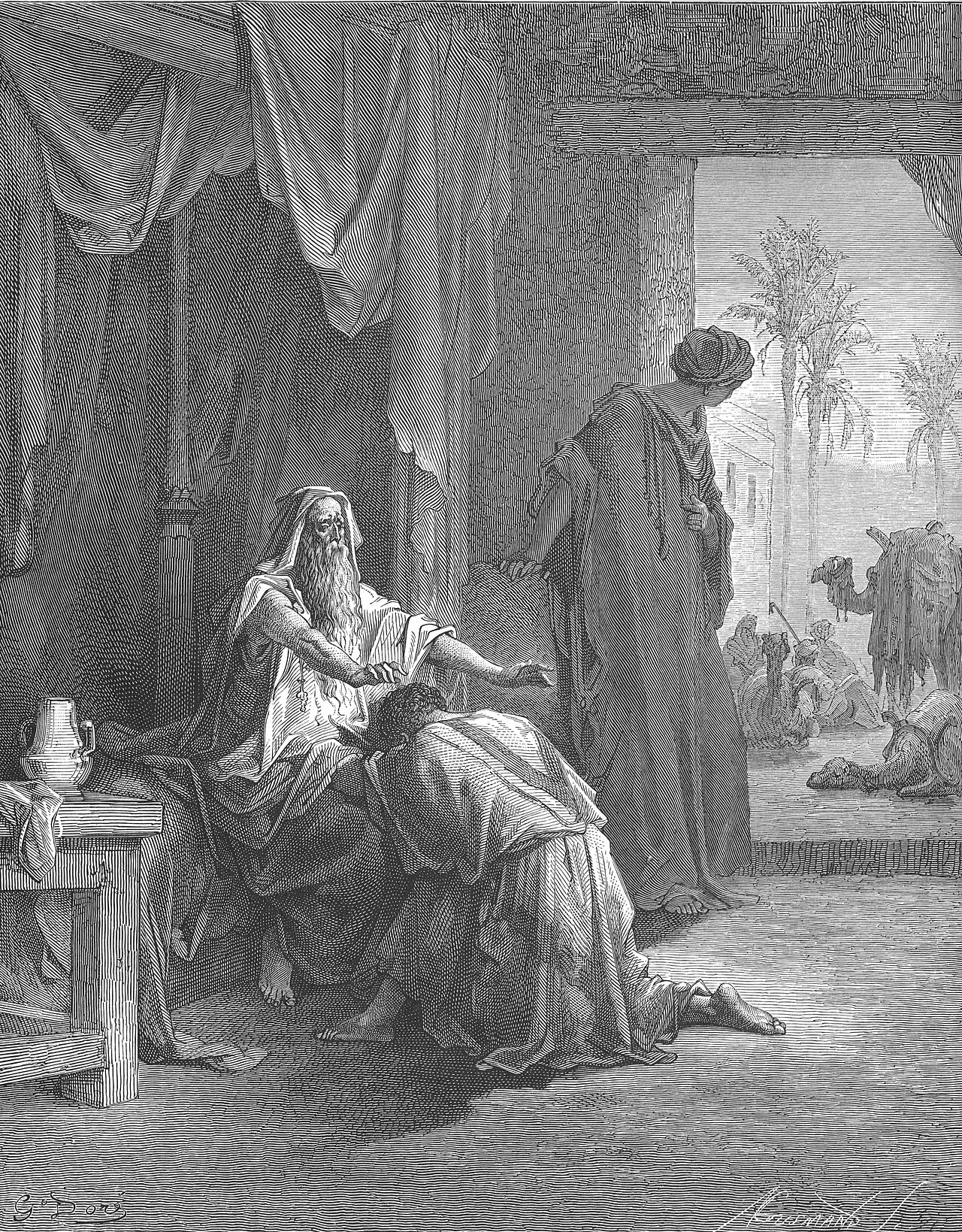
in Genesis 27Isaac did not recognize him, because his hands were hairy like those of his brother Esau; so he blessed him.
BSB
The same verse in ASV and KJV ▾
ASV
And he discerned him not, because his hands were hairy, as his brother Esau’s hands: so he blessed him.
KJV
And he discerned him not, because his hands were hairy, as his brother Esau’s hands: so he blessed him.
⋯
This verse in Genesis 27
Commentary
6 notes on this verseAnd he discerned him not, because his hands were hairy - From this circumstance we may learn that Isaac’s sense of feeling was much impaired by his present malady. When he could not discern the skin of a kid from the flesh of his son, we see that he was, through his infirmity, in a fit state to be imposed on by the deceit of his wife, and the cunning of his younger son.
This site's exposition
come closer so I can touch you
on Genesis 27:21-23
Isaac hears Jacob and feels Esau, and he decides by touch. His hands were hairy like his brother's, so Isaac did not recognize him and blessed him. Matthew Henry read the line as the mark of a hypocrite, a man who talks one way and works another.
This site's exposition
so he blessed him
The goatskins pass for his brother Esau's hairy hands, and so Isaac blessed him. Matthew Henry found one point in favour of Rebekah and Jacob: the blessing was about to go to the wrong son. He called it a small excuse for the fraud.
The record, by era
The Puritans and the Awakening2 voices
That which in some small degree extenuates the crime of Rebekah and Jacob is that the fraud was intended, not so much to hasten the fulfilling, as to prevent the thwarting, of the oracle of God: the blessing was just going to be put upon the wrong head, and they thought it was time to bestir themselves.
And he discerned him not,....
The Nineteenth Century1 voice
A commentator
Jamieson, Fausset & Brown1802–1910
Commentary Critical and Explanatory on the Whole Bible (1871)
proposed
he came unto his father--The scheme planned by the mother was to be executed by the son in the father's bedchamber; and it is painful to think of the deliberate falsehoods, as well as daring profanity, he resorted to.
quarantine:debris (2026-07-29) — starts-lowercase
The words behind it
10 Hebrew wordsEvery Hebrew word of this verse in the order it stands, with what it means and the door to its own study. The last column counts the times a word stands in the whole Bible: the rarer the word, the more the places it appears belong together.
| Hebrew | Sound | Meaning | Word study | In the Bible |
|---|---|---|---|---|
| וְלֹ֣א | velo' | and not | H3808 → | 5168 times |
| הִכִּיר֔וֹ | hikiro | he recognized him | H5234 → | 49 times |
| כִּֽי־ | ki- | for | H3588 → | 4482 times |
| הָי֣וּ | hayu | they were | H1961 → | 3559 times |
| יָדָ֗יו | yadav | hands his | H3027 → | 1618 times |
| כִּידֵ֛י | kidei | like [the] hands of | H3027 → | 1618 times |
| עֵשָׂ֥ו | ʾesav | Esau | H6215 → | 97 times |
| אָחִ֖יו | ʾachiv | brother his | H251 → | 630 times |
| שְׂעִרֹ֑ת | seirot | hairy | H8163 → | 59 times |
| וַֽיְבָרְכֵֽהוּ׃ | vayvarekhehu | and he blessed him | H1288 → | 330 times |
וְלֹ֣אand not
velo'H3808 →5168 times
הִכִּיר֔וֹhe recognized him
hikiroH5234 →49 times
כִּֽי־for
ki-H3588 →4482 times
הָי֣וּthey were
hayuH1961 →3559 times
יָדָ֗יוhands his
yadavH3027 →1618 times
כִּידֵ֛יlike [the] hands of
kideiH3027 →1618 times
עֵשָׂ֥וEsau
ʾesavH6215 →97 times
אָחִ֖יוbrother his
ʾachivH251 →630 times
שְׂעִרֹ֑תhairy
seirotH8163 →59 times
וַֽיְבָרְכֵֽהוּ׃and he blessed him
vayvarekhehuH1288 →330 times
A shaded row is a word that stands 400 times or fewer in the Bible.
The walk
2 stopsEach card is a verse this one points to, and under it the verses that one points to in turn. Where several paths arrive at the same place, that place is listed first: the text keeps returning to it.
Through
Hebrews 11:20By faith Isaac blessed Jacob and Esau concerning the future.
it leads to
- Genesis 27:27–40
So he came near and kissed him. When Isaac smelled his clothing, he blessed him and said: “Ah, the smell of my son is like the smell of a field that the LORD has…
- Genesis 28:2–3
“Go at once to Paddan-aram, to the house of your mother’s father Bethuel, and take a wife from among the daughters of Laban, your mother’s brother.
- Genesis 27:27–40
Where this verse is studied
About Genesis
Who and where
2 names in this verse with a page on the site.
This page draws on Adam Clarke, Commentary on the Bible; Jamieson, Fausset & Brown, Commentary Critical and Explanatory on the Whole Bible; John Gill, Exposition of the Old Testament (1748-1763) and Matthew Henry, Commentary on the Whole Bible.