
Genesis 27:17
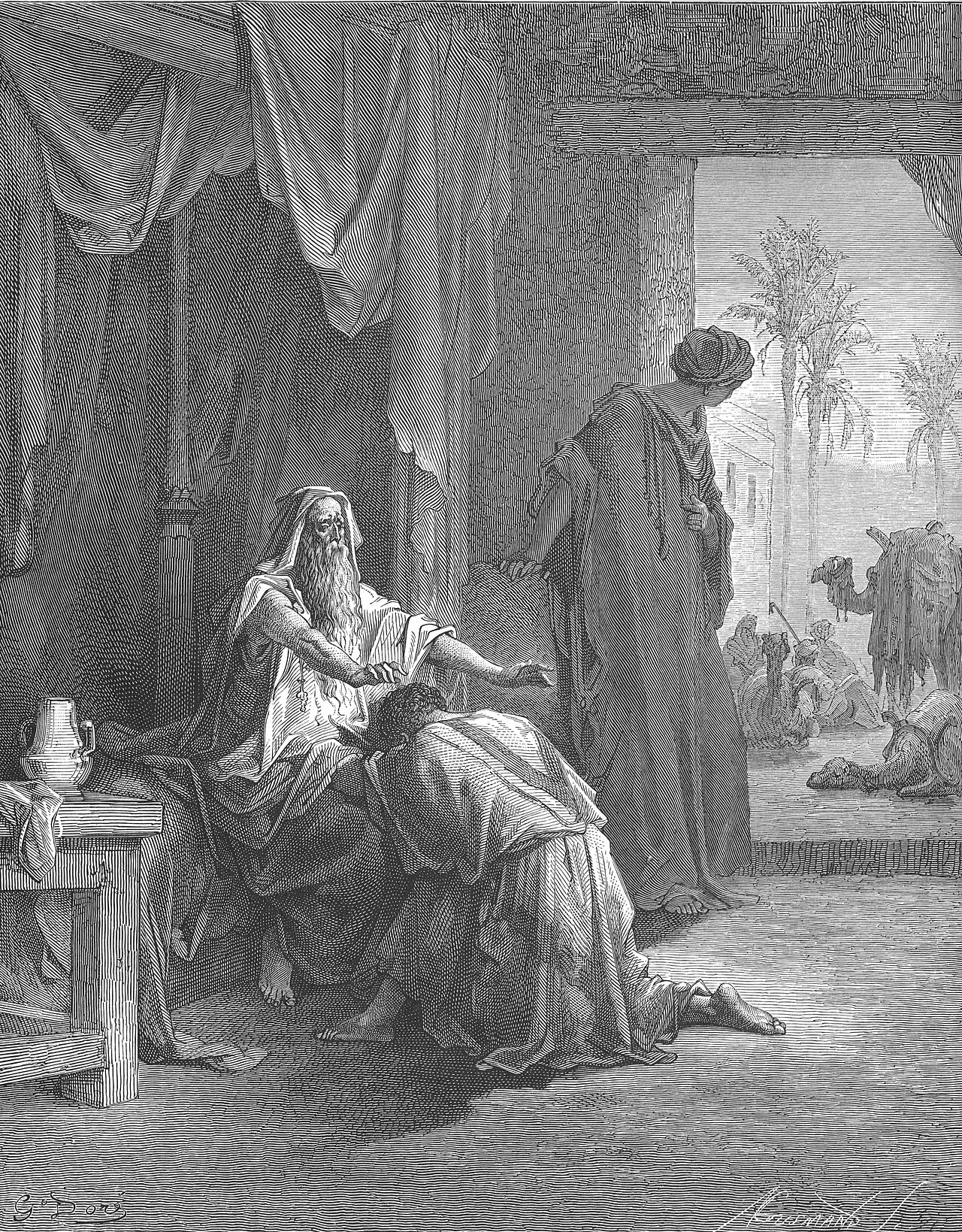
in Genesis 27Then she handed her son Jacob the tasty food and bread she had made.
BSB
The same verse in ASV and KJV ▾
ASV
and she gave the savory food and the bread, which she had prepared, into the hand of her son Jacob.
KJV
And she gave the savoury meat and the bread, which she had prepared, into the hand of her son Jacob.
⋯
This verse in Genesis 27
Commentary
4 notes on this verseThis site's exposition
made the tasty food his father loved
on Genesis 27:14-17
Rebekah dresses the deception in three pieces: the goat meat, Esau's finest clothes, and goatskins on Jacob's hands and neck. A garment and a young goat come back on Jacob. His sons dip Joseph's robe in goat blood and carry it to him at 37:31.
This site's exposition
the tasty food and bread she had made
Rebekah has done every part so far: she heard, planned, cooked and dressed her son, and she puts the food and bread in his hands. From here Jacob acts alone. Adam Clarke held that she used the most exceptionable means to gain her end.
The record, by era
The Puritans and the Awakening2 voices
And she gave the savoury meat,.... Seasoned and dressed in such a manner as might be taken for venison: and the bread which she had prepared to eat with it: into the hand of her son Jacob; the dish of meat in one hand, and the bread in the other.
Jacob's dominion over Esau was to be only typical of this, ch. xlix. Secondly, That from him should come the church, which should be particularly owned and favoured by Heaven. It was part of the blessing of Abraham, when he was first called to be the father of the faithful ch. xii.
How the passage was read
What the Jewish commentators add
On the verses either side of this one
Rivkah also covered Yaakov’s throat and arms with the skins from the goats so that Yitzchok would think that Esau was indeed standing before him.
This section is reception history: how the passage was read and kept in the Jewish tradition. Where a reading parts from an essential of the Christian faith, the section says so at that point.
Texts and citation data: Sefaria; each excerpt follows its version’s licence. 3 further sources are cited on this chapter that carry no English text this site may quote or only restate the verse.
The words behind it
10 Hebrew wordsEvery Hebrew word of this verse in the order it stands, with what it means and the door to its own study. The last column counts the times a word stands in the whole Bible: the rarer the word, the more the places it appears belong together.
| Hebrew | Sound | Meaning | Word study | In the Bible |
|---|---|---|---|---|
| וַתִּתֵּ֧ן | vatiten | and she put | H5414 → | 2011 times |
| אֶת־ | ʾet- | <obj.> | H853 → | 10935 times |
| הַמַּטְעַמִּ֛ים | hamatamim | the savory food<s> | H4303 → | 8 times |
| וְאֶת־ | veet | and <obj.> | H853 → | 10935 times |
| הַלֶּ֖חֶם | halechem | the bread | H3899 → | 298 times |
| אֲשֶׁ֣ר | ʾasher | which | H834 → | 5497 times |
| עָשָׂ֑תָה | ʾasatah | she had prepared | H6213 → | 2628 times |
| בְּיַ֖ד | beyad | in [the] hand of | H3027 → | 1618 times |
| יַעֲקֹ֥ב | yaako | Jacob | H3290 → | 350 times |
| בְּנָֽהּ׃ | benah | son her | H1121 → | 4930 times |
וַתִּתֵּ֧ןand she put
vatitenH5414 →2011 times
אֶת־<obj.>
ʾet-H853 →10935 times
הַמַּטְעַמִּ֛יםthe savory food<s>
hamatamimH4303 →8 times
וְאֶת־and <obj.>
veetH853 →10935 times
הַלֶּ֖חֶםthe bread
halechemH3899 →298 times
אֲשֶׁ֣רwhich
ʾasherH834 →5497 times
עָשָׂ֑תָהshe had prepared
ʾasatahH6213 →2628 times
בְּיַ֖דin [the] hand of
beyadH3027 →1618 times
יַעֲקֹ֥בJacob
yaakoH3290 →350 times
בְּנָֽהּ׃son her
benahH1121 →4930 times
A shaded row is a word that stands 400 times or fewer in the Bible.
Where this verse is studied
About Genesis
Who and where
1 name in this verse with a page on the site.
This page draws on Adam Clarke, Commentary on the Bible; John Gill, Exposition of the Old Testament; John Gill, Exposition of the Old Testament (1748-1763) and Matthew Henry, Commentary on the Whole Bible.