
2 Samuel 13:28
in 2 Samuel 13Now Absalom had ordered his young men, “Watch Amnon until his heart is merry with wine, and when I order you to strike Amnon down, you are to kill him. Do not be afraid. Have I not commanded you? Be courageous and valiant!”
BSB
The same verse in ASV and KJV ▾
ASV
And Absalom commanded his servants, saying, Mark ye now, when Amnon’s heart is merry with wine; and when I say unto you, Smite Amnon, then kill him; fear not; have not I commanded you? be courageous, and be valiant.
KJV
Now Absalom had commanded his servants, saying, Mark ye now when Amnon’s heart is merry with wine, and when I say unto you, Smite Amnon; then kill him, fear not: have not I commanded you? be courageous, and be valiant.
⋯
This verse in 2 Samuel 13
Commentary
7 notes on this verseWithhold - This she spoke, because she thought her royal father would dispense with it, upon this extraordinary occasion, to save his first-born son's life: 15. Hated her - By the just judgment of God both upon Amnon and David, that so the sin might be made publick, and way for the succeeding tragedies.
This site's exposition
heart is merry with wine
on 2 Samuel 13:28-29
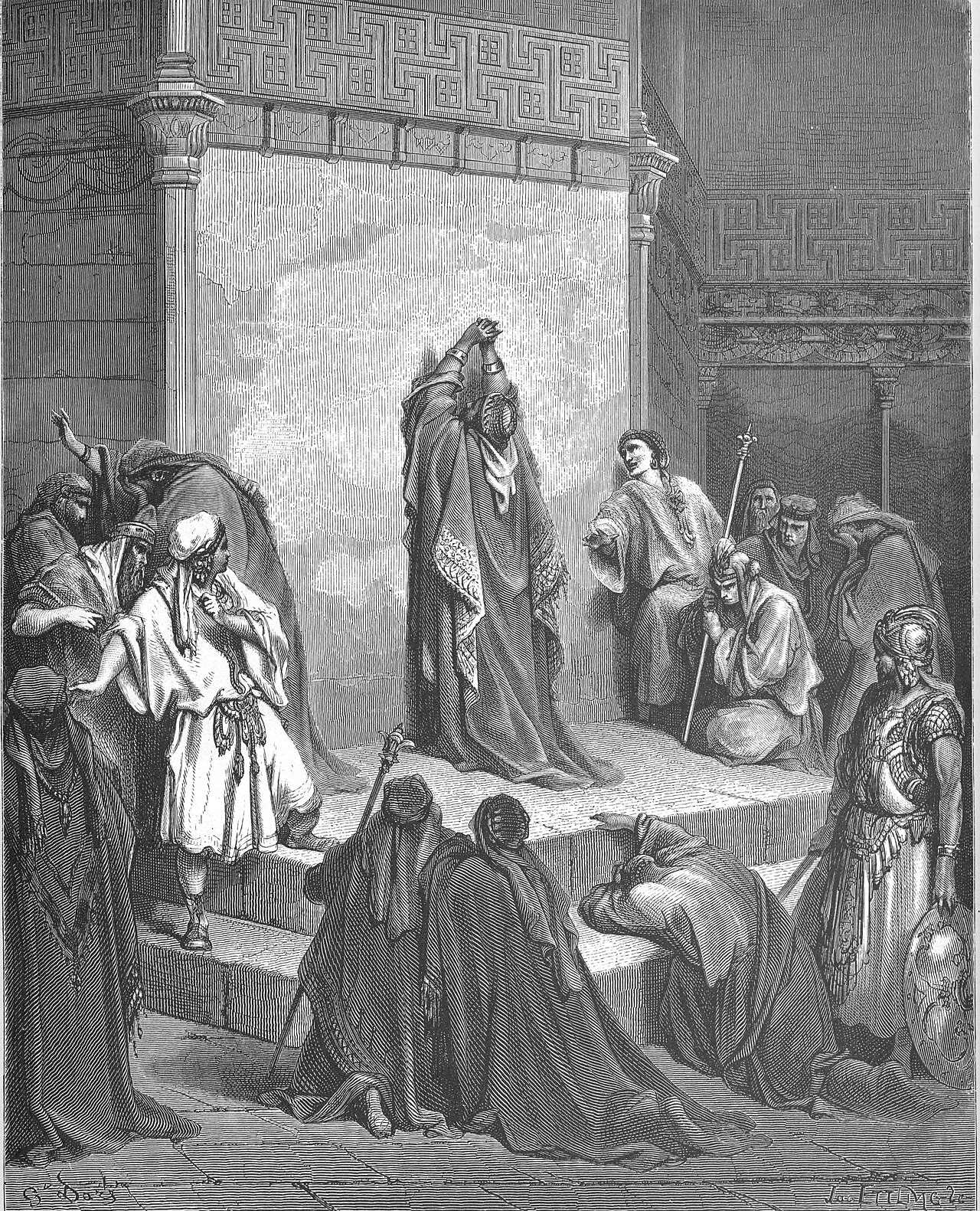
Absalom gives the order in a setting that echoes Amnon's own trap, waiting for the same kind of unguarded moment, wine in place of appetite. This is the sword promised at 12:10 opening its first wound, a son of David killed by a son of David, and the older writers count Amnon among the fourfold loss David pronounced on himself unknowing at 12:6, alongside the child already dead and Absalom and Adonijah still to come. David did nothing to stop what he already knew of, and the other sons flee on their mules not yet knowing whether the killing will end with Amnon.
The record, by era
The Puritans and the Awakening4 voices
Merry - When he least suspects, and will be most unable to prevent the evil. I - I who am the king's son, and, when Amnon is gone, his heir: who therefore shall easily obtain pardon for you, and will liberally reward you.
Observe the aggravations of this sin:-- [1.] He would have Amnon slain when his heart was merry with wine, and he was consequently least apprehensive of danger, least able to resist it, and also least fit to go out of the world; as if his malice aimed to destroy both soul and body, not giving him time to say, Lord, have mercy upon me.
Now Absalom had commanded his servants,....
Amnon's character, we have reason to think, was bad in other things; if he had not forsaken God, he would never have been given up to these vile affections. Godly parents have often been afflicted with wicked children; grace does not run in the blood, but corruption does.
The Nineteenth Century1 voice
A commentator
Jamieson, Fausset & Brown1802–1910
Commentary Critical and Explanatory on the Whole Bible (1871)
proposed
Absalom had commanded his servants, saying . . . when Amnon's heart is merry with wine . . . kill him, fear not--On a preconcerted signal from their master, the servants, rushing upon Amnon, slew him at the table, while the rest of the brothers, horror-struck, and apprehending a general massacre, fled in affrighted haste to Jerusalem.
The words behind it
29 Hebrew wordsEvery Hebrew word of this verse in the order it stands, with what it means and the door to its own study. The last column counts the times a word stands in the whole Bible: the rarer the word, the more the places it appears belong together.
| Hebrew | Sound | Meaning | Word study | In the Bible |
|---|---|---|---|---|
| וַיְצַו֩ | vaytzav | and he commanded | H6680 → | 494 times |
| אַבְשָׁל֨וֹם | ʾavshalom | Absalom | H53 → | 110 times |
| אֶת־ | ʾet- | <obj.> | H853 → | 10935 times |
| נְעָרָ֜יו | nearav | servants his | H5288 → | 239 times |
| לֵאמֹ֗ר | lemor | <to> saying | H559 → | 5305 times |
| רְא֣וּ | reu | look | H7200 → | 1300 times |
| נָ֠א | na' | please | H4994 → | 404 times |
| כְּט֨וֹב | ketov | when is good | H2895 → | 45 times |
| לֵב־ | lev- | [the] heart of | H3820 → | 595 times |
| אַמְנ֤וֹן | ʾamnon | Amnon | H550 → | 28 times |
| בַּיַּ֙יִן֙ | baiyayin | with the wine | H3196 → | 141 times |
| וְאָמַרְתִּ֣י | veamarti | and I will say | H559 → | 5305 times |
| אֲלֵיכֶ֔ם | ʾaleikhem | to you | H413 → | 5510 times |
| הַכּ֧וּ | haku | strike down | H5221 → | 499 times |
| אֶת־ | ʾet- | <obj.> | H853 → | 10935 times |
| אַמְנ֛וֹן | ʾamnon | Amnon | H550 → | 28 times |
| וַהֲמִתֶּ֥ם | vahamitem | and you will kill | H4191 → | 839 times |
| אֹת֖וֹ | ʾoto | <obj.> him | H853 → | 10935 times |
| אַל־ | ʾal- | may not | H408 → | 724 times |
| תִּירָ֑אוּ | tirau | you be afraid | H3372 → | 315 times |
| הֲל֗וֹא | halo' | ¿ In- | H3808 → | 5168 times |
| כִּ֤י | ki | deed | H3588 → | 4482 times |
| אָֽנֹכִי֙ | ʾanokhi | I | H595 → | 359 times |
| צִוִּ֣יתִי | tziviti | I have commanded | H6680 → | 494 times |
| אֶתְכֶ֔ם | ʾetkhem | <obj.> you | H853 → | 10935 times |
| חִזְק֖וּ | chizku | be strong | H2388 → | 291 times |
| וִהְי֥וּ | vihyu | and become | H1961 → | 3559 times |
| לִבְנֵי־ | livnei- | <into> sons of | H1121 → | 4930 times |
| חָֽיִל׃ | chayil | strength | H2428 → | 246 times |
וַיְצַו֩and he commanded
vaytzavH6680 →494 times
אַבְשָׁל֨וֹםAbsalom
ʾavshalomH53 →110 times
אֶת־<obj.>
ʾet-H853 →10935 times
נְעָרָ֜יוservants his
nearavH5288 →239 times
לֵאמֹ֗ר<to> saying
lemorH559 →5305 times
רְא֣וּlook
reuH7200 →1300 times
נָ֠אplease
na'H4994 →404 times
כְּט֨וֹבwhen is good
ketovH2895 →45 times
לֵב־[the] heart of
lev-H3820 →595 times
אַמְנ֤וֹןAmnon
ʾamnonH550 →28 times
בַּיַּ֙יִן֙with the wine
baiyayinH3196 →141 times
וְאָמַרְתִּ֣יand I will say
veamartiH559 →5305 times
אֲלֵיכֶ֔םto you
ʾaleikhemH413 →5510 times
הַכּ֧וּstrike down
hakuH5221 →499 times
אֶת־<obj.>
ʾet-H853 →10935 times
אַמְנ֛וֹןAmnon
ʾamnonH550 →28 times
וַהֲמִתֶּ֥םand you will kill
vahamitemH4191 →839 times
אֹת֖וֹ<obj.> him
ʾotoH853 →10935 times
אַל־may not
ʾal-H408 →724 times
תִּירָ֑אוּyou be afraid
tirauH3372 →315 times
הֲל֗וֹא¿ In-
halo'H3808 →5168 times
כִּ֤יdeed
kiH3588 →4482 times
אָֽנֹכִי֙I
ʾanokhiH595 →359 times
צִוִּ֣יתִיI have commanded
tzivitiH6680 →494 times
אֶתְכֶ֔ם<obj.> you
ʾetkhemH853 →10935 times
חִזְק֖וּbe strong
chizkuH2388 →291 times
וִהְי֥וּand become
vihyuH1961 →3559 times
לִבְנֵי־<into> sons of
livnei-H1121 →4930 times
חָֽיִל׃strength
chayilH2428 →246 times
A shaded row is a word that stands 400 times or fewer in the Bible.
The walk
8 stopsEach card is a verse this one points to, and under it the verses that one points to in turn. Where several paths arrive at the same place, that place is listed first: the text keeps returning to it.
Through
Ruth 3:7After Boaz had finished eating and drinking and was in good spirits, he went to lie down at the end of the heap of grain. Then Ruth went in secretly, uncovered his feet, and…
it leads to
- Esther 1:10
On the seventh day, when the king’s heart was merry with wine, he ordered the seven eunuchs who served him—Mehuman, Biztha, Harbona, Bigtha, Abagtha, Zethar, and Carkas—
Reached by 2 separate paths from here.
- Judges 19:9
When the man got up to depart with his concubine and his servant, his father-in-law, the girl’s father, said to him, “Look, the day is drawing to a close. Please spend the night. See,…
Reached by 2 separate paths from here.
- Judges 19:6
So they sat down and the two of them ate and drank together. Then the girl’s father said to the man, “Please agree to stay overnight and let your heart be merry.”
- Esther 1:10
Through
Judges 19:22While they were enjoying themselves, suddenly the wicked men of the city surrounded the house. Pounding on the door, they said to the old man who owned the house, “Bring out the man who…
it leads to
- Genesis 19:4–5
Before they had gone to bed, all the men of the city of Sodom, both young and old, surrounded the house.
- 1 Corinthians 6:9
Do you not know that the wicked will not inherit the kingdom of God? Do not be deceived: Neither the sexually immoral, nor idolaters, nor adulterers, nor men who submit to or perform homosexual…
- Genesis 19:4–5
Through
Nahum 1:10For they will be entangled as with thorns and consumed like the drink of a drunkard—like stubble that is fully dry.
it leads to
- Micah 7:4
The best of them is like a brier; the most upright is sharper than a hedge of thorns. The day for your watchmen has come, the day of your visitation. Now is the time…
- Malachi 4:1
“For behold, the day is coming, burning like a furnace, when all the arrogant and every evildoer will be stubble; the day is coming when I will set them ablaze,” says the LORD of…
- Isaiah 5:24
Therefore, as a tongue of fire consumes the straw, and as dry grass shrivels in the flame, so their roots will decay and their blossoms will blow away like dust; for they have rejected…
- Micah 7:4
Where this verse is studied
On this page
About 2 Samuel
This page draws on Jamieson Fausset and Brown, Commentary Critical and Explanatory on the Whole Bible; Jamieson, Fausset & Brown, Commentary Critical and Explanatory on the Whole Bible; John Gill, Exposition of the Old Testament (1748-1763); John Wesley, Explanatory Notes upon the Old Testament and Matthew Henry, Commentary on the Whole Bible.