
2 Samuel 13:25
in 2 Samuel 13“No, my son,” the king replied, “we should not all go, or we would be a burden to you.” Although Absalom urged him, he was not willing to go, but gave him his blessing.
BSB
The same verse in ASV and KJV ▾
ASV
And the king said to Absalom, Nay, my son, let us not all go, lest we be burdensome unto thee. And he pressed him: howbeit he would not go, but blessed him.
KJV
And the king said to Absalom, Nay, my son, let us not all now go, lest we be chargeable unto thee. And he pressed him: howbeit he would not go, but blessed him.
⋯
This verse in 2 Samuel 13
Commentary
7 notes on this verseA commentator
Jamieson, Fausset & Brown1802–1910
Commentary Critical and Explanatory on the Whole Bible (1871)
Absalom had sheep-shearers in Baal-hazor, which is beside Ephraim--A sheep-shearing feast is a grand occasion in the East. Absalom proposed to give such an entertainment at his estate in Baal-hazor, about eight miles northeast of Jerusalem near a town called Ephraim (Jos 11:10).
This site's exposition
Two years later
on 2 Samuel 13:23-27
Absalom waits two years, then invites the king to his sheepshearing. Only then does Absalom ask for Amnon, so the request that matters looks like an afterthought. The king asks why Amnon should go, but Absalom urges him, and he sends “Amnon and the rest of his sons”.
This site's exposition
a burden to you
Matthew Henry commends the refusal as good sense, since a young householder should not spend the wool upon the shearing. The king's concern for his son's purse is sincere. His blessing sends Absalom home with royal favor for the day he has planned.
The record, by era
The Puritans and the Awakening4 voices
Withhold - This she spoke, because she thought her royal father would dispense with it, upon this extraordinary occasion, to save his first-born son's life: 15. Hated her - By the just judgment of God both upon Amnon and David, that so the sin might be made publick, and way for the succeeding tragedies.
And the king said to Absalom, nay, my son, let us not all now go,....
Amnon's character, we have reason to think, was bad in other things; if he had not forsaken God, he would never have been given up to these vile affections. Godly parents have often been afflicted with wicked children; grace does not run in the blood, but corruption does.
It is prudent for young house-keepers to begin as they can hold out, and not to spend the wool upon the shearing of it. (4.) Absalom got leave for Amnon, and all the rest of the king's sons, to come and grace his table in the country,
The words behind it
19 Hebrew wordsEvery Hebrew word of this verse in the order it stands, with what it means and the door to its own study. The last column counts the times a word stands in the whole Bible: the rarer the word, the more the places it appears belong together.
| Hebrew | Sound | Meaning | Word study | In the Bible |
|---|---|---|---|---|
| וַיֹּ֨אמֶר | vaiyomer | and he said | H559 → | 5305 times |
| הַמֶּ֜לֶךְ | hamelekh | the king | H4428 → | 2525 times |
| אֶל־ | ʾel- | to | H413 → | 5510 times |
| אַבְשָׁל֗וֹם | ʾavshalom | Absalom | H53 → | 110 times |
| אַל־ | ʾal- | may [we] not | H408 → | 724 times |
| בְּנִי֙ | beni | O son my | H1121 → | 4930 times |
| אַל־ | ʾal- | may not | H408 → | 724 times |
| נָ֤א | na' | please | H4994 → | 404 times |
| נֵלֵךְ֙ | nelekh | we go | H1980 → | 1546 times |
| כֻּלָּ֔נוּ | kulanu | all of us | H3605 → | 5413 times |
| וְלֹ֥א | velo' | and not | H3808 → | 5168 times |
| נִכְבַּ֖ד | nikhbad | we will be heavy | H3513 → | 113 times |
| עָלֶ֑יךָ | ʾaleikha | on you | H5921 → | 5755 times |
| וַיִּפְרָץ־ | vaiyifrotz- | and he urged | H6555 → | 49 times |
| בּ֛וֹ | bo | <in> <the> him | ||
| וְלֹֽא־ | velo'- | and not | H3808 → | 5168 times |
| אָבָ֥ה | ʾavah | he was willing | H14 → | 54 times |
| לָלֶ֖כֶת | lalekhet | to go | H1980 → | 1546 times |
| וַֽיְבָרֲכֵֽהוּ׃ | vayvarakhehu | and he blessed him | H1288 → | 330 times |
וַיֹּ֨אמֶרand he said
vaiyomerH559 →5305 times
הַמֶּ֜לֶךְthe king
hamelekhH4428 →2525 times
אֶל־to
ʾel-H413 →5510 times
אַבְשָׁל֗וֹםAbsalom
ʾavshalomH53 →110 times
אַל־may [we] not
ʾal-H408 →724 times
בְּנִי֙O son my
beniH1121 →4930 times
אַל־may not
ʾal-H408 →724 times
נָ֤אplease
na'H4994 →404 times
נֵלֵךְ֙we go
nelekhH1980 →1546 times
כֻּלָּ֔נוּall of us
kulanuH3605 →5413 times
וְלֹ֥אand not
velo'H3808 →5168 times
נִכְבַּ֖דwe will be heavy
nikhbadH3513 →113 times
עָלֶ֑יךָon you
ʾaleikhaH5921 →5755 times
וַיִּפְרָץ־and he urged
vaiyifrotz-H6555 →49 times
בּ֛וֹ<in> <the> him
bo
וְלֹֽא־and not
velo'-H3808 →5168 times
אָבָ֥הhe was willing
ʾavahH14 →54 times
לָלֶ֖כֶתto go
lalekhetH1980 →1546 times
וַֽיְבָרֲכֵֽהוּ׃and he blessed him
vayvarakhehuH1288 →330 times
A shaded row is a word that stands 400 times or fewer in the Bible.
The walk
8 stopsEach card is a verse this one points to, and under it the verses that one points to in turn. Where several paths arrive at the same place, that place is listed first: the text keeps returning to it.
Through
Ruth 2:4Just then Boaz arrived from Bethlehem and said to the harvesters, “The LORD be with you.” “The LORD bless you,” they replied.
it leads to
- Psalms 129:7–8
unable to fill the hands of the reaper, or the arms of the binder of sheaves.
- Judges 6:12
And the angel of the LORD appeared to Gideon and said, “The LORD is with you, O mighty man of valor.”
- Luke 1:28
The angel appeared to her and said, “Greetings, you who are highly favored! The Lord is with you.”
- 2 Timothy 4:22
The Lord be with your spirit. Grace be with you all.
- 2 Thessalonians 3:16
Now may the Lord of peace Himself give you peace at all times and in every way. The Lord be with all of you.
- Psalms 129:7–8
Through
Luke 14:23So the master told his servant, ‘Go out to the highways and hedges and compel them to come in, so that my house will be full.
it leads to
- Matthew 22:9–10
Go therefore to the crossroads and invite to the banquet as many as you can find.’
- Matthew 22:9–10
Through
Acts 16:15And when she and her household had been baptized, she urged us, “If you consider me a believer in the Lord, come and stay at my house.” And she persuaded us.
it leads to
- Genesis 19:3
But Lot insisted so strongly that they followed him into his house. He prepared a feast for them and baked unleavened bread, and they ate.
Reached by 2 separate paths from here.
- Acts 11:14
He will convey to you a message by which you and all your household will be saved.’
- Genesis 19:3
Where this verse is studied
On this page
About 2 Samuel
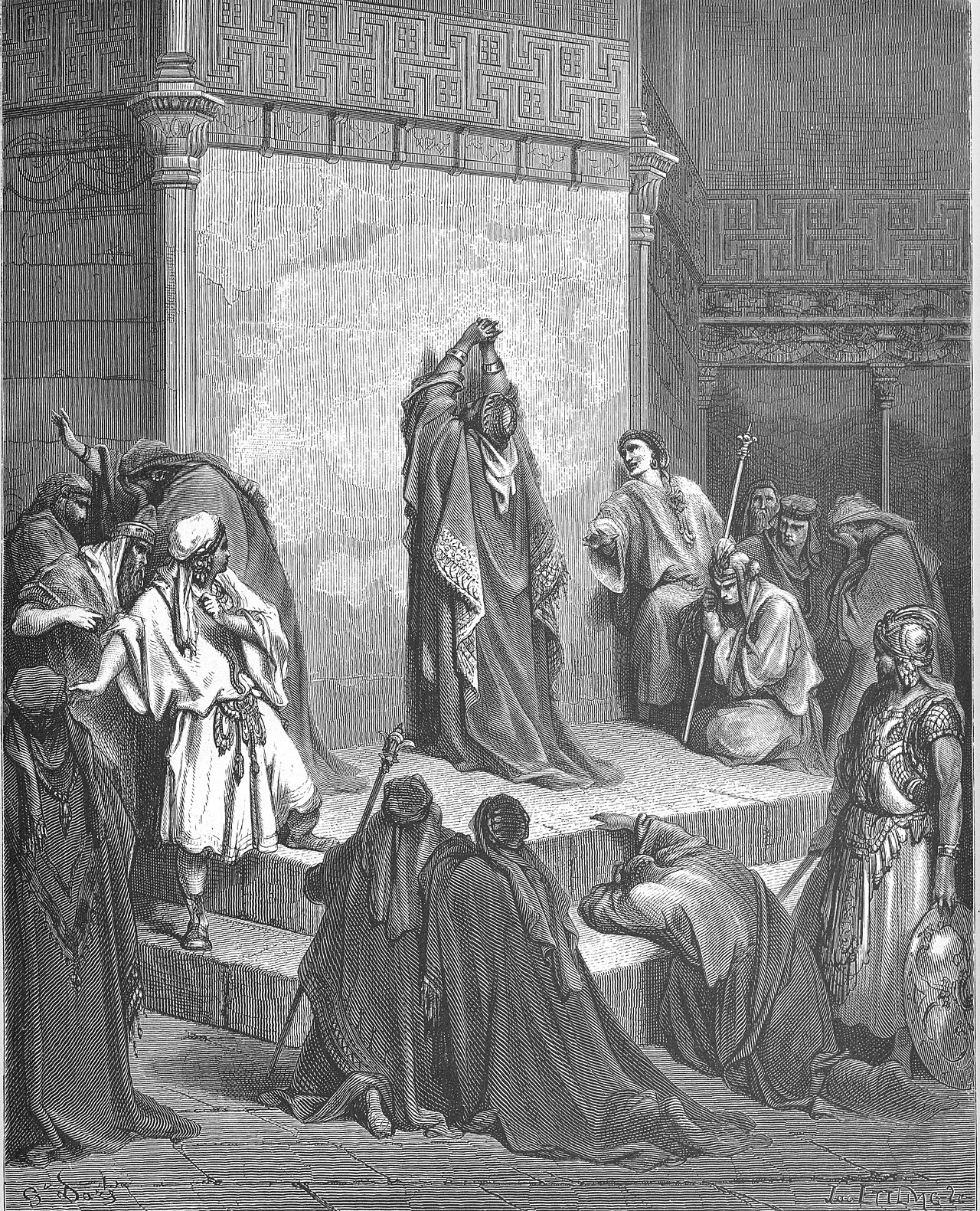
This page draws on Adam Clarke, Commentary on the Bible; Jamieson, Fausset & Brown, Commentary Critical and Explanatory on the Whole Bible; John Gill, Exposition of the Old Testament (1748-1763); John Wesley, Explanatory Notes upon the Old Testament and Matthew Henry, Commentary on the Whole Bible.