
1 Samuel 25:22
in 1 Samuel 25May God punish David, and ever so severely, if I let one of Nabal’s men survive until morning.”
BSB
The same verse in ASV and KJV ▾
ASV
God do so unto the enemies of David, and more also, if I leave of all that pertain to him by the morning light so much as one man-child.
KJV
So and more also do God unto the enemies of David, if I leave of all that pertain to him by the morning light any that pisseth against the wall.
⋯
This verse in 1 Samuel 25
Commentary
9 notes on this verseSo and more also do God - Nothing can justify this part of David’s conduct. Whatever his provocation might have been, he had suffered, properly speaking, no wrongs; and his resolution to cut off a whole innocent family, because Nabal had acted ungenerously towards him, was abominable and cruel, not to say diabolic. He who attempts to vindicate this conduct of David is, at least constructively, a foe to God and truth.
This site's exposition
came down by the covert of the hill
on 1 Samuel 25:20-22
Abigail comes down one path as David comes down another, and the two meet by what providence alone timed. David's own words in verse 21 show the size of what he intends, an oath sworn in the coarse idiom of the day, cursing himself if he leaves alive by morning any male of Nabal's household, a formula used elsewhere in Samuel when a man binds himself to an act. The chapter records David's grievance honestly, that he had kept Nabal's flocks safe for nothing and been repaid evil for good, but the oath itself goes further than the grievance justifies.
This site's exposition
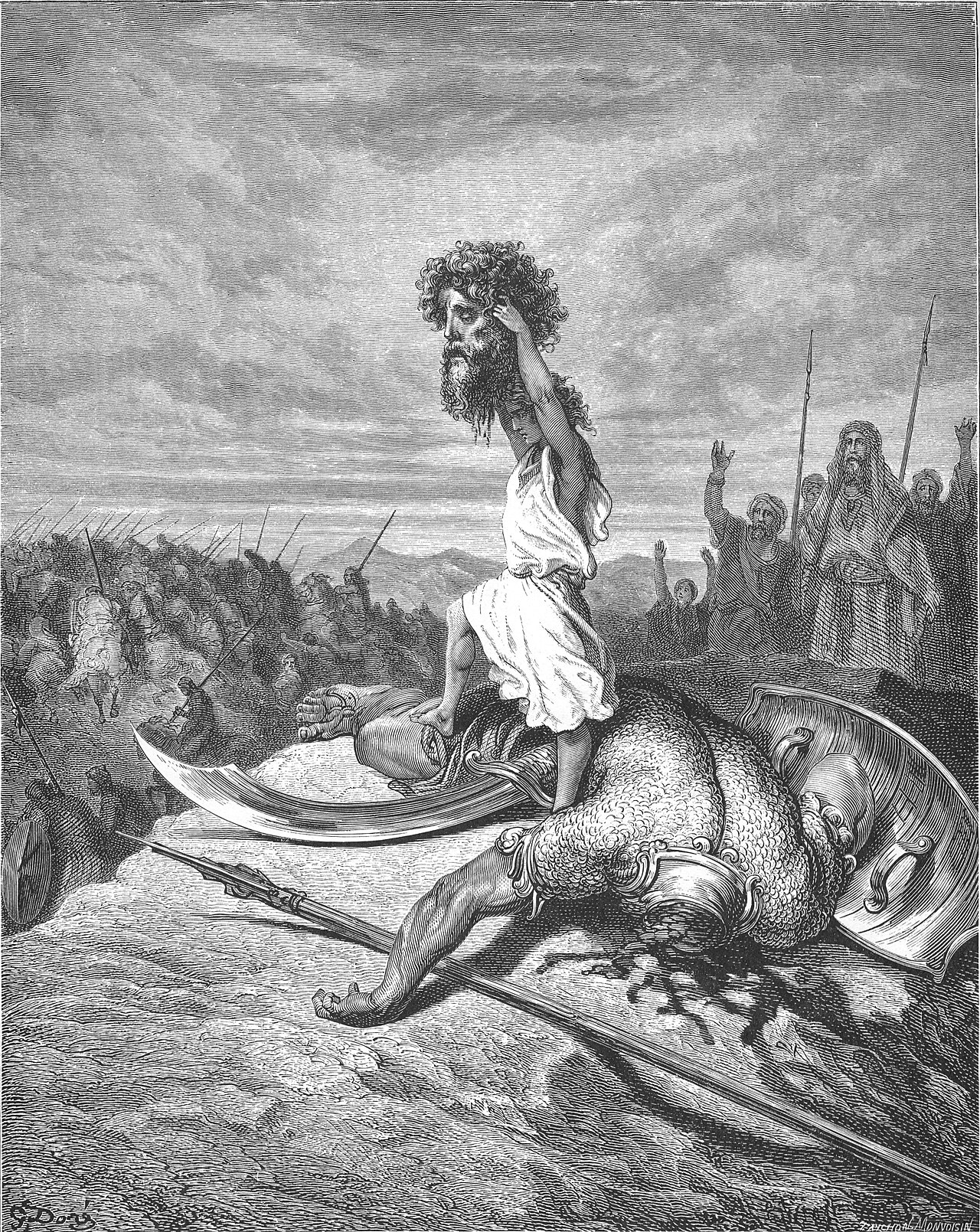
May God punish David, and ever so severely
In the Hebrew text David calls down punishment on David's enemies, and Matthew Henry reads this as David turning the curse away from himself. The Berean text follows the Greek, which names David. Adam Clarke allows no defense of a vow to leave no man of Nabal's household alive by morning.
The record, by era
The Church Fathers1 voice
Indeed, because David swore that he would kill Nabal and then in more considerate forbearance did not, shall we say that we should imitate him by swearing rashly that we are going to do what we see later ought not to be done? But, just as fear confounded the one [Lot] so that he was willing to prostitute his daughters, so did anger confound the other [David] so as to swear rashly. In short, if it were permitted us to make inquiry and ask them both why they did these things, the one could reply, "Fear and trembling are come upon me: and darkness has covered me," and the other also could say, "My eye is troubled through indignation." And so we would not be surprised that the one in the darkness of fear and the other in the indignation of his eye did not see what ought to have been seen so as not to do what ought not to have been done.Indeed, to the righteous David we might with reasonable justice say that he ought not to have become angry, not even with an ingrate who returned evil for good. Even if anger crept upon him, as it does upon a man, at least it ought not to have prevailed so far that he swore to do what he would either do in rage or not do and be forsworn.
The Medieval Church1 voice
If it should perhaps happen that we swear carelessly to something which, if carried out, would have most unfortunate consequences, we should know that we should willingly change it [in accord with] more salutary counsel. There is an urgent necessity for us to break our …
The Puritans and the Awakening3 voices
I thought to oblige him and make him my friend, but I see it is to no purpose. He has no sense of gratitude, nor is he capable of receiving the impressions of a good turn, else he could not have used me thus. He hath requited me evil for good. " But, when we are thus requited, we should not repent of the good we have done, nor be backward to do good another time.
quarantine:debris (2026-07-29) — odd-straight-quotes
Here David did not act like himself. His resolution was bloody, to cut off all the males of Nabal's house, and spare none, man nor man-child. The ratification of his resolution was passionate: So, and more also do to God (he was going to say to me, but that would better become Saul's mouth, ch. xiv.
quarantine:debris (2026-07-29) — unbalanced-parens
So and more also do God unto the enemies of David,....
1 more voice on this verse
The Nineteenth Century1 voice
A commentator
Albert Barnes1798–1870
Notes, Explanatory and Practical, on the Old and New Testaments (1832-1869)
proposed
The concluding phrase denotes the utter destruction of a family, and is rightly explained to mean “every male,” perhaps with the idea, “down to the very meanest member of the household.”
The words behind it
16 Hebrew wordsEvery Hebrew word of this verse in the order it stands, with what it means and the door to its own study. The last column counts the times a word stands in the whole Bible: the rarer the word, the more the places it appears belong together.
| Hebrew | Sound | Meaning | Word study | In the Bible |
|---|---|---|---|---|
| כֹּה־ | koh- | thus | H3541 → | 577 times |
| יַעֲשֶׂ֧ה | yaaseh | may he do | H6213 → | 2628 times |
| אֱלֹהִ֛ים | ʾelohim | God | H430 → | 2601 times |
| לְאֹיְבֵ֥י | leoyevei | to [the] enemies | H341 → | 282 times |
| דָוִ֖ד | david | David | H1732 → | 999 times |
| וְכֹ֣ה | vekhoh | and thus | H3541 → | 577 times |
| יֹסִ֑יף | yosif | may he add | H3254 → | 212 times |
| אִם־ | ʾim- | if | H518 → | 1069 times |
| אַשְׁאִ֧יר | ʾashir | I will leave | H7604 → | 133 times |
| מִכָּל־ | mikol | any of all | H3605 → | 5413 times |
| אֲשֶׁר־ | ʾasher- | that | H834 → | 5497 times |
| ל֛וֹ | lo | [belongs] to <the> him | ||
| עַד־ | ʾad- | until | H5704 → | 1261 times |
| הַבֹּ֖קֶר | haboker | the morning | H1242 → | 214 times |
| מַשְׁתִּ֥ין | mashtin | [one who] urinates | H8366 → | |
| בְּקִֽיר׃ | bekir | on a wall | H7023 → | 75 times |
כֹּה־thus
koh-H3541 →577 times
יַעֲשֶׂ֧הmay he do
yaasehH6213 →2628 times
אֱלֹהִ֛יםGod
ʾelohimH430 →2601 times
לְאֹיְבֵ֥יto [the] enemies
leoyeveiH341 →282 times
דָוִ֖דDavid
davidH1732 →999 times
וְכֹ֣הand thus
vekhohH3541 →577 times
יֹסִ֑יףmay he add
yosifH3254 →212 times
אִם־if
ʾim-H518 →1069 times
אַשְׁאִ֧ירI will leave
ʾashirH7604 →133 times
מִכָּל־any of all
mikolH3605 →5413 times
אֲשֶׁר־that
ʾasher-H834 →5497 times
ל֛וֹ[belongs] to <the> him
lo
עַד־until
ʾad-H5704 →1261 times
הַבֹּ֖קֶרthe morning
habokerH1242 →214 times
מַשְׁתִּ֥ין[one who] urinates
mashtinH8366 →
בְּקִֽיר׃on a wall
bekirH7023 →75 times
A shaded row is a word that stands 400 times or fewer in the Bible.
The walk
8 stopsEach card is a verse this one points to, and under it the verses that one points to in turn. Where several paths arrive at the same place, that place is listed first: the text keeps returning to it.
Through
1 Kings 14:10Because of all this, behold, I am bringing disaster on the house of Jeroboam: I will cut off from Jeroboam every male, both slave and free, in Israel; I will burn up the house…
it leads to
- 2 Kings 14:26
For the LORD saw that the affliction of the Israelites, both slave and free, was very bitter. There was no one to help Israel,
Reached by 3 separate paths from here.
- Deuteronomy 32:36
For the LORD will vindicate His people and have compassion on His servants when He sees that their strength is gone and no one remains, slave or free.
Reached by 2 separate paths from here.
- 1 Kings 21:21
This is what the LORD says: ‘I will bring calamity on you and consume your descendants; I will cut off from Ahab every male in Israel, both slave and free.
- 2 Kings 14:26
Through
1 Samuel 20:13But if my father intends to bring evil on you, then may the LORD punish me, and ever so severely, if I do not tell you and send you on your way in safety.…
it leads to
- Ruth 1:17
Where you die, I will die, and there I will be buried. May the LORD punish me, and ever so severely, if anything but death separates you and me.”
Reached by 2 separate paths from here.
- 1 Samuel 17:37
David added, “The LORD, who delivered me from the claws of the lion and the bear, will deliver me from the hand of this Philistine.” “Go,” said Saul, “and may the LORD be with…
- 1 Chronicles 22:11
Now, my son, may the LORD be with you, and may you succeed in building the house of the LORD your God, as He said you would.
- 1 Chronicles 22:16
in gold and silver, bronze and iron—craftsmen beyond number. Now begin the work, and may the LORD be with you.”
- Ruth 1:17
Through
1 Kings 21:21This is what the LORD says: ‘I will bring calamity on you and consume your descendants; I will cut off from Ahab every male in Israel, both slave and free.
it leads to
- 1 Kings 14:10
Because of all this, behold, I am bringing disaster on the house of Jeroboam: I will cut off from Jeroboam every male, both slave and free, in Israel; I will burn up the house…
- 1 Kings 14:10
Where this verse is studied
On this page
Studies1
About 1 Samuel
Who and where
1 name in this verse with a page on the site.
This page draws on Adam Clarke, Commentary on the Bible; Albert Barnes, Notes, Explanatory and Practical, on the Old and New Testaments (1832-1869); Augustine of Hippo, Against Lying 9.21-22; Bede, Homilies on the Gospels 2; John Gill, Exposition of the Old Testament; John Gill, Exposition of the Old Testament (1748-1763) and Matthew Henry, Commentary on the Whole Bible.