
1 Samuel 25:11
in 1 Samuel 25Why should I take my bread and water and the meat I have slaughtered for my shearers, and give them to these men whose origin I do not know?”
BSB
The same verse in ASV and KJV ▾
ASV
Shall I then take my bread, and my water, and my flesh that I have killed for my shearers, and give it unto men of whom I know not whence they are?
KJV
Shall I then take my bread, and my water, and my flesh that I have killed for my shearers, and give it unto men, whom I know not whence they be?
⋯
This verse in 1 Samuel 25
Commentary
6 notes on this verseA commentator
Albert Barnes1798–1870
Notes, Explanatory and Practical, on the Old and New Testaments (1832-1869)
The mention of water indicates a country where water was scarce (compare Jos 15:19). Or “bread and water” may be equivalent to “meat and drink.”
This site's exposition
they relayed all these words to Nabal on behalf of David
on 1 Samuel 25:9-11
Nabal answers with contempt, asking who David is and calling him a servant breaking away from his master. Henry reads Nabal's reasoning as the common error, that a man may do what he likes with his own, when possession is stewardship under God.
This site's exposition
Why should I take my bread and water
Albert Barnes reads bread and water as a plain phrase for food and drink, with water named because it was scarce in that country. Nabal claims the bread, water and meat as his own. Abigail took loaves, wine and butchered sheep from the same house at verse 18.
The record, by era
The Puritans and the Awakening2 voices
Shall I then take my bread, and my water,....
But this, he thinks, will justify him in keeping i t all to himself, and giving David none; for may he not do what he will with his own? Whereas we mistake if we think we are absolute lords of what we have and may do what we please with it. No, we are but stewards, and must use it as we are directed, remembering it is not our own, but his that entrusted us with it.
The Nineteenth Century1 voice
A commentator
Jamieson, Fausset & Brown1802–1910
Commentary Critical and Explanatory on the Whole Bible (1871)
Their protection creates a claim for some kind of tribute, in the shape of supplies of food and necessaries, which is usually given with great good will and gratitude; but when withheld, is enforced as a right. Nabal's refusal, therefore, was a violation of the established usages of the place.
How the passage was read
What the Jewish commentators add
On the verses either side of this one
Who is Dovid. Of what importance is he that I should give him mine? Is he not descended from Rus the Moavite? 10 And as such, Novol questioned Dovid’s right to the throne. See Talmud Yerushalmi Sanhedrin:3.
This section is reception history: how the passage was read and kept in the Jewish tradition. Where a reading parts from an essential of the Christian faith, the section says so at that point.
Texts and citation data: Sefaria; each excerpt follows its version’s licence. 6 further sources are cited on this chapter that carry no English text this site may quote or only restate the verse.
The words behind it
18 Hebrew wordsEvery Hebrew word of this verse in the order it stands, with what it means and the door to its own study. The last column counts the times a word stands in the whole Bible: the rarer the word, the more the places it appears belong together.
| Hebrew | Sound | Meaning | Word study | In the Bible |
|---|---|---|---|---|
| וְלָקַחְתִּ֤י | velakachti | and will I take | H3947 → | 966 times |
| אֶת־ | ʾet- | <obj.> | H853 → | 10935 times |
| לַחְמִי֙ | lachmi | bread my | H3899 → | 298 times |
| וְאֶת־ | veet | and <obj.> | H853 → | 10935 times |
| מֵימַ֔י | meimai | water my | H4325 → | 581 times |
| וְאֵת֙ | veet | and <obj.> | H853 → | 10935 times |
| טִבְחָתִ֔י | tivchati | slaughter my | H2878 → | |
| אֲשֶׁ֥ר | ʾasher | which | H834 → | 5497 times |
| טָבַ֖חְתִּי | tavachti | I have slaughtered | H2873 → | |
| לְגֹֽזְזָ֑י | legozezai | for shearers my | H1494 → | 15 times |
| וְנָֽתַתִּי֙ | venatati | and will I give [them] | H5414 → | 2011 times |
| לַֽאֲנָשִׁ֔ים | laanashim | to men | H582 → | 566 times |
| אֲשֶׁר֙ | ʾasher | who | H834 → | 5497 times |
| לֹ֣א | lo' | not | H3808 → | 5168 times |
| יָדַ֔עְתִּי | yada'ti | I know | H3045 → | 945 times |
| אֵ֥י | ʾei | where? | H335 → | 39 times |
| מִזֶּ֖ה | mizeh | from this | H2088 → | 1180 times |
| הֵֽמָּה׃ | hemah | [are] they | H1992 → | 553 times |
וְלָקַחְתִּ֤יand will I take
velakachtiH3947 →966 times
אֶת־<obj.>
ʾet-H853 →10935 times
לַחְמִי֙bread my
lachmiH3899 →298 times
וְאֶת־and <obj.>
veetH853 →10935 times
מֵימַ֔יwater my
meimaiH4325 →581 times
וְאֵת֙and <obj.>
veetH853 →10935 times
טִבְחָתִ֔יslaughter my
tivchatiH2878 →
אֲשֶׁ֥רwhich
ʾasherH834 →5497 times
טָבַ֖חְתִּיI have slaughtered
tavachtiH2873 →
לְגֹֽזְזָ֑יfor shearers my
legozezaiH1494 →15 times
וְנָֽתַתִּי֙and will I give [them]
venatatiH5414 →2011 times
לַֽאֲנָשִׁ֔יםto men
laanashimH582 →566 times
אֲשֶׁר֙who
ʾasherH834 →5497 times
לֹ֣אnot
lo'H3808 →5168 times
יָדַ֔עְתִּיI know
yada'tiH3045 →945 times
אֵ֥יwhere?
ʾeiH335 →39 times
מִזֶּ֖הfrom this
mizehH2088 →1180 times
הֵֽמָּה׃[are] they
hemahH1992 →553 times
A shaded row is a word that stands 400 times or fewer in the Bible.
The walk
8 stopsEach card is a verse this one points to, and under it the verses that one points to in turn. Where several paths arrive at the same place, that place is listed first: the text keeps returning to it.
Through
Galatians 6:10Therefore, as we have opportunity, let us do good to everyone, and especially to the family of faith.
it leads to
- Hebrews 13:16
And do not neglect to do good and to share with others, for with such sacrifices God is pleased.
- Proverbs 3:27
Do not withhold good from the deserving when it is within your power to act.
- 1 Thessalonians 5:15
Make sure that no one repays evil for evil. Always pursue what is good for one another and for all people.
- Titus 3:8
This saying is trustworthy. And I want you to emphasize these things, so that those who have believed God will take care to devote themselves to good deeds. These things are excellent and profitable…
- Matthew 25:40
And the King will reply, ‘Truly I tell you, whatever you did for one of the least of these brothers of Mine, you did for Me.’
- Hebrews 13:16
Through
Deuteronomy 8:17You might say in your heart, “The power and strength of my hands have made this wealth for me.”
it leads to
- Deuteronomy 9:4
When the LORD your God has driven them out before you, do not say in your heart, “Because of my righteousness the LORD has brought me in to possess this land.” Rather, the LORD…
- 1 Corinthians 4:7
For who makes you so superior? What do you have that you did not receive? And if you did receive it, why do you boast as though you did not?
- Daniel 4:30
the king exclaimed, “Is this not Babylon the Great, which I myself have built by the might of my power as a royal residence and for the glory of my majesty?”
- Deuteronomy 9:4
Where this verse is studied
On this page
About 1 Samuel
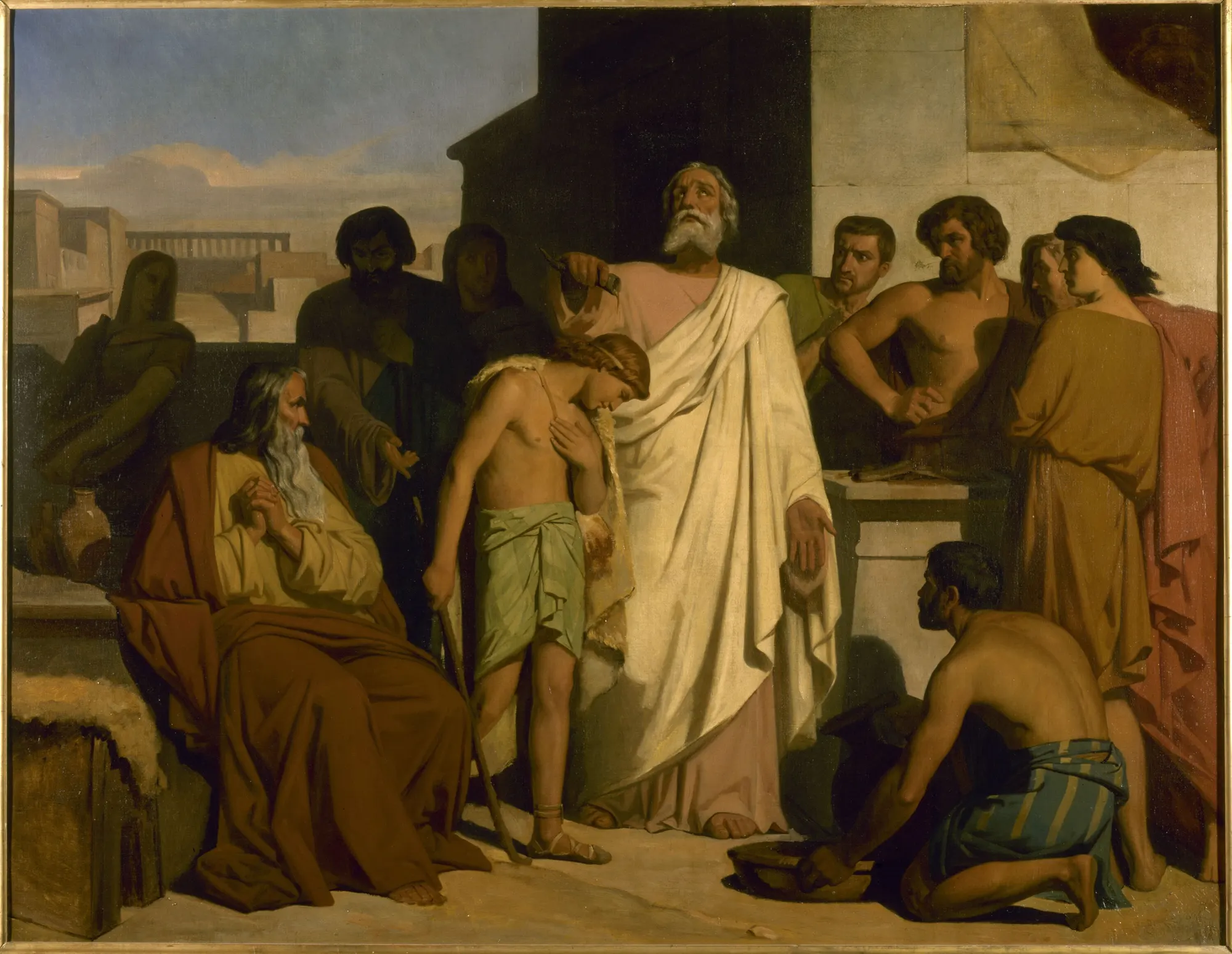
This page draws on Adam Clarke, Commentary on the Bible; Albert Barnes, Notes, Explanatory and Practical, on the Old and New Testaments (1832-1869); Jamieson, Fausset & Brown, Commentary Critical and Explanatory on the Whole Bible; John Gill, Exposition of the Old Testament (1748-1763) and Matthew Henry, Commentary on the Whole Bible.