
1 Samuel 15:18
in 1 Samuel 15and sent you on a mission, saying, ‘Go and devote to destruction the sinful Amalekites. Fight against them until you have wiped them out.’
BSB
The same verse in ASV and KJV ▾
ASV
and Jehovah sent thee on a journey, and said, Go, and utterly destroy the sinners the Amalekites, and fight against them until they be consumed.
KJV
And the Lord sent thee on a journey, and said, Go and utterly destroy the sinners the Amalekites, and fight against them until they be consumed.
⋯
This verse in 1 Samuel 15
Commentary
6 notes on this verseA commentator
Jamieson, Fausset & Brown1802–1910
Commentary Critical and Explanatory on the Whole Bible (1871)
Saul said unto him, Blessed be thou of the Lord: I have performed the commandment of the Lord--Saul was either blinded by a partial and delusive self-love, or he was, in his declaration to Samuel, acting the part of a bold and artful hypocrite. He professed to have fulfilled the divine command, and that the blame of any defects in the execution lay with the people.
This site's exposition
what the Lord hath said to me this night
on 1 Samuel 15:16-19
Samuel's rebuke opens by returning Saul to the beginning, when thou wast little in thine own sight, the same smallness Saul once claimed for himself at his anointing. The command is restated in full, to utterly destroy the sinners the Amalekites, closing the door on any reading that the order was ever partial or left open to judgment calls about what counted as good. Verse 19 names the true offense without softening it: Saul did not obey, he flew upon the spoil, and Samuel calls it evil in the sight of the Lord, not merely a misjudgment.
The record, by era
The Medieval Church1 voice
A commentator
Gregory the DialogistCommentary on 1 Kings, Book 6, Chapter 2 · Written before 604.
proposed
By these words, the disobedience of the proud king is subtly examined: because he first sets before him the gifts that were bestowed, then strikes at the audacity of his transgression through a careful investigation of that same fault. For it is a subtle examination when a crafty sinner is so scrutinized that no excuse for his guilt is left to him, so that God's sentence holds him bound, as it were, to the death of his crime, since no refuge from sin remains for him. Therefore, so that every way of escape may be blocked for the deceitful and proud, both the loftiness of his dignity and the manner of his ministry are recalled to him, when he says: "Were you not, when you were little in your own eyes, made the head among the tribes of Israel? And the Lord said to you: Destroy the sinners of Amalek." And so that, now surrounded and besieged by these arguments, he might catch him, he lays upon him the hand of guilt, saying: "Why then did you not hear the voice of the Lord, but turned to the spoil and did evil in the sight of the Lord?" As if to say: Behold what you were, what you were made, what you ought to have done; behold what you have done; behold how far you have departed from what you ought to have carried out. Therefore, when he pressed further, saying: "Why did you do evil in the eyes of the Lord?" he seized the deceitful defendant, as it were, by surrounding him on every side.
The Puritans and the Awakening2 voices
The work was honourable, to destroy the sworn enemies of God and Israel; and had he denied himself, and set aside the consideration of his own profit so far as to have destroyed all that belonged to Amalek, he would have been no loser by it at last, nor have gone this warfare on his own charges.
And the Lord sent thee on a journey,.... And therefore he ought to have attended to the errand sent upon, and executed the orders given; in vain, therefore, was it to lay the blame on the people: and said, go, and utterly destroy the sinners, the Amalekites; those notorious sinners, who deserve no mercy at the hands of God or men; who had so highly offended the Lord, and had been so injurious to his people at their first coming out of Egypt.
The Nineteenth Century1 voice
A commentator
Albert Barnes1798–1870
Notes, Explanatory and Practical, on the Old and New Testaments (1832-1869)
proposed
The sinners - As though God would justify His commission to destroy them. (Compare Gen 13:13.)
How the passage was read
What the Jewish commentators add
On the verses either side of this one
You are the head of the tribes of Yisroel. Targum Yonoson renders, 'the tribe of Binyomin crossed the [Reed] Sea ahead of all the people, as it is said, 'Binyomin, the youngest, rules them.' 18 Tehillim:28.
This section is reception history: how the passage was read and kept in the Jewish tradition. Where a reading parts from an essential of the Christian faith, the section says so at that point.
Texts and citation data: Sefaria; each excerpt follows its version’s licence. 4 further sources are cited on this chapter that carry no English text this site may quote or only restate the verse.
The words behind it
15 Hebrew wordsEvery Hebrew word of this verse in the order it stands, with what it means and the door to its own study. The last column counts the times a word stands in the whole Bible: the rarer the word, the more the places it appears belong together.
| Hebrew | Sound | Meaning | Word study | In the Bible |
|---|---|---|---|---|
| וַיִּשְׁלָחֲךָ֥ | vaiyishlachakha | and he sent you | H7971 → | 845 times |
| יְהוָ֖ה | yahweh | Yahweh | H3068 → | 6520 times |
| בְּדָ֑רֶךְ | bedarekh | on a journey | H1870 → | 707 times |
| וַיֹּ֗אמֶר | vaiyomer | and he said | H559 → | 5305 times |
| לֵ֣ךְ | lekh | go | H1980 → | 1546 times |
| וְהַחֲרַמְתָּ֞ה | vehacharamtah | and you will totally destroy | H2763 → | 52 times |
| אֶת־ | ʾet- | <obj.> | H853 → | 10935 times |
| הַֽחַטָּאִים֙ | hachataim | the sinners | H2400 → | |
| אֶת־ | ʾet- | <obj.> | H853 → | 10935 times |
| עֲמָלֵ֔ק | ʾamalek | Amalek | H6002 → | 39 times |
| וְנִלְחַמְתָּ֣ | venilchamta | and you will wage war | H3898 → | 177 times |
| ב֔וֹ | vo | against <the> it | ||
| עַ֥ד | ʾad | until | H5704 → | 1261 times |
| כַּלּוֹתָ֖ם | kalotam | destroy they | H3615 → | 208 times |
| אֹתָֽם׃ | ʾotam | <obj.> them | H853 → | 10935 times |
וַיִּשְׁלָחֲךָ֥and he sent you
vaiyishlachakhaH7971 →845 times
יְהוָ֖הYahweh
yahwehH3068 →6520 times
בְּדָ֑רֶךְon a journey
bedarekhH1870 →707 times
וַיֹּ֗אמֶרand he said
vaiyomerH559 →5305 times
לֵ֣ךְgo
lekhH1980 →1546 times
וְהַחֲרַמְתָּ֞הand you will totally destroy
vehacharamtahH2763 →52 times
אֶת־<obj.>
ʾet-H853 →10935 times
הַֽחַטָּאִים֙the sinners
hachataimH2400 →
אֶת־<obj.>
ʾet-H853 →10935 times
עֲמָלֵ֔קAmalek
ʾamalekH6002 →39 times
וְנִלְחַמְתָּ֣and you will wage war
venilchamtaH3898 →177 times
ב֔וֹagainst <the> it
vo
עַ֥דuntil
ʾadH5704 →1261 times
כַּלּוֹתָ֖םdestroy they
kalotamH3615 →208 times
אֹתָֽם׃<obj.> them
ʾotamH853 →10935 times
A shaded row is a word that stands 400 times or fewer in the Bible.
The walk
8 stopsEach card is a verse this one points to, and under it the verses that one points to in turn. Where several paths arrive at the same place, that place is listed first: the text keeps returning to it.
Through
Proverbs 10:29The way of the LORD is a refuge to the upright, but destruction awaits those who do evil.
it leads to
- Proverbs 21:15
Justice executed is a joy to the righteous, but a terror to the workers of iniquity.
Reached by 2 separate paths from here.
- Proverbs 21:15
Through
Genesis 15:16In the fourth generation your descendants will return here, for the iniquity of the Amorites is not yet complete.”
it leads to
- 1 Kings 21:26
He committed the most detestable acts by going after idols, just like the Amorites whom the LORD had driven out before the Israelites.)
- Daniel 8:23
In the latter part of their reign, when the rebellion has reached its full measure, an insolent king, skilled in intrigue, will come to the throne.
- Exodus 12:40
Now the duration of the Israelites’ stay in Egypt was 430 years.
- Matthew 23:32–35
Fill up, then, the measure of the sin of your fathers.
- 1 Thessalonians 2:16
hindering us from telling the Gentiles how they may be saved. As a result, they continue to heap up their sins to full capacity; the utmost wrath has come upon them.
- 1 Kings 21:26
Through
Job 31:3Does not disaster come to the unjust and calamity to the workers of iniquity?
it leads to
- Job 21:30
Indeed, the evil man is spared from the day of calamity, delivered from the day of wrath.
- Job 21:30
Through
Genesis 13:13But the men of Sodom were wicked, sinning greatly against the LORD.
it leads to
- 2 Peter 2:10
Such punishment is specially reserved for those who indulge the corrupt desires of the flesh and despise authority. Bold and self-willed, they are unafraid to slander glorious beings.
- 2 Peter 2:10
Where this verse is studied
About 1 Samuel
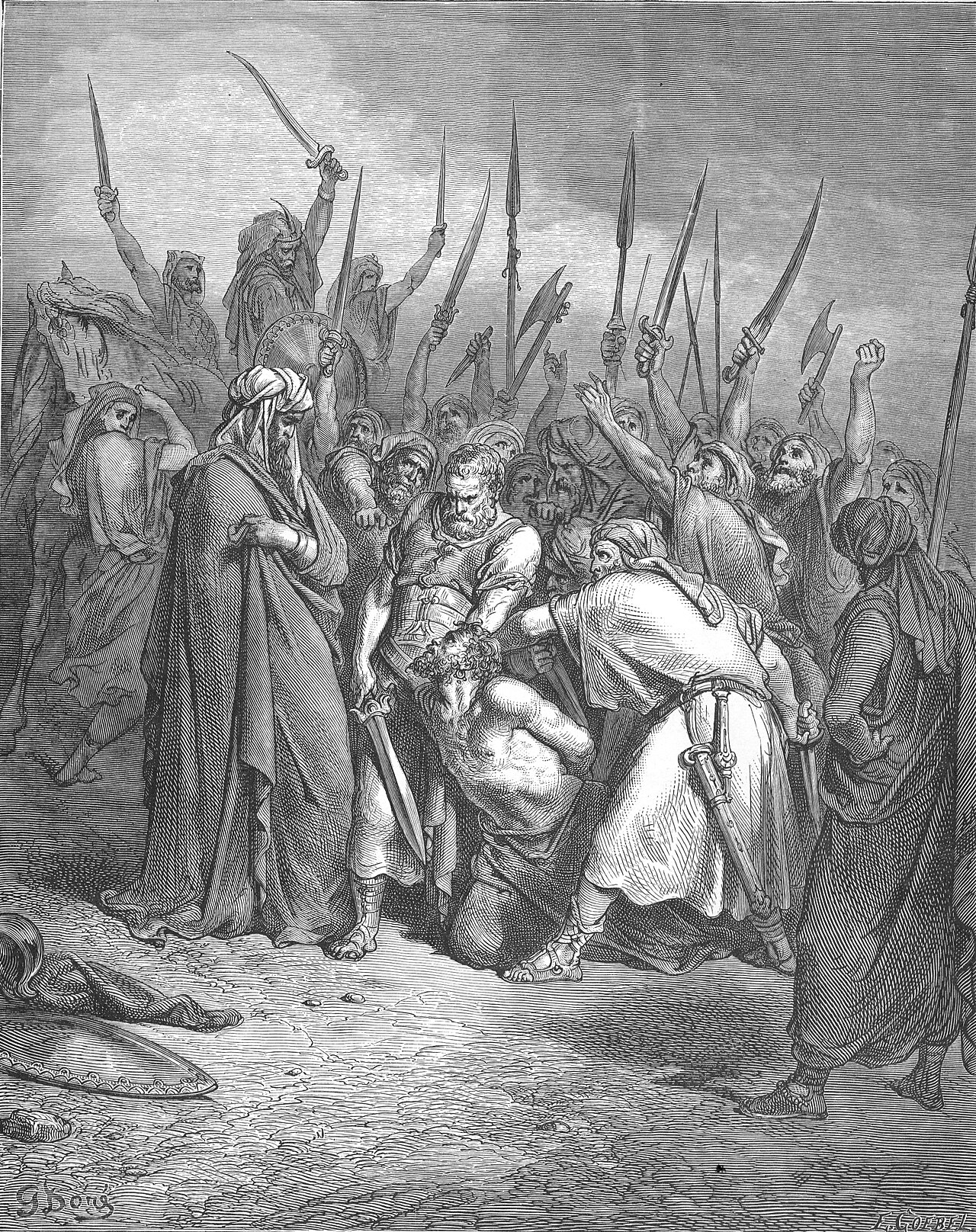
This page draws on Albert Barnes, Notes, Explanatory and Practical, on the Old and New Testaments (1832-1869); Gregory the Dialogist, Commentary on 1 Kings, Book 6, Chapter 2; Jamieson, Fausset & Brown, Commentary Critical and Explanatory on the Whole Bible; John Gill, Exposition of the Old Testament; John Gill, Exposition of the Old Testament (1748-1763); Keil and Delitzsch, Biblical Commentary on the Books of Samuel and Matthew Henry, Commentary on the Whole Bible.