
1 Samuel 14:1
in 1 Samuel 14One day Jonathan son of Saul said to the young man bearing his armor, “Come, let us cross over to the Philistine outpost on the other side.” But Jonathan did not tell his father.
BSB
The same verse in ASV and KJV ▾
ASV
Now it fell upon a day, that Jonathan the son of Saul said unto the young man that bare his armor, Come, and let us go over to the Philistines’ garrison, that is on yonder side. But he told not his father.
KJV
Now it came to pass upon a day, that Jonathan the son of Saul said unto the young man that bare his armour, Come, and let us go over to the Philistines’ garrison, that is on the other side. But he told not his father.
⋯
This verse in 1 Samuel 14
Commentary
8 notes on this verseA commentator
Albert Barnes1798–1870
Notes, Explanatory and Practical, on the Old and New Testaments (1832-1869)
Now ... - Rather “and,” since this verse is in immediate dependence upon the preceding. When Jonathan saw the garrison come out again and again, in defiance “of the armies of the living God,” at length “upon a day” he determined to attack them.
This site's exposition
let us go over
on 1 Samuel 14:1-2
Jonathan moves on his own initiative and keeps his father in the dark, while Saul sits at the edge of Gibeah under a pomegranate tree with six hundred men who do nothing. The chapter opens on that contrast and holds it: one Saulide acts in faith and one commands a camp that waits. Six hundred men are the whole muster left to Israel after 13:15, a number the narrator does not explain but the reader is meant to feel.
The record, by era
The Medieval Church2 voices
And it happened one day, that Jonathan said, etc. For Jonathan, who is interpreted as the gift of the dove, foresaw the grace of the Spirit teachers; his young armor-bearer, the disciples obediently bearing arms not of the flesh, but powerful in God; whose youth …
A commentator
Gregory the DialogistCommentary on 1 Kings, Book 5, Chapter 4 · Written before 604.
proposed
The station of the Philistines goes forth when the throng of evil spirits is revealed to the minds of the elect through harmful suggestions. It is indeed called a station for this reason: because the wars of the elect are being described. For to stand, for malignant spirits, is to exert great forces in the battle of the elect. For anyone can strive to accomplish something more powerfully by standing than by sitting. Therefore the station of the Philistines is said to have gone forth, so that the effort of the demons in our war may be openly understood.
The Puritans and the Awakening2 voices
Nor had he so great an opinion of the priest as to consult him, but, being conscious of a divine impulse putting him upon it, he threw himself into the mouth of danger, in hope of doing service to his country. The way of access to the enemies' camp is described (
quarantine:debris (2026-07-29) — unbalanced-parens
Now it came to pass upon a day,....
The Nineteenth Century1 voice
Come, and let us go over - This action of Jonathan was totally contrary to the laws of war; no military operation should be undertaken without the knowledge and command of the general. But it is likely that he was led to this by a Divine influence. The armor-bearer is the origin of what we call esquire, from escu, old French, a shield; armiger is the Latin, from arma, weapons, and gero, I bear. In the times of chivalry, the armiger, or esquire, was the servant of the knight who went after him, and carried his lance, shield, etc. It is now (strange to tell!) a title of honor.
1 more voice on this verse
Modern Voices1 voice
A commentator
GK ChestertonTime's Abstract and Brief Chronicle (1904-1905) · Written before 1936.
proposed
The one perfectly divine thing, the one glimpse of God's paradise given on earth, is to fight a losing battle - and not lose it.
The words behind it
21 Hebrew wordsEvery Hebrew word of this verse in the order it stands, with what it means and the door to its own study. The last column counts the times a word stands in the whole Bible: the rarer the word, the more the places it appears belong together.
| Hebrew | Sound | Meaning | Word study | In the Bible |
|---|---|---|---|---|
| וַיְהִ֣י | vayhi | and it was | H1961 → | 3559 times |
| הַיּ֗וֹם | haiyom | the day | H3117 → | 2304 times |
| וַיֹּ֨אמֶר | vaiyomer | and he said | H559 → | 5305 times |
| יוֹנָתָ֤ן | yonatan | Jonathan | H3129 → | 43 times |
| בֶּן־ | ben- | [the] son of | H1121 → | 4930 times |
| שָׁאוּל֙ | shaul | Saul | H7586 → | 402 times |
| אֶל־ | ʾel- | to | H413 → | 5510 times |
| הַנַּ֙עַר֙ | hanaar | the young man | H5288 → | 239 times |
| נֹשֵׂ֣א | nose' | [the] bearer of | H5375 → | 656 times |
| כֵלָ֔יו | khelav | armor<s> his | H3627 → | 325 times |
| לְכָ֗ה | lekhah | come ! | H1980 → | 1546 times |
| וְנַעְבְּרָה֙ | vena'berah | so let us pass over | H5674 → | 556 times |
| אֶל־ | ʾel- | to | H413 → | 5510 times |
| מַצַּ֣ב | matzav | [the] garrison of | H4673 → | 10 times |
| פְּלִשְׁתִּ֔ים | pelishtim | [the] Philistines | H6430 → | 287 times |
| אֲשֶׁ֖ר | ʾasher | which | H834 → | 5497 times |
| מֵעֵ֣בֶר | meever | [is] from [the] other side of | H5676 → | 90 times |
| הַלָּ֑ז | halaz | this | H1975 → | |
| וּלְאָבִ֖יו | uleaviv | and to father his | H1 → | 1212 times |
| לֹ֥א | lo' | not | H3808 → | 5168 times |
| הִגִּֽיד׃ | higid | he told | H5046 → | 370 times |
וַיְהִ֣יand it was
vayhiH1961 →3559 times
הַיּ֗וֹםthe day
haiyomH3117 →2304 times
וַיֹּ֨אמֶרand he said
vaiyomerH559 →5305 times
יוֹנָתָ֤ןJonathan
yonatanH3129 →43 times
בֶּן־[the] son of
ben-H1121 →4930 times
שָׁאוּל֙Saul
shaulH7586 →402 times
אֶל־to
ʾel-H413 →5510 times
הַנַּ֙עַר֙the young man
hanaarH5288 →239 times
נֹשֵׂ֣א[the] bearer of
nose'H5375 →656 times
כֵלָ֔יוarmor<s> his
khelavH3627 →325 times
לְכָ֗הcome !
lekhahH1980 →1546 times
וְנַעְבְּרָה֙so let us pass over
vena'berahH5674 →556 times
אֶל־to
ʾel-H413 →5510 times
מַצַּ֣ב[the] garrison of
matzavH4673 →10 times
פְּלִשְׁתִּ֔ים[the] Philistines
pelishtimH6430 →287 times
אֲשֶׁ֖רwhich
ʾasherH834 →5497 times
מֵעֵ֣בֶר[is] from [the] other side of
meeverH5676 →90 times
הַלָּ֑זthis
halazH1975 →
וּלְאָבִ֖יוand to father his
uleavivH1 →1212 times
לֹ֥אnot
lo'H3808 →5168 times
הִגִּֽיד׃he told
higidH5046 →370 times
A shaded row is a word that stands 400 times or fewer in the Bible.
The walk
8 stopsEach card is a verse this one points to, and under it the verses that one points to in turn. Where several paths arrive at the same place, that place is listed first: the text keeps returning to it.
Through
1 Samuel 13:2He chose for himself three thousand men of Israel: Two thousand were with Saul at Michmash and in the hill country of Bethel, and a thousand were with Jonathan in Gibeah of Benjamin. And…
it leads to
- 1 Samuel 10:26
Saul also went to his home in Gibeah, and the men of valor whose hearts God had touched went with him.
- 1 Samuel 13:5
Now the Philistines assembled to fight against Israel with three thousand chariots, six thousand horsemen, and troops as numerous as the sand on the seashore. They went up and camped at Michmash, east of…
- 1 Samuel 14:31
That day, after the Israelites had struck down the Philistines from Michmash to Aijalon, the people were very faint.
- 1 Samuel 13:23
And a garrison of the Philistines had gone out to the pass at Michmash.
- 1 Samuel 10:26
Through
1 Samuel 25:19and said to her young men, “Go ahead of me. I will be right behind you.” But she did not tell her husband Nabal.
it leads to
- Genesis 32:20
You are also to say, ‘Look, your servant Jacob is right behind us.’” For he thought, “I will appease Esau with the gift that is going before me. After that I can face him,…
- Genesis 32:20
Through
Judges 6:27So Gideon took ten of his servants and did as the LORD had told him. But because he was too afraid of his father’s household and the men of the city, he did it…
it leads to
- John 2:5
His mother said to the servants, “Do whatever He tells you.”
- 1 Thessalonians 2:4
Instead, we speak as those approved by God to be entrusted with the gospel, not in order to please men but God, who examines our hearts.
- Deuteronomy 4:1
Hear now, O Israel, the statutes and ordinances I am teaching you to follow, so that you may live and may enter and take possession of the land that the LORD, the God of…
- John 2:5
Where this verse is studied
On this page
Studies1
About 1 Samuel
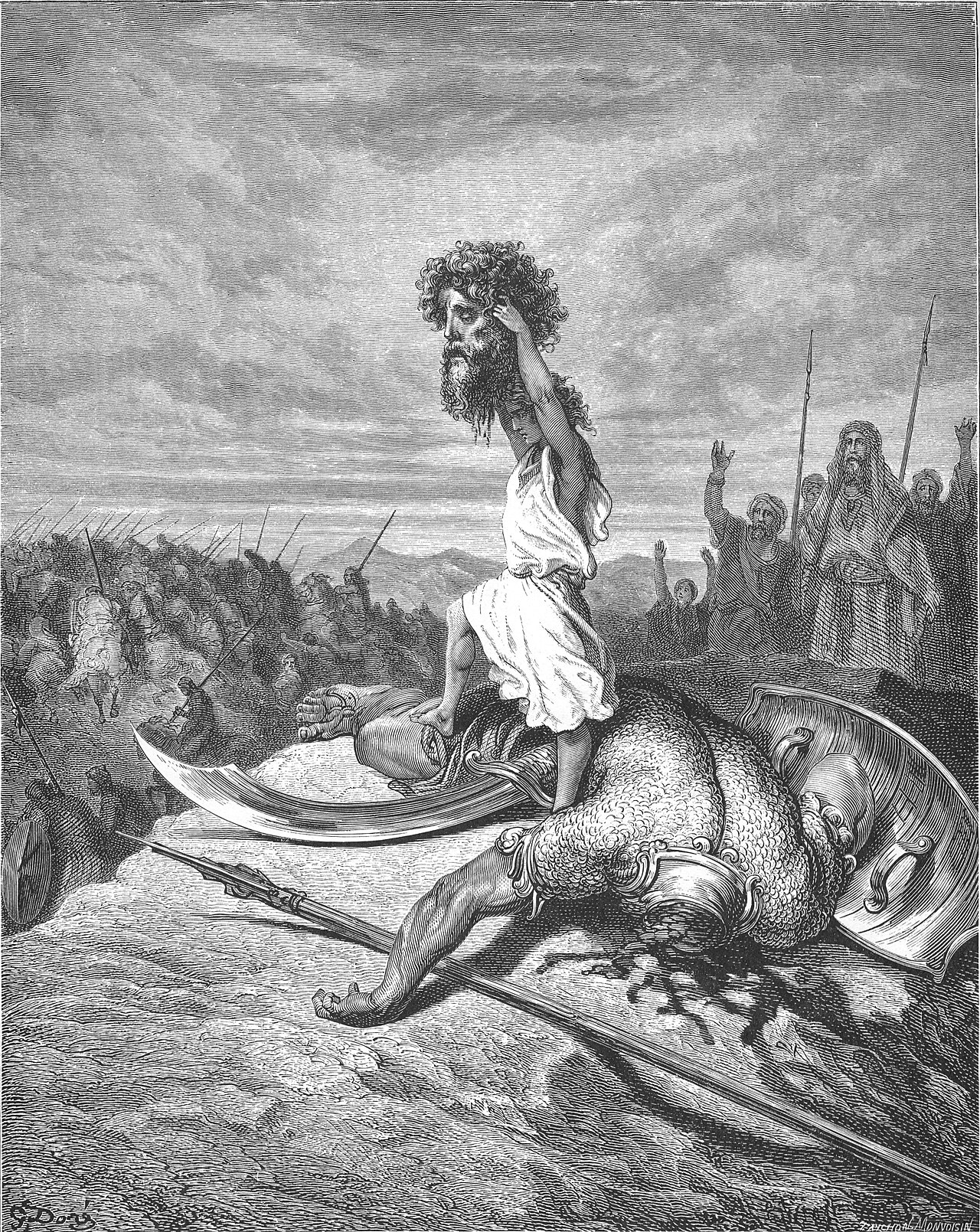
Who and where
2 names in this verse with a page on the site.
- PersonUnited monarchySaulIsrael's first king, head and shoulders above the people; began in humility, ended in rejection — sparing what God devoted, consul…
- PersonEarly monarchyJonathanSon of King Saul who climbed a cliff to rout a garrison on the conviction that nothing restrains Jehovah; cut a covenant of steadf…
This page draws on Adam Clarke, Commentary on the Bible; Albert Barnes, Notes, Explanatory and Practical, on the Old and New Testaments (1832-1869); Bede, Commentary on Samuel; GK Chesterton, Time's Abstract and Brief Chronicle (1904-1905); Gregory the Dialogist, Commentary on 1 Kings, Book 5, Chapter 4; Jamieson, Fausset and Brown, Commentary Critical and Explanatory on the Whole Bible; John Gill, Exposition of the Old Testament (1748-1763) and Matthew Henry, Commentary on the Whole Bible.