
1 Samuel 1:25
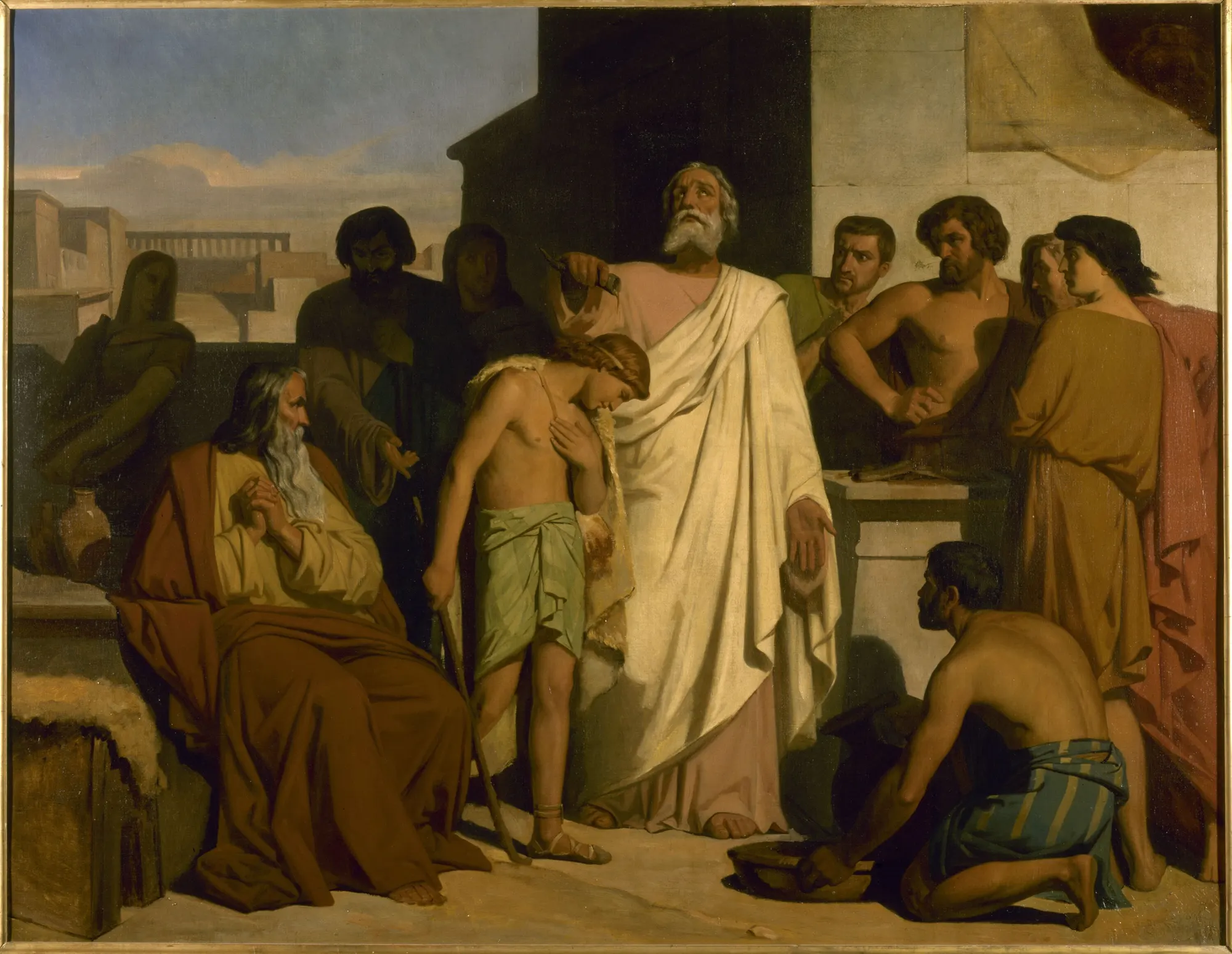
in 1 Samuel 1And when they had slaughtered the bull, they brought the boy to Eli.
BSB
The same verse in ASV and KJV ▾
ASV
And they slew the bullock, and brought the child to Eli.
KJV
And they slew a bullock, and brought the child to Eli.
⋯
This verse in 1 Samuel 1
Commentary
5 notes on this verseThis site's exposition
Hannah took the boy with her
on 1 Samuel 1:24-25
A three-year-old bull, an ephah of flour and a skin of wine make the offering generous beyond a family's duty. The text adds “the boy was still young”. They slaughter the bull and bring the boy to Eli in one sentence, the sacrifice and the surrender told as one act.
This site's exposition
And when they had slaughtered the bull
Verse 24 had Hannah alone take the boy to the house of the LORD. Gregory the Dialogist marks that both parents now slaughter the bull and bring him to Eli. Matthew Henry notes that Elkanah worshiped whenever he sacrificed.
The record, by era
The Medieval Church1 voice
A commentator
Gregory the DialogistCommentary on 1 Kings, Book 1, Chapter 1 · Written before 604.
proposed
49. Above it was said of Anna alone: "And she brought him with her, after she had weaned him." But now it is added concerning both Elkanah and Anna: "And they sacrificed a calf, and offered the boy to Eli." The calf was sacrificed when Samuel was brought and offered. If therefore Elkanah was there both when he was being brought and when he was being offered, why was it not said "they brought him with them," just as it was said "they sacrificed" and "they offered"?
The Puritans and the Awakening2 voices
And they slew a bullock,....
When he sacrificed he worshipped, joining prayers and thanksgivings with his sacrifices. In this course of religion he was constant, for he went up yearly. And that which made it the more commendable in him was, 1.
The words behind it
8 Hebrew wordsEvery Hebrew word of this verse in the order it stands, with what it means and the door to its own study. The last column counts the times a word stands in the whole Bible: the rarer the word, the more the places it appears belong together.
| Hebrew | Sound | Meaning | Word study | In the Bible |
|---|---|---|---|---|
| וַֽיִּשְׁחֲט֖וּ | vaiyishchatu | and they slaughtered | H7819 → | 81 times |
| אֶת־ | ʾet- | <obj.> | H853 → | 10935 times |
| הַפָּ֑ר | hapar | the young bull | H6499 → | |
| וַיָּבִ֥יאוּ | vaiyaviu | and they brought | H935 → | 2568 times |
| אֶת־ | ʾet- | <obj.> | H853 → | 10935 times |
| הַנַּ֖עַר | hanaar | the lad | H5288 → | 239 times |
| אֶל־ | ʾel- | to | H413 → | 5510 times |
| עֵלִֽי׃ | ʾeli | Eli | H5941 → | 33 times |
וַֽיִּשְׁחֲט֖וּand they slaughtered
vaiyishchatuH7819 →81 times
אֶת־<obj.>
ʾet-H853 →10935 times
הַפָּ֑רthe young bull
haparH6499 →
וַיָּבִ֥יאוּand they brought
vaiyaviuH935 →2568 times
אֶת־<obj.>
ʾet-H853 →10935 times
הַנַּ֖עַרthe lad
hanaarH5288 →239 times
אֶל־to
ʾel-H413 →5510 times
עֵלִֽי׃Eli
ʾeliH5941 →33 times
A shaded row is a word that stands 400 times or fewer in the Bible.
The walk
1 stopEach card is a verse this one points to, and under it the verses that one points to in turn. Where several paths arrive at the same place, that place is listed first: the text keeps returning to it.
Through
Luke 2:22And when the time of purification according to the Law of Moses was complete, His parents brought Him to Jerusalem to present Him to the Lord
it leads to
- Leviticus 12:1–8
Then the LORD said to Moses,
- Leviticus 12:1–8
Where this verse is studied
On this page
Studies13
On this verse
About 1 Samuel
Who and where
1 name in this verse with a page on the site.
This page draws on Gregory the Dialogist, Commentary on 1 Kings, Book 1, Chapter 1; John Gill, Exposition of the Old Testament; John Gill, Exposition of the Old Testament (1748-1763) and Matthew Henry, Commentary on the Whole Bible.