
On this page, 7 sections
The one drawing
Across the canon
Old Testament
New Testament
The other 56 books of the canon carry none.
12 passages
Where Scripture speaks
The passages this subject stands on, in canon order.
For I have chosen him, so that he will command his children and his household after him to keep the way of the LORD by doing what is right and just, in order that the LORD may bring upon Abraham what He has promised.”And you shall teach them diligently to your children and speak of them when you sit at home and when you walk along the road, when you lie down and when you get up.We will not hide them from their children, but will declare to the next generation the praises of the LORD and His might, and the wonders He has performed.Children are indeed a heritage from the LORD, and the fruit of the womb is His reward.He who spares the rod hates his son, but he who loves him disciplines him diligently.Train up a child in the way he should go, and when he is old he will not depart from it.Discipline your son, and he will give you rest; he will bring delight to your soul.Then He went down to Nazareth with them and was obedient to them. But His mother treasured up all these things in her heart.Fathers, do not provoke your children to wrath; instead, bring them up in the discipline and instruction of the Lord.Fathers, do not provoke your children, so they will not become discouraged.An overseer must manage his own household well and keep his children under control, with complete dignity.Endure suffering as discipline; God is treating you as sons. For what son is not disciplined by his father?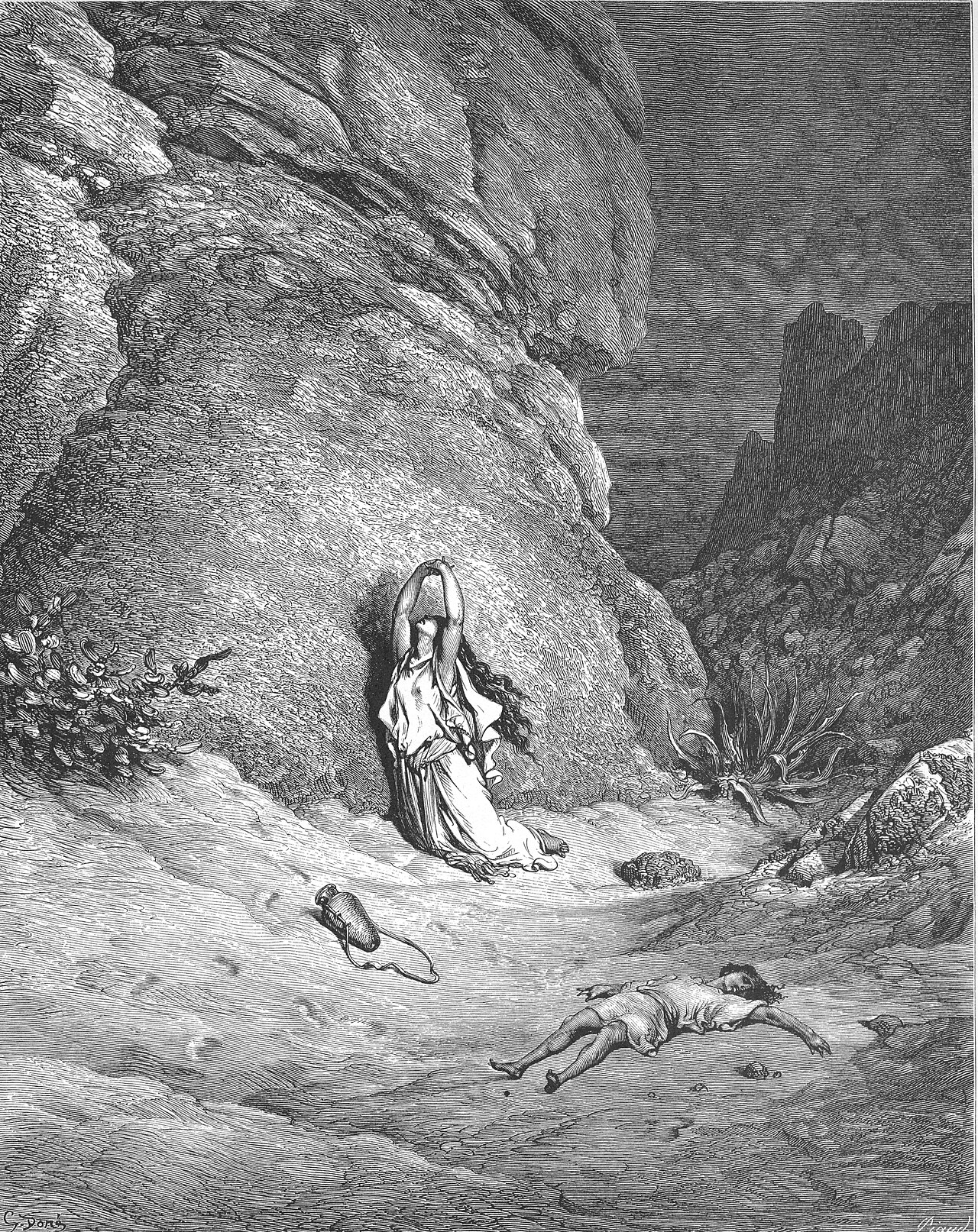
Parenting in Scripture, in full
Scripture opens with parents. Adam and Eve name their children, watch one son kill another, and grieve. From the very first family, the Bible is honest that raising children is not simple, even in a world barely a generation old (Genesis 4:1-8).
God speaks of Abraham in a striking way before Isaac is even born: he chooses him because he knows Abraham will command his children and his household after him to keep the way of the LORD (Genesis 18:19). Parenting, in other words, was never just about food and shelter. It was about handing down the knowledge of God himself.
That charge becomes explicit at Sinai. Moses tells Israel to keep God's words in their own hearts first, and then teach them diligently to their children: talking about them at home, on the road, lying down, and rising up (Deuteronomy 6:6-7). The generations were never meant to drift apart from the faith. Each one was responsible to hand the next one the same living knowledge of God it had received.
The Psalms make the same commitment into a song. One generation tells the next what the LORD has done, so that no child grows up not knowing (Psalm 78:4-6). Children themselves are called a heritage from the LORD, not a burden to be managed but a gift to be received (Psalm 127:3).
Proverbs is the most practical book in Scripture on raising children, and it does not flinch from the subject of correction. It links real love for a son to a willingness to discipline him, and promises that training a child in the way he should go will not be forgotten even when he is old (Proverbs 13:24; 22:6). It also promises the other side of that coin, that correcting a son brings the parent rest, not only struggle (Proverbs 29:17).
The New Testament turns the same instruction around and speaks just as directly to parents. Paul tells fathers not to provoke their children to wrath, but to bring them up in the training and instruction of the Lord (Ephesians 6:4). He repeats the warning to the Colossians almost word for word; do not provoke your children, or they will lose heart (Colossians 3:21). Correction and love, in Paul's mind, were never opposites. A father who never corrects and a father who only provokes have both failed the same test.
Jesus himself was once a child under parents. Luke records, almost in passing, that after being found in the temple he went down to Nazareth and was subject to Mary and Joseph (Luke 2:51). The Son of God grew up obedient inside an ordinary human family, under ordinary human parents, before he ever taught a crowd or worked a miracle.
Behind every human parent stands the pattern of God's own fatherhood. Hebrews compares his discipline of believers directly to a father correcting a son he loves, arguing that a father who never corrects his child is not caring for him but neglecting him (Hebrews 12:5-11). The aim was never punishment for its own sake, but a child shaped into someone who can be trusted with what matters.
John captures the reward at the far end of all this labor in a single line: he has no greater joy than to hear that his children are walking in the truth (3 John 1:4). That, more than any method or rule, is what parenting in Scripture is finally aimed at: not children who simply obey, but children who grow up to know and love the same God their parents did.
3 voices
What teachers have said
We must sing of God's mercies as long as we live, train up others to sing of them when we are gone, and hope to be singing them in heaven world without end; and this is singing of the mercies of the Lord for ever.
Matthew Henry · Commentary on the Whole Bible, 1710
In this passage, he teaches him the art of educating. And well he might, for it was through Moses, in fact, that the Lord of the ancient people was the educator of his children. It is in his own person, however, face to face, that he is the guide of the new people.
Clement of Alexandria · The Instructor Book 1
Written before 215.
The necessity of an early religious education is inculcated through the whole oracles of God. The parents who neglect it have an awful account to give to the Judge of quick and dead.
Adam Clarke · Commentary on the Bible
Written before 1832.
The words underneath
Each card is one Hebrew or Greek word behind parenting. It gives the sense, the count across the canon, and the number in Strong's 1890 concordance.
paideuo: to instruct
Greek · G3811Strong's entry: to train up a child, i.e. educate, or (by implication), discipline (by punishment)
paideuo — to train a child, including loving discipline and correction
13 times in the New Testament · paideuo, in full →
yalad: to beget
Hebrew · H3205Strong's entry: to bear young; causatively, to beget; medically, to act as midwife; specifically, to show lineage
the ordinary Hebrew word for having children
496 times in the Old Testament · yalad, in full →
chanak: to dedicate
Hebrew · H2596Strong's entry: properly, to narrow; figuratively, to initiate or discipline
the verb behind 'train up a child' (Proverbs 22:6)
5 times in the Old Testament · chanak, in full →
huiothesia: adoption (as son)
Greek · G5206Strong's entry: the placing as a son, i.e. adoption (figuratively, Christian sonship in respect to God)
believers received into God's own family as Father
5 times in the New Testament · huiothesia, in full →
1 verses
The complete list
This subject carries 13 curated verses. 12 of them are quoted above, and the other 1 stand here, book by book. Open a book to read the references with a clause of each verse.
Life questions