
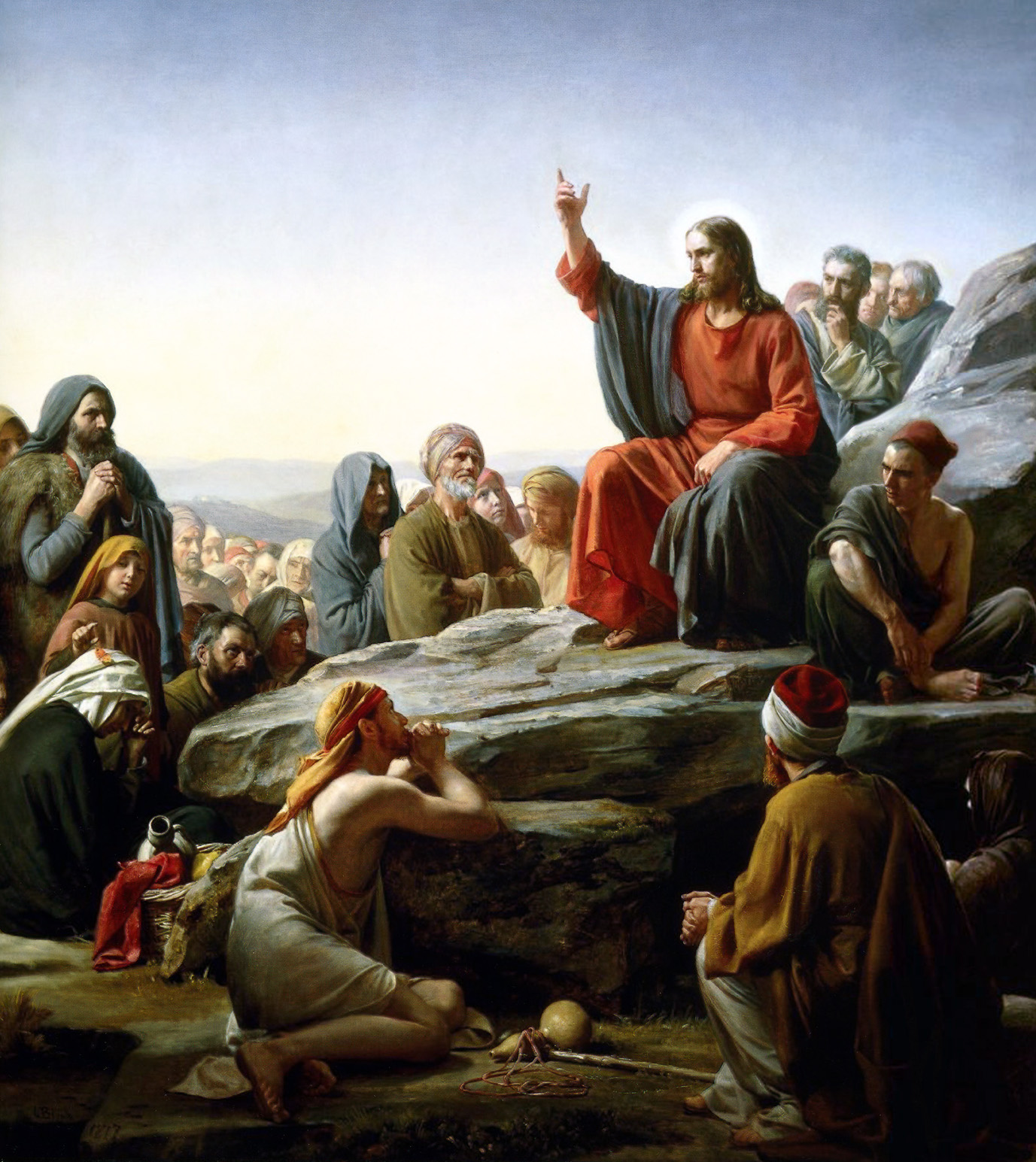
Matthewchapter 11
30 verses · Matthew, by tradition · AD 50 to 65 · The Gospels
Come to Me, all you who are weary and burdened, and I will give you rest.
Introduction
Matthew, by tradition, The Gospels, Matthew Overview.
Matthew wrote for readers who knew the Hebrew Scriptures well, and this chapter begins the part of his Gospel where people must decide what to make of Jesus. The prophet who baptized Him now sits in a ruler's prison, and the towns of Galilee have seen His works up close. Listen for how Jesus answers an honest doubt by pointing to what Isaiah foretold. Listen also for the sudden change of tone near the end, from warning to welcome. Read it as the point where refusal and trust begin to part ways.
Context
- Who
- Jewish readers wrestling with why the evidence had not convinced everyone
- What
- John the Baptist sends to ask whether Jesus is the one to come, and Jesus speaks of John's place, rebukes the unrepentant towns and calls the weary to Himself.
- Where
- Galilee, among the towns on the northern shore of the Sea of Galilee, while John is held in prison by Herod Antipas.
- When
- The Galilean ministry of Jesus, about AD 28 to 29 on the common dating, while John was in prison before his death.
- Why
- To show that Jesus is the promised one by His works, and that the towns which saw those works and refused Him are left without excuse.
Historical context
John sent his question from a cell. Josephus says Herod Antipas imprisoned and executed John at Machaerus, a hilltop fortress east of the Dead Sea, a hard, hot place, and a long way from the Jordan crossings where John had preached.
Show the rest of the historical context, 3 more paragraphs
The taunt about a reed shaken by the wind may have had a coin behind it. Antipas struck coinage bearing a reed, the plant that grew thick along the lake he built his new capital beside. A man in soft clothing in a king's palace is the obvious contrast to the man in camel hair.
The three towns cursed at the end of the chapter sat within a few miles of one another on the lake's north shore. Chorazin and Capernaum are excavated ruins today, and the exact site of Bethsaida is still argued over, two candidate mounds near the Jordan's inflow have both been proposed. Tyre and Sidon, the Phoenician port cities held up as less guilty, were bywords in Israel's Scriptures for pagan wealth and pride.
The closing invitation uses a teacher's word. A rabbi's whole body of interpretation was called his yoke, and taking a teacher's yoke meant accepting his reading of the Law. Farm yokes were carved to fit a particular animal's shoulders, so an easy yoke was one that had been shaped for the one who wore it.
Significance
That John himself asked the question was permission for Matthew's readers to ask it. The answer given is not an argument but a list of things happening: the blind see, the poor hear good news. Go and report what you see.
Show the rest of the significance, 1 more paragraph
The woes then explain the thing that troubled them most. Their own towns, the ones that saw the most, believed the least, while the burden was being lifted from people no scribe would have chosen.
The heads below are this chapter's scenes. The numbered points under each are its verses.
John's Question From Prison
After Jesus had finished instructing His twelve disciples: The words “After Jesus had finished instructing His twelve disciples” close the mission discourse with the formula that seals each of Matthew’s five teaching blocks. Jesus then went on “to teach and preach in their cities”, so the sending of the twelve is matched by his own going.
Matthew 11:1
“Chapter 11, Verses 1-2. And it came to pass, when Jesus had finished instructing His twelve disciples, that He departed from there to teach and preach in their cities. It is not as if He was unaware and asking; for He had already shown the others who were unaware, saying: Behold, the Lamb of God, behold Him who takes away the sins of the world (John 1:29), and He had heard the voice of the Father, thundering: This is my beloved Son, in whom I am well pleased (Matthew 3:17).”
Jerome · written before 420 · Commentary on Matthewpatristic
2 more voices on this verseWhat preachers and commentators have said about this verse, in their own words.
Matthew 11:1
“And it came to pass ... - The directions to the apostles were given in the vicinity of Capernaum. The Saviour went from thence to preach in their cities; that is, in the cities in the vicinity of Capernaum, or in Galilee. He did not yet go into Judea.”
Matthew 11:1
“The first thing that demands our attention in this passage is the message which John the Baptist sends to our Lord Jesus Christ. He “sent two of his disciples and said unto him, “Art thou he that should come or do we look for another?” This question did not arise from doubt or unbelief on the part of John. We do that holy man injustice if we interpret it in such a way.”
J.C. Ryle · Expository Thoughts on the Gospels: Matthew (1856)Reformed Evangelical
Matthew 11:2-3
John heard in prison about the works of Christ: John sent his disciples to ask whether Jesus was “the One who was to come”. He had preached the axe at the root, and now heard of healing and preaching with no judgment yet. Chrysostom taught that the question was sent for the disciples’ sake as much as his.
Matthew 11:2
“John had heard in the prison - John was cast into prison by order of Herod Antipas, Mat 14:3, etc., (where see the notes), a little after our Lord began his public ministry, Mat 4:12; and after the first passover, Joh 3:24.”
Adam Clarke · Commentary on the Bible (1810-1826)evangelical
2 more voices on this verse
Matthew 11:2
“Art thou the Messiah promised, or not? It is taken for granted that the Messiah should come. It was one of the names by which he was known to the Old-Testament saints, he that cometh or shall come, Ps. cxviii.”
Matthew Henry · Commentary on the Whole Bible (1707-1721)puritan
Matthew 11:2
“OUTBURST OF FEELING SUGGESTED TO THE MIND OF JESUS BY THE RESULT OF HIS LABORS IN GALILEE. The connection of this with what goes before it and the similarity of its tone make it evident, we think, that it was delivered on the same occasion, and that it is but a new and more comprehensive series of reflections in the same strain.”
Jamieson, Fausset & Brown · Commentary Critical and Explanatory on the Whole Bible (1871)reformed
the One who was to come: Adam Clarke and John Gill read the One who was to come as a title for the Messiah, drawn from the prophets' promises. Hilary of Poitiers and Theophylact hold that John knew the answer already. Theophylact says he sent the question for his jealous disciples.
Matthew 11:3
“Art thou he that should come? - That is, Art thou the Messiah, or the Christ? The Jews expected a Saviour. His coming had been long foretold, Gen 49:10; Isa 9:1-6; Isa 11:1-5; Isa 35:4-6; Isa 53:1-12; Dan 9:24-27. See also Joh 6:14. Compare Deu 18:18-19. In common language, therefore, he was familiarly described as “he that was to come.” Luke adds here Luk 7:21, that at the time when the messengers came to him, Jesus “cured many of their infirmities, and plagues, and of evil spirits.” An answer was therefore ready to the inquiries of John.”
Matthew 11:4-6
Jesus answers John with evidence: “Go back and report to John what you hear and see”. The list echoes Isaiah 35:5-6 and 61:1, and it ends on the preaching to the poor. The closing blessing names John’s own temptation, to stumble over a Messiah who heals before he judges.
Matthew 11:4
“Go and show John the things - ye do hear and see - Christ would have men to judge only of him and of others by their works. This is the only safe way of judging. A man is not to be credited because he professes to know such and such things; but because he demonstrates by his conduct that his pretensions are not vain.”
Adam Clarke · Commentary on the Bible (1810-1826)evangelical
2 more voices on this verse
Matthew 11:4
“Now if the works of Christ agree with the words of the prophet, as it is plain they do, then no doubt but this is our God whom we have waited for, who shall come with a recompence; this is he who is so much wanted. (2.) Tell him what you hear of the preaching of his gospel, which accompanies his miracles. Faith, though confirmed by seeing, comes by hearing.”
Matthew Henry · Commentary on the Whole Bible (1707-1721)puritan
Matthew 11:4
“This last is no less than the first. And understand it as if it had been said, Even the poor; that so between noble and mean, rich and poor, there may be no difference in preaching. This approves the strictness of the master, this the truth of the teacher, that in His sight every one who can be saved is equal.”
Jerome · written before 420 · Catena Aurea by Aquinaspatristic
the good news is preached to the poor: John Gill traces the list to Isaiah's prophecies of the Messiah, so the deeds themselves answer John's question in the prophets' words. Thomas Aquinas ties the last item to Isaiah 61:1, where the Spirit sends the anointed one to preach to the poor. John Wesley calls that the greatest mercy.
Matthew 11:5
“The blind receive their sight, etc. - Αναβλεπωσι, look upwards, contemplating the heavens which their Lord hath made. The lame walk - Περιπατωσι, they walk about; to give the fullest proof to the multitude that their cure was real. These miracles were not only the most convincing proofs of the supreme power of Christ, but were also emblematic of that work of salvation which he effects in the souls of men. 1. Sinners are blind; their understanding is so darkened by sin that they see not the way of truth and salvation.”
Adam Clarke · Commentary on the Bible (1810-1826)evangelical
2 more voices on this verse
Matthew 11:5
“The blind receive their sight,.... Our Lord here, has reference to several prophecies concerning the Messiah, in Isa 35:6 and which having their accomplishment in him, John and his disciples might easily and strongly conclude, that he was he that was to come, and that they should not look for another.”
Matthew 11:5
“The poor have the Gospel preached to them - The greatest mercy of all.”
John Wesley · Explanatory Notes upon the New Testament (1755)evangelical
Thomas Aquinas renders the phrase as being scandalized, taking offence at Jesus as at a stumbling block. Gregory the Dialogist applies it to the cross, where unbelievers stumbled on seeing the worker of miracles die. John Chrysostom hears a quiet rebuke to the messengers.
Matthew 11:6
“Blessed is he whosoever shall not be offended in me - Or, Happy is he who will not be stumbled at me; for the word σκανδαλιζεσθαι, in its root, signifies to hit against or stumble over a thing, which one may meet with in the way. The Jews, as was before remarked, expected a temporal deliverer. Many might he tempted to reject Christ, because of his mean appearance, etc., and so lose the benefit of salvation through him. To instruct and caution such, our blessed Lord spoke these words.”
Adam Clarke · Commentary on the Bible (1810-1826)evangelical
1 more voice on this verse
Matthew 11:6
“THE connection of the passage assists us in feeling its force. John had sent his disciples to ask the Master whether He was, indeed, the Messiah. The Savior, after giving abundant proof that He was the Sent One who had long been promised, then adds, "And blessed is he who is not offended because of Me." Had John begun to suspect a stumbling block in reference to the Nazarene? Did he question if so lowly a Person could, indeed, be the promised Christ? Had he expected Messiah to be a glorious prince with an earthly kingdom?”
What Jesus Said About John
Matthew 11:7-9
A reed swaying in the wind?: Jesus defended the prophet with three questions, and “A reed swaying in the wind” sets John against a man swayed by popular opinion. The second sets his camel’s hair against Herod’s court. The third settles it: John is “more than a prophet”, the subject of prophecy and its final voice.
Matthew 11:7
“Was it for this ye went out into the desert to see a man like unto a reed, and carried about by every wind, so that in lightness of mind he doubts concerning Him whom once he preached? Or it may be he is roused against Me by the sting of envy, and he seeks empty honour by his preaching, that he may thereof make gain. Why should he covet wealth? that he may have dainty fare? But his food is locusts and wild honey. That he may wear soft raiment? But his clothing is camel's hair.”
Jerome · written before 420 · Catena Aurea by Aquinaspatristic
2 more voices on this verse
Matthew 11:7
“And as they departed ... - Jesus took occasion, from the inquiries made by John’s disciples, to instruct the people respecting the true character of John. Multitudes had gone out to hear him when he preached in the desert Matt. 3, and it is probable that many had been attracted by the novelty of his appearance or doctrines, or had gone simply to see and hear a man of singular habits and opinions. Probably many who followed Christ had been of that number.”
Matthew 11:7
“As they departed, he said concerning John - Of whom probably he would not have said so much when they were present. A reed shaken by the wind? - No; nothing could ever shake John in the testimony he gave to the truth. The expression is proverbial.”
John Wesley · Explanatory Notes upon the New Testament (1755)evangelical
dressed in fine clothes?: Albert Barnes describes the fine clothes as light, thin linen worn for ornament, the dress of a royal court. Gregory the Dialogist recalls that John wore woven camel's hair in the desert, far from the houses of kings. Theophylact calls him an enemy of luxury.
Matthew 11:8
“A man clothed in soft raiment? - A second excellency in John was, his sober and mortified life. A preacher of the Gospel should have nothing about him which savours of effeminacy and worldly pomp: he is awfully mistaken who thinks to prevail on the world to hear him and receive the truth, by conforming himself to its fashions and manners. Excepting the mere color of his clothes, we can scarcely now distinguish a preacher of the Gospel, whether in the establishment of the country, or out of it, from the merest worldly man.”
Adam Clarke · Commentary on the Bible (1810-1826)evangelical
more than a prophet: Gregory the Dialogist explains that a prophet foretells what is to come, and John also pointed out the one he foretold. Theophylact notes that John saw Christ with his own eyes and leapt before him in his mother's womb. Jerome names a third honour: he baptized his Lord.
Matthew 11:9
“In this he is also greater than the other prophets, that to his prophetic privilege is added the reward of the Baptist that he should baptize his Lord.”
Jerome · written before 420 · Catena Aurea by Aquinaspatristic
I will send My messenger ahead of You: Jesus cites Malachi 3:1, “Behold, I will send My messenger ahead of You”, a text about one who prepares the way. Jesus applies the prophecy to John directly and without qualification. The messenger goes “ahead of You”, before Jesus himself, which places Jesus where Malachi placed the LORD of Israel.
Matthew 11:10
“For this is he of whom it is written,.... Mal 3:1 Behold I send my messenger before thy face, which shall prepare thy way before thee. That these words belong לעולם הבא, to the world to come, or the times of the Messiah, that is, the Gospel dispensation, the Jews (z) themselves own; but as to the particular person meant by the "messenger", or "angel", because they are not willing to acknowledge the right person, are at the utmost loss.”
3 more voices on this verse
Matthew 11:10
“Behold, I send my messenger - A fifth excellency of the Baptist was, his preparing the way of the Lord; being the instrument, in God’s hand, of preparing the people’s hearts to receive the Lord Jesus; and it was probably through his preaching that so many thousands attached themselves to Christ, immediately on his appearing as a public teacher.”
Adam Clarke · Commentary on the Bible (1810-1826)evangelical
Matthew 11:10
“In him, John is greater than the other prophets, because while they had predicted someone who was to come, he pointed to the one who has already come, saying: Behold the Lamb of God, behold him who takes away the sins of the world. And because to the privilege of being a prophet, John added the reward of baptizing his Lord, it follows that he increased in merits, fulfilling the testimony of Malachi, in which even an angel is prophesied (Mal. II).”
Jerome · written before 420 · Commentary on Matthewpatristic
Matthew 11:10
“His business was to prepare Christ's way, to dispose people to receive the Saviour, by discovering to them their sin and misery, and their need of a Saviour. This he had said of himself ( John i. 23 ) and now Christ said it of him; intending hereby not only to put an honour upon John's ministry, but to revive people's regard to it, as making way for the Messiah.”
Matthew Henry · Commentary on the Whole Bible (1707-1721)puritan
Cross references
Matthew 11:10
- QuotingMalachi 3:1“Behold, I will send My messenger, who will prepare the way before Me. Then the Lord whom you seek will suddenly come to His temple—the Messenger of the covenant, in whom you delight—see, He is coming,” says the LORD of Hosts.
'Behold, I send my messenger before thy face' ('this is he, of whom it is written')
among those born of women there has risen no one greater than John the Baptist: Jesus says that “among those born of women there has risen no one greater than John the Baptist”, the last voice of the old covenant. Yet “even the least in the kingdom of heaven is greater than he”, because the least believer holds finished redemption that John did not have.
Matthew 11:11
“Among them that are born of women - This is an emphatic way of saying that there “had never” been a greater “man” than John. See Job 14:1. He that is least in the kingdom of heaven is greater than he - The phrase “kingdom of heaven” is used in many senses. See the notes at Mat 3:2. It here probably means, “in preaching the kingdom of God,” or the gospel.”
1 more voice on this verse
Matthew 11:11
“He is then set before all those that are born in wedlock, and not before Him who was born of the Virgin and the Holy Spirit; yet these words, there has not arisen a greater than John the Baptist, do not imply that John is to be set above the Prophets and Patriarchs and all others, but only makes him equal to the rest; for it does not follow that because others are not greater than him, that therefore he is greater than others.”
Jerome · written before 420 · Catena Aurea by Aquinaspatristic
Matthew 11:12-13
the kingdom of heaven has been subject to violence: The saying “the kingdom of heaven has been subject to violence, and the violent lay claim to it” is among the hardest in the Gospel. Some take the violence as assault from without, and others take it of eager souls pressing in as men storm a city.
prophesied until John: Matthew Henry notes that the Law is said to prophesy alongside the Prophets, since the signs and sacrifices of Moses foretold Christ. Jerome limits the verse to the written Law and Prophets, since Agabus still prophesied in Acts. Thomas Aquinas says their promises began to be fulfilled with John.
Matthew 11:13
“All the prophets ... - It is meant by this verse that John introduced a new dispensation; and that the old one, under which the prophets and the law of Moses were the guide, was closed when he preached that the kingdom of heaven was at hand. By the “law” is meant here the five books of Moses; by the prophets, the remainder of the books of the Old Testament.”
Matthew 11:14-15
he is the Elijah who was to come: Jesus names John “the Elijah who was to come”, answering Malachi 4:5. In Luke 1:17 the angel ties John to the spirit and power of Elijah. In John 1:21 John denies being Elijah in person, and the two texts stand together, since John held Elijah’s office and spirit.
Matthew 11:14
“John then is said to be Elias, not according to the foolish philosophers, and certain heretics who bring forward their metempsychosis, or passing of the soul from one body to another; but because (as it is in another passage of the Gospel) he came in the spirit and power of Elias, and had the same grace and measure of the Holy Spirit.”
Jerome · written before 420 · Catena Aurea by Aquinaspatristic
1 more voice on this verse
Matthew 11:14
“Or, "If you will receive him, or if you will receive the ministry of John as that of the promised Elias, he will be an Elias to you, to turn you and prepare you for the Lord," Note, Gospel truths are as they are received, a savour of life or death. Christ is a Saviour, and John an Elias, to those who will receive the truth concerning them.”
Matthew Henry · Commentary on the Whole Bible (1707-1721)puritan
He who has ears: Albert Barnes calls this a proverbial saying of Jesus that asks for the closest attention. It follows the claim that John is Elijah. Jerome and Remigius of Rheims read the call as a sign that John was Elijah in spirit, and a hearer needed understanding to receive it.
Matthew 11:15
“And so that they might understand that he was speaking in a mystical way, he adds, he who has ears to hear, let him hear, i.e., he that has ears spiritually, let him hear and understand.”
Thomas Aquinas · written before 1274 · Commentary on Matthewpatristic
1 more voice on this verse
Matthew 11:15
“He that hath ears ... - This expression is frequently used by Christ. It is a proverbial expression, implying that the highest attention should be given to what was spoken. The doctrine about John he regarded as of the greatest importance. He among you, says he, that has the faculty of understanding this, or that will believe that this is the Elijah spoken of, let him attend to it and remember it.”
Matthew 11:16-17
They are like children sitting in the marketplaces: Jesus turns to the generation that rejected both John and himself, and compares it to “children sitting in the marketplaces and calling out to others”. The crowd answers to neither joy nor sorrow, which prepares the contrast of John and Jesus in verses 18 and 19.
Matthew 11:16
“But whereunto shall I liken this generation? - That is, the Jewish people - την γενεαν ταυτην, this race: and so the word γενεα is often to be understood in the evangelists. In the markets - Or, places of concourse, αγοραις, from αγειρω, I gather together; not a market-place only, but any place of public resort: probably meaning here, places of public amusement. Calling unto their fellows - Or, companions. Instead of εταιροις, companions, many of the best MSS. have ετεροις, others. The great similarity of the words might have easily produced this difference.”
Adam Clarke · Commentary on the Bible (1810-1826)evangelical
John Gill explains the picture as Jewish children copying their elders in the marketplace, piping as at a wedding and wailing as at a funeral. Theophylact applies it to people whom neither John's asceticism nor Christ's simplicity could please. Adam Clarke notes the verb for mourn means beating the breast.
Matthew 11:17
“And saying, we have piped unto you, and ye have not danced,.... The allusion is to Jewish children, who having seen their parents and friends at their festivals and weddings, some play upon the pipe, and others dance to them, mimicked the same in their diversions; and also having observed, at funerals, the mourning women, making their doleful ditties, and others answering to them, acted the part of these persons, expecting their fellows would make their responses, but did not: hence the complaint, we have mourned unto you, and ye have not lamented.”
2 more voices on this verse
Matthew 11:17
“We have piped unto you, and ye have not danced - We have begun the music, which should have been followed by the dance, but ye have not attended to it. We have mourned - and ye have not lamented - Ye have not smote the breast: ουκ εκοψασθε, from κοπτομαι, to strike, or beat the breasts with the hands, particularly in lamentation. So used, Nah 2:7; Luk 18:13; Luk 23:48, and by the best Greek and Roman writers. There is an allusion here to those funeral lamentations explained Mat 9:23.”
Adam Clarke · Commentary on the Bible (1810-1826)evangelical
Matthew 11:17
“They say therefore, We have flayed music to you, and ye have not danced; i. e. We have called on you to work good works to our songs, and ye would not. We have lamented and called you to repentance, and this ye would not, rejecting both preaching, as well of exhortation to virtue, as of repentance for sin.”
Jerome · written before 420 · Catena Aurea by Aquinaspatristic
Matthew 11:18-19
neither eating nor drinking: John came “neither eating nor drinking”, and they said he had a demon. The Son of Man came “eating and drinking”, and they called him “a friend of tax collectors and sinners”. Each manner drew the opposite charge, so neither fasting nor feasting satisfied a generation set on finding fault.
Matthew 11:18
“For John came neither eating nor drinking - Leading a very austere and mortified life: and yet, he did not receive him. A sinner will not be persuaded that what he has no mind to imitate can come from God. There are some who will rather blame holiness itself, than esteem it in those whom they do not like. He hath a devil - He is a vile hypocrite, influenced by a demon to deceive and destroy the simple.”
Adam Clarke · Commentary on the Bible (1810-1826)evangelical
3 more voices on this verse
Matthew 11:18
“John came neither eating nor drinking - In a rigorous austere way, like Elijah. And they say, He hath a devil - Is melancholy, from the influence of an evil spirit.”
John Wesley · Explanatory Notes upon the New Testament (1755)evangelical
Matthew 11:18
“If fasting then pleases you, why were you not satisfied with John? If fulness, why not with the Son of man? Yet one of these ye said had a dæmon, the other ye called a gluttonous man, and drunkard.”
Jerome · written before 420 · Catena Aurea by Aquinaspatristic
Matthew 11:18
“The Evangelists do not mean that John was excited by the miracles to acknowledge Christ at that time as Mediator; but, perceiving that Christ had acquired great reputation, and concluding that this was a fit and seasonable time for putting to the test his own declaration concerning him, he sent to him his disciples.”
John Calvin · Commentaries (1554)reformed
Jerome notes that some copies read wisdom justified by her works while others read by her children, and the Berean follows the first. He takes wisdom as Christ, the wisdom of God. John Wesley reads the saying as wisdom acknowledged by those who are truly wise.
Matthew 11:19
“The Son of man came eating and drinking - That is, went wheresoever he was invited to eat a morsel of bread, and observed no rigid fasts: how could he, who had no corrupt appetites to mortify or subdue? They say, Behold a man gluttonous, etc. - Whatever measures the followers of God may take, they will not escape the censure of the world: the best way is not to be concerned at them. Iniquity, being always ready to oppose and contradict the Divine conduct, often contradicts and exposes itself.”
Adam Clarke · Commentary on the Bible (1810-1826)evangelical
2 more voices on this verse
Matthew 11:19
“Wisdom is justified of her children, i. e. The dispensation or doctrine of God, or Christ Himself who is the power and wisdom of God, is proved by the Apostles, who are His children, to have done righteously. Some copies read, Wisdom is justified of her works, for wisdom does not seek the witness of words, but of works.”
Jerome · written before 420 · Catena Aurea by Aquinaspatristic
Matthew 11:19
“MANY A TRUE WORD is spoken in jest, and many a tribute to virtue has been unwittingly paid by the sinister lips of malice. The enemies of our Lord Jesus Christ thought to brand him with infamy, hold him up to derision, and hand his name down to everlasting scorn, as “a friend of publicans and sinners.” Short-sighted mortals! Their scandal published his reputation. To this day the Savior is adored by the title which was minted as a slur.”
Woe to the Cities That Would Not Repent
Then Jesus began to denounce the cities: Jesus turns to the Galilean towns that saw his miracles firsthand. The charge is exact, “because they did not repent”, since no one there denied the works, yet they would not turn from sin. Outside the woes of chapter 23, Matthew records no sharper rebuke from Jesus.
Matthew 11:20
“Then began he to upbraid the cities - The more God has done to draw men unto himself, the less excusable are they if they continue in iniquity. If our blessed Lord had not done every thing that was necessary for the salvation of these people, he could not have reproached them for their impenitence.”
Adam Clarke · Commentary on the Bible (1810-1826)evangelical
3 more voices on this verse
Matthew 11:20
“Then began he to upbraid the cities - It is observable he had never upbraided them before. Indeed at first they received him with all gladness, Capernaum in particular.”
John Wesley · Explanatory Notes upon the New Testament (1755)evangelical
Matthew 11:20
“His upbraiding of the towns of Corozaim, Bethsaida, and Capharnaum, is set forth in this chapter, because He therefore upbraided them, because after He had such mighty works and wonders in them they had not done penitence. Whence He adds, Wo for thee, Corozaim! wo for thee, Bethsaida!”
Jerome · written before 420 · Catena Aurea by Aquinaspatristic
Matthew 11:20
“In the parable, this is called his piping to us, and his mourning to us; he hath piped to us in the precious promises of the gospel, proper to work upon hope, and mourned to us in the dreadful threatenings of the law, proper to work upon fear, that he might frighten us out of our sins and allure us to himself.”
Matthew Henry · Commentary on the Whole Bible (1707-1721)puritan
Matthew 11:21-22
Chorazin and Bethsaida were towns near Capernaum, and Jesus sets them against Tyre and Sidon, pagan Phoenician cities that Israel’s prophets made bywords for wickedness. Those cities “would have repented long ago in sackcloth and ashes” had they seen the same miracles. Greater light refused brings a heavier reckoning.
Matthew 11:21
“In this word Wo, these towns of Galilee are mourned for by the Saviour, that after so many signs and mighty works, they had not done penitence. And to these are preferred Tyre and Sidon, cities given up to idolatry and vices; For if the mighty works which have been done in you had been done in Tyre and Sidon, they would have long ago done penitence in sackcloth and ashes. We ask where it is written that the Lord did wonders in Corozaim and Bethsaida?”
Jerome · written before 420 · Catena Aurea by Aquinaspatristic
4 more voices on this verse
Matthew 11:21
“Woe unto thee, Chorazin!.... Though many of Christ's mighty works were done in this place, yet mention is made of it no where else, but here; whether it was a single city, or a country, is not easy to determine: the word חורשין, "Chorasin", signifying "woody places", Dr. Lightfoot (l) conjectures it might include Cana, in which Christ wrought his first miracle, and a small adjacent country, situated in a wood, and be so called from thence; and Origen (m) reads it, χορα ζιν, "the region of Zin": woe unto thee, Bethsaida!”
Matthew 11:21
“Chorazin and Bethsaida - These were towns not far from Capernaum, but the precise situation is unknown. See “The Land and the Book” (Thomson), vol. ii. pp. 8, 9. Bethsaida means literally a “house of hunting” or “a house of game,” and it was probably situated on the banks of the Sea of Galilee, and supported itself by hunting or fishing. It was the residence of Philip, Andrew, and Peter, Joh 1:44. It was enlarged by Philip the Tetrarch, and called “Julia,” after the emperor’s daughter.”
Matthew 11:21
“Woe to thee, Chorazin - That is, miserable art thou. For these are not curses or imprecations, as has been commonly supposed; but a solemn, compassionate declaration of the misery they were bringing on themselves.”
John Wesley · Explanatory Notes upon the New Testament (1755)evangelical
Matthew 11:21
“As their wealth and prosperity engendered luxury and its concomitant evils--irreligion and moral degeneracy--their overthrow was repeatedly foretold in ancient prophecy, and once and again fulfilled by victorious enemies.”
Jamieson, Fausset & Brown · Commentary Critical and Explanatory on the Whole Bible (1871)reformed
more bearable for Tyre and Sidon: Jesus ranks the Gentile ports of Tyre and Sidon above the towns where his miracles were done. Thomas Aquinas says he weighs guilt against guilt, and the heavier guilt meets the heavier sentence. Adam Clarke adds that favours received will count against the impenitent.
Matthew 11:22
“But I say unto you,.... What may be depended upon as true, and which shall certainly come to pass, however the inhabitants of these cities might flatter themselves; or in whatsoever light they might look upon their neighbours, the Tyrians and Sidonians; and fancy themselves to be the favourites of heaven, and these as the most execrable of creatures; it shall be more tolerable for Tyre and Sidon at the day off judgment, than for you.”
1 more voice on this verse
Matthew 11:22
“But - it shall be more tolerable - Every thing will help to overwhelm the impenitent at the tribunal of God - the benefits and favors which they have received, as well as the sins which they have committed.”
Adam Clarke · Commentary on the Bible (1810-1826)evangelical
Matthew 11:23-24
And you, Capernaum: Capernaum was Jesus’ base of ministry, and its fall matches its height: “you will be brought down to Hades”. Genesis 19 made Sodom’s destruction proverbial. The judgment carries on the principle drawn at Chorazin and Bethsaida, that the towns which watched the Messiah bear a heavier weight than Sodom.
Matthew 11:23
“And thou, Capernaum - See the notes at Mat 4:13. Which art exalted to heaven - This is an expression used to denote great privileges. He meant that they were especially favored with instruction. The city was prosperous. It was signally favored by its wealth. Most of all, it was signally favored by the presence, the preaching, and the miracles of the Lord Jesus Christ. Here he spent a large portion of his time in the early part of his ministry, and in Capernaum and its neighborhood he performed his chief miracles.”
more bearable for Sodom: Capernaum had been exalted as the town of Jesus, and Theophylact says that honour only deepened its judgment because it did not believe. Adam Clarke points to Jude 7, where Sodom stands as the example of eternal fire. Capernaum's sentence is set heavier still.
Matthew 11:24
“But - it shall be more tolerable for the land of Sodom - Γη Σοδομων, the land of the Sodomites; i.e. the ancient inhabitants of that city and its neighborhood. In Jude, Jud 1:7, we are told that these persons are suffering the vengeance of eternal fire. The destruction of Sodom and Gomorrah happened A. M. 2107, which was 1897 years before the incarnation. What a terrible thought is this! It will be more tolerable for certain sinners, who have already been damned nearly four thousand years, than for those who, live and die infidels under the Gospel!”
Adam Clarke · Commentary on the Bible (1810-1826)evangelical
Come Unto Me: My Yoke Is Easy
Matthew 11:25-26
Jesus turns to prayer and praises the Father because “You have hidden these things from the wise and learned, and revealed them to little children”. The prayer answers the failure just named in the cities, where those confident in their own learning missed what humble hearts received.
Matthew 11:25
“There are few passages in the four Gospels more important than this. There are few which contain in so short a compass so many precious truths. May God give us an eye to see, and a heart to feel their value! Let us learn in the first place, the excellence of a childlike and teachable frame of mind. Our Lord says to his Father, “Thou hast hid these things from the wise and prudent, and revealed them unto babes.” It is not for us to attempt to explain why some receive and believe the Gospel, while others do not.”
J.C. Ryle · Expository Thoughts on the Gospels: Matthew (1856)Reformed Evangelical
4 more voices on this verse
Matthew 11:25
“Let those hear who falsely argue, that the Saviour was not born but created, how He calls His Father Lord of heaven and earth. For if He be a creature, and the creature can call its Maker Father, it was surely foolish here to address Him as Lord of heaven and earth, and not of Him (Christ) likewise.”
Jerome · written before 420 · Catena Aurea by Aquinaspatristic
Matthew 11:25
“Jesus answering - This word does not always imply, that something had been spoken, to which an answer is now made. It often means no more than the speaking in reference to some action or circumstance preceding.”
John Wesley · Explanatory Notes upon the New Testament (1755)evangelical
Matthew 11:25
“THAT is a singular way with which to commence a verse—"At that time Jesus answered." If you will look at the context you will not perceive that anybody had asked Him a question, or that He was indeed in conversation with any human being. Yet it says, "Jesus answered and said, I thank You, Father." Now when a man answers, he answers a person who has been speaking to him! Who, then, had been speaking to Jesus? Why, His Father!”
Matthew 11:25
“From the wise and prudent - That is, from those who “thought” themselves wise - “wise” according to the world’s estimation of wisdom, 1Co 1:26-27. Hast revealed them unto babes - To the poor, the ignorant, and the obscure; the teachable, the simple, the humble. By the wise and prudent here he had reference probably to the proud and haughty scribes and Pharisees in Capernaum. They rejected his gospel, but it was the pleasure of God to reveal it to obscure and more humble people.”
well-pleasing in Your sight: The verse completes the thanks of verse 25 for truth hidden from the wise and shown to little children. Theophylact reads the Father's good pleasure as his love, revealing the mysteries freely without anyone asking. John Gill hears in it a common Jewish prayer formula.
Matthew 11:26
“Even so, Father - Ναι ο πατηρ. An emphatical ratification of the preceding address. It was right that the heavenly wisdom, despised, rejected, and persecuted by the scribes and Pharisees, should be offered to the simple people, and afterwards to the foolish people, the Gentiles, who are the children of wisdom, and justify God in his ways, by bringing forth that fruit of the Gospel of which the Pharisees refused to receive even the seed.”
Adam Clarke · Commentary on the Bible (1810-1826)evangelical
All things have been entrusted to Me by My Father: The saying “All things have been entrusted to Me by My Father” is among the highest claims about Christ in the Synoptic Gospels. The knowledge it names is mutual and exclusive: “No one knows the Son except the Father, and no one knows the Father except the Son”.
Matthew 11:27
“All things are delivered unto me of my Father--He does not say, They are revealed--as to one who knew them not, and was an entire stranger to them save as they were discovered to Him--but, They are "delivered over," or "committed," to Me of My Father; meaning the whole administration of the kingdom of grace.”
Jamieson, Fausset & Brown · Commentary Critical and Explanatory on the Whole Bible (1871)reformed
1 more voice on this verse
Matthew 11:27
“All things are delivered to me - Our Lord, here addressing himself to his disciples, shows why men, wise in other things, do not know this: namely, because none can know it by natural reason: none but those to whom he revealeth it.”
John Wesley · Explanatory Notes upon the New Testament (1755)evangelical
Matthew 11:28-30
Come to Me, all you who are weary and burdened: The invitation “Come to Me, all you who are weary and burdened” comes from the Son who just claimed sole knowledge of the Father. The rest he gives is access to God. The yoke draws on a rabbinic image for the law or a teacher’s discipleship.
Matthew 11:28
“Come to me - Here he shows to whom he is pleased to reveal these things to the weary and heavy laden; ye that labour - After rest in God: and are heavy laden - With the guilt and power of sin: and I will give you rest - I alone (for none else can) will freely give you (what ye cannot purchase) rest from the guilt of sin by justification, and from the power of sin by sanctification.”
John Wesley · Explanatory Notes upon the New Testament (1755)evangelical
3 more voices on this verse
Matthew 11:28
“WHEN THE REGULAR CONGREGATION LEFT THEIR SEATS TO BE OCCUPIED BY STRANGERS. ONE is struck with the personality of this text. There are two persons in it, "you" and "Me"—that is to say, the laboring one and the tender Savior who entreats him to come, that he may find rest. It is most important, if we wish to see the way of peace, clearly, to understand that we must, each one, come personally to Jesus for rest—"Come unto Me, all you that labor"—and that coming, on our part, must be to a personal Christ.”
Matthew 11:28
“Come unto me - This phrase in the new covenant implies simply, believing in Christ, and becoming his disciple, or follower. All ye that labor and are heavy laden - The metaphor here appears to be taken from a man who has a great load laid upon him, which he must carry to a certain place: every step he takes reduces his strength, and renders his load the more oppressive. However, it must be carried on; and he labors, uses his utmost exertions, to reach the place where it is to be laid down.”
Adam Clarke · Commentary on the Bible (1810-1826)evangelical
Matthew 11:28
“What gentleness, what sweetness is there in the very style of the invitation--"Hither to Me"; and in the words, "All ye that toil and are burdened," the universal wretchedness of man is depicted, on both its sides--the active and the passive forms of it.”
Jamieson, Fausset & Brown · Commentary Critical and Explanatory on the Whole Bible (1871)reformed
Take My yoke upon you: Thomas Aquinas compares the yoke to the beam that joins the necks of oxen, as the teaching of the gospel binds a people under Christ. Augustine hears the lesson as humility, the foundation any great building needs. Wesley reads gentle toward people and humble toward God.
Matthew 11:29
“For I am meek and lowly in heart - Meek toward all men, lowly toward God: and ye shall find rest - Whoever therefore does not find rest of soul, is not meek and lowly. The fault is not in the yoke of Christ: but in thee, who hast not taken it upon thee. Nor is it possible for any one to be discontented, but through want of meekness or lowliness.”
John Wesley · Explanatory Notes upon the New Testament (1755)evangelical
2 more voices on this verse
Matthew 11:29
“Take my yoke - This is a figure taken from the use of oxen, and hence signifying to labor for one, or in the service of anyone. The “yoke” is used in the Bible as an emblem: (1) Of bondage or slavery, Lev 26:13; Deu 28:38. (2) Of afflictions or crosses, Lam 3:27. (3) Of the punishment of sin, Lam 1:14, (4) Of the commandments of God. (5) Of legal ceremonies, Act 15:10; Gal 5:1. It refers here to the religion of the Redeemer; and the idea is, that they should embrace his system of religion and obey him.”
Matthew 11:29
“Take my yoke upon you,.... The phrase is Rabbinical. The Jewish doctors often speak (a) of עול מלכות שמים, "the yoke of the kingdom of heaven", and of persons taking it upon them; and which they exhort to, and express in much such language as here (b); קדישא קבילו עלייכו עול מלכותא, "take upon you the yoke of the holy kingdom", every day.”
Jamieson, Fausset and Brown call the saying a paradox, a yoke that brings rest. Augustine notes that those who took the yoke met hardship and danger, and the Holy Spirit renewed the inward man as the outward man decayed. The lightness lies in that renewal.
Matthew 11:30
“For my yoke is easy, and my burden is light--Matchless paradox, even among the paradoxically couched maxims in which our Lord delights! That rest which the soul experiences when once safe under Christ's wing makes all yokes easy, all burdens light.”
Jamieson, Fausset & Brown · Commentary Critical and Explanatory on the Whole Bible (1871)reformed
3 more voices on this verse
Matthew 11:30
“And how is the Gospel lighter than the Law, seeing in the Law murder and adultery, but under the Gospel anger and concupiscence also, are punished? Because by the Law many things are commanded which the Apostle fully teaches us cannot be fulfilled; by the Law works are required, by the Gospel the will is sought for, which even if it goes not into act, yet does not lose its reward. The Gospel commands what we can do, as that we lust not; this is in our own power; the Law punishes not the will but the act, as adultery.”
Jerome · written before 420 · Catena Aurea by Aquinaspatristic
Matthew 11:30
“For my yoke is easy - My Gospel imposes nothing that is difficult; on the contrary, it provides for the complete removal of all that which oppresses and renders man miserable, viz. sin. The commandments of Christ are not grievous. Hear the whole: Thou shalt love the Lord thy God with all thy heart, and thy neighbor as thyself. Can any thing be more congenial to the nature of man than love? - such a love as is inspired by God, and in which the soul rests supremely satisfied and infinitely happy?”
Adam Clarke · Commentary on the Bible (1810-1826)evangelical
Matthew 11:30
“OBSERVE dear Friends, that our Lord Jesus Christ does lay a yoke and a burden upon His followers. He uses those words that none may presume to enter His service without due consideration. Religion is not a matter for trifling. The service of the meek and lowly Christ is no child's play. There is a yoke that is to be borne by all His disciples and the neck of self-will must be bent low to receive it.”
Charles Spurgeon · written before 1892 · The Metropolitan Tabernacle Pulpit, Sermon No. 2832: “Christ's Yoke and Burden” (lightly modernized text, CCEL edition)Particular Baptist
Keep studying
Studies22
People and groups1
Words12
Subjects1
Sources for this chapter
The summary
Jamieson, Fausset & Brown, Commentary Critical and Explanatory; John Calvin, Commentaries; John Wesley, Explanatory Notes Upon the New Testament and Matthew Henry, Complete Commentary.
The context
E. B. Pusey, The Minor Prophets: A Commentary and Matthew Henry, Commentary on the Whole Bible.
The exposition
Adam Clarke, Commentary on the Bible; Albert Barnes; Augustine of Hippo, Catena Aurea by Aquinas; Gregory the Dialogist, Forty Gospel Homilies, Homily 6; Hilary of Poitiers, Catena Aurea by Aquinas; Jamieson, Fausset & Brown, Commentary Critical and Explanatory on the Whole Bible; Jerome; John Calvin, Commentary on a Harmony of the Evangelists; John Chrysostom; John Gill; John Lightfoot, Horae Hebraicae et Talmudicae on Matthew; John Wesley, Explanatory Notes upon the New Testament; Matthew Henry, Commentary on the Whole Bible; Remigius of Rheims, Catena Aurea by Aquinas; Theophylact of Ohrid, Commentary on Matthew and Thomas Aquinas, Commentary on Matthew.