

Philippians 4 · Value 25 of 41 · Featured Study
Contentment
Contentment is rest in what God gives.
David wrote of the LORD, “I shall not want” (Psalm 23:1).
I am not saying this out of need, for I have learned to be content regardless of my circumstances.
- Anchor text
- Philippians 4:11 “I am not saying this out of need,…”
- Its opposite
- Covetousness and envy
- Hold in memory
- Philippians 4:11, Hebrews 13:5
Summary
Contentment in Scripture rests on God Himself, who provides for His people day by day and promises never to leave them. John the Baptist commanded it to soldiers, Paul to Timothy's church and the letter to the Hebrews to every believer. Scripture sets it against covetousness and envy, and Paul counts it, joined to godliness, as great gain.
- Paul says contentment is learned, and he learned it in hunger and in plenty through the strength Christ gives.
- Jesus owned no home and warned His hearers against every kind of greed.
- The tenth commandment forbids coveting, so discontent is a sin of the heart before it becomes a deed.
- The love of money never satisfies, and Scripture traces many sorrows to it.
What Contentment Is
The Greek and Hebrew words name sufficiency, being enough and being satisfied.
Contentment runs through Scripture from the manna in the wilderness to Paul's letter from prison. It matters because every reader lives with want or with plenty at some time, and Scripture asks for the same rest in both. This study of contentment asks what Scripture means by it, what it rests on, and how a believer comes to have it. It sets out the words, the ground of contentment in God, the example of Jesus and the teaching of the church.
Autarkes, content
1 use in the canon
The Greek adjective autarkes (G842) is Paul's word in his letter to the Philippians, where he says he has learned to be content.
Autarkeia, sufficiency
2 uses in the canon
The noun autarkeia (G841) is contentment in 1 Timothy 6:6 and sufficiency in Paul's promise to the Corinthians, “having all that you need.”
Arkeo, to be enough
8 uses in the canon
The verb arkeo (G714) means to be enough, and in the passive to be satisfied with what one has. John the Baptist used it when he told the soldiers, “Be content with your wages.”
Saba, to be satisfied
97 uses in the canon
The Hebrew verb saba (H7646) means to be filled to satisfaction. Psalm 90 asks, “Satisfy us in the morning with Your loving devotion.”
The lexicon in full
Autarkes, content, Autarkeia, sufficiency, Arkeo, to be enough, Saba, to be satisfied, The Words Autarkes and Autarkeia, the study in brief
The Key Texts of Contentment
Texts from the manna in the wilderness to Paul's letter to Timothy set the measure of enough.
Law
When they measured it by the omer, he who gathered much had no excess, and he who gathered little had no shortfall. Each one gathered as much as he needed to eat.
The manna was measured so that each household had what it needed, which teaches that God's daily gift is sufficient.
Exodus 16:18BSB
Wisdom
Keep falsehood and deceitful words far from me. Give me neither poverty nor riches; feed me with the bread that is my portion. Otherwise, I may have too much and deny You, saying, ‘Who is the LORD?’ Or I may become poor and steal, profaning the name of my God.
Agur asks for neither poverty nor riches, because each extreme carries its own temptation.
Prophets
Though the fig tree does not bud and no fruit is on the vines, though the olive crop fails and the fields produce no food, though the sheep are cut off from the fold and no cattle are in the stalls, yet I will exult in the LORD; I will rejoice in the God of my salvation!
Habakkuk resolves to rejoice in God even when every crop and every herd has failed.
Gospels
Therefore do not worry, saying, ‘What shall we eat?’ or ‘What shall we drink?’ or ‘What shall we wear?’ For the Gentiles strive after all these things, and your heavenly Father knows that you need them. But seek first the kingdom of God and His righteousness, and all these things will be added unto you.
Jesus answers worry about food and clothing with the Father's knowledge of what His children need.
Epistles
Of course, godliness with contentment is great gain. For we brought nothing into the world, so we cannot carry anything out of it. But if we have food and clothing, we will be content with these.
Paul names food and clothing as enough and calls godliness joined to contentment great gain.
Proverbs 30:8 to 9, Habakkuk 3:17 to 18, Matthew 6:31 to 33, 1 Timothy 6:6 to 8
Contentment Rests on God's Provision and Presence
The psalms, Lamentations, Paul and Hebrews ground contentment in who God is and what He gives.
The psalmist calls the LORD “my chosen portion and my cup” and says, “You have made my lot secure” (Psalm 16:5). The writer of Lamentations, mourning the fall of Jerusalem, could still say, “The LORD is my portion” (Lamentations 3:24).
Paul promised the Philippians, who had given to him, that “my God will supply all your needs according to His glorious riches in Christ Jesus” (Philippians 4:19).
Keep your lives free from the love of money and be content with what you have, for God has said: “Never will I leave you, never will I forsake you.”Hebrews grounds the command to be content in God's promise never to leave His people.
Paul's letters record each state he names in Philippians 4:12, from hunger and homelessness to having more than enough.
| The state | Text | The Berean words |
|---|---|---|
| Living humbly | 1 Corinthians 4:11 | “To this very hour we are hungry and thirsty, we are poorly clothed, we are brutally treated, we are homeless.” |
| Being hungry | 2 Corinthians 11:27 | “in labor and toil and often without sleep, in hunger and thirst and often without food, in cold and exposure.” |
| Having need | 2 Corinthians 11:9 | “when I was with you and in need, I was not a burden to anyone; for the brothers who came from Macedonia supplied my needs.” |
| Having plenty | Philippians 4:18 | “I have all I need and more, now that I have received your gifts from Epaphroditus.” |
| Both at once | 2 Corinthians 6:10 | “poor, yet making many rich; having nothing, and yet possessing everything.” |
A table of five rows from Paul's letters, each with its Berean words., Learning Contentment, the study in brief
Christ and Contentment
Jesus showed contentment in His own life, taught it to the crowds and gave up His riches at the cross.
He had no home of His ownLuke 9
As Jesus and His disciples walked along the road, a man said to Him, “I will follow You wherever You go” (Luke 9:57).
Jesus replied, “Foxes have dens and birds of the air have nests, but the Son of Man has no place to lay His head.”
Luke 9:58BSB Jesus tells a would-be follower that the Master he offers to follow owns no home.
Read the page on Jesus 33 sections, 35 verses set out
He lived on the will of the FatherJohn 4
Jesus sat by a well in Samaria while His disciples went into the town for food. When they came back they urged Him, “Rabbi, eat something,” and He told them, “I have food to eat that you know nothing about” (John 4:31 to 32).
Jesus explained, “My food is to do the will of Him who sent Me and to finish His work.
John 4:34BSB The saying shows where Jesus found His satisfaction while His disciples were thinking of food.
He warned against greedLuke 12
A man in the crowd asked Jesus to tell his brother to divide the inheritance with him (Luke 12:13). Jesus would not judge between them, and He told of a rich man who planned bigger barns, to whom God said, “You fool! This very night your life will be required of you” (Luke 12:20).
And He said to them, “Watch out! Guard yourselves against every form of greed, for one’s life does not consist in the abundance of his possessions.”
Luke 12:15BSB Jesus answers a quarrel over an inheritance with a warning meant for every hearer.
He became poor for othersThe cross
At the cross the soldiers divided His garments among themselves and cast lots for His tunic (John 19:23 to 24).
For you know the grace of our Lord Jesus Christ, that though He was rich, yet for your sakes He became poor, so that you through His poverty might become rich.
2 Corinthians 8:9BSB Paul makes the poverty Christ took on the ground of the Corinthians' giving.
Read the story of the Crucifixion 12 sections, 12 verses set out
He lived on the will of the Father (John 4), He warned against greed (Luke 12), He became poor for others (The cross)
Luke 12:15, 2 Corinthians 8:9
Who Showed Contentment
Four people of the Bible were content with their home, their age, their place and their own labor.
When Elisha offered to speak for her to the king, she answered, “I have a home among my own people.”
2 Kings 4:13Barzillai
At eighty he declined to go up to Jerusalem with David and asked to return to his own city near the tomb of his father and mother.
2 Samuel 19:34 to 37When his disciples told him that the crowds were going to Jesus, he answered, “A man can receive only what is given him from heaven.”
John 3:27He told the elders of Ephesus, “I have not coveted anyone’s silver or gold or clothing,” and he worked with his own hands for his needs.
Acts 20:33 to 34
John the Baptist, Paul
The Practice of Contentment
Scripture names five practices of contentment, each in the words of the verse that gives it.
- 1Ask for today's bread“Give us this day our daily bread.”Matthew 6:11
- 2Test your own work“Each one should test his own work. Then he will have reason to boast in himself alone, and not in someone else.”Galatians 6:4
- 3Work quietly with your hands“and to aspire to live quietly, to attend to your own matters, and to work with your own hands, as we instructed you.”1 Thessalonians 4:11
- 4Quiet your soul“Surely I have stilled and quieted my soul; like a weaned child with his mother, like a weaned child is my soul within me.”Psalm 131:2
- 5Prefer a little with the fear of God“Better a little with the fear of the LORD than great treasure with turmoil.”Proverbs 15:16
Test your own work, Work quietly with your hands, Quiet your soul, Prefer a little with the fear of God
What Stands Against Contentment
Scripture names covetousness, the love of money and envy of a neighbor as the enemies of contentment.
The Teacher saw that “all labor and success spring from a man’s envy of his neighbor” (Ecclesiastes 4:4).
He who loves money is never satisfied by money, and he who loves wealth is never satisfied by income. This too is futile.The Teacher's verdict shows why the craving for more is the opposite of contentment.
A tranquil heart is life to the body, but envy rots the bones.The proverb shows that envy harms the body as well as the heart.
Ecclesiastes 5:10, Proverbs 14:30, You Shall Not Covet, the study in brief
Contentment in the Stories of the Bible
Four stories tell of a widow's last handful of flour, a craving for meat, a king sullen over a vineyard and a servant who ran after silver.
The widow of Zarephath1 Kings 17
In a time of drought a widow told Elijah that she had “only a handful of flour in a jar and a little oil in a jug” (1 Kings 17:12). He told her to make him a small cake of bread first, and she did as he said (1 Kings 17:13 to 15).
The jar of flour was not exhausted and the jug of oil did not run dry, according to the word that the LORD had spoken through Elijah.
1 Kings 17:16BSB The widow's small store lasted day by day, as the LORD had promised through Elijah.
The craving for meatNumbers 11
The rabble among Israel “had a strong craving for other food,” and the people wept for the fish, cucumbers, melons, leeks, onions and garlic of Egypt (Numbers 11:4 to 5). God sent quail, and while the meat was still between their teeth a severe plague struck the people (Numbers 11:33).
So they called that place Kibroth-hattaavah, because there they buried the people who had craved other food.
Numbers 11:34BSB The name of the place kept the craving in Israel's memory as a warning.
Read the study of the Quail at Kibroth-hattaavah 11 sections, 22 verses set out
Ahab and Naboth's vineyard1 Kings 21
King Ahab offered Naboth a better vineyard or its value in silver for the vineyard beside his palace. Naboth answered, “The LORD forbid that I should give you the inheritance of my fathers” (1 Kings 21:3).
So Ahab went to his palace, sullen and angry because Naboth the Jezreelite had told him, “I will not give you the inheritance of my fathers.” He lay down on his bed, turned his face away, and refused to eat.
1 Kings 21:4BSB A king who lacked nothing would not eat because one vineyard was refused him.
Gehazi2 Kings 5
Elisha refused the gifts of Naaman the Aramean, whom the LORD had healed of leprosy. His servant Gehazi said, “I will run after him and get something from him” (2 Kings 5:20). He took two talents of silver and two sets of clothing and then lied to his master about where he had been.
But Elisha questioned him, “Did not my spirit go with you when the man got down from his chariot to meet you? Is this the time to accept money and clothing, olive groves and vineyards, sheep and oxen, menservants and maidservants?
2 Kings 5:26BSB Elisha asks whether a time of God's mercy to a foreigner was the time to take money.
The craving for meat (Numbers 11), Ahab and Naboth's vineyard (1 Kings 21), Gehazi (2 Kings 5)
1 Kings 21:4, 2 Kings 5:26
Contentment in the Church's History
Three accounts tell of a monk's rule from the sixth century, a Puritan book printed in 1649 and a sermon of 1860.
The Rule of Benedict6th century
Benedict of Nursia died at Monte Cassino in 543, and his Rule for monks was most probably written there. Its seventh chapter names as the sixth degree of humility “that a monk be content with the poorest and worst of everything”. Its thirty-fourth chapter, on sharing what each one needs, says, “He who needs less should thank God and not be discontented.”
The Rare Jewel of Christian Contentment1649
Jeremiah Burroughs expounded Philippians 4:11 in The Rare Jewel of Christian Contentment, printed at London in 1649 as the first of three volumes of his works issued by Thomas Goodwin, William Greenhill, Sydrach Simpson, Philip Nye and William Bridge, among others. The book defines Christian contentment as “that sweet, inward, quiet, gracious frame of spirit, which freely submits to and delights in God's wise and fatherly disposal in every condition”.
Read the story of the Rare Jewel of Christian Contentment 7 sections, 1 verse set out
Spurgeon's sermon on contentment1860
Charles Spurgeon's sermon No. 320, Contentment, printed in The New Park Street Pulpit for 1860, took Philippians 4:11 as its text. He told his hearers that “contentment in all states is not a natural propensity of man” and that “contentment is one of the flowers of heaven, and if we would have it, it must be cultivated.”
The Rare Jewel of Christian Contentment (1649), Spurgeon's sermon on contentment (1860)
Voices on Contentment, by Century
Five quotations from the third century to the eighteenth, each under the line it teaches.
died 258 · Cyprian
Treatise III. On the Lapsed.
A third-century reading: the rich who think they possess are possessed by their money.
The quotation1 quotation
“But how can they follow Christ, who are held back by the chain of their wealth? Or how can they seek heaven, and climb to sublime and lofty heights, who are weighed down by earthly desires? They think that they possess, when they are rather possessed; as slaves of their profit, and not lords with respect to their own money, but rather the bond-slaves of their money.”
Cyprian · Treatise III. On the Lapsed. · on 1 Timothy 6:9Patristic
died 379 · Basil of Caesarea
Letter 42
A fourth-century reading: a Christian host should be content with what is at hand.
The quotation1 quotation
“Do not be a stumbling block in any way to those you meet. Be cheerful, a lover of the brethren, gentle, humble. Do not demean the aim of hospitality by seeking extravagant foods. Be content with what is at hand.”
Basil of Caesarea · Letter 42 · on 1 Corinthians 10:32Patristic
died 407 · John Chrysostom
Homily on Philippians 15
A fifth-century reading: Paul checks any boast by naming the One who strengthens him.
The quotation1 quotation
“But since boasting might seem to have a place here, see how quickly he checks up, and says, ‘I can do all things in Christ that strengtheneth me.’ The success is not mine own, but His who has given me strength.”
John Chrysostom · Homily on Philippians 15 · on Philippians 4:13Patristic
died 1107 · Theophylact of Ohrid
Commentary on Philippians
A twelfth-century reading: it takes practice to rejoice rightly in abundance.
The quotation1 quotation
“Do you see that it is no easy thing to rejoice in abundance; for this requires practice and effort. ‘I have learned,’ he says.”
Theophylact of Ohrid · Commentary on Philippians · on Philippians 4:11Patristic
1662 to 1714 · Matthew Henry
Commentary on the Whole Bible
An eighteenth-century reading: contentment alone is great gain, and wealth got by fraud does not stay.
The quotation1 quotation
“It is contentment only that is great gain. Providence remarkably keeps some from being rich, defeating their enterprises, breaking their measures, and keeping them always behind-hand. Many that get much by fraud and injustice, yet do not grow rich: it goes as it comes; it is got by one sin and spent upon another.”
Matthew Henry · Commentary on the Whole Bible · on Job 15:29Puritan
John Chrysostom, Theophylact of Ohrid, Matthew Henry
How Contentment Has Been Taught
Thomas Watson in the seventeenth century and J. B. Lightfoot in the nineteenth taught how contentment is learned and what Paul's word means.
Thomas Watson taught that contentment is an art learned by holy industry.1 paragraph
Thomas Watson's The Art of Divine Contentment (1653) is an exposition of Philippians 4:11. He wrote, “The trade of sin needs not to be learned, but the art of divine contentment is not achieved without holy industry.”
J. B. Lightfoot read Paul's word beside the Stoic ideal.1 paragraph
In his commentary on Philippians (1888 edition), J. B. Lightfoot gave the idea of autarkeia as “independence of external circumstances” and noted that the Stoics “especially laid great stress on this virtue”. He rendered Paul's verb in Philippians 4:12 as “I have been initiated, I possess the secret”.
Where the Science Speaks
Psychologists have measured whom people compare themselves with and what the comparison does to them.
Gerber, Wheeler and Suls (2018) pooled more than sixty years of social comparison studies in Psychological Bulletin. People given a choice most often compared themselves with someone above them, and the usual result was contrast, as people rated their own ability and mood lower after the comparison.
Contentment and Comparison, the study in brief
The Studies of Contentment
Each study takes one part of contentment into more depth.
The texts
3 studies
- Passages and psalms · 7 verses set outGodliness with Contentment
Paul wrote these lines to Timothy at Ephesus, between a warning about false teachers and a charge to the rich.
- Passages and psalms · 8 verses set outLearning Contentment
Philippians 4:10 to 20 stands near the end of the letter, before Paul's last greetings.
- Passages and psalms · 9 verses set outYou Shall Not Covet
Exodus 20:17 is the last of the ten words God spoke at Sinai, and Deuteronomy 5:21 repeats it.
- Passages and psalms · 7 verses set outGodliness with Contentment
The stories
3 studies
- Stories · 1 verse set outThe Rare Jewel of Christian Contentment
The Rare Jewel of Christian Contentment is a book of sermons on Philippians 4:11 by Jeremiah Burroughs, printed after his death.
- Subjects · 10 versesJealousy
Guarding what is yours: godly in God, corrosive in us.
- Subjects · 12 versesEnvy
Wanting what your brother has: the sin crouching at Cain's door.
- Stories · 1 verse set outThe Rare Jewel of Christian Contentment
The words
1 study
- Symbols and words · 2 verses set outThe Words Autarkes and Autarkeia
Paul's words for contentment were words of the Greek moral schools, and in his letters they rest on God.
- Symbols and words · 2 verses set outThe Words Autarkes and Autarkeia
The science
1 study
- Doctrines · 8 verses set outContentment and Comparison
Psychologists have measured comparison with others for more than sixty years, and Psalm 73 and 1 Samuel 18 record the envy it breeds.
- Doctrines · 8 verses set outContentment and Comparison

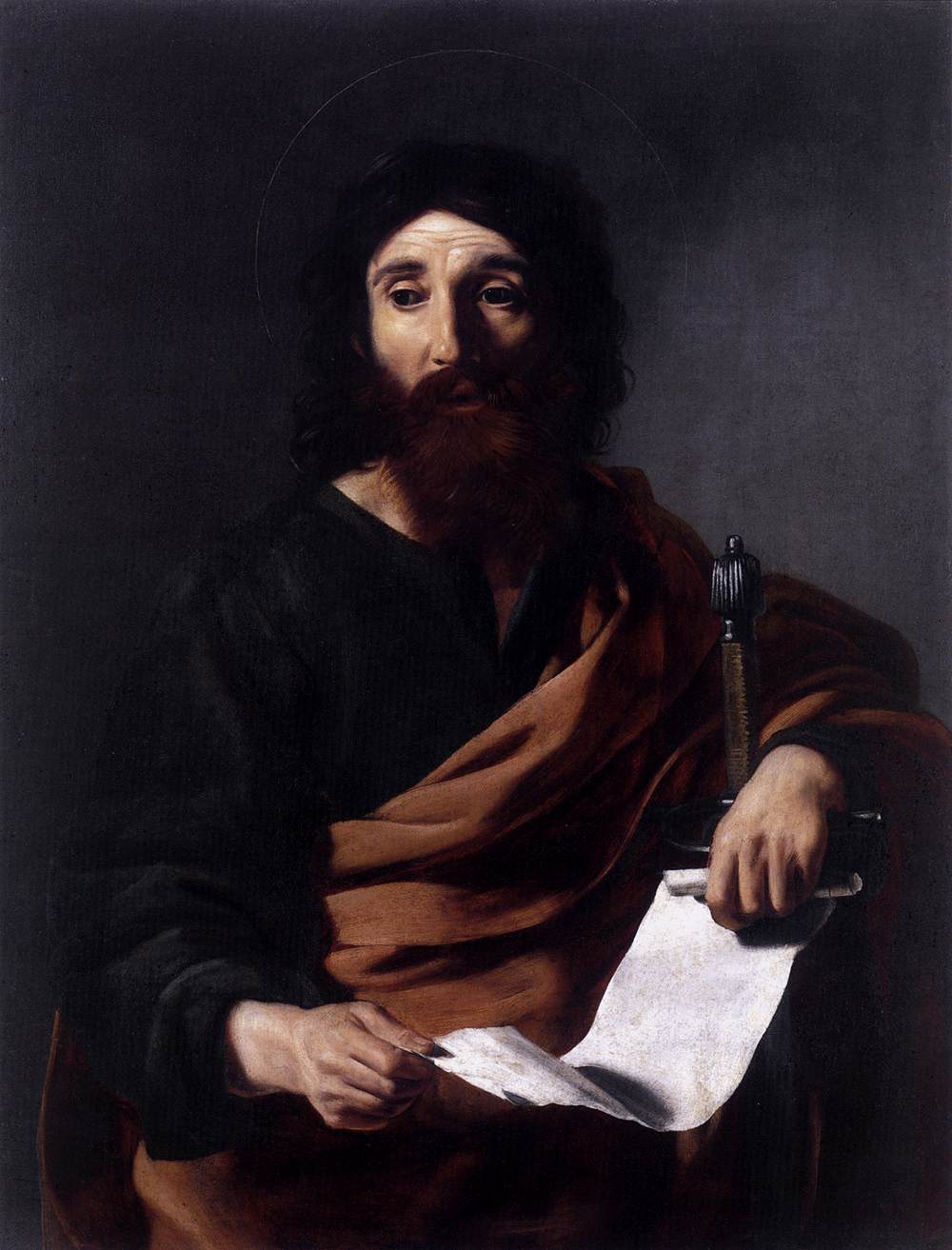
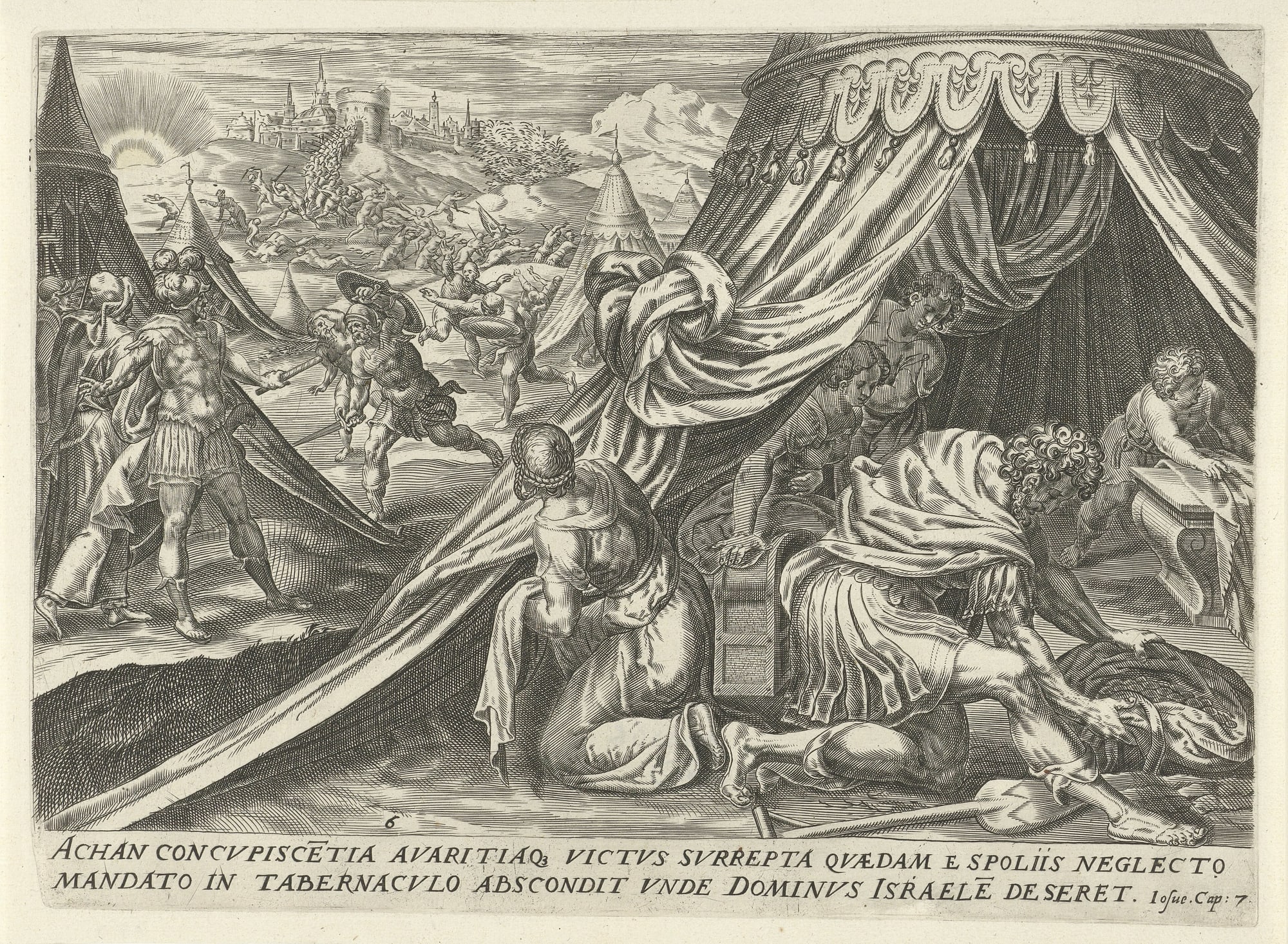
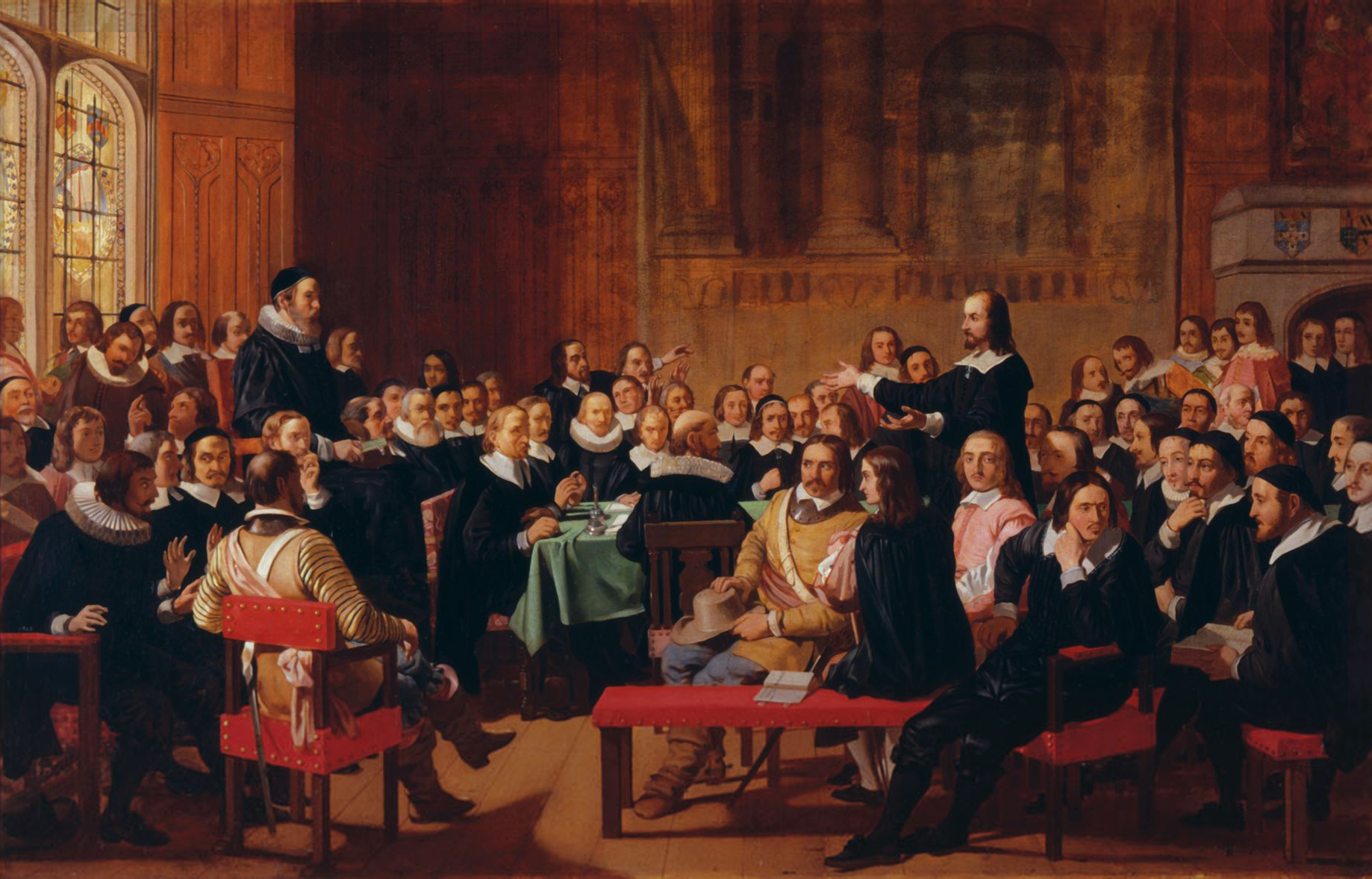
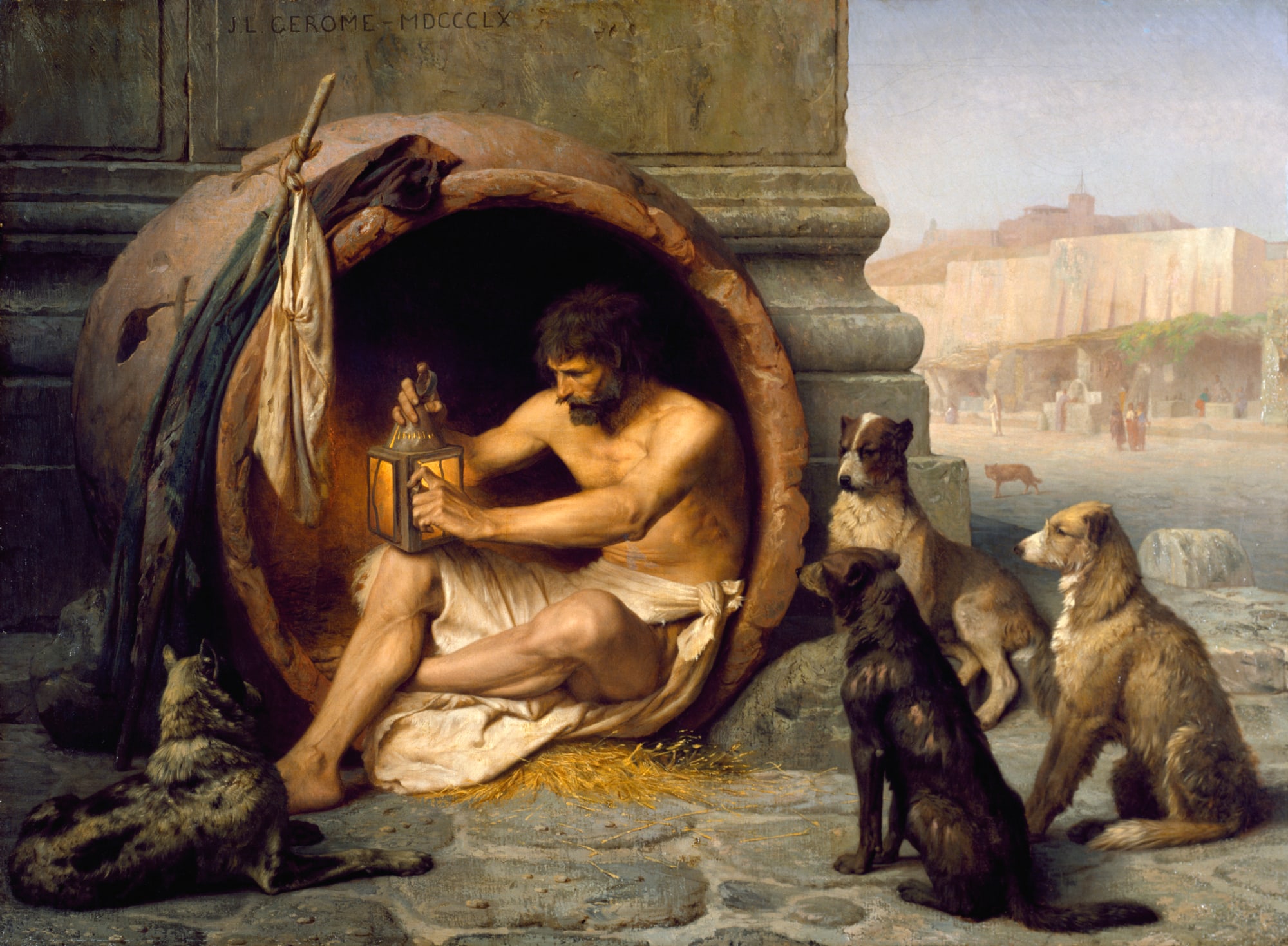

Learning Contentment, You Shall Not Covet, The Rare Jewel of Christian Contentment, Jealousy, Envy, The Words Autarkes and Autarkeia, Contentment and Comparison
Where Readers Disagree
Six readings answer three questions, each with its holders, the work that argues it and the objection raised against it.
How far Philippians 4:13 reaches
Read the study of Learning Contentment 9 sections, 8 verses set out
| Reading | Held by | Work | Objection |
|---|---|---|---|
| Strength to bear every trial and perform every duty in prosperity or adversity | Albert Barnes (American Presbyterian) | Barnes, Notes, Explanatory and Practical (1832 to 1869), on Philippians 4:13 | Paul gives the strength in the setting of hunger and plenty that Philippians 4:12 names. |
| The strength by which Paul endured want | Thomas Aquinas (Dominican) | Aquinas, Commentary on Philippians, on Philippians 4:13 | Albert Barnes answered that Paul's experience let him conclude that “He could bear any trial, perform any duty”. |
Whether Paul's word is the Stoics' self-sufficiency
Read the study of the Words Autarkes and Autarkeia 7 sections, 2 verses set out
| Reading | Held by | Work | Objection |
|---|---|---|---|
| Paul takes up a virtue the Stoics prized | J. B. Lightfoot (Anglican) | Lightfoot, Saint Paul's Epistle to the Philippians (1888 edition), on Philippians 4:11 | Jamieson, Fausset and Brown answered that Paul joins contentment to piety, beyond the heathen sentiment of Cicero. |
| Paul joins contentment to godliness, beyond the heathen ideal | Jamieson, Fausset and Brown (Scottish Presbyterian commentary) | Jamieson, Fausset and Brown, Commentary Critical and Explanatory (1871), on 1 Timothy 6:6 | Paul gives the word its sense in Philippians 4:11 by calling contentment something he learned. |
Whether contentment allows a believer to seek a better condition
Read the debate on the Prosperity Message 12 sections, 18 verses set out
| Reading | Held by | Work | Objection |
|---|---|---|---|
| It may, where God's providence goes before | Thomas Watson (English Puritan) | Watson, The Art of Divine Contentment (1653) | Chrysostom praised godliness with contentment “not when it possesses wealth, but when it has it not”. |
| The true gain is godliness held without wealth | John Chrysostom (Patristic) | Chrysostom, Homilies on 1 Timothy, homily 17, on 1 Timothy 6:6 | Watson held that “a Christian may lawfully seek to change his condition: so far as God's providence doth go before, he may follow”. |
Sources
Scripture is the Berean Standard Bible.
- STEP Bible, Translators Brief lexicon of Extended Strongs for Hebrew and for Greek (Tyndale House, Cambridge), CC BY 4.0, with the Greek brief lexicon based on Abbott-Smith (1922)
- St. Benedict's Rule for Monasteries, translated by Leonard J. Doyle (Collegeville: St. John's Abbey, 1948), chapters 7 and 34.
- Hugh Ford, St. Benedict of Nursia, The Catholic Encyclopedia, volume 2 (New York: Robert Appleton, 1907)
- Jeremiah Burroughs, The Rare Jewel of Christian Contentment (London: Peter Cole, 1649)
- Jeremiah Burroughs, The Rare Jewel of Christian Contentment (first printed 1649), a modern-spelling edition, chapter 1.
- Charles Spurgeon, Contentment, sermon No. 320, The New Park Street Pulpit (1860), CCEL edition.
- Thomas Watson, The Art of Divine Contentment: An Exposition of Philippians 4:11 (1653), from the Free Presbyterian Publications reprint of the 1855 edition.
- J. B. Lightfoot, Saint Paul's Epistle to the Philippians (London: Macmillan, 1888), pages 163 to 164.
- J. P. Gerber, L. Wheeler and J. Suls, A social comparison theory meta-analysis 60+ years on, Psychological Bulletin 144(2): 177 to 197 (2018)
- Cyprian, On the Lapsed, on 1 Timothy 6:9 (Ante-Nicene Fathers, volume 5)
- Basil of Caesarea, Letter 42.
- John Chrysostom, Homilies on Philippians, homily 15, on Philippians 4:13.
- John Chrysostom, Homilies on 1 Timothy, homily 17, on 1 Timothy 6:6.
- Theophylact of Ohrid, Commentary on Philippians, on Philippians 4:11, in a modern English translation.
- Thomas Aquinas, Commentary on Philippians, on Philippians 4:13, in a modern English translation.
- Matthew Henry, Commentary on the Whole Bible (1710), on Job 15:29.
- Albert Barnes, Notes, Explanatory and Practical (1832 to 1869), on Philippians 4:13.
- Robert Jamieson, A. R. Fausset and David Brown, Commentary Critical and Explanatory on the Whole Bible (1871), on 1 Timothy 6:6.
Keep Studying
Studies12
In this value6
People and groups17