
Isaiah 41 · Trial 6 of 21 · Featured Study
Fear
Fear is the dread of harm to come, and Scripture names it from the garden of Eden to the empty tomb.
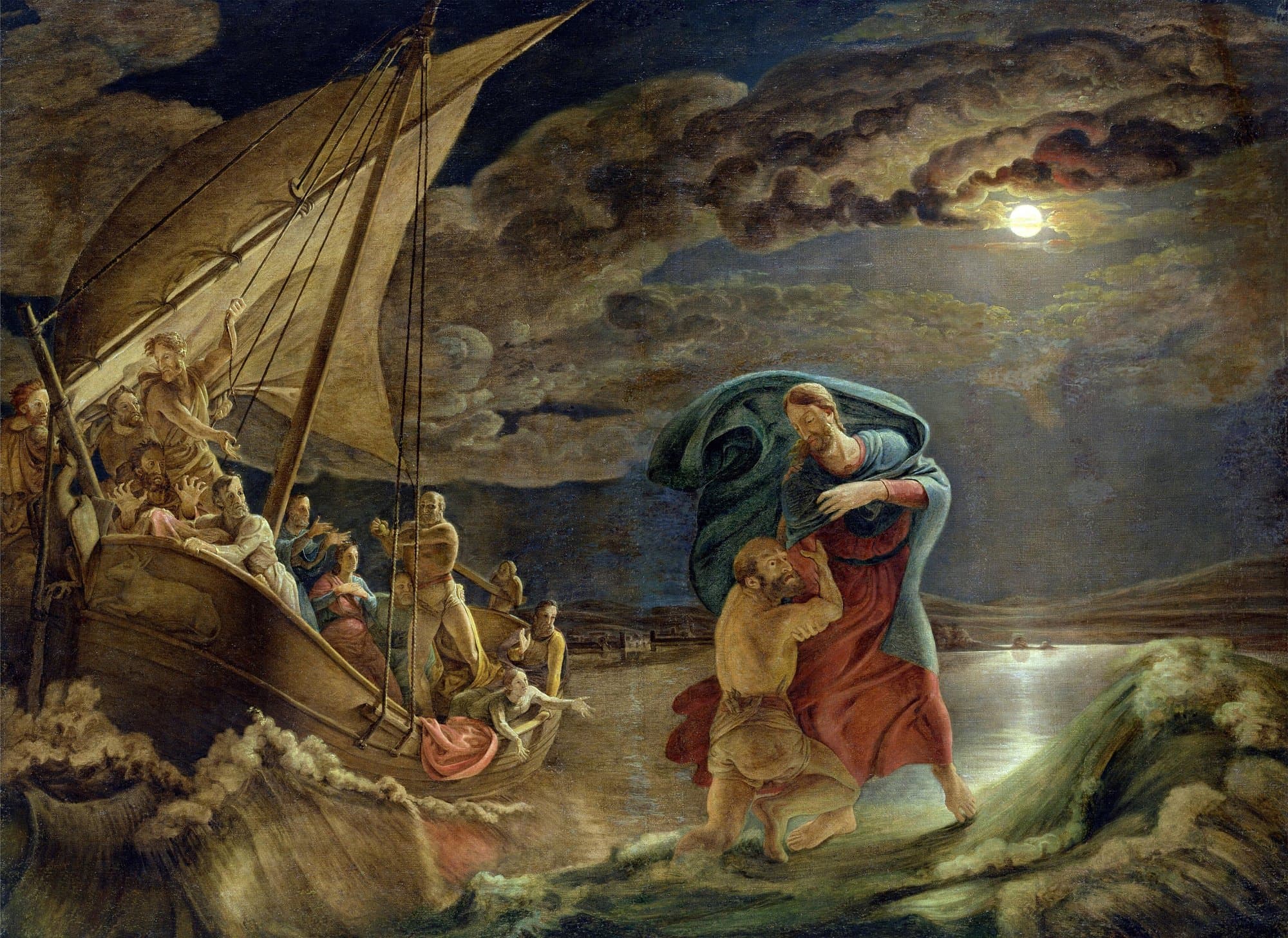
When Peter saw the strength of the wind on the Sea of Galilee, “he was afraid, and beginning to sink” (Matthew 14:30).
Do not fear, for I am with you; do not be afraid, for I am your God. I will strengthen you; I will surely help you; I will uphold you with My right hand of righteousness.
- Anchor text
- Isaiah 41:10 “Do not fear, for I…”
- The lament
- Psalm 55:4 to 8 “…terrors of death assail me. Fear and…”
- Hold in memory
- Isaiah 41:10, Psalm 56:3
Summary
Patriarchs, prophets, kings and apostles all knew fear, and the Bible records their fear plainly. God meets the afraid by speaking to them, staying with them and acting for them. Scripture also sets the fear of people against the fear of God, so that the one who fears God need not live in dread of others.
- The first fear in the Bible is Adam's, who hid from God because he was naked after he had sinned (Genesis 3:10).
- Jesus taught that not one sparrow falls to the ground apart from the Father, so nothing a believer fears lies outside God's rule (Matthew 10:29).
- Jesus Himself was in anguish in Gethsemane on the night before He died.
- Hebrews teaches that Christ became human and died to set free those whom the fear of death had enslaved.
- The psalms give the afraid words to pray in the danger itself (Psalm 55:4 to 8; Psalm 56:3).
What Scripture Says to the One Who Is Afraid
Six Hebrew and Greek words name fear, dread, dismay and timidity.
Fear can come at the sight of an army, at news of death, in the dark of night, or before people whose anger has power. This study asks where fear comes from in Scripture's own account and what God says to the one who is afraid. It shows how Christ bore fear for His people, what Scripture gives the afraid to do, and where readers of the Bible disagree about fear. It gathers the people and stories of Scripture that tell of fear, the church's accounts of believers in danger, and the teachers who have written on it.
Yare, to fear
315 uses in the canon
The Hebrew verb yare (H3372) is the common word for being afraid, and the same verb names reverence for God. The psalm of God our refuge uses it of fear refused: “Therefore we will not fear, though the earth is transformed.”
Pachad, dread
49 uses in the canon
The Hebrew noun pachad (H6343) stands in the promise of Psalm 91, “You will not fear the terror of the night.”
Chathath, to be dismayed
52 uses in the canon
The Hebrew verb chathath (H2865) means to be shattered and dismayed. When Goliath defied Israel, “Saul and all the Israelites were dismayed and greatly afraid.”
Phobeo, to be afraid
95 uses in the canon
The Greek verb phobeo (G5399) means to be alarmed or frightened. The angel used it to the shepherds of Bethlehem: “Do not be afraid! For behold, I bring you good news of great joy.”
Phobos, fear
46 uses in the canon
The Greek noun phobos (G5401) names alarm or fright. On the evening of the resurrection the disciples sat “with the doors locked for fear of the Jews.”
Deilia, timidity
1 use in the canon
The Greek noun deilia (G1167) means timidity and stands once in the New Testament, where Paul names it as the spirit God has not given His people.
The lexicon in full1 paragraph
Yare and phobos also name the reverence for God that Proverbs calls the beginning of knowledge.
Yare, to fear, Pachad, dread, Chathath, to be dismayed, Phobeo, to be afraid, Phobos, fear, Deilia, timidity, The Words Pachad and Deilia, the study in brief, a paragraph
The Key Texts on Fear
The Law, the psalms, the prophets and the letters each answer fear with a word from God.
Law
After these events, the word of the LORD came to Abram in a vision: “Do not be afraid, Abram. I am your shield, your very great reward.”
God's first word to Abram after the battle of the kings ties the end of fear to God Himself as shield and reward.
Genesis 15:1BSB
Law
Be strong and courageous; do not be afraid or terrified of them, for it is the LORD your God who goes with you; He will never leave you nor forsake you.”
The verse stands among the key texts because it gives the Law's own ground for courage, the presence of the LORD, on which later words against fear rest.
Wisdom
I sought the LORD, and He answered me; He delivered me from all my fears.
The verse stands here as a testimony from a man who was afraid, beside the commands and promises of the other key texts.
Psalm 34:4BSB
Prophets
Surely God is my salvation; I will trust and not be afraid. For the LORD GOD is my strength and my song, and He also has become my salvation.”
Isaiah's song of the redeemed joins trust and the end of fear in one line of praise.
Isaiah 12:2BSB
Prophets
Now this is what the LORD says— He who created you, O Jacob, and He who formed you, O Israel: “Do not fear, for I have redeemed you; I have called you by your name; you are Mine!
The prophet grounds the command not to fear in redemption, since God has called His people by name as His own.
Isaiah 43:1BSB
Letters
For you did not receive a spirit of slavery that returns you to fear, but you received the Spirit of sonship, by whom we cry, “Abba! Father!”
The verse stands here because it answers a believer's fear with the believer's standing as a child of God.
Romans 8:15BSB
Letters
So we say with confidence: “The Lord is my helper; I will not be afraid. What can man do to me?”
Hebrews takes the words of Psalm 118 for every believer who faces what people can do.
Hebrews 13:6BSB
Letters
There is no fear in love, but perfect love drives out fear, because fear involves punishment. The one who fears has not been perfected in love.
The verse stands here because readers have long disagreed over which fear it means.
1 John 4:18BSB
Deuteronomy 31:6, Psalm 34:4, Isaiah 12:2, Isaiah 43:1, Romans 8:15, Hebrews 13:6, 1 John 4:18
Where Fear Comes From, and Christ Who Bore It
Fear begins with sin in the garden and weighs on a world under the curse, and Christ entered it, prayed through it and broke its hold.
“I heard Your voice in the garden,” he replied, “and I was afraid because I was naked; so I hid myself.”The verse stands at the head of the section because every later fear in Scripture is felt in the world that sin entered here.
The Law warned Israel that if they broke the covenant they would live in dread, afraid night and day and never certain of survival (Deuteronomy 28:66). Proverbs sets the guilty conscience beside the fear it breeds.
The wicked flee when no one pursues, but the righteous are as bold as a lion.The proverb shows a fear with no outward cause, the fear that guilt carries with it.
The fear of man is a snare, but whoever trusts in the LORD is set securely on high.The proverb names the fear of people as a snare and sets trust in the LORD against it.
Paul writes that the creation itself was subjected to futility and waits to be set free from its bondage to decay (Romans 8:20 to 21). Fear lives in that world of danger, death and enemies.
Do not be afraid of those who kill the body but cannot kill the soul. Instead, fear the One who can destroy both soul and body in hell. Are not two sparrows sold for a penny? Yet not one of them will fall to the ground apart from the will of your Father. And even the very hairs of your head are all numbered. So do not be afraid; you are worth more than many sparrows.The saying stands here because it places every danger a disciple meets under the knowledge and care of God.
He was troubled as His hour cameJohn 12
Some Greeks came to the feast and asked to see Jesus, and He answered that the hour had come for the Son of Man to be glorified (John 12:20 to 23).
Now My soul is troubled, and what shall I say? ‘Father, save Me from this hour’? No, it is for this purpose that I have come to this hour.
John 12:27BSB The verse shows Jesus troubled at the approach of His death and choosing the hour for which He came.
Read the page on Jesus 33 sections, 35 verses set out
He was distressed in GethsemaneMark 14
In the garden Jesus prayed, “Father, if You are willing, take this cup from Me. Yet not My will, but Yours be done” (Luke 22:42). Luke adds that an angel from heaven strengthened Him (Luke 22:43).
He took with Him Peter, James, and John, and began to be deeply troubled and distressed. Then He said to them, “My soul is consumed with sorrow to the point of death. Stay here and keep watch.”
Mark 14:33 to 34BSB Mark records the distress of Jesus in His own words before the arrest.
He prayed and was heardHebrews 5
Hebrews calls Jesus a high priest who is able to sympathize with our weaknesses, tempted in every way that we are, yet without sin (Hebrews 4:15).
During the days of Jesus’ earthly life, He offered up prayers and petitions with loud cries and tears to the One who could save Him from death, and He was heard because of His reverence.
Hebrews 5:7BSB The verse shows the Son bringing His own anguish to the Father, so that the afraid have a high priest who has prayed as they pray.
He told His disciples not to be afraidMatthew 14
The disciples saw Jesus walking on the sea in the night and cried out in fear, thinking He was a ghost (Matthew 14:26).
But Jesus spoke up at once: “Take courage! It is I. Do not be afraid.”
Matthew 14:27BSB Jesus answers the disciples' terror with His own presence before He calms the wind.
He shared their flesh and blood and diedHebrews 2
Now since the children have flesh and blood, He too shared in their humanity, so that by His death He might destroy him who holds the power of death, that is, the devil, and free those who all their lives were held in slavery by their fear of death.
Hebrews 2:14 to 15BSB Hebrews gives the reason for the incarnation and the cross in terms of the fear that holds people in slavery.
He rose and said, “Do not be afraid”Matthew 28
The women hurried away from the empty tomb “in fear and great joy” to tell the disciples, and Jesus met them on the way (Matthew 28:8 to 9).
“Do not be afraid,” said Jesus. “Go and tell My brothers to go to Galilee. There they will see Me.”
Matthew 28:10BSB The first words of the risen Christ to His followers in Matthew answer their fear and send them out.
Read the story of the Empty Tomb 12 sections, 10 verses set out
He was distressed in Gethsemane (Mark 14), He prayed and was heard (Hebrews 5), He told His disciples not to be afraid (Matthew 14), He shared their flesh and blood and died (Hebrews 2), He rose and said, “Do not be afraid” (Matthew 28)
Proverbs 29:25, Matthew 10:28 to 31, John 12:27, Mark 14:33 to 34, Hebrews 5:7, Matthew 14:27, Hebrews 2:14 to 15, Matthew 28:10
Proverbs 28:1, Proverbs 29:25, Matthew 10:28 to 31, He was troubled as His hour came (John 12), He was distressed in Gethsemane (Mark 14), He prayed and was heard (Hebrews 5), He told His disciples not to be afraid (Matthew 14), He shared their flesh and blood and died (Hebrews 2) and 1 more
Who Walked Through Fear
Four people of the Bible are remembered for a fear they named, from Jacob before his brother to Paul at Corinth.
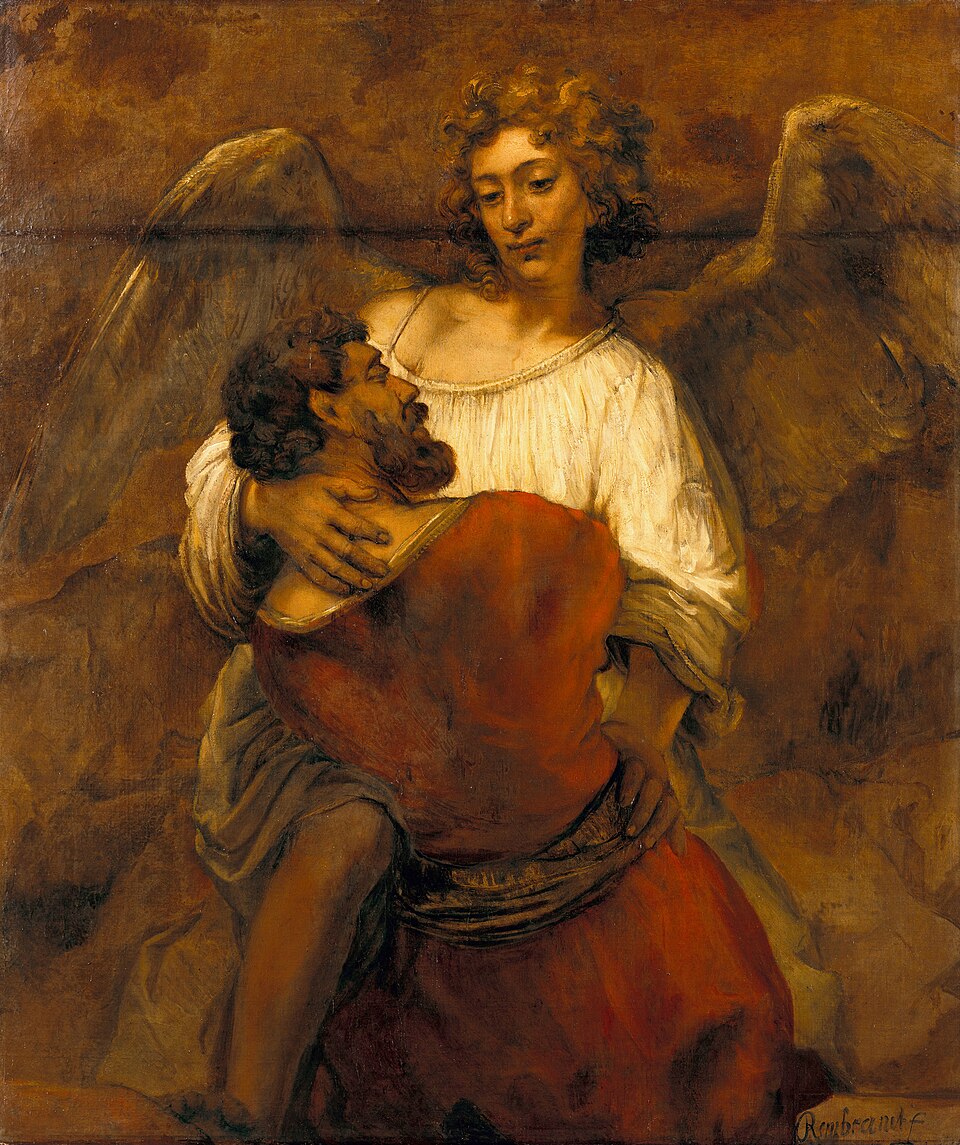
Before he met Esau, Jacob prayed, “Please deliver me from the hand of my brother Esau, for I am afraid that he may come and attack me.”
Genesis 32:11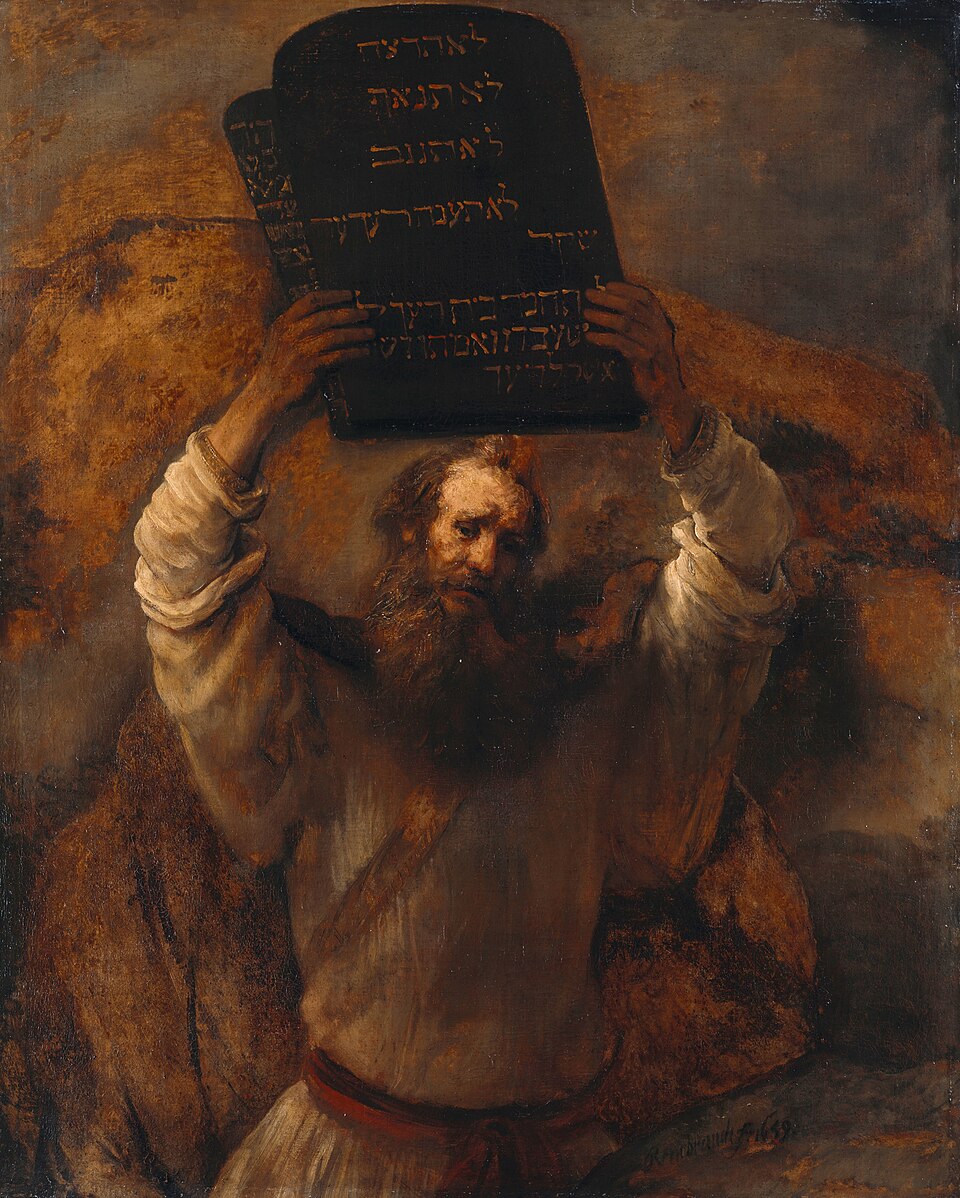
When a Hebrew asked whether he meant to kill him as he had killed the Egyptian, “Moses was afraid” and knew that his deed had become known.
Exodus 2:14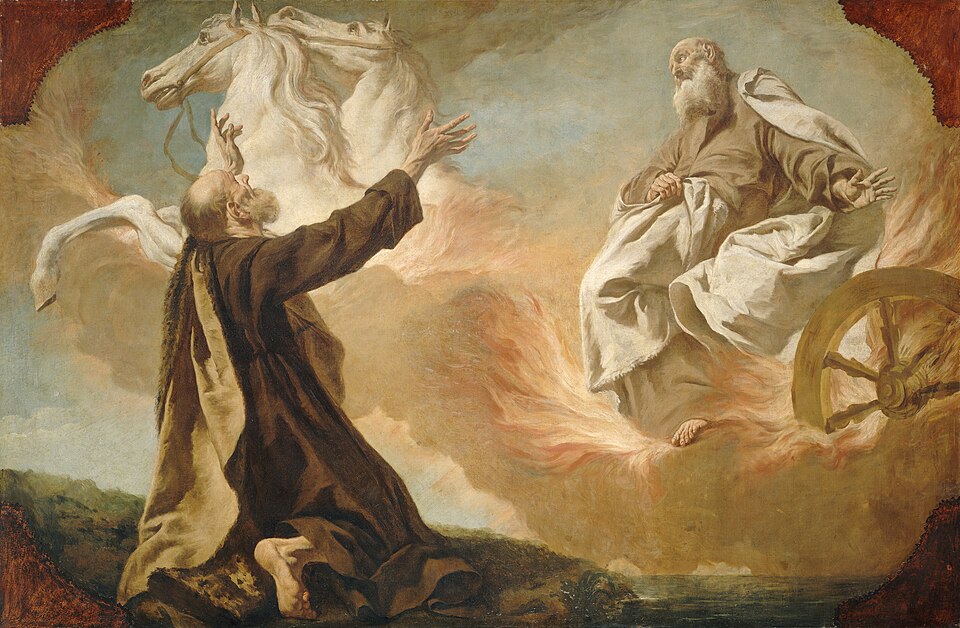
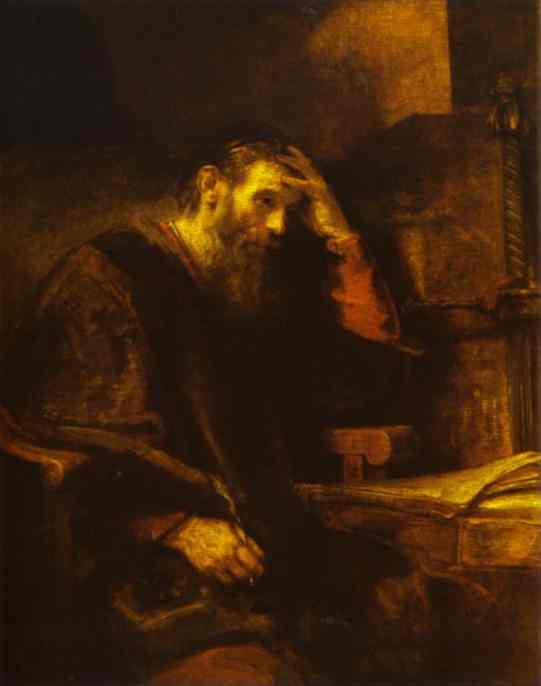
He reminded the Corinthians, “I came to you in weakness and fear, and with much trembling.”
1 Corinthians 2:3
Elijah, Paul
What Scripture Gives the Afraid to Do
Scripture gives six things to do in fear, each in the words of the verse that gives it.
- 1Trust God in the moment of fear“When I am afraid, I put my trust in You.”Psalm 56:3
- 2Call on Him morning, noon and night“Morning, noon, and night, I cry out in distress, and He hears my voice.”Psalm 55:17
- 3Fear God more than people“Do not fear what they fear; do not live in dread. The LORD of Hosts is the One you shall regard as holy.”Isaiah 8:12 to 13
- 4Keep the heart fixed on Him“He does not fear bad news; his heart is steadfast, trusting in the LORD.”Psalm 112:7
- 5Lie down and sleep“I will lie down and sleep in peace, for You alone, O LORD, make me dwell in safety.”Psalm 4:8
- 6Believe Christ's wordJesus said to Jairus, whose daughter had died, “Do not be afraid; just believe.”Mark 5:36
Call on Him morning, noon and night, Fear God more than people, Keep the heart fixed on Him, Lie down and sleep, Believe Christ's word
Fear that will not lift, or panic that grips the body, also calls for a physician's care beside prayer, and never in place of it.
The Lament of the Afraid
David wrote Psalm 55 under the threat of enemies and the betrayal of a friend.
The friend was “a man like myself, my companion and close friend” (Psalm 55:13), and together “we walked with the crowd into the house of God” (Psalm 55:14).
My heart murmurs within me, and the terrors of death assail me. Fear and trembling grip me, and horror has overwhelmed me. I said, “Oh, that I had wings like a dove! I would fly away and find rest. How far away I would flee! In the wilderness I would remain. Selah I would hurry to my shelter, far from this raging tempest.”These verses stand here because they bring terror and the wish to run from it to God as one prayer.
Cast your burden upon the LORD and He will sustain you; He will never let the righteous be shaken.The verse stands here as the counsel the same psalm gives once the fear has been prayed.
Psalm 55:4 to 8, Psalm 55:22
Fear in the Stories of the Bible
Four stories tell of a nation at the sea, ten spies before giants, disciples in a storm and an apostle at a fire.
Israel at the Red SeaExodus 14
Pharaoh's chariots overtook Israel camped by the sea, and the people cried out to the LORD and accused Moses of bringing them out to die in the wilderness (Exodus 14:10 to 12).
But Moses told the people, “Do not be afraid. Stand firm and you will see the LORD’s salvation, which He will accomplish for you today; for the Egyptians you see today, you will never see again.
Exodus 14:13BSB The verse stands here because it is Moses' answer to the terrified people, given before the sea was opened.
Read the story of the Red Sea Crossing 11 sections, 25 verses set out
The spies and the giantsNumbers 13 to 14
Ten of the twelve spies said of Canaan's people, “We seemed like grasshoppers in our own sight” (Numbers 13:33). Joshua and Caleb urged the people not to rebel and not to fear, for the LORD was with them (Numbers 14:9). The people wanted to stone them, and that generation died in the wilderness.
Read the story of Caleb and the Twelve Spies 10 sections, 15 verses set out
The disciples in the stormMark 4
A violent windstorm swamped the boat while Jesus slept on the cushion, and the disciples woke Him, asking whether He cared that they were perishing (Mark 4:37 to 38). He rebuked the wind and the sea, and it was perfectly calm.
Peter at the fireLuke 22
Peter followed the arrested Jesus at a distance to the high priest's courtyard and sat by the fire. Three times he denied that he knew Jesus, and the rooster crowed (Luke 22:54 to 60). The Lord turned and looked at Peter, and he went outside and wept bitterly (Luke 22:61 to 62).
The spies and the giants (Numbers 13 to 14), The disciples in the storm (Mark 4), Peter at the fire (Luke 22)
Fear in the Church's History
Three accounts tell of a bishop before the beasts, a priest in an Atlantic storm and a preacher after a deadly panic.
Polycarp at SmyrnaSecond century
The church of Smyrna's letter, The Martyrdom of Polycarp, sets two men side by side. Quintus, “when he saw the wild beasts, became afraid” and sacrificed (chapter 4). Polycarp, threatened with beasts and fire, “was filled with confidence and joy” (chapter 12). Christ had written to Smyrna, “Do not fear what you are about to suffer” (Revelation 2:10).
Read the story of Polycarp 8 sections, 3 verses set out
John Wesley in the Atlantic storms1736
On his voyage across the Atlantic, John Wesley wrote in his Journal on 23 January 1736 that he was “still unwilling to die.” Two days later a sea split the mainsail while German Moravians sang a psalm: “A terrible screaming began among the English. The Germans calmly sang on.” One of them told him, “No; our women and children are not afraid to die.”
Spurgeon after the Surrey Gardens panic1856
A panic, started on purpose at the Music Hall of the Royal Surrey Gardens, left seven people dead. In Charles Spurgeon's first sermon after the disaster, on 2 November 1856, he said he still felt “those same painful emotions which well-nigh prostrated me before.” His text, Philippians 2:9 to 11, had brought “a power of comfort on my depressed spirit.”
John Wesley in the Atlantic storms (1736), Spurgeon after the Surrey Gardens panic (1856)
Voices on Fear, by Century
Eight quotations from the third century to the eighteenth, each under the line it teaches.
died 215 · Clement of Alexandria
The Stromata Book 3
A third-century reading: the Spirit teaches the believer to call God Father, and the Father takes fear away.
The quotation1 quotation
“We have received the Spirit to enable us to know the one to whom we pray, our real Father, the one and only Father of all, that is, the one who like a Father educates us for salvation and does away with fear.”
Clement of Alexandria · The Stromata Book 3 · on Romans 8:15Patristic
died 253 · Origen of Alexandria
AGAINST CELSUS 8:27
A third-century reading: Christians need not fear hostile spirits, since God guards them by His angels.
The quotation1 quotation
“Christians have nothing to fear, even if demons should not be well-disposed to them; for they are protected by the supreme God, who is well pleased with their piety and who sets his divine angels to watch over those who are worthy of such guardianship, so that they can suffer nothing from demons.”
Origen of Alexandria · Against Celsus 8:27 · on Psalm 27:1Patristic
died 397 · Ambrose of Milan
On Jacob and the Blessed Life, Book 2, Chapter 6
A fourth-century reading: Christ gives a steadfast mind that terror cannot shake.
The quotation1 quotation
“For it belongs to the perfect not to be easily moved by worldly matters, not to be disturbed by fear, not to be agitated by suspicion, not to be shaken by terror, not to be harassed by sorrow: but rather, to calm the unchanging mind, like a safe seashore against the rising waves of worldly storms, with steadfast faith and unwavering devotion. This firmament, Christ introduced into the minds of Christians, bringing internal peace to the souls of the righteous; so that our heart is not troubled, nor our mind disturbed.”
Ambrose of Milan · On Jacob and the Blessed Life, Book 2, Chapter 6 · on John 14:27Patristic
died 420 · Jerome
Homily 20, on Psalm 90
A fifth-century reading: a believer may feel terror at night and still not be ruled by fear.
The quotation1 quotation
“You shall not fear the terror of the night. The devil is always in darkness: ‘that he may strike,’ he says, ‘the innocent in secret.’ You see, therefore, that whoever is simple and innocent is always struck in secret. You shall not fear the terror of the night. What he says is this: Although you may be in terror, which is night, nevertheless you shall not fear, because you have the shield of truth.”
Jerome · Homily 20, on Psalm 90 · on Psalm 91:5Patristic
died 444 · Cyril of Alexandria
Commentary on the Gospel of John
A fifth-century reading: Christ brings help to those in danger at the point where fear has cut off their hope.
The quotation1 quotation
“When they are separated by great interval from the land, and it was like that they in their trouble would no way be saved (for they were now in the midst of the sea) then Christ thrice longed for appears to them. For thus could He give most welcome salvation to those in danger, when fear had already cut off all hope of life.”
Cyril of Alexandria · Commentary on the Gospel of John · on John 6:19Patristic
died 735 · Bede
Commentary on Revelation
An eighth-century reading: the Lord in His mercy takes away the fear a man feels before the vision of God.
The quotation1 quotation
“And when I saw him, I fell at his feet. As a man, he trembles at the spiritual vision, but the Lord's mercy dispels human fear.”
Bede · Commentary on Revelation · on Revelation 1:17Patristic
1509 to 1564 · John Calvin
Commentaries
A sixteenth-century reading: in terror it is hard to grasp the unseen power of God that delivers from fear.
The quotation1 quotation
“When troubles and dangers arise, when terrors assail us on every side, when even death presents itself to our view, it is difficult to realize the secret and invisible power of God, which is able to deliver us from all anxiety and fear; for our understandings, which are gross and earthly, tend downward to the earth.”
John Calvin · Commentaries · on Psalm 35:2Reformed
1662 to 1714 · Matthew Henry
Commentary on the Whole Bible
An eighteenth-century reading: dangers without bring fears within, and the memory of sin adds to them.
The quotation1 quotation
“When without are fightings no marvel that within are fears; and, if it was upon the occasion of Absalom's rebellion, we may suppose that the remembrance of his sin in the matter of Uriah, which God was now reckoning with him for, added as much more to the fright.”
Matthew Henry · Commentary on the Whole Bible · on Psalm 55:5Puritan
Ambrose of Milan, Jerome, Cyril of Alexandria, Bede, John Calvin, Matthew Henry
How Fear Has Been Taught
Three teachers, Cyprian in the third century, Augustine in the fifth and Thomas Aquinas in the thirteenth, taught on fear, death and love.
Cyprian taught a church in time of plague that the one who goes to Christ need not fear death.1 paragraph
Cyprian of Carthage wrote On the Mortality to a church frightened by plague (translated by Robert Ernest Wallis, Ante-Nicene Fathers, volume 5). He asked, “Who, in the midst of these things, is trembling and sad, except he who is without hope and faith?” (section 2). He found one gain in the plague, that “we begin gladly to desire martyrdom as we learn not to fear death” (section 16).
Augustine taught that fear enters the soul first to make room for love, and then gives way to it.1 quotation
“As we see in sewing, the thread is introduced by means of the bristle; the bristle first enters, but except it come out the thread does not come into its place: so fear first occupies the mind, but the fear does not remain there, because it enters only in order to introduce charity. When once there is the sense of security in the mind, what joy have we both in this world and in the world to come! Even in this world, who shall hurt us, being full of charity? See how the apostle exults concerning this very charity: ‘Who shall separate us from the charity of Christ? shall tribulation, or distress, or persecution, or famine, or nakedness, or peril, or sword?’”
Augustine of Hippo · Ten Homilies on 1 John 9 · on 1 John 4:18Patristic
Thomas Aquinas taught that every fear springs from a love of what the fear threatens.1 paragraph
Thomas Aquinas asked in the Summa Theologiae (second part of the second part, question 125, English Dominican translation) whether the sin of fear is contrary to fortitude. He answered that “all fear arises from love; since no one fears save what is contrary to something he loves” (article 2). He added that “the greatest fear of all is that which has the danger of death for its object,” so that a disordered fear of death is the fear most opposed to fortitude.
What the Science Shows
Four peer-reviewed reviews describe the body's fear response, its treatment and religious coping.
Joseph LeDoux reviewed the research on fear conditioning in 2003. He concluded that the amygdala links what a person meets to the body's defence responses (Cellular and Molecular Neurobiology 23). Michelle Craske and colleagues found exposure therapy effective for anxiety disorders in 2014, though many patients do not benefit or find their fear returns (Behaviour Research and Therapy 58).
Stefan Hofmann and Jasper Smits combined 27 placebo-controlled trials of cognitive behavioural therapy for adult anxiety disorders in 2008. They found it effective, with much room for improvement (Journal of Clinical Psychiatry 69). Gene Ano and Erin Vasconcelles combined 49 studies of religious coping in 2005. Positive forms went with better adjustment to stress, and negative forms with worse (Journal of Clinical Psychology 61). These studies corroborate what Scripture shows of fear in the body and mind, and Scripture remains the ground of its teaching.
The Studies of Fear
Each study takes one text, story or word of fear into more depth.
The texts
3 studies
- Passages and psalms · 3 verses set outA Spirit of Power and Love
In 2 Timothy 1:6 to 8 Paul, a prisoner, urges Timothy to rekindle God's gift and to share in suffering for the gospel.
- Passages and psalms · 3 verses set outDo Not Fear, for I Am with You
Isaiah 41:8 to 13 is part of the LORD's speech in Isaiah 41, where He summons the nations to judgment.
- Passages and psalms · 5 verses set outWhen I Am Afraid
Psalm 56:3 to 4 and Psalm 27:1 to 3 are two psalms of David that meet fear with trust in God.
- Passages and psalms · 3 verses set outA Spirit of Power and Love
The stories
2 studies
- Stories · 5 verses set outElisha at Dothan
In 2 Kings 6 the servant of Elisha woke to an army around Dothan and was shown that the hills were full of fire.
- Stories · 8 verses set outGideon the Least
Gideon was a man of Manasseh, from the clan of Abiezer at Ophrah.
- Stories · 5 verses set outElisha at Dothan
The words
1 study
- Symbols and words · 7 verses set outThe Words Pachad and Deilia
Hebrew pachad and Greek deilia are two of the words English Bibles render fear, dread and timidity.
- Symbols and words · 7 verses set outThe Words Pachad and Deilia
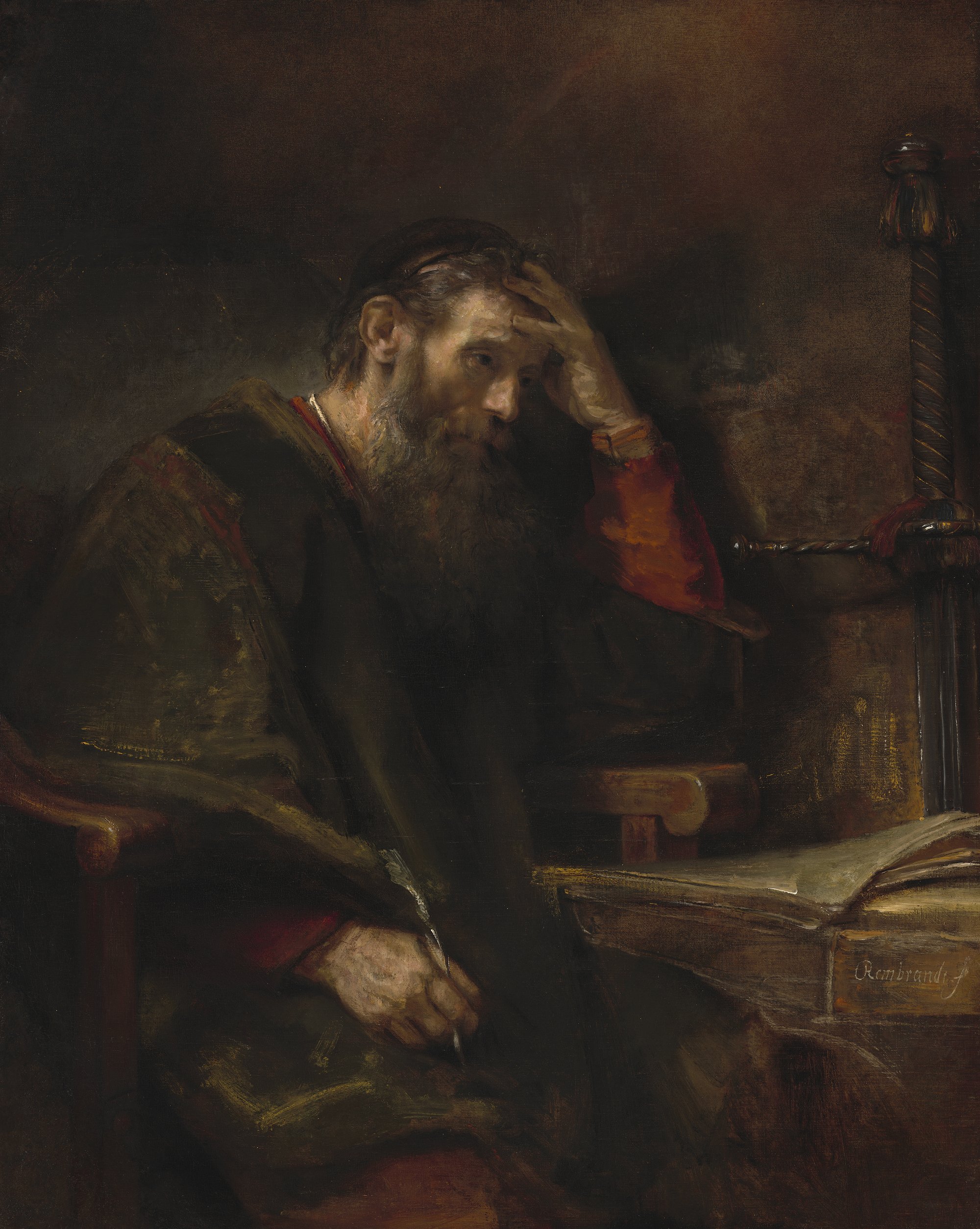
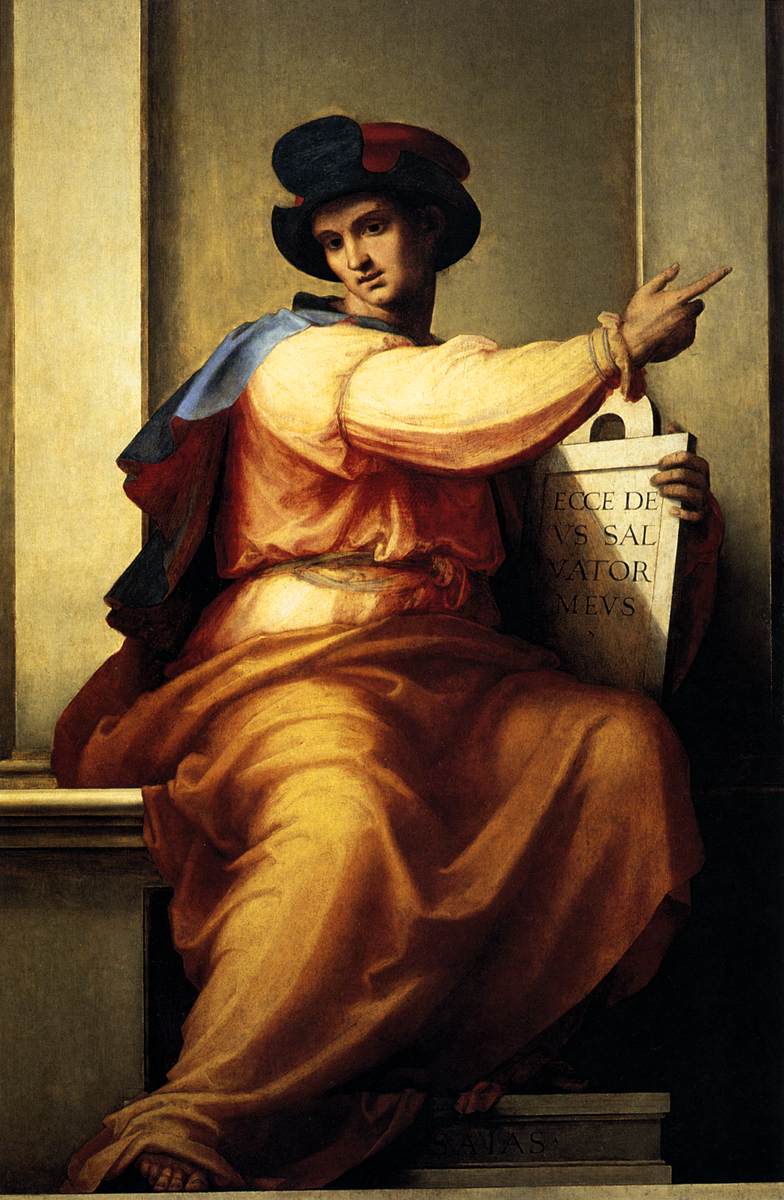
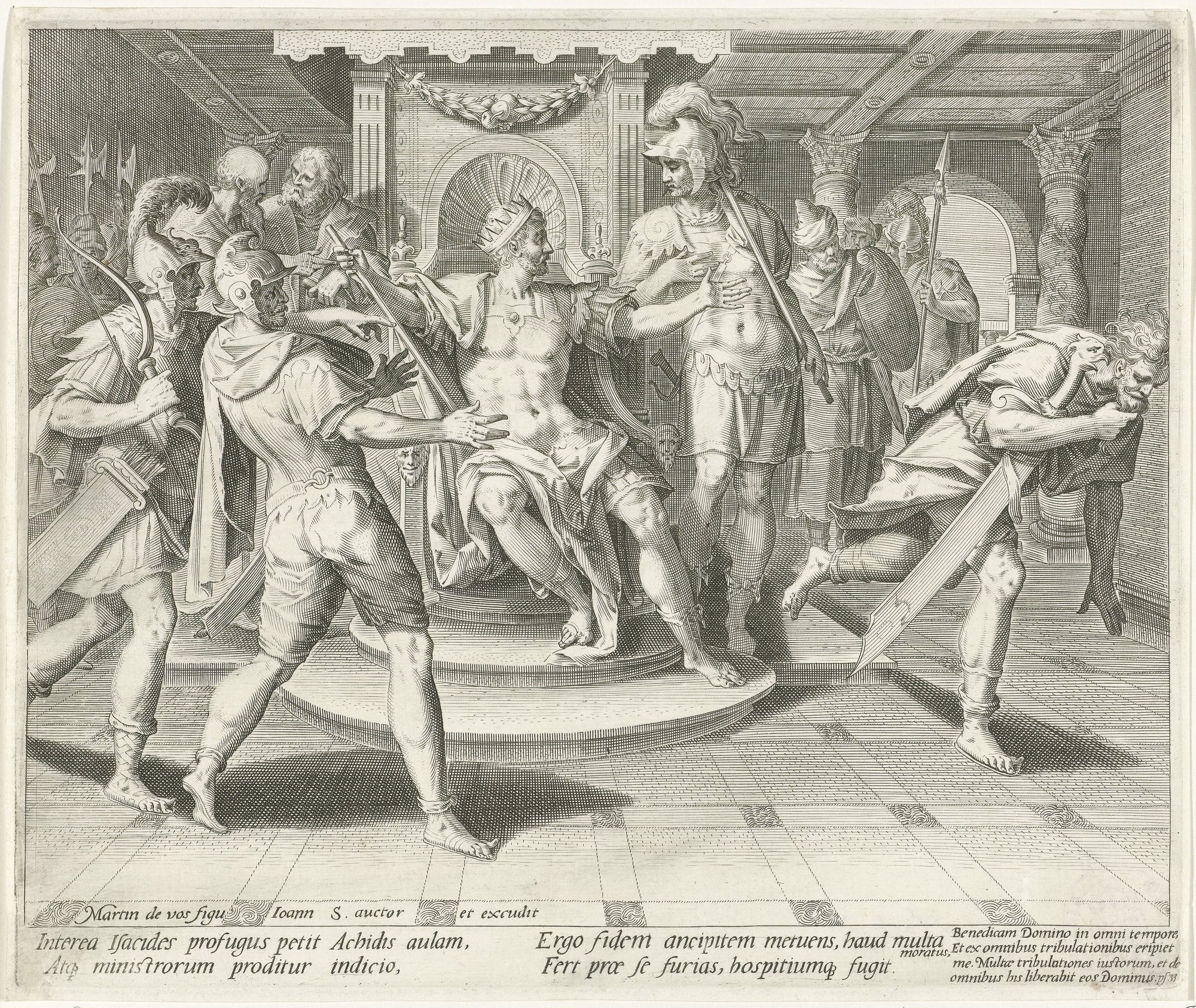
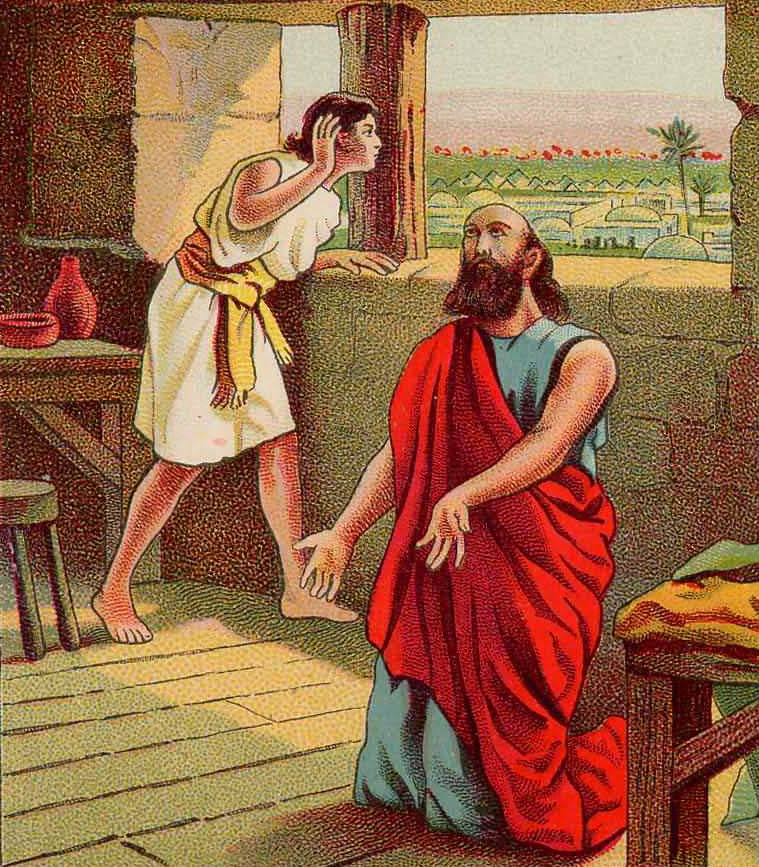
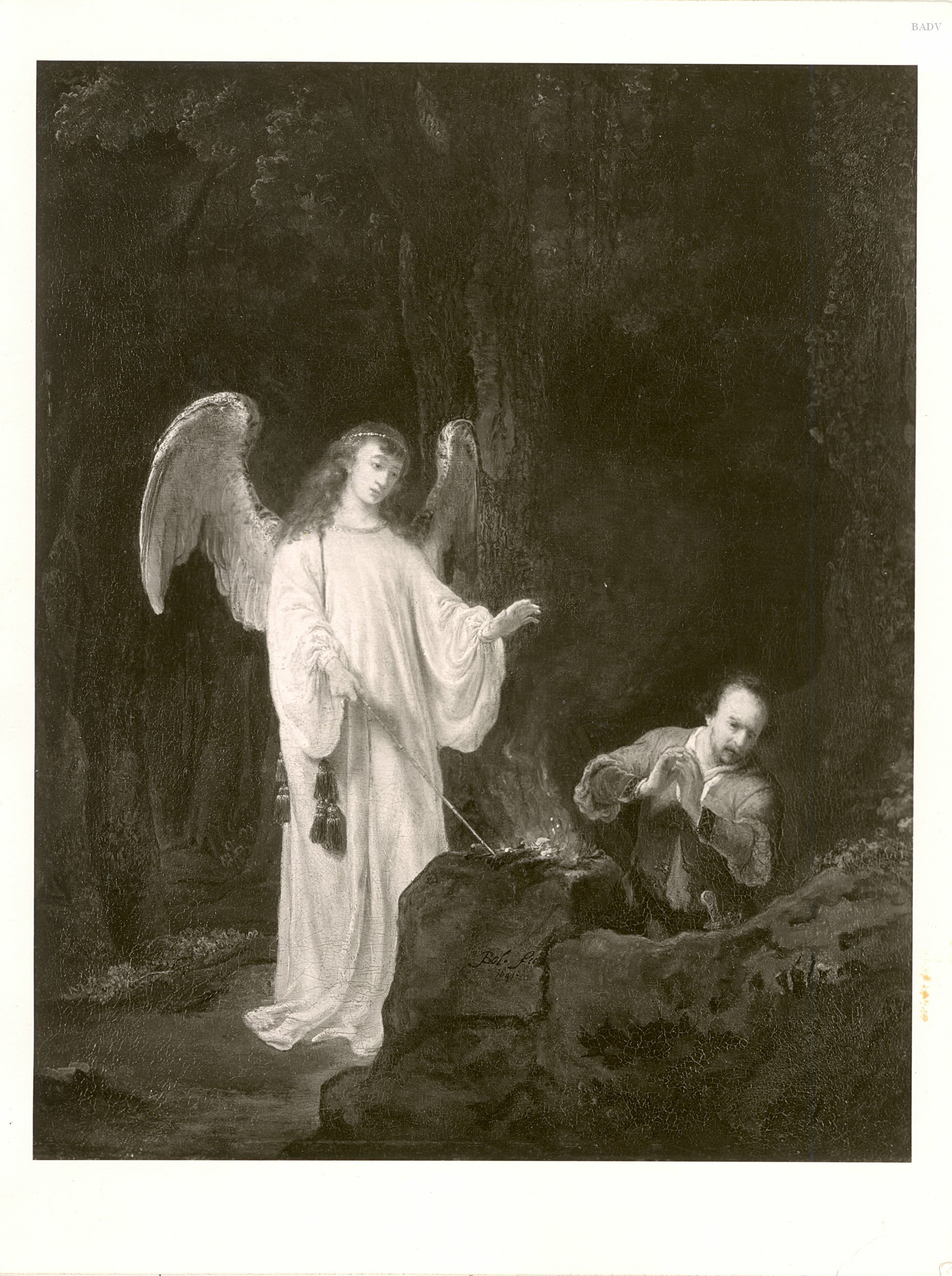
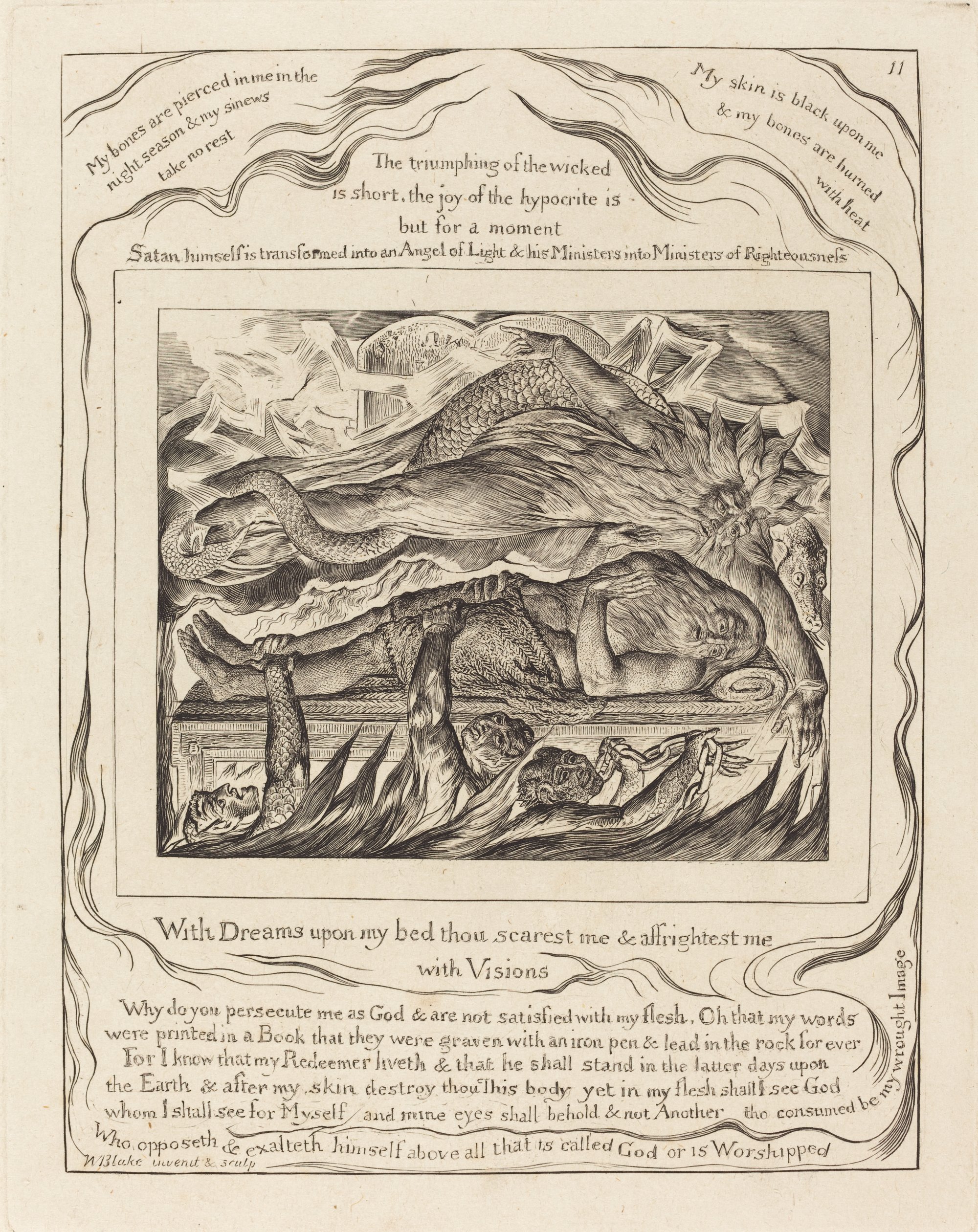
Do Not Fear, for I Am with You, When I Am Afraid, Elisha at Dothan, Gideon the Least, The Words Pachad and Deilia
Where Readers Disagree
Six readings answer three questions, each with its holders, the work that argues it and the objection raised against it.
Is fear itself sin?
| Reading | Held by | Work | Objection |
|---|---|---|---|
| Fear as a feeling is not sin, and it becomes sin when the will yields to it against what reason says must be endured | Thomas Aquinas; John Calvin (Medieval scholastic theology; Reformed) | Thomas Aquinas, Summa Theologiae II-II question 125, articles 1 and 3; John Calvin, Commentary on the Book of Psalms, on Psalm 56:3 | Jesus asked His disciples in the storm why they were so afraid and whether they still had no faith (Mark 4:40), and He drew no line between the feeling and consent. |
| Christ felt fear in Gethsemane without sin, so fear as such is not sin | Bede (Latin patristic writing) | Bede, On the Gospel of Mark, on Mark 14:33 | The Berean text of Mark 14:33 speaks of distress and trouble, and the word afraid comes from the text Bede expounded. |
What fear does perfect love drive out (1 John 4:18)?
| Reading | Held by | Work | Objection |
|---|---|---|---|
| The fear of punishment before God | Theophylact of Ohrid (Byzantine commentary) | Theophylact, Commentary on 1 John, on 1 John 4:18 | John wrote to believers whom the world hated (1 John 3:13), and a reading of the fear of punishment alone leaves their fear of people without an answer in the verse. |
| The fear of persecutors, which love overcomes when the believer confesses Christ | Tertullian; Leo the Great (Latin patristic writing) | Tertullian, Scorpiace; Leo the Great, Sermons 76.5 | The verse gives its own reason, the punishment that fear expects, and the verse before it speaks of the day of judgment (1 John 4:17 to 18). |
Is the word “Do not be afraid” a command or a comfort?
Read the study of Fear Not: How Often Scripture Says It 8 sections, 2 verses set out
| Reading | Held by | Work | Objection |
|---|---|---|---|
| A comfort grounded in God's presence, since only God can give courage | Gregory of Nyssa (Greek patristic writing) | Gregory of Nyssa, Against Eunomius, book 2, chapter 15 | God called His word not to fear a command when He spoke to Joshua (Joshua 1:9). |
| A command, so that fear in Christ's presence deserves rebuke | Bede (Latin patristic writing) | Bede, On the Gospel of Mark, on Mark 4:40 | The sayings usually join the word to a reason in God Himself, as Isaiah 43:5 does: “Do not be afraid, for I am with you.” |
Every Text on Fear
Four verses the older essay on fear names, in the Berean wording, and the two essays on fear that stood on the site's older pages.
Law and history
“Do not be afraid,” Moses replied. “For God has come to test you, so that the fear of Him may be before you, to keep you from sinning.”
The verse stands here because it sets the fear of harm beside the fear of God, and the second is taught on the page of the fear of the LORD.
Exodus 20:20BSB
Law and history
Have I not commanded you to be strong and courageous? Do not be afraid; do not be discouraged, for the LORD your God is with you wherever you go.”
The verse stands here because readers who hold the word not to fear to be a command take their ground from it.
Joshua 1:9BSB
Wisdom
The LORD is my light and my salvation— whom shall I fear? The LORD is the stronghold of my life— whom shall I dread?
The verse stands here because Psalm 27 is one of the two psalms the study When I Am Afraid teaches.
Psalm 27:1BSB
Gospels
Do not be afraid, little flock, for your Father is pleased to give you the kingdom.
The verse stands here because Jesus spoke it to His disciples within His teaching on worry about food and clothing (Luke 12:22 to 31).
Luke 12:32BSB
Joshua 1:9, Psalm 27:1, Luke 12:32
The essay that stood on the tag page Fear7 paragraphs
Fear is the first emotion named in the Bible after sin enters the world. When Adam heard God walking in the garden, he did not run to him; he hid, telling God plainly, "I was afraid, because I was naked, and I hid myself" (Genesis 3:10). Before that moment, nothing in Eden suggests Adam and Eve knew fear at all. Sin did not just break a command. It introduced a new and crippling emotion into the human experience: the fear of being exposed before God.
From that point on, Scripture treats fear with remarkable honesty. It does not pretend that great men of faith never felt it. Abram, promised descendants and land, still needed to hear God say, "Fear not, Abram: I am thy shield" (Genesis 15:1). Moses told the people gathered at Mount Sinai not to fear the thunder and lightning, because God had come near not to destroy them but to test them, so that his fear (reverence, not terror), would keep them from sin (Exodus 20:20). There is a fear that drives people away from God, and a fear that draws them close. The Bible calls both by the same word and asks readers to tell the difference.
Joshua faced an entire land of walled cities and needed the command repeated to him directly: "Have not I commanded thee? Be strong and of a good courage; be not afraid" (Joshua 1:9). Courage in Scripture is rarely the absence of fear. It is obedience that continues in spite of it, anchored in the character of the God who gives the command.
The Psalms turn fear into prayer more honestly than almost any other book. David can say in one breath that he walks through the valley of the shadow of death and fears no evil, because God is with him (Psalm 23:4), and in another that the Lord is his light and his salvation, so whom shall he fear (Psalm 27:1). He does not claim to feel nothing. He claims that whatever he feels, God is bigger than it. When fear does come, David describes seeking the Lord and being delivered from all his fears: not some, all (Psalm 34:4).
The proverbs add a warning that cuts close to daily life: the fear of man brings a snare (Proverbs 29:25). Fearing other people's opinions, anger, or rejection can quietly steer a life away from what is right, one small compromise at a time. Isaiah answers this exact fear with a promise repeated throughout Scripture in one form or another: "Fear thou not; for I am with thee" (Isaiah 41:10).
Jesus took up this same theme and pushed it further. He told his disciples not to fear those who can kill the body but cannot touch the soul (Matthew 10:28), redirecting fear away from earthly threats and toward reverence for God alone. To his followers he said something even gentler: "Fear not, little flock; for it is your Father's good pleasure to give you the kingdom" (Luke 12:32). Fear, in the mouth of Jesus, is regularly followed by a reason not to feel it: not a denial of danger, but a bigger truth standing over it.
Paul told Timothy that God has not given believers a spirit of fear, but of power, love, and a sound mind (2 Timothy 1:7). John went further still, writing that perfect love casts out fear, because fear involves torment, and love that has reached its full measure leaves no room for it (1 John 4:18). The final answer to fear in Scripture is not a technique. It is a person: the God who came near in Christ, whose perfect love is strong enough to drive out even the deepest dread.
The essay that stood on the topic page Fear1 paragraph
Fear in Scripture appears both as godly reverence (the fear of the LORD) and as the dread that paralyses obedience. The prophets, apostles, and disciples are repeatedly told "fear not" — not because the threats are imagined, but because the presence of God redefines them. Scripture directs fear away from creatures and toward the One before whom all creatures stand.
Sources
Scripture is the Berean Standard Bible.
- STEP Bible brief lexicons of Extended Strongs for Hebrew and for Greek (Tyndale House, Cambridge), CC BY 4.0, with the Strong's glosses.
- The Martyrdom of Polycarp, chapters 4 and 12, translated by Alexander Roberts and James Donaldson, Ante-Nicene Fathers, volume 1 (Buffalo: Christian Literature Publishing, 1885)
- John Wesley, The Journal of John Wesley, entries of 23 and 25 January 1736 (Chicago: Moody Press, 1951)
- Charles Spurgeon, The Exaltation of Christ, Sermon No. 98, delivered 2 November 1856 at New Park Street Chapel, with the editor's note on the Surrey Gardens disaster.
- Cyprian, On the Mortality (Treatise 7), sections 2 and 16, translated by Robert Ernest Wallis, Ante-Nicene Fathers, volume 5 (Buffalo: Christian Literature Publishing, 1886)
- Thomas Aquinas, Summa Theologiae, II-II question 125, articles 1, 2 and 3, English Dominican translation.
- Tertullian, Scorpiace, on 1 John 4:18.
- Clement of Alexandria, The Stromata, book 3, on Romans 8:15.
- Origen, Against Celsus, book 8, chapter 27.
- Gregory of Nyssa, Against Eunomius, book 2, chapter 15.
- Ambrose of Milan, On Jacob and the Blessed Life, book 2, chapter 6.
- Jerome, Homily 20, on Psalm 90 (Psalm 91 in the Hebrew numbering)
- Cyril of Alexandria, Commentary on the Gospel of John, on John 6:19.
- Augustine of Hippo, Ten Homilies on the First Epistle of John, homily 9.
- Leo the Great, Sermons, 76.5.
- Bede, On the Gospel of Mark, on Mark 14:33 and Mark 4:40.
- Bede, Commentary on Revelation, on Revelation 1:17.
- Theophylact of Ohrid, Commentary on 1 John, on 1 John 4:18.
- John Calvin, Commentary on the Book of Psalms, on Psalm 35:2 and Psalm 56:3.
- Matthew Henry, Commentary on the Whole Bible (1710), on Psalm 55:5.
- Joseph LeDoux, The emotional brain, fear, and the amygdala, Cellular and Molecular Neurobiology 23 (2003): 727 to 738, PMID 14514027.
- Michelle G. Craske, Michael Treanor, Christopher C. Conway, Tomislav Zbozinek and Bram Vervliet, Maximizing exposure therapy: an inhibitory learning approach, Behaviour Research and Therapy 58 (2014): 10 to 23, PMID 24864005.
- Stefan G. Hofmann and Jasper A. J. Smits, Cognitive-behavioral therapy for adult anxiety disorders: a meta-analysis of randomized placebo-controlled trials, Journal of Clinical Psychiatry 69 (2008): 621 to 632, PMID 18363421.
- Gene G. Ano and Erin B. Vasconcelles, Religious coping and psychological adjustment to stress: a meta-analysis, Journal of Clinical Psychology 61 (2005): 461 to 480, PMID 15503316.
- Fear, the essay of the former tag page at /tag/fear (3,373 characters)
- Fear, the description of the former topic page at /topics/fear (367 characters)
Keep Studying
Studies9
People and groups26
Show the next 6 titles
Show the next 6 titles
Show the next 6 titles
Symbols1
Doctrines1
In this trial6
Trials of life1