

Joshua 1 · Value 23 of 41 · Featured Study
Courage
Courage in Scripture is strength to do what God commands in the face of fear.
Before Israel crossed the Jordan, its new leader was told not to be afraid.
Have I not commanded you to be strong and courageous? Do not be afraid; do not be discouraged, for the LORD your God is with you wherever you go.”
- Anchor text
- Joshua 1:1 to 18 “…forsake you. Be strong and…”
- Its opposite
- Cowardice and the fear of people
- Hold in memory
- Joshua 1:9, 2 Timothy 1:7
Summary
The call to courage runs from the Law to the letters of the apostles, and it comes to soldiers, kings, exiles, apostles and churches under threat. Its heroes are people who also knew fear, and their courage was given by God as much as commanded. Joshua, David, Esther, the apostles and the martyrs of the church each had to choose it in the face of loss.
- God gives His reason with the command, and the reason is His presence, His help or His word.
- Jesus told His disciples to fear God rather than people who can kill only the body (Matthew 10:28).
- Jesus told His disciples to take courage because He had overcome the world.
- The church in Acts prayed for boldness and spoke the word of God boldly.
What Courage Is
Four words of the Bible's Hebrew and Greek carry the call to courage.
Courage runs through Scripture from the charge to Joshua to the boldness of the apostles in Jerusalem and Rome. This study of courage asks what Scripture means by it, where it comes from, and how God's people are to have it. It gives the words, the key texts, the ground of courage in God, Christ and courage, the people who showed it, its practice and its opposite. The later sections give the stories of the Bible and of the church, the church's voices, and the questions on which readers disagree.
Chazaq, to be strong
291 uses in the canon
The Hebrew verb chazaq (H2388) opens the charge to Joshua: “Be strong and courageous, for you shall give these people the inheritance of the land.”
Amats, to be courageous
41 uses in the canon
The Hebrew verb amats (H553) closes the same charge, and a psalm gives it to every believer: “Be strong and courageous, all you who hope in the LORD.”
Parrhesia, boldness
31 uses in the canon
The Greek noun parrhesia (G3954) is the boldness Paul hoped for in prison: “but will have complete boldness so that now as always Christ will be exalted in my body.”
Tharseo, take courage
7 uses in the canon
The Greek verb tharseo (G2293) is the Lord's own word to the frightened. On the lake He said, “Take courage! It is I. Do not be afraid.”
The lexicon in full
Chazaq, to be strong, Amats, to be courageous, Parrhesia, boldness, Tharseo, take courage, The Words Chazaq, Amats and Parrhesia, the study in brief
The Key Texts of Courage
The Law, the psalms, the prophets and the letters give the command and its reason.
Law
Be strong and courageous; do not be afraid or terrified of them, for it is the LORD your God who goes with you; He will never leave you nor forsake you.”
Moses gives all Israel the command and its reason before he hands the people to Joshua.
Wisdom
Wait patiently for the LORD; be strong and courageous. Wait patiently for the LORD!
The psalm turns the charge given to Joshua into a word for every believer who waits.
Psalm 27:14BSB
Prophets
Do not fear, for I am with you; do not be afraid, for I am your God. I will strengthen you; I will surely help you; I will uphold you with My right hand of righteousness.
Isaiah speaks to Israel in exile, so the command meets a people far from home.
Isaiah 41:10BSB
Epistles
Be on the alert. Stand firm in the faith. Be men of courage. Be strong.
Paul writes to a divided church, so courage there means standing firm in the faith together.
Epistles
For God has not given us a spirit of fear, but of power, love, and self-control.
Paul writes to strengthen Timothy for hard ministry, and he traces courage to the gift of the Spirit.
Revelation
Do not fear what you are about to suffer. Look, the devil is about to throw some of you into prison to test you, and you will suffer tribulation for ten days. Be faithful even unto death, and I will give you the crown of life.
The promise is given to a church about to suffer, so courage is asked in view of the reward.
Psalm 27:14, Isaiah 41:10, 1 Corinthians 16:13, 2 Timothy 1:7, Revelation 2:10
Courage Rests on God's Presence
Scripture grounds courage in God's presence and in the gift of His Spirit.
Courage is also a gift. Micah said he was “filled with power by the Spirit of the LORD, with justice and courage” (Micah 3:8).
Be Strong and Courageous, the study in brief
Christ and Courage
His own conduct, His word to the disciples, His cross and His word to Paul after He rose each show courage.
He set His face toward JerusalemLuke 9
Jesus had told His disciples that the Son of Man must suffer many things and be killed (Luke 9:22). Soon after, Luke records His turn toward the city.
As the day of His ascension approached, Jesus resolutely set out for Jerusalem.
Luke 9:51BSB Jesus goes toward the place of His death of His own will, with the end in view.
Read the page on Jesus 33 sections, 35 verses set out
He stepped forward to meet His arrestJohn 18
Judas brought soldiers and officers to the garden, and they came carrying lanterns, torches and weapons (John 18:3).
Jesus, knowing all that was coming upon Him, stepped forward and asked them, “Whom are you seeking?” “Jesus of Nazareth,” they answered. Jesus said, “I am He.” And Judas His betrayer was standing there with them.
John 18:4 to 5BSB Jesus' courage is in His choice to go out to them, since He knew what the arrest would bring.
His word on the night before He diedJohn 16
On the night before He died, Jesus told the eleven that they would be scattered and leave Him alone (John 16:32).
I have told you these things so that in Me you may have peace. In the world you will have tribulation. But take courage; I have overcome the world!”
John 16:33BSB Jesus grounds His disciples' courage in His own victory over the world.
Read the study of My Peace I Give to You 8 sections, 7 verses set out
He endured the crossHebrews 12
In Gethsemane Jesus prayed, “Yet not My will, but Yours be done” (Luke 22:42). Hebrews sets His endurance before believers who are weary.
Let us fix our eyes on Jesus, the author and perfecter of our faith, who for the joy set before Him endured the cross, scorning its shame, and sat down at the right hand of the throne of God.
Hebrews 12:2BSB Hebrews offers His endurance as the pattern for believers who are growing weary.
Read the story of the Crucifixion 12 sections, 12 verses set out
The risen Lord stood by PaulActs 23
Paul had stood trial before the council in Jerusalem, and the next morning a plot was formed to kill him (Acts 23:12).
The following night the Lord stood near Paul and said, “Take courage! As you have testified about Me in Jerusalem, so also you must testify in Rome.”
Acts 23:11BSB The word comes on the night before a plot against Paul's life, so courage is given before the danger is known.
Read the story of the Empty Tomb 12 sections, 10 verses set out
He stepped forward to meet His arrest (John 18), His word on the night before He died (John 16), He endured the cross (Hebrews 12), The risen Lord stood by Paul (Acts 23)
John 16:33, Hebrews 12:2, Acts 23:11
Who Showed Courage
Five people of the Bible spoke or acted with courage before a strong people, a besieging army, enemies at the wall, a king's decree and a hostile city.
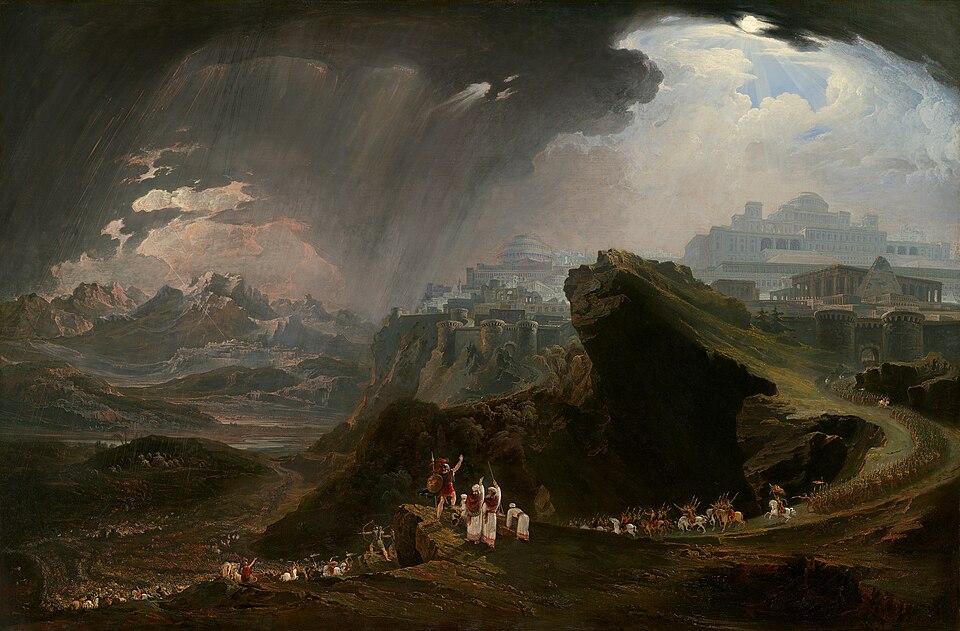
With Caleb he urged Israel, “do not be afraid of the people of the land, for they will be like bread for us,” because “the LORD is with us.”
Numbers 14:9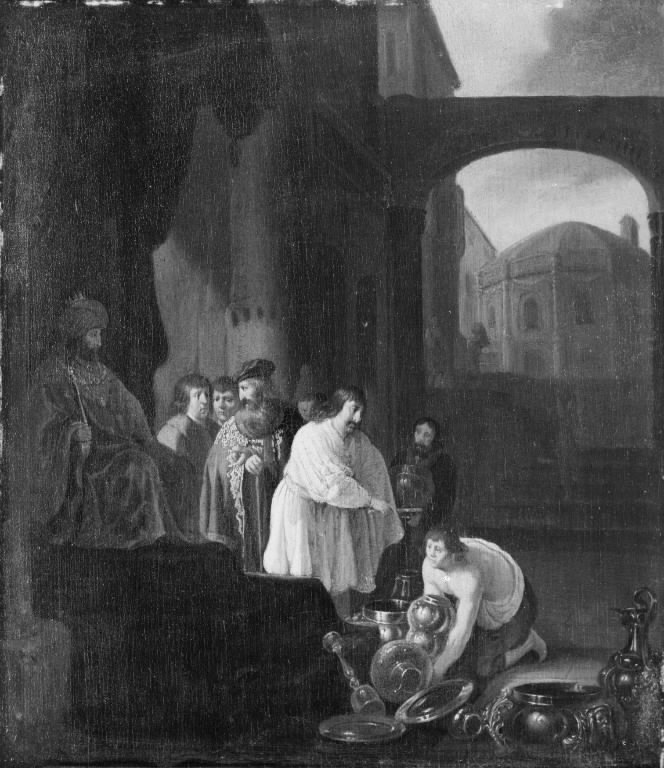
He told Jerusalem, “Be strong and courageous! Do not be afraid or discouraged before the king of Assyria and the vast army with him.”
2 Chronicles 32:7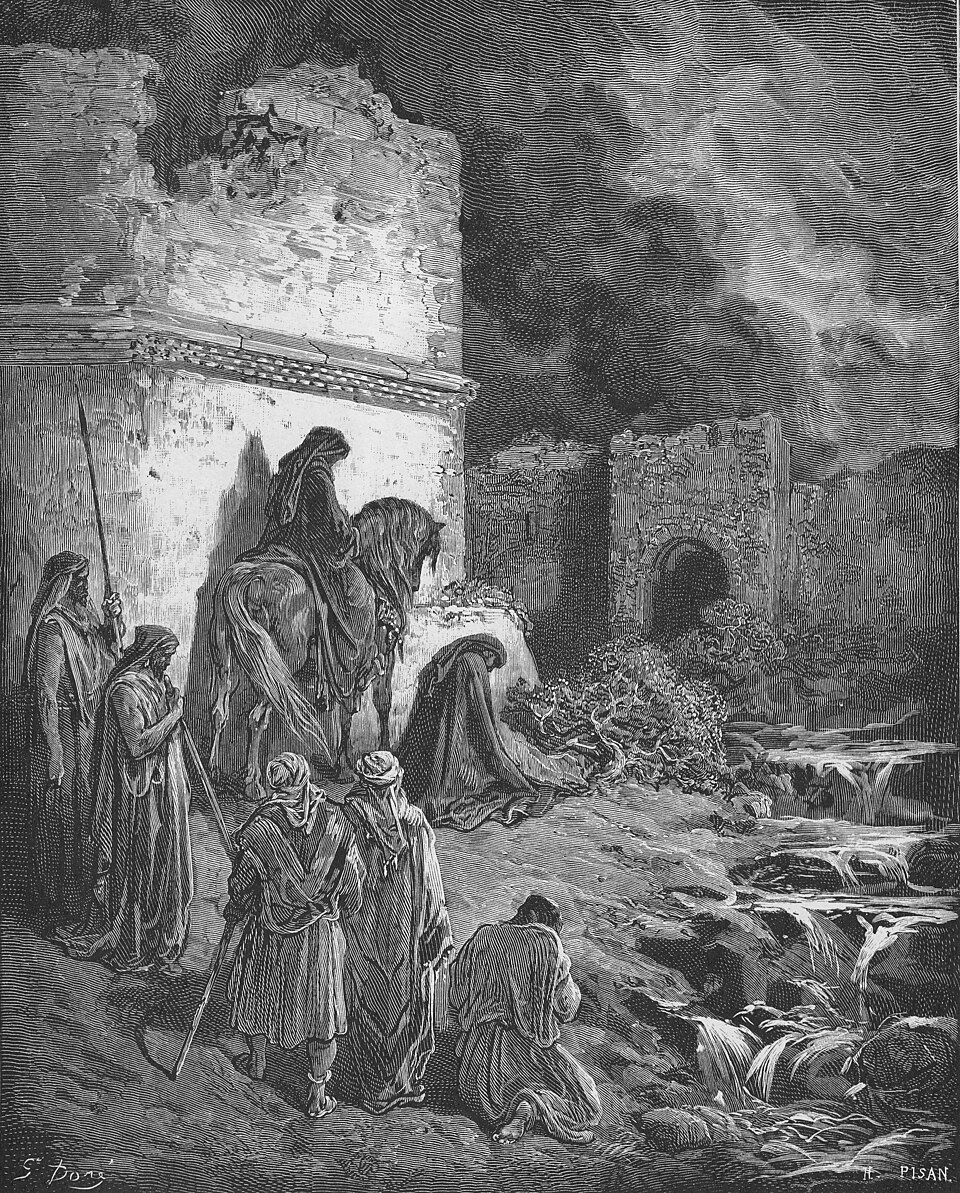
When enemies threatened the builders of the wall, he told the people, “Do not be afraid of them. Remember the Lord, who is great and awesome.”
Nehemiah 4:14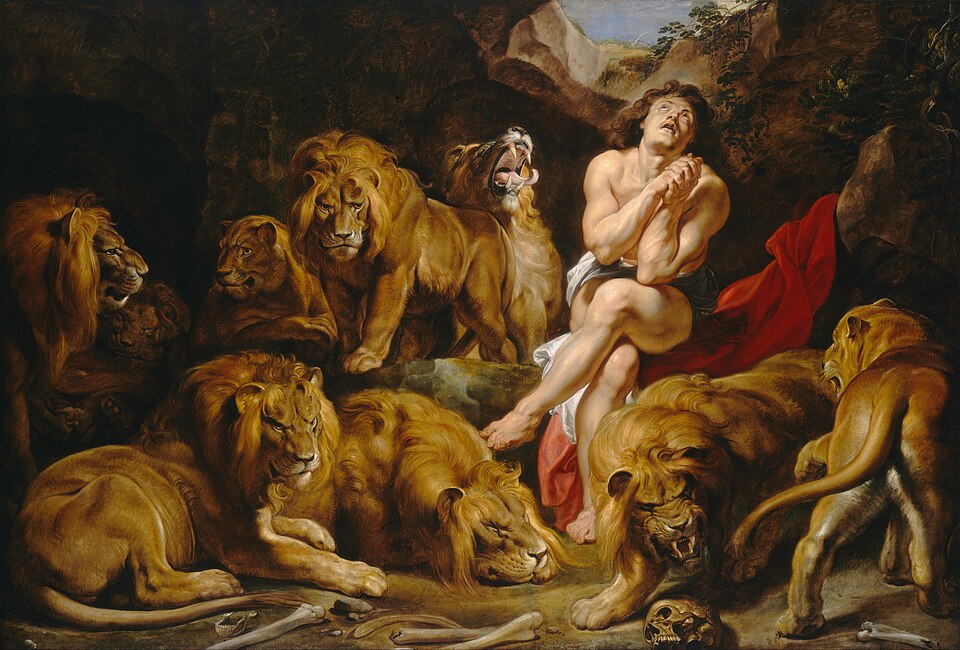
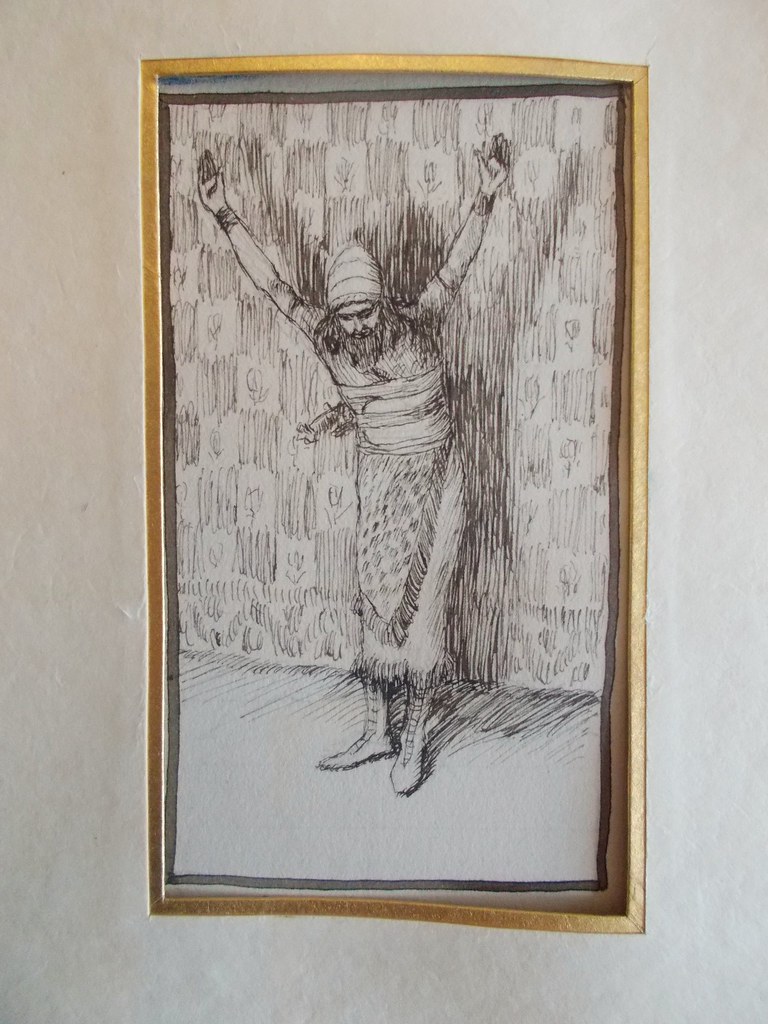
When he learned the decree had been signed, he went home and prayed toward Jerusalem three times a day, “just as he had done before.”
Daniel 6:10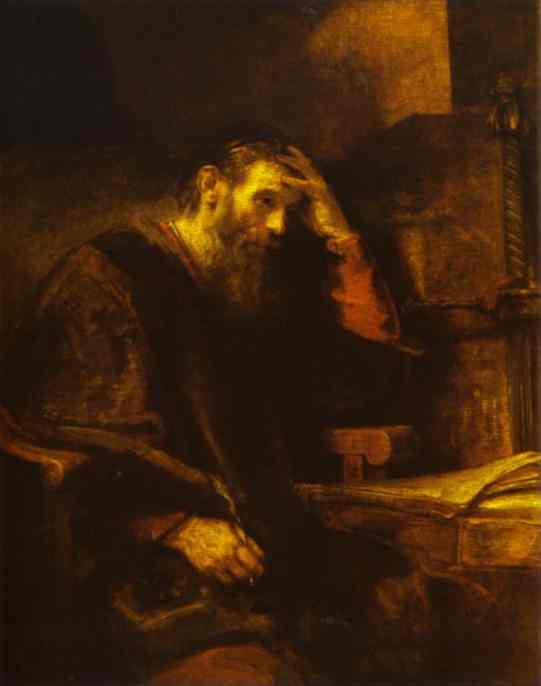
Warned of chains in Jerusalem, he said, “I consider my life of no value to me, if only I may finish my course.”
Acts 20:24
Nehemiah, Daniel, Paul
The Practice of Courage
Scripture names six practices of courage, each in the words of the verse that gives it.
- 1Keep the word“This Book of the Law must not depart from your mouth; meditate on it day and night.”Joshua 1:8
- 2Pray for boldness“And now, Lord, consider their threats, and enable Your servants to speak Your word with complete boldness.”Acts 4:29
- 3Bring the fear to God“When I am afraid, I put my trust in You.”Psalm 56:3
- 4Fear God rightly“Do not be afraid of those who kill the body but cannot kill the soul.”Matthew 10:28
- 5Speak courage to others“So take courage, men, for I believe God that it will happen just as He told me.”Acts 27:25
- 6Love“There is no fear in love, but perfect love drives out fear.”1 John 4:18
Pray for boldness, Bring the fear to God, Fear God rightly, Speak courage to others, Love
What Stands Against Courage
Scripture names the melting heart, the shrinking back and a daring cut loose from what is right.
The spies who went up with Caleb told Israel, “We cannot go up against the people, for they are stronger than we are!” (Numbers 13:31). Before Gideon's battle, “twenty-two thousand of them turned back” when the fearful were sent home (Judges 7:3).
Absalom used the words of courage when he ordered his young men to kill his brother Amnon, telling them, “Do not be afraid” (2 Samuel 13:28).
When we heard this, our hearts melted and everyone’s courage failed because of you, for the LORD your God is God in the heavens above and on the earth below.Rahab's words show courage failing in Israel's enemies, and her own faith in the God who caused it.
But to the cowardly and unbelieving and abominable and murderers and sexually immoral and sorcerers and idolaters and all liars, their place will be in the lake that burns with fire and sulfur. This is the second death.”The list of the lost in the last vision of Scripture begins with fear that turned from God.
Joshua 2:11, Revelation 21:8
Courage in the Stories of the Bible
Five stories tell of a shepherd before a giant, three men before a furnace, a queen before a king, two apostles before a council and a deacon before his killers.
David and Goliath1 Samuel 17
Saul and all Israel “were dismayed and greatly afraid” when the Philistine champion challenged them (1 Samuel 17:11). The shepherd David offered to fight him, because the LORD had delivered him from the lion and the bear (1 Samuel 17:37). He would not wear Saul's armour, and went out with his staff, his sling and five smooth stones from the brook (1 Samuel 17:40). Without a sword in his hand he struck the Philistine down.
But David said to the Philistine, “You come against me with sword and spear and javelin, but I come against you in the name of the LORD of Hosts, the God of the armies of Israel, whom you have defied.
1 Samuel 17:45BSB David's courage rests on the name of the LORD, the same ground Joshua was given.
Read the story of David and Goliath 12 sections, 16 verses set out
The three in the furnaceDaniel 3
Shadrach, Meshach and Abednego refused to bow to Nebuchadnezzar's golden statue, though the penalty was the blazing furnace. The furnace was heated seven times hotter, and the king then saw four men walking in the fire unharmed (Daniel 3:19 and Daniel 3:25).
If the God whom we serve exists, then He is able to deliver us from the blazing fiery furnace and from your hand, O king. But even if He does not, let it be known to you, O king, that we will not serve your gods or worship the golden statue you have set up.”
Daniel 3:17 to 18BSB Their refusal does not depend on being rescued, which is the heart of their courage.
Esther before the kingEsther 4
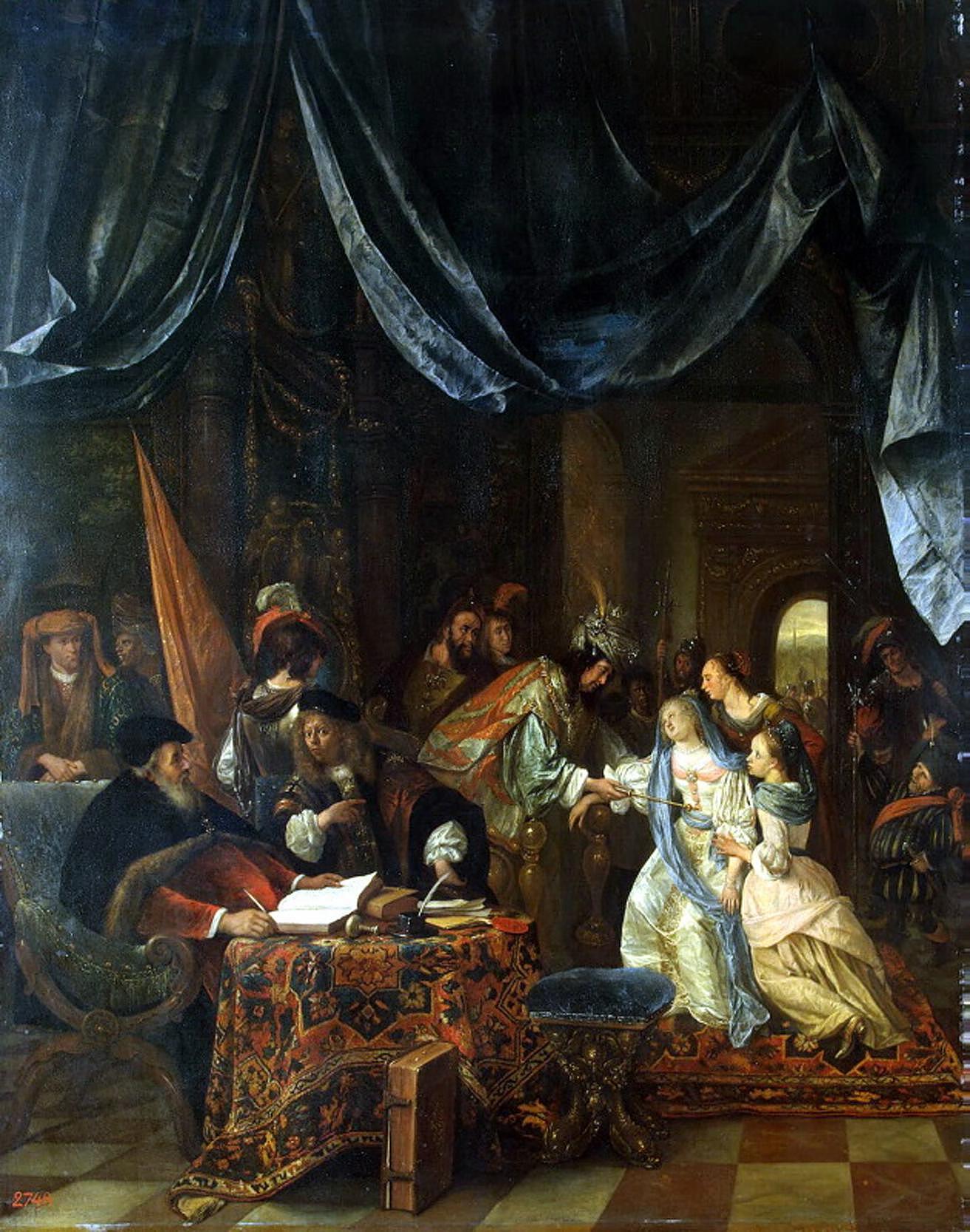
When Haman's decree named every Jew in the empire for death, Mordecai asked Queen Esther to plead with the king. Anyone who entered his inner court unsummoned could be put to death (Esther 4:11). The king held out the gold scepter to her, and she touched its tip (Esther 5:2).
“Go and assemble all the Jews who can be found in Susa, and fast for me. Do not eat or drink for three days, night or day, and I and my maidens will fast as you do. After that, I will go to the king, even though it is against the law. And if I perish, I perish!”
Esther 4:16BSB Esther prepares with fasting and accepts the cost before she acts.
Read the story of Esther: For Such a Time as This 8 sections, 7 verses set out
Peter and John before the councilActs 4
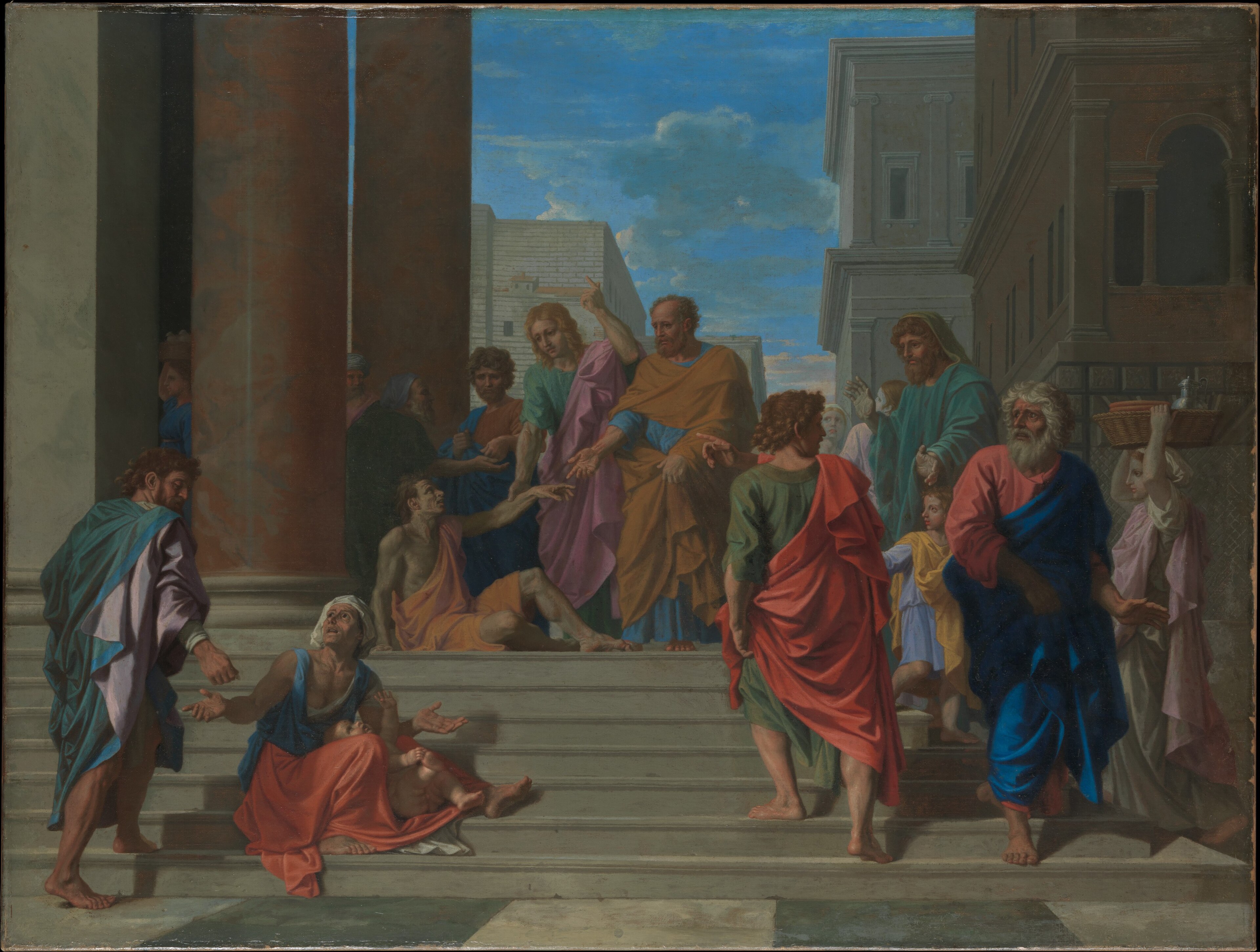
Arrested for preaching the resurrection in Jesus, Peter and John stood before the high priest's council the next day. Peter, filled with the Holy Spirit, told them that the lame man had been healed by the name of Jesus Christ of Nazareth (Acts 4:8 to 10). The council saw their boldness, took note that they had been with Jesus, and ordered them not to speak in His name again (Acts 4:13 and Acts 4:18).
For we cannot stop speaking about what we have seen and heard.”
Acts 4:20BSB The reply shows courage as a refusal to be silent, which the church then prayed to keep.
Read the story of The Boldness of Peter and John 8 sections, 6 verses set out
StephenActs 7
Men from the Synagogue of the Freedmen argued with Stephen but could not stand up to his wisdom or the Spirit by whom he spoke (Acts 6:9 to 10). Stephen told the council that they always resisted the Holy Spirit, as their fathers had. Full of the Spirit, he saw the glory of God and Jesus standing at God's right hand (Acts 7:55). The council dragged him out of the city and stoned him.
While they were stoning him, Stephen appealed, “Lord Jesus, receive my spirit.” Falling on his knees, he cried out in a loud voice, “Lord, do not hold this sin against them.” And when he had said this, he fell asleep.
Acts 7:59 to 60BSB Stephen's last words show courage joined to forgiveness.
The three in the furnace (Daniel 3), Esther before the king (Esther 4), Peter and John before the council (Acts 4), Stephen (Acts 7)
Esther 4:16, Acts 4:20, Acts 7:59 to 60
Courage in the Church's History
Four accounts tell of a bishop in a stadium, a young woman in Carthage, a reformer before an emperor and two preachers at the stake.
Polycarp of Smyrna155 or 156
The church of Smyrna's letter on the death of its bishop says the proconsul told him, “Swear, and I will set you at liberty, reproach Christ.” Polycarp answered, “Eighty and six years have I served Him, and He never did me any injury: how then can I blaspheme my King and my Saviour?” Pressed again, he said, “hear me declare with boldness, I am a Christian.” He was burned in the stadium.
Read the story of Polycarp: Eighty-Six Years 8 sections, 3 verses set out
Perpetua203
Perpetua, a young woman of Carthage of about twenty-two, wrote her own account of her imprisonment. She told her father that as a pitcher could be called by no other name, she could call herself nothing else than a Christian. Her father begged her, “Lay aside your courage, and do not bring us all to destruction.” Before the governor Hilarianus she said, “I am a Christian.” By the common dating she died in 203.
Luther at Worms1521
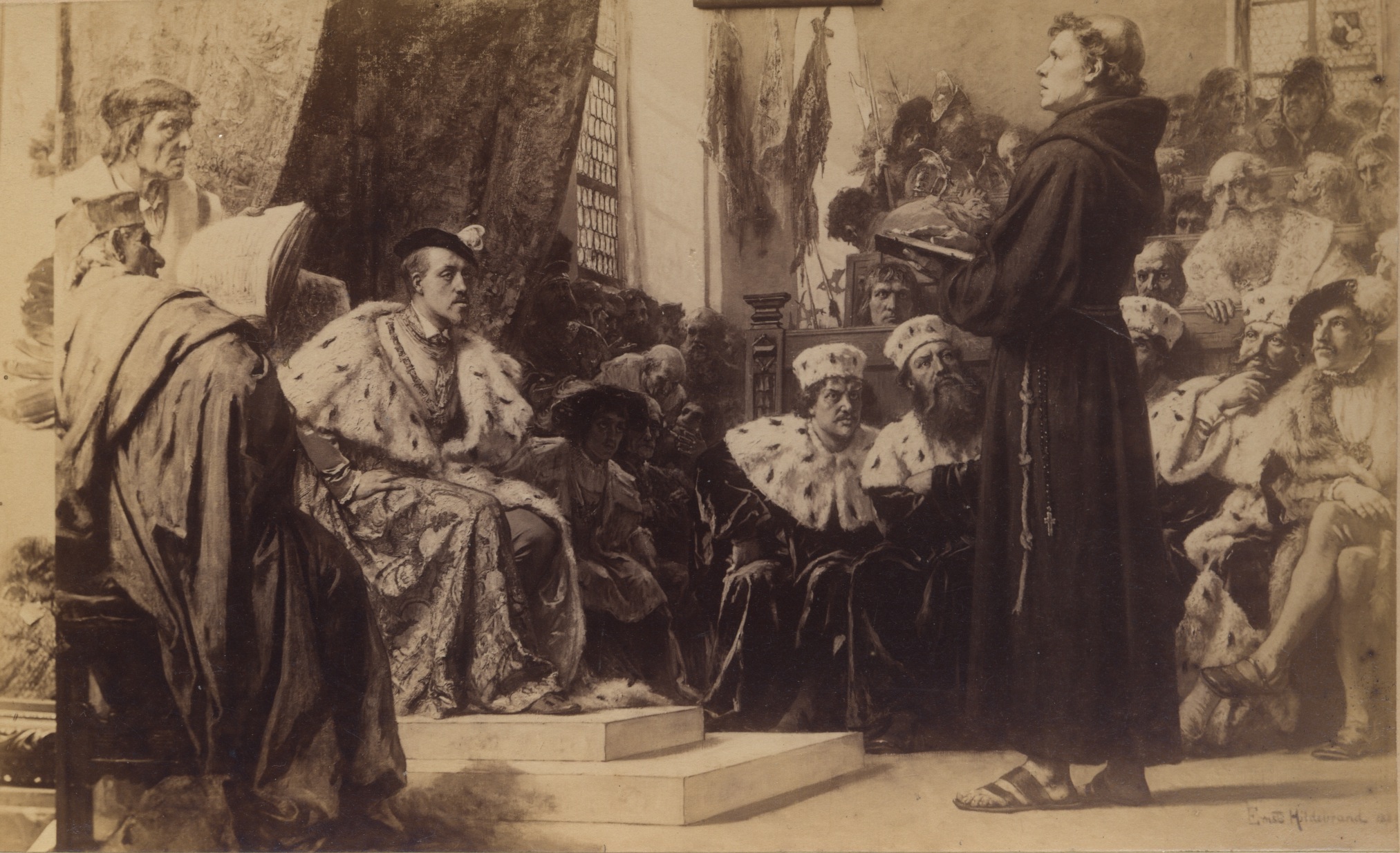
On the road Martin Luther wrote that he would enter Worms “in the face of the gates of hell and the princes of the air”. Before the emperor and the Diet he owned his books and asked a day to answer. The next day he refused to recant unless convicted by Scripture or by right reason, saying that his conscience was captive to the word of God. The emperor's edict then put him under the ban of the empire.
Read the story of Luther at Worms 7 sections, 0 verses set out
Latimer and Ridley1555
Hugh Latimer and Nicholas Ridley were burned together at Oxford on 16 October 1555. John Foxe's Acts and Monuments records that as the fire was laid at Ridley's feet, Latimer said to him, “Be of good comfort, master Ridley, and play the man.” He went on to speak of lighting “such a candle, by God's grace, in England, as I trust shall never be put out”.
Perpetua (203), Luther at Worms (1521), Latimer and Ridley (1555)
Voices on Courage, by Century
Four quotations from the third century to the nineteenth, each under the line it teaches.
died 258 · Cyprian
Epistle LV
A third-century reading: true courage believes God can deliver and still does not fear death.
The quotation1 quotation
“They believed that they might escape according to their faith, but they added, ‘and if not,’ that the king might know that they could also die for the God they worshipped. For this is the strength of courage and of faith, to believe and to know that God can deliver from present death, and yet not to fear death nor to give way, that faith may be the more mightily proved. The uncorrupted and unconquered might of the Holy Spirit broke forth by their mouth, so that the words which the Lord in His Gospel spoke are seen to be true: ‘But when they shall seize you, take no thought what ye shall speak; for it shall be given you in that hour what ye shall speak. For it is not ye that speak, but the Spirit of your Father which speaketh in you.’”
Cyprian · Epistle LV · on Daniel 3:18Patristic
died 397 · Ambrose of Milan
On Jacob and the Blessed Life
A fourth-century reading: the virtuous man bears hard times with courage of mind and leads others to better things.
The quotation1 quotation
“For the blessed Jeremiah in captivity was no less blessed, nor was Daniel, nor Ezra, nor the blessed Hananiah, Azariah, and Mishael, than if they had not fallen into captivity; for they were led into captivity in order to bring comfort to the people in their present circumstances, and to bring hope of escaping captivity. For it is the perfection of a virtuous man to sustain the fellowship of human nature with the courage of the mind, and to lead others to better things.”
Ambrose of Milan · On Jacob and the Blessed Life · on Daniel 3:23Patristic
1662 to 1714 · Matthew Henry
Commentary on the Whole Bible
An eighteenth-century reading: natural courage fails, and all our sufficiency is of God.
The quotation1 quotation
“Our natural courage is as perfect cowardice, and our natural strength as perfect weakness; but all our sufficiency is of God. In his strength we must go forth and go on. By the actings of faith, we must fetch in grace and help from heaven to enable us to do that which of ourselves we cannot do, in our Christian work and warfare.”
Matthew Henry · Commentary on the Whole Bible · on Ephesians 6:10Puritan
1834 to 1892 · Charles Spurgeon
The Treasury of David, Vol. 2
A nineteenth-century reading: courage is the soldier's motto for those who wait on the Lord.
The quotation1 quotation
“Wait on the Lord. Wait at his door with prayer; wait at his foot with humility; wait at his table with service; wait at his window with expectancy. Suitors often win nothing but the cold shoulder from earthly patrons after long and obsequious waiting; he speeds best whose patron is in the skies. Be of good courage. A soldier's motto. Be it mine. Courage we shall need, and for the exercise of it we have as much reason as necessity, if we are soldiers of King Jesus. And he shall strengthen thine heart.”
Charles Spurgeon · The Treasury of David, Vol. 2 · on Psalm 27:14
Matthew Henry, Charles Spurgeon
How Courage Has Been Taught
Augustine in the fifth century, Aquinas in the thirteenth and Calvin in the sixteenth taught where true courage comes from.
Augustine taught that love wins the victory over fear.1 paragraph
Augustine wrote to the bishop Honoratus (Letter 228, translated by J. G. Cunningham in 1887) that “this victory over fear is won wherever the flame of the love of God, without the smoke of worldliness, burns in the heart”. In the City of God (book 19, chapter 25) he judged that virtues with no reference to God “are rather vices than virtues”.
Aquinas taught that the chief act of courage is to endure.1 paragraph
Thomas Aquinas treats courage under the name of fortitude in the Summa Theologiae, in the second part of its second part. He held that “the principal act of fortitude is endurance, that is to stand immovable in the midst of dangers rather than to attack them” (question 123, article 6).
Calvin taught that heroic courage is a gift of God.1 paragraph
John Calvin wrote of the heroes of the ancient world in the Institutes (2.3.4). He spoke of “God, in kindness to the human race, often giving a spirit of heroism to those whom he destines for empire”. He added that “the principal part of rectitude is wanting, when there is no zeal for the glory of God”.
Where the Science Speaks
One study of real-life courage measured what happens in the body when people act despite fear.
Nili and others (2010) scanned the brains of volunteers who feared snakes while they chose, step by step, to bring a live snake closer. The fear the volunteers reported and their bodily arousal came apart.
The Studies of Courage
Each study takes one part of courage into more depth.
The texts
2 studies
- Passages and psalms · 8 verses set outBe Strong and Courageous
The first chapter of Joshua gives the LORD's charge to Israel's new leader and the answer of the people.
- Doctrines · 2 verses set outFear Not: How Often Scripture Says It
In the Berean Standard Bible 121 verses command a hearer not to fear or to take courage, 89 in the Old Testament and 32 in the New.
- Passages and psalms · 8 verses set outBe Strong and Courageous
The stories
3 studies
- Stories · 7 verses set outEsther: For Such a Time as This
Queen Esther went to King Xerxes without being summoned, at the risk of her life, to plead for her people.
- Stories · 0 verses set outLuther at Worms
Martin Luther stood before the Emperor Charles V and the princes of the empire at Worms in April 1521 and would not take back his books.
- Stories · 6 verses set outThe Boldness of Peter and John
Before the high priest's council in Jerusalem, Peter and John refused an order to stop teaching in the name of Jesus.
- Stories · 7 verses set outEsther: For Such a Time as This
The words
1 study
- Symbols and words · 9 verses set outThe Words Chazaq, Amats and Parrhesia
Six words of the original languages stand behind the strength, boldness and confidence of the English text.
- Symbols and words · 9 verses set outThe Words Chazaq, Amats and Parrhesia
The practice
1 study
- Subjects · 13 versesFear
What fear does to people, and the fear of God that drives every other fear out.
- Subjects · 13 versesFear
Fear Not: How Often Scripture Says It, Esther: For Such a Time as This, Luther at Worms, The Boldness of Peter and John, The Words Chazaq, Amats and Parrhesia, Fear
Where Readers Disagree
Eight readings answer three questions, each with its holders, the work that argues it and the objection raised against it.
Whether courage is a natural virtue or a grace
| Reading | Held by | Work | Objection |
|---|---|---|---|
| It is a natural virtue that grace raises | Thomas Aquinas (Catholic, scholastic) | Aquinas, Summa Theologiae, II-II question 123 article 1 and question 139 article 1, English Dominican translation (1920) | Every command in Joshua 1 rests on God's presence and none on Joshua's training, and Acts 4 gives boldness as an answer to prayer. |
| Courage without reference to God is no true virtue | Augustine; John Calvin (Early church; Reformed) | Augustine, The City of God 19.25; Calvin, Institutes 2.3.4 | Scripture names the courage of unbelievers without calling it vice, as the Philistines' cry “Take courage and be men” shows (1 Samuel 4:9). |
Whether fear itself is sin
Read Fear Not: How Often Scripture Says It 8 sections, 2 verses set out
| Reading | Held by | Work | Objection |
|---|---|---|---|
| Fear is sin only when it is disordered | Thomas Aquinas (Catholic, scholastic) | Aquinas, Summa Theologiae, II-II question 125 articles 1 and 3 | Jesus asked His disciples in the storm, “Do you still have no faith?” (Mark 4:40), and drew no line between a passion and consent. |
| Fear and faith can stand together in a believer | Charles Spurgeon (English Baptist) | Spurgeon, The Treasury of David (1872), on Psalm 56:3 | Revelation 21:8 sets the cowardly first among those who have no part in the new creation. |
| The fear that leads to denial is sin | Tertullian (Early church, North Africa) | Tertullian, Scorpiace, on 1 John 4:18 | Jesus Himself “began to be deeply troubled and distressed” in Gethsemane (Mark 14:33), and Scripture counts no sin in Him. |
Fear and faith can stand together in a believer, The fear that leads to denial is sin
Whether a Christian may flee persecution
Read Polycarp: Eighty-Six Years 8 sections, 3 verses set out
| Reading | Held by | Work | Objection |
|---|---|---|---|
| No, flight refuses what God sends | Tertullian (Early church, North Africa) | Tertullian, On Flight in Persecution, chapters 4 and 7 | Christ commanded it: “When they persecute you in one town, flee to the next” (Matthew 10:23). |
| Yes, the saints who fled were no cowards | Athanasius; Ambrose of Milan (Early church) | Athanasius, Defence of His Flight, chapters 11 to 18; Ambrose, On the Duties of the Clergy 1.37.187 | Jesus says the one who abandons the sheep when the wolf comes is the hired hand and not the shepherd (John 10:12). |
| A pastor may not flee while his people need him | Augustine (Early church) | Augustine, Letter 228 to Honoratus | The rule leans on the pastor's office, and Scripture's examples of flight include apostles who left a city while the church remained in it. |
Yes, the saints who fled were no cowards, A pastor may not flee while his people need him
Sources
Scripture is the Berean Standard Bible.
- STEP Bible lexicons of Extended Strongs for Hebrew and Greek (Tyndale House, Cambridge), CC BY 4.0.
- A count of the command over the Berean Standard Bible.
- Ambrose of Milan, On the Duties of the Clergy, tr. H. de Romestin, NPNF 2.10 (1896)
- Cyprian, Epistle 55.
- Ambrose of Milan, On Jacob and the Blessed Life.
- Matthew Henry, Commentary on the Whole Bible (1710)
- Charles Spurgeon, The Treasury of David, vol. 2 (1870)
- The Martyrdom of Polycarp, tr. Alexander Roberts and James Donaldson, Ante-Nicene Fathers, vol. 1 (1885)
- The Passion of the Holy Martyrs Perpetua and Felicitas, tr. R. E. Wallis, Ante-Nicene Fathers, vol. 3 (1885)
- Preserved Smith, The Life and Letters of Martin Luther (1911)
- John Foxe, The Acts and Monuments, ed. Stephen Reed Cattley, vol. 7 (1837)
- Augustine, Letter 228 and The City of God, tr. J. G. Cunningham and Marcus Dods, NPNF 1.1 and 1.2 (1887)
- Thomas Aquinas, Summa Theologiae, tr. Fathers of the English Dominican Province (1920)
- John Calvin, Institutes of the Christian Religion, tr. Henry Beveridge.
- Tertullian, On Flight in Persecution, tr. S. Thelwall, Ante-Nicene Fathers, vol. 4 (1885)
- Athanasius, Defence of His Flight, NPNF 2.4 (1892)
- Charles Spurgeon, The Treasury of David (1872)
- Nili U, Goldberg H, Weizman A, Dudai Y, Fear thou not: activity of frontal and temporal circuits in moments of real-life courage, Neuron 66 (2010)
Keep Studying
Read it5
Studies12
In this value6
People and groups22