
Psalm 56 and Psalm 27 · Passage · Fear
When I Am Afraid
Psalm 56:3 to 4 and Psalm 27:1 to 3 are two psalms of David that meet fear with trust in God.
David had once walked out alone against Goliath of Gath, and in Psalm 56 he writes, “When I am afraid”.
When I am afraid, I put my trust in You.
- The passage
- Psalm 56:3 to 4, Psalm 27:1 to 3, Psalm 56:10 to 11, 1 Samuel 21:10 to 15
- Books
- Psalms, 1 Samuel
- Hold in memory
- Psalm 56:3, Psalm 27:1
Summary
In Psalm 56 the psalmist is afraid and trusts God in the same hour. Psalm 27 opens by naming the LORD light, salvation and stronghold, and only then asks whom the psalmist should fear. In both psalms the confession of God comes first, and the resolve not to be afraid follows from it.
- The refrain of Psalm 56 rests the psalmist's trust on the word of God, which he praises (Psalm 56:4 and Psalm 56:10 to 11).
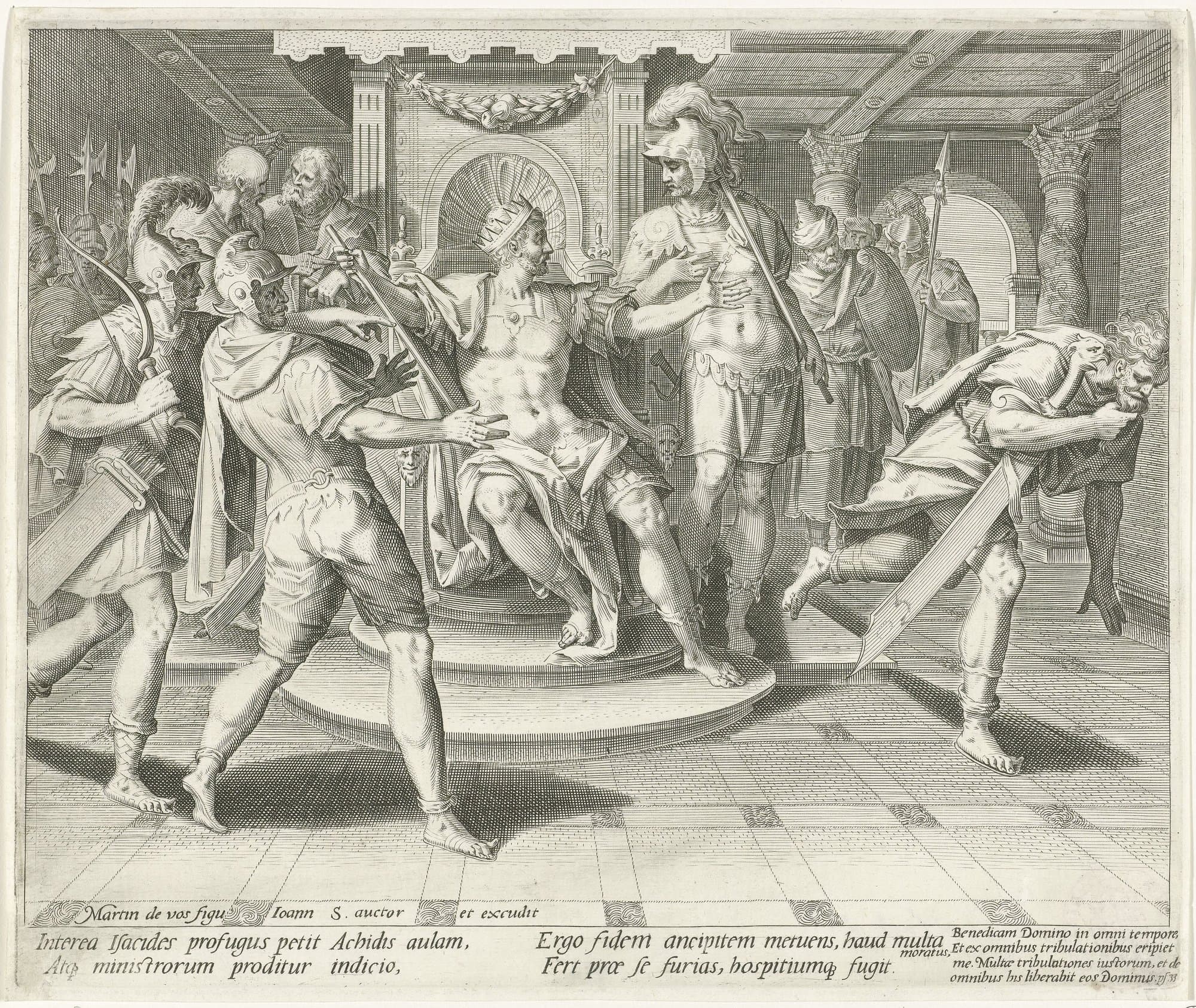
- The Hebrew title of Psalm 56 ties the psalm to David's time in Philistine hands at Gath (1 Samuel 21:10 to 15).
- Readers differ on whether “I will not be afraid” means fear removed or fear met with trust.
A Psalm from Gath
Psalm 56 belongs to David's years as a fugitive from Saul.
When I Am Afraid studies Psalm 56:3 to 4 and Psalm 27:1 to 3, two passages of the trial of fear. It asks what a believer does with fear when it comes, and on what ground he can say that he will not be afraid.
The study reads Psalm 56 against the episode its title names and sets the two psalms side by side, step by step. It gives the Hebrew of the lines on fear and trust and follows Psalm 27 from its confession to its call to wait. It also sets out two questions on which interpreters differ, with the holders of each reading and the objection to it.
Psalm 56 has a title in Hebrew that stands before its first line. Young's Literal Translation renders it “A secret treasure of David, in the Philistines' taking hold of him in Gath.”
First Samuel tells that David went to Achish king of Gath (1 Samuel 21:10). When the servants of Achish knew him, he “feigned madness in their hands”, and Achish asked why they had brought a madman to him (1 Samuel 21:13 to 15).
Now David took these words to heart and was very much afraid of Achish the king of Gath.The verse names David's fear in the story the psalm's title points to, so the psalm's confession has a setting.
In Hebrew the confession of fear in Psalm 56:3 opens with the word for day.
You have taken account of my wanderings. Put my tears in Your bottle— are they not in Your book?The verse grounds the trust of Psalm 56 in a God who already knows the psalmist's distress.
“God is mindful of his exile and remembers his tears. The custom of bottling the tears of mourners as a memorial, which has existed in some Eastern nations, may explain the figure.”
Jamieson, Fausset & Brown · Commentary Critical and Explanatory on the Whole Bible · on Psalm 56:8Reformed
Two Psalms Side by Side
The Hebrew of the two psalms calls the enemy flesh and the fear dread.
Psalm 56 and Psalm 27 move through the same steps, from the danger to the end the psalmist looks for.
| Step | Psalm 56 | Psalm 27 |
|---|---|---|
| The danger | “men are hounding me; all day they press their attack” (Psalm 56:1) | “Though an army encamps around me” (Psalm 27:3) |
| The confession | “in God I trust” (Psalm 56:4) | “The LORD is the stronghold of my life” (Psalm 27:1) |
| The question | “What can man do to me?” (Psalm 56:4) | “whom shall I fear?” (Psalm 27:1) |
| The resolve | “I will not be afraid” (Psalm 56:11) | “my heart will not fear” (Psalm 27:3) |
| The end | “that I may walk before God in the light of life” (Psalm 56:13) | “Still I am certain to see the goodness of the LORD in the land of the living” (Psalm 27:13) |
The refrain of Psalm 56 stands at Psalm 56:4 and again, longer, at Psalm 56:10 to 11, where the line “in the LORD, whose word I praise” is added.
In the question, Psalm 56:4 has basar, flesh, and Psalm 56:11 has adam, man, and the Berean text gives “man” in both. John Wesley, in his Explanatory Notes upon the Old Testament (1765), took flesh to mean “Infirm and mortal men, called flesh by way of contempt”.
In Psalm 27:1 the first question uses the common verb for fear, and the second, “whom shall I dread?”, uses pachad, the verb of sudden dread.
Light, Salvation and Stronghold
Psalm 27 moves from confession to desire to waiting.
Psalm 27:1 is built in two pairs, a confession and a question each time. The psalmist then recalls a time when the wicked came “to devour my flesh” and “stumbled and fell” (Psalm 27:2).
“David says that he does not fear, because the enemy were eating up his flesh but not his soul.”
Ambrose of Milan · Concerning Repentance 1.14.77 · on Psalm 27:2Patristic
One thing I have asked of the LORD; this is what I desire: to dwell in the house of the LORD all the days of my life, to gaze on the beauty of the LORD and seek Him in His temple.The psalmist's one request is to dwell with the LORD, so the cure for fear in this psalm is nearness to God.
Wait patiently for the LORD; be strong and courageous. Wait patiently for the LORD!The psalm ends with a command to wait and to be strong and courageous, so trust is given a shape over time.
Psalm 34 carries a title that also points to David's escape by feigned madness, though it names the king Abimelech, and Psalm 34:4 says, “He delivered me from all my fears”.
Fear and Trust Together
The psalms answer fear with a Person and leave the danger as it is.
Charles Spurgeon, in The Treasury of David (1872), wrote of Psalm 56:3, “It is possible, then, for fear and faith to occupy the mind at the same moment.”
Where fear weighs on the body and the mind, a physician's care belongs beside prayer, and the psalmist's trust in God has room for that care.
So we say with confidence: “The Lord is my helper; I will not be afraid. What can man do to me?”Hebrews 13:6 quotes Psalm 118:6, which asks the question of Psalm 56:4, so the letter gives that confidence to the church.
The Titles and the Resolve
The worth of the titles and the sense of the resolve are each read two ways.
The title of Psalm 56 records the occasion of the psalmAlbert Barnes
Albert Barnes, in his Notes, Explanatory and Practical (1832 to 1869), read the wanderings of Psalm 56:8 as David's flights, “to Gath” (1 Samuel 21:10) and “to the cave of Adullam” (1 Samuel 22:1).
The objection: the psalm speaks of enemies who twist words and lurk all day (Psalm 56:5 to 6), and First Samuel tells of no such plotting at the court of Achish.
The titles are later notes and the occasions improbableS. R. Driver
In An Introduction to the Literature of the Old Testament (eighth edition, 1898), S. R. Driver judged the historical titles to be late. He held that they “contain no authentic tradition respecting the authorship of the Psalms, or the occasions on which they were composed”. He judged the occasions the titles give to Psalm 56 and Psalm 57 “not less improbable”.
The objection: Driver gives Psalm 56 a single sentence with no reason drawn from the psalm, though for Psalm 52 he argues from the psalm's own words.
“I will not be afraid” means fear met with trustJohn Calvin
John Calvin, in his Commentaries on the Psalms, said of David, “He acknowledges his weakness, in so far as he was sensible of fear, but denies having yielded to it.”
The objection: Psalm 27:3 says “my heart will not fear” even with an army encamped, which reads as fear gone rather than fear held in check.
“I will not be afraid” means fear overcome by confidenceAdam Clarke
Adam Clarke, in his Commentary on the Bible (1832), read Psalm 27:3 as a settled confidence. He wrote, “I am so confident of the Almighty's protection, that were I alone, and encompassed by a host, I would not fear.”
The objection: the same resolve stands in Psalm 56:11, where it is spoken by a man who has confessed his fear earlier in the psalm.
The Light of Life
Each psalm closes with God in view.
Both psalms are prayers spoken by a man in danger, and a frightened believer can pray them in the same words.
Sources
Scripture is the Berean Standard Bible.
- Robert Young, Young's Literal Translation of the Holy Bible (1862, revised 1898)
- STEP Bible, the tagged Hebrew Bible (Tyndale House, Cambridge), CC BY 4.0.
- John Wesley, Explanatory Notes upon the Old Testament (1765), on Psalm 56:4.
- Charles Spurgeon, The Treasury of David, volume 3 (1872), on Psalm 56:3.
- Albert Barnes, Notes, Explanatory and Practical, on the Old and New Testaments (1832 to 1869), on Psalm 56:8.
- John Calvin, Commentary on the Book of Psalms, volume 2, translated by James Anderson for the Calvin Translation Society (Edinburgh, from 1845), on Psalm 56:3.
- Adam Clarke, Commentary on the Bible (1832), on Psalm 27:3.
- Robert Jamieson, A. R. Fausset and David Brown, Commentary Critical and Explanatory on the Whole Bible (1871), on Psalm 56:8.
- Ambrose of Milan, Concerning Repentance 1.14.77, on Psalm 27:2, translated by H. de Romestin, E. de Romestin and H. T. F. Duckworth, Nicene and Post-Nicene Fathers, Second Series, volume 10 (Christian Literature Publishing Co., Buffalo, 1896)
- S. R. Driver, An Introduction to the Literature of the Old Testament, eighth edition (Charles Scribner's Sons, New York, 1898), the chapter on the Psalms.
Keep Studying
Read it4
Studies4
People and groups7
Show the next 1 title
Places1