
1 Kings 19:3
in 1 Kings 19And Elijah was afraid and ran for his life. When he came to Beersheba in Judah, he left his servant there,
BSB
The same verse in ASV and KJV ▾
ASV
And when he saw that, he arose, and went for his life, and came to Beer-sheba, which belongeth to Judah, and left his servant there.
KJV
And when he saw that, he arose, and went for his life, and came to Beer–sheba, which belongeth to Judah, and left his servant there.
⋯
This verse in 1 Kings 19
Commentary
8 notes on this verseA commentator
Albert Barnes1798–1870
Notes, Explanatory and Practical, on the Old and New Testaments (1832-1869)
The rapid movement of the original is very striking. “And he saw (or, “feared,” as some read), and he rose, and he went, etc.” The fear and flight of Elijah are very remarkable. Jezebel’s threat alone, had not, in all probability, produced the extraordinary change but, partly, physical reaction from the over-excitement of the preceding day; and, partly, internal disquietude and doubt as to the wisdom of the course which he had adopted. Beer-sheba is about 95 miles from Jezreel, on the very borders of the desert et-Tih.
This site's exposition
he arose, and went for his life
on 1 Kings 19:3-4
The man who faced four hundred and fifty prophets alone on Carmel now travels a day into the wilderness at one woman's threat and sits under a juniper tree asking to die. Great faith is not always equally strong, as Henry notes of this very collapse. Elijah's plea, it is enough, and his reason, I am not better than my fathers, set him beside Moses and Jonah among the prophets who asked the Lord to end their lives rather than carry on the calling.
The record, by era
The Church Fathers1 voice
"Then he was afraid; he got up and fled for his life." It was out of wisdom that he turned away from danger, because it was absolutely wrong that he disposed of his soul, since he had no reason to give it to death, but, …
The Medieval Church1 voice
Somebody may ask why Elijah, who did not fear Ahab's authority, was frightened and fled when Jezebel sent him the message. We answer: The providence of God is directed by him and proceeds toward us in two different ways: either by means of benefits or …
The Puritans and the Awakening2 voices
Nay, which kept him by his sacrifice when the fire of God fell upon it? He that stood undaunted in the midst of the terrors both of heaven and earth trembles at the impotent menaces of a proud passionate woman. Great faith is not always alike strong.
And when he saw that,....
The Nineteenth Century1 voice
A commentator
Jamieson, Fausset & Brown1802–1910
Commentary Critical and Explanatory on the Whole Bible (1871)
proposed
The threat produced the intended effect, for his faith suddenly failed him. He fled out of the kingdom into the southernmost part of the territories in Judah; nor did he deem himself safe even there, but, dismissing his servant, he resolved to seek refuge among the mountain recesses of Sinai, and there longed for death (Jas 5:17).
1 more voice on this verse
The Nineteenth Century1 voice
He arose, and went for his life - He saw it was best to give place to this storm, and go to a place of safety. He probably thought that the miracle at Carmel would have been the means of effecting the conversion of the whole court and of the country, but, finding himself mistaken, he is greatly discouraged. To Beer-sheba - This being at the most southern extremity of the promised land, and under the jurisdiction of the king of Judah, he might suppose himself in a place of safety. Left his servant there - Being alone, he would be the more unlikely to be discovered; besides, he did not wish to risk the life of his servant.
The words behind it
14 Hebrew wordsEvery Hebrew word of this verse in the order it stands, with what it means and the door to its own study. The last column counts the times a word stands in the whole Bible: the rarer the word, the more the places it appears belong together.
| Hebrew | Sound | Meaning | Word study | In the Bible |
|---|---|---|---|---|
| וַיַּ֗רְא | vaiyar' | and he saw | H7200 → | 1300 times |
| וַיָּ֙קָם֙ | vaiyakom | and he arose | H6965 → | 628 times |
| וַיֵּ֣לֶךְ | vaiyelekh | and he went | H1980 → | 1546 times |
| אֶל־ | ʾel- | to | H413 → | 5510 times |
| נַפְשׁ֔וֹ | nafsho | life his | H5315 → | 754 times |
| וַיָּבֹ֕א | vaiyavo' | and he came | H935 → | 2568 times |
| בְּאֵ֥ר | beer | Beer | H884 → | 68 times |
| שֶׁ֖בַע | sheva' | Sheba | H884 → | 68 times |
| אֲשֶׁ֣ר | ʾasher | which | H834 → | 5497 times |
| לִֽיהוּדָ֑ה | lihudah | [belongs] to Judah | H3063 → | 819 times |
| וַיַּנַּ֥ח | vaiyanach | and he left | H5117 → | 142 times |
| אֶֽת־ | ʾet- | <obj.> | H853 → | 10935 times |
| נַעֲר֖וֹ | naaro | servant his | H5288 → | 239 times |
| שָֽׁם׃ | sham | there | H8033 → | 834 times |
וַיַּ֗רְאand he saw
vaiyar'H7200 →1300 times
וַיָּ֙קָם֙and he arose
vaiyakomH6965 →628 times
וַיֵּ֣לֶךְand he went
vaiyelekhH1980 →1546 times
אֶל־to
ʾel-H413 →5510 times
נַפְשׁ֔וֹlife his
nafshoH5315 →754 times
וַיָּבֹ֕אand he came
vaiyavo'H935 →2568 times
בְּאֵ֥רBeer
beerH884 →68 times
שֶׁ֖בַעSheba
sheva'H884 →68 times
אֲשֶׁ֣רwhich
ʾasherH834 →5497 times
לִֽיהוּדָ֑ה[belongs] to Judah
lihudahH3063 →819 times
וַיַּנַּ֥חand he left
vaiyanachH5117 →142 times
אֶֽת־<obj.>
ʾet-H853 →10935 times
נַעֲר֖וֹservant his
naaroH5288 →239 times
שָֽׁם׃there
shamH8033 →834 times
A shaded row is a word that stands 400 times or fewer in the Bible.
The walk
8 stopsEach card is a verse this one points to, and under it the verses that one points to in turn. Where several paths arrive at the same place, that place is listed first: the text keeps returning to it.
Through
Matthew 26:56But this has all happened so that the writings of the prophets would be fulfilled.” Then all the disciples deserted Him and fled.
it leads to
- Zechariah 13:7
Awake, O sword, against My Shepherd, against the man who is My Companion, declares the LORD of Hosts. Strike the Shepherd, and the sheep will be scattered, and I will turn My hand against…
- John 16:32
“Look, an hour is coming and has already come when you will be scattered, each to his own home, and you will leave Me all alone. Yet I am not alone, because the Father…
- Mark 14:50–52
Then everyone deserted Him and fled.
- Matthew 26:31
Then Jesus said to them, “This very night you will all fall away on account of Me. For it is written: ‘I will strike the Shepherd, and the sheep of the flock will be…
- 2 Timothy 4:16
At my first defense, no one stood with me, but everyone deserted me. May it not be charged against them.
- Zechariah 13:7
Through
2 Corinthians 12:7or because of these surpassingly great revelations. So to keep me from becoming conceited, I was given a thorn in my flesh, a messenger of Satan, to torment me.
it leads to
- Numbers 33:55
But if you do not drive out the inhabitants of the land before you, those you allow to remain will become barbs in your eyes and thorns in your sides; they will harass you…
- Judges 2:3
So now I tell you that I will not drive out these people before you; they will be thorns in your sides, and their gods will be a snare to you.”
- 2 Chronicles 32:25–26
But because his heart was proud, Hezekiah did not repay the favor shown to him. Therefore wrath came upon him and upon Judah and Jerusalem.
- Numbers 33:55
Where this verse is studied
On this page
Studies4
About 1 Kings
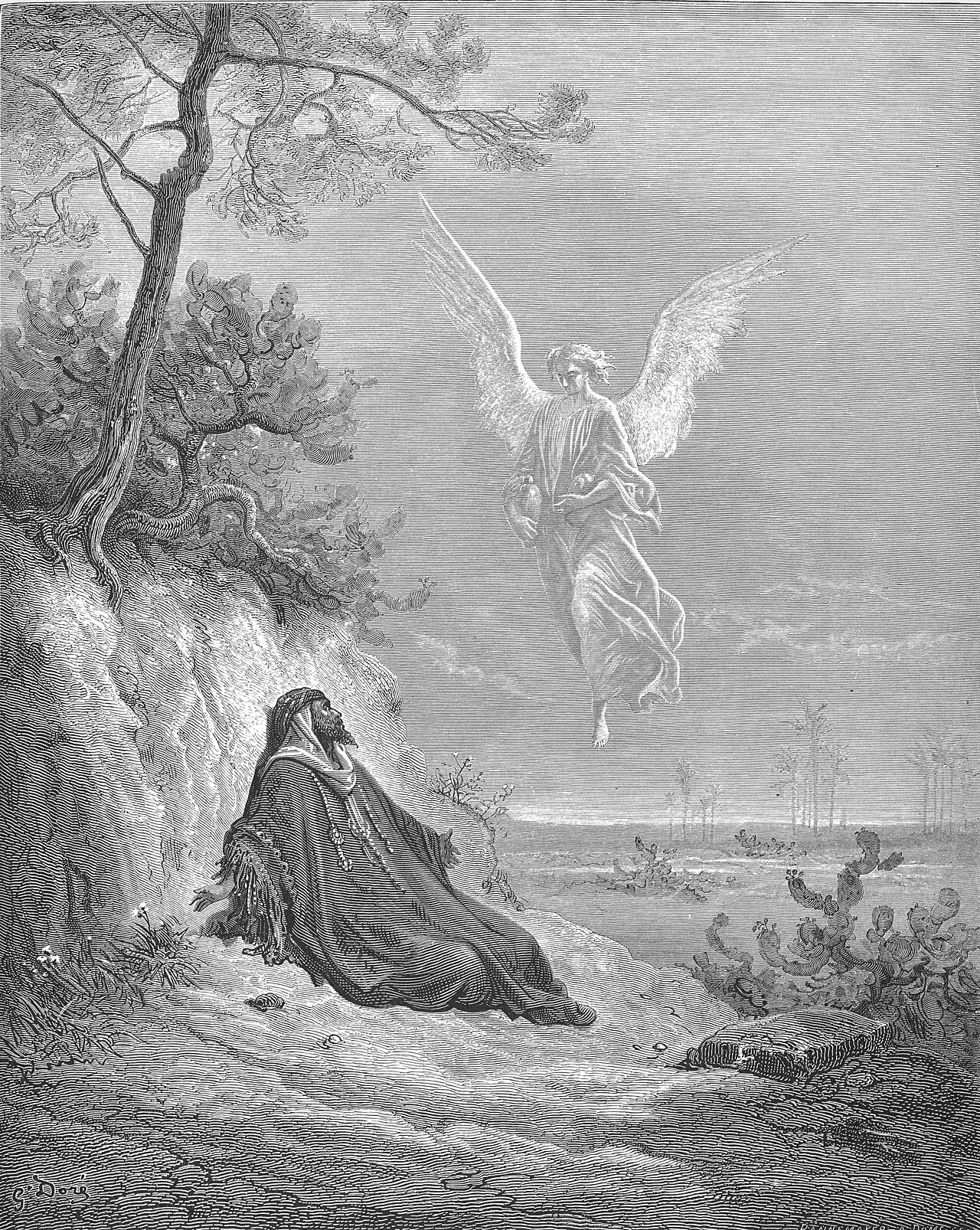
Who and where
3 names in this verse with a page on the site.
- PersonPatriarchsJudahJacob's fourth son who pledges himself for Benjamin; the tribe that carries the scepter to Shiloh (49:10) and the line to Christ (…
- PersonDivided kingdomElijahThe Tishbite who shut heaven for three years and a half, called down fire on Carmel, heard the still small voice at Horeb, and wen…
- PlaceThe NegevBeershebaThe well of the oath at the south of the land, where Abraham made his covenant with Abimelech and planted a tamarisk, where Isaac…
This page draws on Adam Clarke, Commentary on the Bible; Albert Barnes, Notes, Explanatory and Practical, on the Old and New Testaments (1832-1869); Ephrem the Syrian, ON THE FIRST BOOK OF KINGS 19:3; Ishodad of Merv, BOOKS OF SESSIONS 1 KINGS 19:2; Jamieson Fausset and Brown, Commentary Critical and Explanatory on the Whole Bible; Jamieson, Fausset & Brown, Commentary Critical and Explanatory on the Whole Bible; John Gill, Exposition of the Old Testament (1748-1763) and Matthew Henry, Commentary on the Whole Bible.