

Daniel 3 and 6 · Featured Study
Faith Under Fire
Two death sentences, fifty years and two empires apart. Three young men will not bow to a statue, and an old man will not stop praying at his window. Both are told, in advance, exactly what it will cost. Both go through with it. And in both, God does not spare them the furnace or the den. He shows up inside it.
Briton Rivière, Daniel's Answer to the King (1890) — Public domain, via Wikimedia Commons
Summary
Daniel 3 and Daniel 6 are read as facing trials, the same six-stage shape playing out twice, fifty years and two kings apart. Both end with God present inside the sentence rather than instead of it.
- A stage-by-stage table lines the furnace and the lions' den up side by side, from the decree to the pagan king's own doxology.
- Daniel 3:17–18, "but if not," is broken into three moves: God is able, He will deliver, and even if He does not, the three still will not bow.
- Two readings of the fourth man in the fire stand side by side, a pre-incarnate Christ and an angel sent by God, with this site's tradition named.
- A four-point test names what the two chapters do and do not license: narrow refusal, worship only, the penalty accepted, nothing else changed.
The Story
the shallow end, start here
The furnace
A king built a giant golden statue and told everyone to bow down to it. Anyone who didn’t would be thrown into a furnace. When the music played, everybody bowed, except three friends, who stayed standing. The king gave them one more chance. They said no.
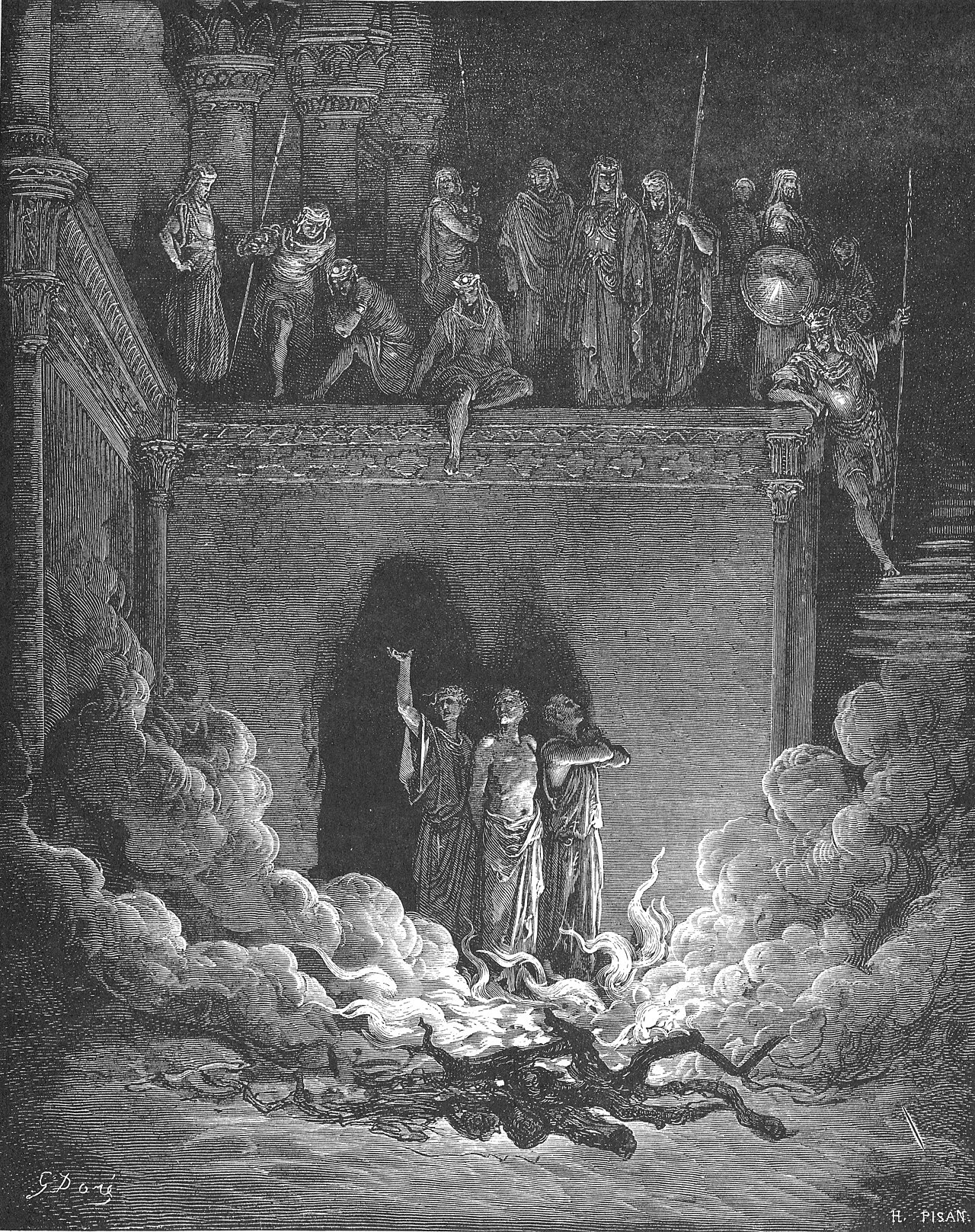
So he made the fire seven times hotter and had them thrown in, tied up. Then he looked in and jumped up out of his seat. There were four people in there. They were walking around. They were not tied up any more. And the fourth one looked like a son of the gods.
When the three came out, their hair wasn’t burned, their clothes weren’t burned, and they didn’t even smell like smoke. The only thing the fire burned was the ropes.
The lions
Years later, in a different empire, some officials were jealous of Daniel. They couldn’t find anything wrong with his work, so they went after his prayers. They tricked the new king into signing a law: for thirty days, nobody may pray to anyone but the king. Anyone who does goes into a pit of lions.
Daniel heard about the law. Then he went home, opened his windows toward Jerusalem, got down on his knees, and prayed and gave thanks, just like he always had.
They threw him to the lions and sealed the pit with a stone. The king couldn’t sleep all night. At sunrise he ran there and called out. Daniel answered: God sent His angel and shut the lions’ mouths.
One Shape, Told Twice
six movements, stage for stage
An image of gold is set up on the plain of Dura, and at the sound of the music every person in the empire is to fall down and worship it. The penalty is named in advance: a burning fiery furnace.
Daniel 6:6–9The officials, unable to find any fault in Daniel except concerning the law of his God, persuade the king to sign an interdict: for thirty days, no petition to any god or man but the king. The penalty is named in advance: a den of lions.
Three men do not bow. They do not argue, organize, or flee. When they are hauled in and given one more chance, they decline the chance.
Daniel 6:10Daniel, knowing the writing is signed, goes home, opens his windows toward Jerusalem, and kneels three times that day and gives thanks, as he did aforetime. Nothing is added to his devotion, and nothing is subtracted.
The king, in a rage, orders the furnace heated seven times more than usual. The men who carry them to it are killed by the heat. The three go in bound, in their coats and hats and hosen.
Daniel 6:14–17The king, who has spent the whole day trying to find a way out, cannot break his own law. Daniel is cast in, a stone is laid on the mouth of the den, and it is sealed with the king's signet.
The king starts up in astonishment: he sees four men, loose, walking in the fire, and the aspect of the fourth is like a son of the gods.
Daniel 6:19–22God sent His angel, Daniel says at daybreak, and shut the lions' mouths. He spent the night in the den; the den simply stopped being what it was for.
They come out, and the satraps gather to inspect them: the fire had no power over their bodies, not a hair singed, their garments unchanged, no smell of fire on them. The only thing burned is what had bound them.
Daniel 6:23Daniel is taken up out of the den, and no manner of hurt is found upon him, because he had trusted in his God.
Nebuchadnezzar blesses the God of Shadrach, Meshach, and Abednego, who sent His angel and delivered the servants that trusted in Him and yielded their bodies rather than serve any god except their own.
Daniel 6:25–27Darius writes to all peoples, nations, and languages: that in every dominion of my kingdom men tremble and fear before the God of Daniel, for He is the living God, and steadfast for ever, and His kingdom shall not be destroyed.
Read down either column and you have a good story. Read across and you have the book’s argument: the empire changes, the king changes, the method of execution changes, and nothing else does. Stage four is the same both times, and it is the only stage that matters. God does not cancel the sentence. He is in it.
But If Not
Daniel 3:17–18, the anatomy of the thing
- 01
He is able
Our God whom we serve is able to deliver us from the burning fiery furnace.
It starts with what is true about God, not with what they feel about the fire. Ability first, because if He is not able, nothing that follows matters.
- 02
And He will deliver us
And he will deliver us out of thy hand, O king.
This is not hedged. They expect rescue and they say so to the man holding the sentence. Faith here is not vague; it makes a claim in public.
- 03
But if not
But even if He does not, let it be known to you, O king, that we will not serve your gods or worship the golden statue you have set up.”
And then the hinge the whole passage turns on: if He does not, nothing changes. Their obedience was never payment for a rescue. This is the sentence that separates faith from a transaction.
Three words hold the whole page together. Take them out and you have confidence in an outcome. Leave them in and you have faith in a Person, and the difference shows up only when the outcome does not arrive.
The Fourth Man
two readings, both voiced
A pre-incarnate appearance of the Son
The reading carried through much of church history and through the devotional tradition: the fourth figure is the Angel of the LORD, the same presence that met Hagar, wrestled Jacob, and stood in the bush, that is, the Son before His incarnation. Its weight: what the king describes is not a servant but a likeness of deity, and the effect in the fire is the effect Christ has everywhere, which is that bonds fall off and people walk.
Read this way by Spurgeon in his preaching on the chapter, and by the deeper-life tradition (Tozer) as the pattern of the manifest Presence in affliction.
An angel sent by God
The reading the chapter itself supplies: the king, telling the story afterward, says God sent His angel and delivered His servants (3:28), and the parallel in the lions' den says exactly the same thing (6:22). The phrase a son of the gods is a pagan king's vocabulary for a divine being, not a Christian confession. Its weight: it takes the narrator's own summary as the interpretation.
The reading favored by commentators who hold the text's own explanatory line closest, including much of the public-domain expository tradition.
This site's tradition teaches the Christophany reading: Jesus Himself as the fourth man in the fire. The king’s own summary does say angel, and the created-angel reading is held by careful readers, Calvin among them. What neither reading disputes is the thing the chapter is actually reporting: the fire had a fourth occupant, He was not put there by the king, and the only thing it consumed was the rope.
The Den
Daniel 6, the night nothing happened
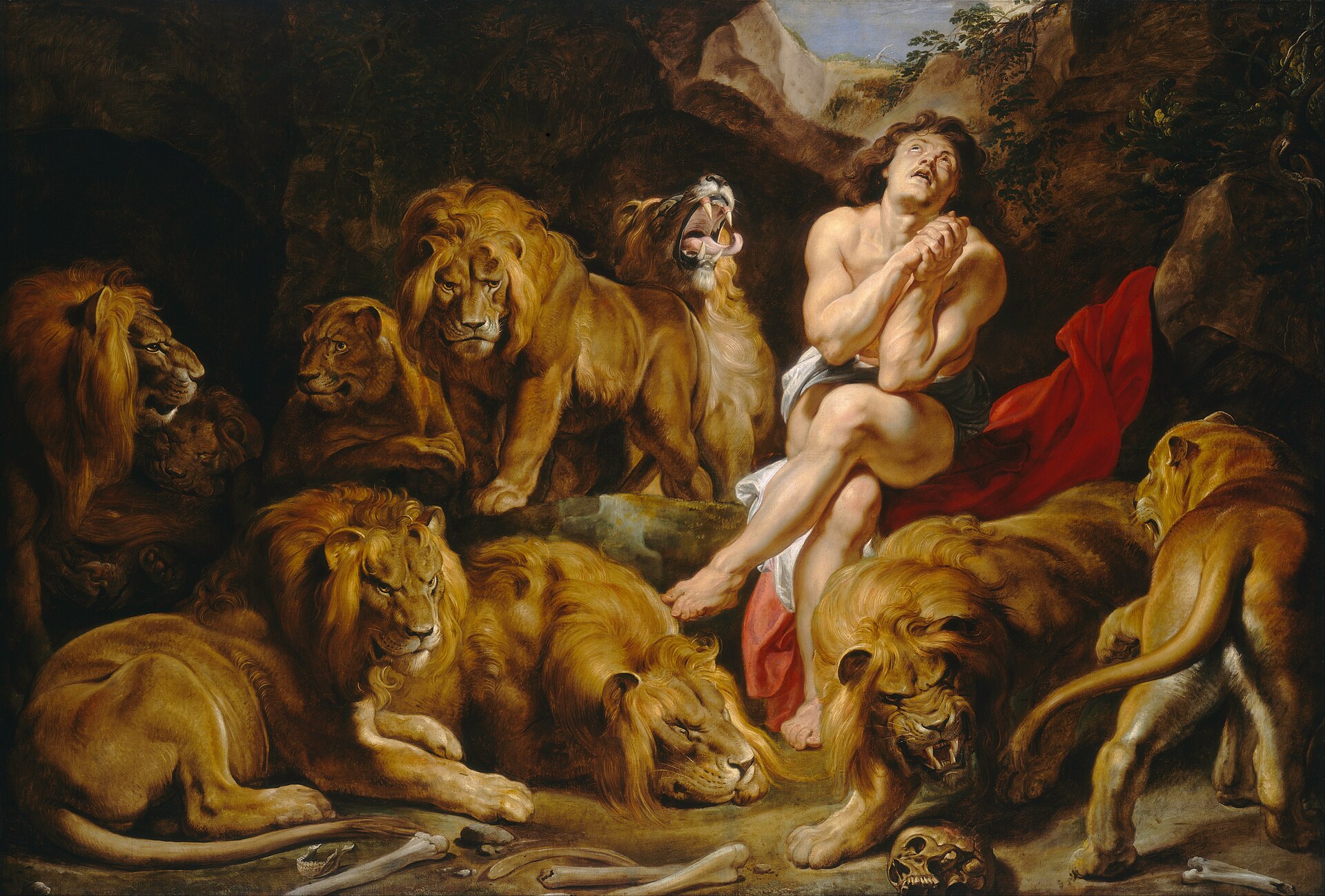
Chapter 6 is the quieter of the two, and the more unnerving. There is no rage, no seven-times furnace, no music. There is a piece of paperwork, drafted by men who could not fault Daniel’s administration and so went looking for his religion, and a king who likes Daniel, signs it anyway, and then spends the entire night fasting and sleepless because he cannot unsign it.
Daniel is well past eighty here, by any reasonable reading of the chronology. He has outlasted Nebuchadnezzar, Belshazzar, and an entire empire, and he is still kneeling at the same window three times a day. The trap only works because everyone already knows he will.
Obeying God Rather Than Men
what these chapters do and do not license
It is never rebellion in general
In both chapters the men are model civil servants. Daniel serves three regimes with such integrity that his enemies concede they will never find a charge against him except in the law of his God. The refusal is narrow and it is specific.
It refuses one thing: worship
The line is not taxation, conscription, or even exile. It is the point where the state asks for what belongs to God, an image to bow to, a prayer redirected to a man. Everything short of that line, they render.
It accepts the penalty
Nobody hides, flees, or fights. They walk to the furnace and to the den. The disobedience is open, and so is the cost, which is what distinguishes it from evasion.
It changes nothing about the practice
Daniel's windows were open before the edict, and they are open after it. He does not escalate into protest, and he does not retreat into secrecy. The edict simply does not get a vote on his prayer life.
The confessor tradition (Bonhoeffer, Corrie ten Boom, Richard Wurmbrand) reads these two chapters as their charter, and reads them with all four of those constraints in place: costly, public, non-violent, and confined to the point where the state asks for worship. Each is cited to their own account; none is quoted at length here.
Keep studying
Read it6
On this page
People2
Places1
Symbols1
Go further1
By subject
The exile9 pages