
John 14:23
in John 14Jesus replied, “If anyone loves Me, he will keep My word. My Father will love him, and We will come to him and make Our home with him.
BSB
The same verse in ASV and KJV ▾
ASV
Jesus answered and said unto him, If a man love me, he will keep my word: and my Father will love him, and we will come unto him, and make our abode with him.
KJV
Jesus answered and said unto him, If a man love me, he will keep my words: and my Father will love him, and we will come unto him, and make our abode with him.
⋯
This verse in John 14
Commentary
27 notes on this verseRightly therefore in the creation of the world the heaven is both first and last, wherein is that which is beyond heaven, even the God of heaven. And of man is rather to be understood the text, Heaven is my throne, for God does not sit above the element, but in the heart of man. Wherefore the Lord also says, We will come unto Him, and make our abode with Him. Heaven therefore is the first work in the creation of the world, and man the last.
This site's exposition
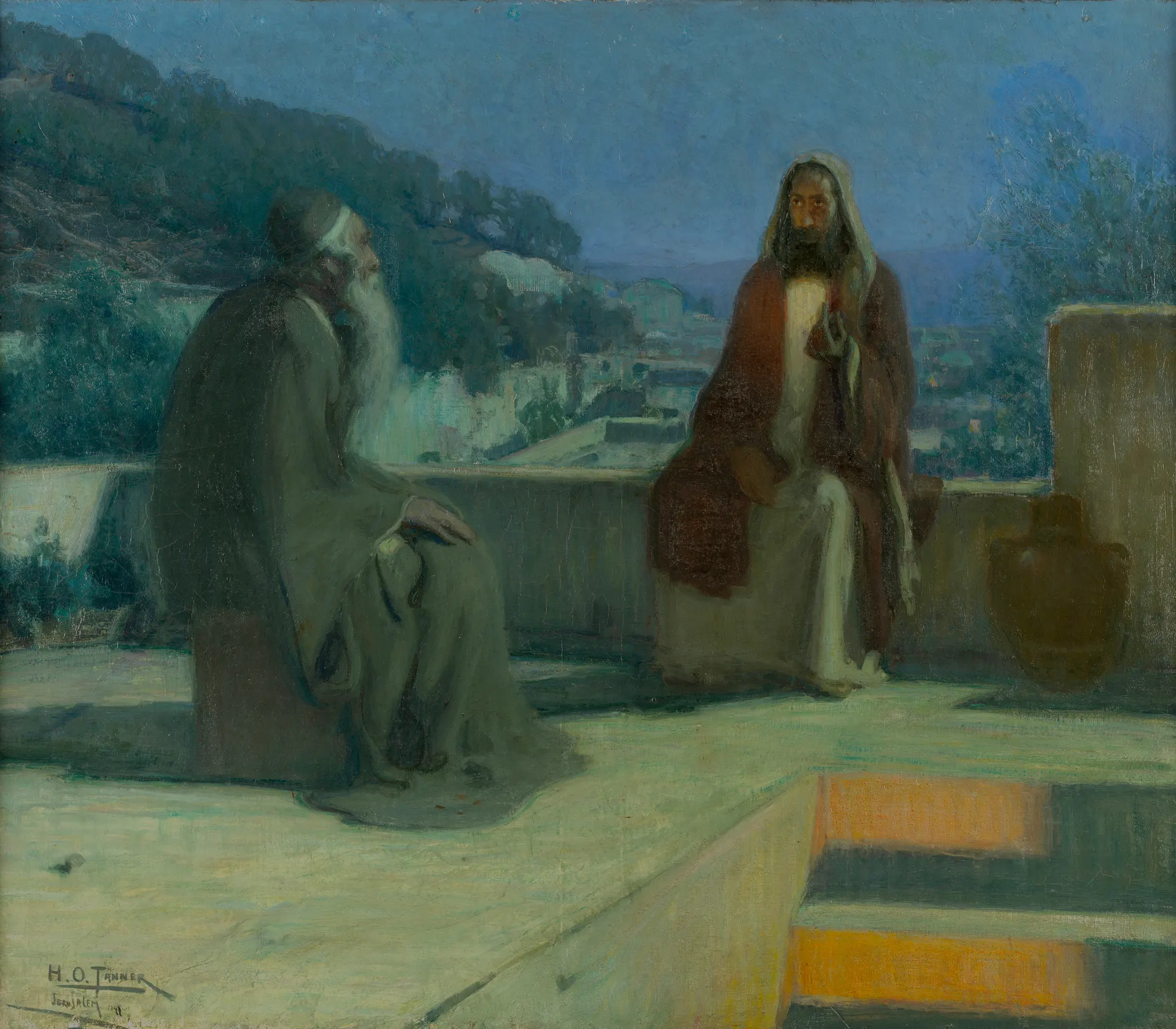
Lord, why are You going to reveal Yourself to us and not to the world?
on John 14:22-24
This Judas is the other disciple of that name, and he expects Messiah revealed to the whole nation. The answer moves the revealing indoors: the Father and the Son make Their home with anyone who keeps His word. Home here is mone, the word behind rooms in verse 2.
This site's exposition
We will come to him and make
The Father and the Son come together to the one who loves Jesus, and the Spirit of verse 17 dwells there with Them. The more a man obeys, the more God loves him. A visit and a home differ, and the promise is a home.
The record, by era
The Church Fathers5 voices
A commentator
Athanasius of Alexandria296–373
Commentary (church-history corpus) · Written before 373.
Christ is the true Son, and so when we receive the Spirit, we are made sons. For it says; 'you did not receive the spirit of slavery leading you back into fear, but you have received the Spirit of adopted sonship' [Romans 8:15]. But when we are made sons in the Spirit, it is clear that we are called children of God in Christ... And when the Spirit is given to us-the Saviour said: 'Receive the Holy Spirit' [John 20:22]- God [The Father] is in us... But when God is in us, the Son is also in us.
Let him be a temple, and God will come to him. He does not disdain, does not reject, does not scorn; rather, He deigns, unless He should be indignant. Hear Him promising, hear Him in the meantime deigning by promising, not indignantly threatening: "We will come," He says, "to him, I and the Father." To him whom He mentioned above as His lover, the obedient to His commandments, the keeper of His mandate, the lover of God, the lover of his neighbor: "We will come," He says, "to him, and make Our home with him." The heart of the faithful is not narrow, to whom the temple of Solomon was narrow. For even he, when he built this, said: If the heaven of heavens does not suffice for you. And yet the temple of God is holy, which you are. For we, he says elsewhere, are the temple of the living God. "And how do you prove this?", as if it were said to him: As it is written, he says, I will dwell in them. If some great patron said to you: "I will dwell with you," what would you do? Since your house is narrow, without a doubt you would be troubled, indeed you would be terrified, you would wish it not to happen. For you would not want to be in straits, receiving a great one, to whose coming your poor little house would not suffice. Do not fear the coming of your God, do not fear the affection of your God. He will not narrow you when He comes; rather by coming, He will broaden you. For in order that you may know that He will broaden you, He not only promised His coming: I will dwell in them, but also the very breadth, by adding: And I will walk in them. If you love this breadth, you see it. Fear has torment, therefore it has straits; and thus love has breadth. See the breadth of charity: Because the charity of God is poured forth, he says, in our hearts.
"Jesus answered and said unto him, If a man love me, he will keep my word: and my Father will love him, and we will come unto him, and make our abode with him. He that loveth me not, keepeth not my sayings." Here we have set forth the reason why He is to manifest Himself to His own, and not to that other class whom He distinguishes by the name of the world; and such is the reason also why the one loveth Him, and the other loveth Him not. It is the very reason, whereof it is declared in the sacred psalm, "Judge me, O God, and plead my cause against an unholy nation." For such as love are chosen, because they love: but those who have not love, though they speak with the tongues of men and angels, are become a sounding brass and a tinkling cymbal; and though they had the gift of prophecy, and knew all mysteries and all knowledge, and had all faith so that they could remove mountains, they are nothing; and though they distributed all their substance, and gave their body to be burnt, it profiteth them nothing. The saints are distinguished from the world by that love which maketh the one-minded to dwell together in a house. In this house Father and Son make their abode, and impart that very love to those whom They shall also honor at last with this promised self manifestation; of which the disciple questioned his Master, that not only those who then listened might learn it from His own lips, but we also from his Gospel. For he had made inquiry about the manifestation of Christ, and heard in reply about His loving and abiding. […]
(Tract. lxxvi. 1) Our Lord in reply explains why He manifests Himself to His own, and not to aliens, viz. because the one love Him, the other do not. Jesus answered and said unto him, If a man love Me, he will keep My words. (Tract. lxxvi. 2) Love distinguishes the saints from the world: it maketh men to be of one mind in an house; in which house the Father and the Son take their abode; who give that love to those, to whom in the end they will manifest themselves. For there is a certain inner manifestation of God, unknown to the ungodly, to whom there is no manifestation made of the Father and the Holy Spirit, and only could be of the Son in the flesh; which latter manifestation is not as the former, being only for a little while, not for ever, for judgment, not for joy, for punishment, not for reward. And We will come unto him: They come to us, in that we go to Them; They come by succouring, we go by obeying; They come by enlightening, we go by contemplating; They come by filling, we go by holding: so Their manifestation to us is not external, but inward; Their abode in us not transitory, but eternal. It follows, And will make Our abode with him. (Tract. lxxvi. 4) But while the Father and the Son make Their abode with the loving soul, is the Holy Spirit excluded? What meaneth that which is said of the Holy Spirit above: He dwelleth with you, and shall be in you, but that the Spirit makes His abode with us? Unless indeed a man be so absurd as to think that when the Father and the Son come, the Holy Spirit departs, as if to give place to His superiors. Yet even this carnal thought is met by Scripture, in that it says, Abide with you for ever. (v.16) He will therefore be in the same abode with Them for ever. As He did not come without Them, so neither They without Him. […]
God does indeed consume and utterly destroy: he consumes evil thoughts, wicked actions and sinful desires when they find their way into the minds of believers. God, with his Son, inhabits those souls that have been rendered capable of receiving his word and wisdom, in line with his saying, "I and the Father shall come and make our abode with him." After their vices and passions have been consumed, he makes them a holy temple, worthy of himself.
19 more voices on this verse
The Church Fathers4 voices
But you, heretic, as you wildly rave and are driven about by the Spirit of your deadly doctrine the Apostle seizes and constrains, establishing Christ for us as the foundation of our faith, being well aware also of that saying of our Lord, If a man love Me, he will also keep My word; and My Father will love him, and We will come unto him, and make Our abode with him. For by this He testified that while the Spirit of Christ abides in us the Spirit of God abides in us, and that the Spirit of Him that was raised from the dead differs not from the Spirit of Him that raised Him from the dead. For they come and dwell in us: and I ask whether they will come as aliens associated together and make Their abode, or in unity of nature? Nay, the teacher of the Gentiles contends that it is not two Spirits—the Spirits of God and of Christ—that are present in those who believe, but the Spirit of Christ which is also the Spirit of God. This is no joint indwelling, it is one indwelling: yet an indwelling under the mysterious semblance of a joint indwelling, for it is not the case that two Spirits indwell, nor is one that indwells different from the other. For there is in us the Spirit of God and there is also in us the Spirit of Christ, and when the Spirit of Christ is in us there is also in us the Spirit of God. And so since what is of God is also of Christ, and what is of Christ is also of God, Christ cannot be anything different from what God is. Christ, therefore, is God, one Spirit with God.
A commentator
Cyril of AlexandriaCommentary on the Gospel of John, Book 10 · Written before 444.
proposed
When He saw that the disciple did not quite understand, He goes back again to what He said at first, and teaches clearly that He will not manifest Himself to His own, according to the conception he had formed in his mind, but that the manner of His manifestation will be special to His disciples, and not that common to the rest of mankind. For the vulgar, and those, for instance, who have just escaped from the deceitfulness of idols and have been called to the knowledge of the Living God, rest their faith on bare and unquestioned axioms, merely having learnt to know that there is no idol in the world, and that the Living God is One only; while they who have their minds illumined by every virtue and are already in a state to fitly apprehend Divine and hidden mysteries, will receive the torch of the Spirit, and will behold with the eyes of the soul the Lord Himself, Who has taken up His abode in them. The knowledge therefore that the Saints possess is not common to the rest, but is in a manner special and distinct and widely diverse. Christ then benefits us by every kind of word and way. For, first of all, anyone that loves Him is very broadly distinguished from the rest, showing as it seems to me, and as I justly apprehend, that it has not been given to all men to receive the power of His grace, but only to those in whom the glory of intimate connection with Him may be seen indwelling through their keeping His commandments. Then in what way He will declare Himself and how He will take up His abode in them He goes on to declare. For My Father will love him, He says. For any man who has honoured by his obedience to the Son the Father from Whom He springs, will reap His love as the fruit of his conduct. Then He clearly shows what will be the issue thereof and what profit such a man will gain when He says, I and the Father will come unto him and make Our abode with him. […]
A commentator
Cyril of AlexandriaCommentary on the Gospel of John, Book 10 · Written before 444.
proposed
And "Every creature loves his like," according to the saying, and "Man will seek union with his like." And if it seems most desirable even among ourselves to live with those of similar habits to ourselves, how can we escape the reflection that this is still more the case with God? For as He is good by nature and the beginning and source of all virtue, He takes up His abode not in the lovers of wickedness but in the workers of virtue, and disdains the impure, and with good reason. As then we ourselves are naturally eager to rid our houses of filth and stench if any such there be, disdaining to live in them, will not the pure and all-holy God still more disdain the polluted soul, and abominate a heart sunk in the slough of sin? Of this there can be no question.
(Hom. lxxv. 1, 2) To correct this mistake, He says, I and My Father will come to him, i. e. I shall manifest Myself, even as My Father manifests Himself. And will make our abode with Him; which is not like a dream.
The Medieval Church8 voices
Jesus answered and said to him: If anyone loves me, he will keep my word; Luke 6: "Why do you call me Lord, Lord, and do not do the things which I command you?" "The love of God is not idle: for it works great …
A commentator
Bernard of ClairvauxSermons on the Song of Songs, Sermon 69 · Written before 1153.
proposed
So great is the condescension of the Word, so great the benevolence of the Father of the Word toward a well-disposed and well-ordered soul (which is itself the gift of the Father and the work of the Word), that the soul which they have preceded …
(Hom. xxx. in Evang.) If thou wouldest prove thy love, show thy works. The love of God is never idle; whenever it is, it doeth great things: if it do not work, it is not. (Hom. xxx.) Into some hearts He cometh, but not to make His abode with them. For some feel compunction for a season and turn to God, but in time of temptation forget that which gave them compunction, and return to their former sins, just as if they had never lamented them. But whoso loveth God truly, into his heart the Lord both comes, and also makes His abode therein: for the love of the Godhead so penetrates him, that no temptation withdraws him from it. He truly loves, whose mind no evil pleasure overcomes, through his consent thereto.
Then, Christ's answer is given: first, Christ states the reason why he will manifest himself to the disciples and not to the world; secondly, he explains something he had said (v 24b). He shows, first, why he will manifest himself to his disciples; secondly, why …
For today the Holy Spirit came upon the disciples with a sudden sound, and changed the minds of carnal men into love of Him, and while tongues of fire appeared outwardly, their hearts were made flaming within, because as they received God in the vision of fire, they burned sweetly through love. For the Holy Spirit Himself is love. Hence John also says: "God is love." Therefore whoever desires God with a whole heart already has Him whom he loves. For no one could love God if he did not have Him whom he loves. But behold, if any one of you were asked whether he loves God, he would respond with full confidence and a secure mind: "I love." Yet in the very beginning of the reading you heard what the Truth says: "If anyone loves me, he will keep my word." The proof of love, therefore, is the showing forth of works. Hence the same John says in his epistle: "He who says, 'I love God,' and does not keep His commandments, is a liar." For we truly love God if we restrain ourselves from our own pleasures for the sake of His commandments. For he who still flows away through illicit desires certainly does not love God, because he contradicts Him by his own will. "And my Father will love him, and we will come to him and make our abode with him." Consider, dearly beloved brothers, how great a solemnity this is: to have the coming of God as a guest in the lodging of the heart. Certainly if some wealthy and very powerful friend were to enter your house, the whole house would be cleaned with all haste, lest perhaps there be anything that might offend the eyes of the entering friend. Let him therefore wipe away the filth of wicked deeds who prepares the house of his mind for God. […]
The way of the Lord is made straight to the heart when the word of truth is humbly heard. The way of the Lord is made straight to the heart when one's life is prepared according to his commandment. Hence it is written: "If anyone loves me, he will keep my word, and my Father will love him, and we will come to him and make our dwelling with him." Therefore whoever raises his mind in pride, whoever pants with the fevers of avarice, whoever defiles himself with the pollutions of lust, closes the door of his heart against the truth; and lest the Lord come to him, he condemns the gates of his soul with the bars of vices.
Judas in great fear thought that the Lord after His death would appear to them in a dream, which is why he posed the aforementioned question. But the Lord, refuting his opinion, says that just as the Father appears Himself, so I too will appear …
A commentator
BonaventureCollations on the Hexaemeron, Collation 2 · Written in the 13th century.
proposed
There shines forth a threefold signification in Scriptures, teaching what to believe, what to expect, and what to do. What to believe, in terms of faith; what to expect, in terms of hope; what to do, in terms of charity, which consists in action, and …
The Puritans and the Awakening2 voices
My Father will love him - The more any man loves and obeys, the more God will love him. And we will come to him, and make our abode with him - Which implies such a large manifestation of the Divine presence and love, that the former in justification is as nothing in comparison of it.
Jesus answered and said unto him,....
The Nineteenth Century5 voices
A commentator
Albert Barnes1798–1870
Notes, Explanatory and Practical, on the Old and New Testaments (1832-1869)
Will keep my words - See Joh 14:15. We will come to him - We will come to him with the manifestation of pardon, peace of conscience, and joy in the Holy Spirit. It means that God will manifest himself to the soul as a Father and Friend; that Jesus will manifest himself as a Saviour; that is, that there will be shed abroad in the heart just views and proper feelings toward God and Christ. The Christian will rejoice in the perfections of God and of Christ, and will delight to contemplate the glories of a present Saviour.
A commentator
Jamieson, Fausset & Brown1802–1910
Commentary Critical and Explanatory on the Whole Bible (1871)
As the Son came in the Father's name, so the Father shall send the Spirit in My name, says Jesus, that is, with like divine power and authority to reproduce in their souls what Christ taught them, "bringing to living consciousness what lay like slumbering germs in their minds" [OLSHAUSEN]. On this rests the credibility and ultimate divine authority of THE GOSPEL HISTORY.
A commentator
Charles Spurgeon1834–1892
The Metropolitan Tabernacle Pulpit, Sermon No. 2895: “A Blessed Gospel Chain” (lightly modernized text, CCEL edition) · Written before 1892.
proposed
THIS is a blessed chain of Gospel experience. Our text is not meant for the men of the world who have their portion in this life, but for the chosen, called and faithful who are brought into the inner circle of Christ's disciples and taught to understand the mysteries of His Kingdom. It was in answer to the question of Judas ("not Iscariot") as to how Christ would manifest Himself to His own and not to the world, that these words were spoken. Christ explained that it would be manifest who were His own people by certain marks and signs.
A commentator
Charles Spurgeon1834–1892
The Metropolitan Tabernacle Pulpit, Sermon No. 2895: “A Blessed Gospel Chain” (lightly modernized text, CCEL edition) · Written before 1892.
proposed
THIS is a blessed chain of Gospel experience. Our text is not meant for the men of the world who have their portion in this life, but for the chosen, called and faithful who are brought into the inner circle of Christ's disciples and taught to understand the mysteries of His Kingdom. It was in answer to the question of Judas ("not Iscariot") as to how Christ would manifest Himself to His own and not to the world, that these words were spoken. Christ explained that it would be manifest who were His own people by certain marks and signs. They would be those who love Him and keep His commandments and so win the confidence of the Father—and the Father and the Son would come to these loving and obedient disciples and make Their abode with them. God grant that all of us may be able to take each of the steps here mentioned so that our Lord may manifest Himself to us as He does not unto the world! The subject upon which I am about to speak to you is one which the preacher cannot handle without the people. I must have God's people with me in spirit to help me while I am dealing with such a topic as this. You know that in the Church of England service there are certain places where the clergyman says, "saying after me," so that it is not simply the minister uttering the prayer or the confession, but he is a sort of preceptor leading the rest of the congregation. In a similar style, I want you people of God, as the Holy Spirit shall enable you, to bend all your thoughts and energies in this direction and step by step climb with me to these distinct spiritual platforms—ascending from the one to the other by the Spirit's gracious aid—that your fellowship may be with the Father and with His Son, Jesus Christ. I.
If a man - Not only my present disciples, but all those who shall believe on me through their word, or that of their successors: Love me - Receive me as his Savior, and get the love of God shed abroad in his heart by the Holy Ghost: He will keep my words - Observe all my sayings, and have his affections and conduct regulated by my Spirit and doctrine: My Father will love him - Call him his child; support, defend, and preserve him as such. And we will come unto him - God the Father, through his Son, will continue to pour out his choicest blessings upon his head and upon his heart: And make our abode with him - Will make his heart our temple, where God, the Father, Son, and Spirit, shall rest, receive homage, and dwell to eternity. Thus will I manifest myself to the believing, loving, obedient disciple, and not to the world, who will not receive the Spirit of the truth.
The words behind it
28 Greek wordsEvery Greek word of this verse in the order it stands, with what it means and the door to its own study. The last column counts the times a word stands in the whole Bible: the rarer the word, the more the places it appears belong together.
| Greek | Sound | Meaning | Word study | In the Bible |
|---|---|---|---|---|
| Ἀπεκρίθη | apekrithe | Answered | G611 → | 231 times |
| Ἰησοῦς | iesous | Jesus | G2424 → | 908 times |
| καὶ | kai | and | G2532 → | 9120 times |
| εἶπεν | eipen | said | G2036 → | 925 times |
| αὐτῷ· | auto | to him; | G846 → | 5565 times |
| ἐάν | ean | If | G1437 → | 352 times |
| τις | tis | anyone | G5100 → | 528 times |
| ἀγαπᾷ | agapa | shall love | G25 → | 143 times |
| με, | me | Me, | G3165 → | 1936 times |
| τὸν | ton | the | G3588 → | 19766 times |
| λόγον | logon | word | G3056 → | 329 times |
| μου | mou | of Mine | G3165 → | 1936 times |
| τηρήσει, | teresei | he will keep, | G5083 → | 70 times |
| καὶ | kai | and | G2532 → | 9120 times |
| ὁ | ho | the | G3588 → | 19766 times |
| πατήρ | pater | Father | G3962 → | 410 times |
| μου | mou | of Mine | G3165 → | 1936 times |
| ἀγαπήσει | agapesei | will love | G25 → | 143 times |
| αὐτόν, | auton | him, | G846 → | 5565 times |
| καὶ | kai | and | G2532 → | 9120 times |
| πρὸς | pros | to | G4314 → | 700 times |
| αὐτὸν | auton | him | G846 → | 5565 times |
| ἐλευσόμεθα | eleusometha | we will come | G2064 → | 628 times |
| καὶ | kai | and | G2532 → | 9120 times |
| μονὴν | monen | a home | G3438 → | |
| παρ᾽ | par᾽ | with | G3844 → | 192 times |
| αὐτῷ | auto | him | G846 → | 5565 times |
| ποιησόμεθα. | poiesometha | we will make. | G4160 → | 569 times |
ἈπεκρίθηAnswered
apekritheG611 →231 times
ἸησοῦςJesus
iesousG2424 →908 times
καὶand
kaiG2532 →9120 times
εἶπενsaid
eipenG2036 →925 times
αὐτῷ·to him;
autoG846 →5565 times
ἐάνIf
eanG1437 →352 times
τιςanyone
tisG5100 →528 times
ἀγαπᾷshall love
agapaG25 →143 times
με,Me,
meG3165 →1936 times
τὸνthe
tonG3588 →19766 times
λόγονword
logonG3056 →329 times
μουof Mine
mouG3165 →1936 times
τηρήσει,he will keep,
tereseiG5083 →70 times
καὶand
kaiG2532 →9120 times
ὁthe
hoG3588 →19766 times
πατήρFather
paterG3962 →410 times
μουof Mine
mouG3165 →1936 times
ἀγαπήσειwill love
agapeseiG25 →143 times
αὐτόν,him,
autonG846 →5565 times
καὶand
kaiG2532 →9120 times
πρὸςto
prosG4314 →700 times
αὐτὸνhim
autonG846 →5565 times
ἐλευσόμεθαwe will come
eleusomethaG2064 →628 times
καὶand
kaiG2532 →9120 times
μονὴνa home
monenG3438 →
παρ᾽with
par᾽G3844 →192 times
αὐτῷhim
autoG846 →5565 times
ποιησόμεθα.we will make.
poiesomethaG4160 →569 times
A shaded row is a word that stands 400 times or fewer in the Bible.
The walk
8 stopsEach card is a verse this one points to, and under it the verses that one points to in turn. Where several paths arrive at the same place, that place is listed first: the text keeps returning to it.
Through
John 14:15If you love Me, you will keep My commandments.
it leads to
- 2 John 1:6
And this is love, that we walk according to His commandments. This is the very commandment you have heard from the beginning, that you must walk in love.
Reached by 2 separate paths from here.
- 1 John 2:3–5
By this we can be sure that we have come to know Him: if we keep His commandments.
- 1 John 5:2–3
By this we know that we love the children of God: when we love God and keep His commandments.
- John 14:21–24
Whoever has My commandments and keeps them is the one who loves Me. The one who loves Me will be loved by My Father, and I will love him and reveal Myself to him.”
- John 15:10–14
If you keep My commandments, you will remain in My love, just as I have kept My Father’s commandments and remain in His love.
- 2 John 1:6
Through
John 14:21Whoever has My commandments and keeps them is the one who loves Me. The one who loves Me will be loved by My Father, and I will love him and reveal Myself to him.”
it leads to
- John 15:9–10
As the Father has loved Me, so have I loved you. Remain in My love.
Reached by 2 separate paths from here.
- John 14:15
If you love Me, you will keep My commandments.
- 1 John 5:3
For this is the love of God, that we keep His commandments. And His commandments are not burdensome,
- John 15:9–10
Where this verse is studied
On this page
Studies22
On this verse
On this chapter
About John
This page draws on 25 works. Open the list of works
This page draws on Adam Clarke, Commentary on the Bible; Albert Barnes, Notes, Explanatory and Practical, on the Gospels; Albert Barnes, Notes, Explanatory and Practical, on the Old and New Testaments (1832-1869); Alexander Maclaren, Expositions of Holy Scripture, John; Ambrose of Milan, Letter 49 (To Horontianus), Section 8; Athanasius of Alexandria, Commentary (church-history corpus); Augustine of Hippo, Tractates on John 76; Augustine of Hippo, Sermon 23.6-7; Augustine of Hippo, Catena Aurea by Aquinas; Bernard of Clairvaux, Sermons on the Song of Songs, Sermon 69; Bonaventure, Commentary on John, Chapter 14; Bonaventure, Collations on the Hexaemeron, Collation 2; Charles Spurgeon, The Metropolitan Tabernacle Pulpit, Sermon No. 2895: “A Blessed Gospel Chain” (lightly modernized text, CCEL edition); Cyril of Alexandria, Commentary on the Gospel of John, Book 10; Gregory the Dialogist, Catena Aurea by Aquinas; Gregory the Dialogist, Forty Gospel Homilies, Homily 30; Gregory the Dialogist, Forty Gospel Homilies, Homily 7; Hilary of Poitiers, ON THE TRINITY 8.27; Jamieson, Fausset & Brown, Commentary Critical and Explanatory on the Whole Bible; John Chrysostom, Catena Aurea by Aquinas; John Gill, Exposition of the New Testament (1746-1748); John Wesley, Explanatory Notes upon the New Testament; Origen of Alexandria, ON FIRST PRINCIPLES 1.1.2; Theophylact of Ohrid, Commentary on John and Thomas Aquinas, Commentary on John.