

Jesus Christ · On Prayer
Asking in His Name
On the last night of His life, in the upper room, Jesus repeats one promise five times across three chapters: whatever is asked “in my name” will be given. It is the single largest concentration of prayer-promise in anything He taught: and only once, almost in passing, does He name the condition attached to it. “In my name” was never a phrase to append to a request. It is a name to ask inside of.
Carl Bloch, Gethsemane, 1873. Public domain.
Summary
Five separate promises across John 14 through 16 are laid out side by side with the one condition Jesus attaches to them. The page also holds that promise beside His own prayer in Gethsemane, where the same voice submitted instead of receiving what He asked.
- Five promises are laid out side by side with their one shared condition.
- "In my name" means asking as His representative, not a password added to a request.
- Jesus also says He is not stepping back once believers learn to pray this way.
- The tension between "ask and it will be given" and "not as I will, but as you will" is held, not resolved.
- Doorways lead on to Abide in Me and to the Father's Will.
The Text
John 14:13–14; 15:7, 16; 16:23–26
And I will do whatever you ask in My name, so that the Father may be glorified in the Son. If you ask Me for anything in My name, I will do it.The first statement of the promise: no condition named yet.
If you remain in Me and My words remain in you, ask whatever you wish, and it will be done for you.The one place the condition is stated in the same breath as the promise.
You did not choose Me, but I chose you. And I appointed you to go and bear fruit—fruit that will remain—so that whatever you ask the Father in My name, He will give you.Tied to being chosen and appointed to bear fruit that remains.
In that day you will no longer ask Me anything. Truly, truly, I tell you, whatever you ask the Father in My name, He will give you. Until now you have not asked for anything in My name. Ask and you will receive, so that your joy may be complete.A new access opened: “hitherto have ye asked nothing in my name.”
In that day you will ask in My name. I am not saying that I will ask the Father on your behalf.Jesus declines to frame this as intercession-by-mention.
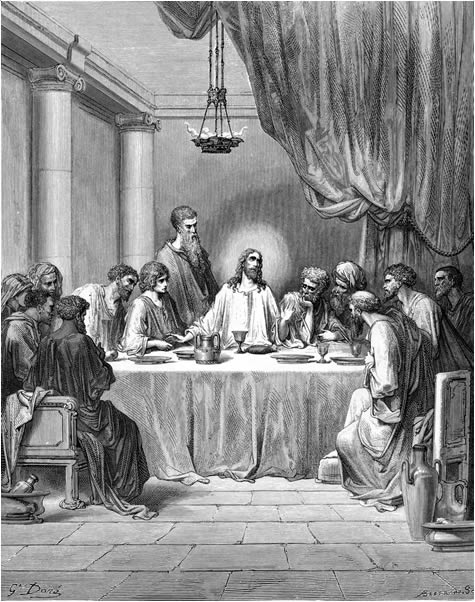
All five sayings belong to one setting: the upper room, the night of the Last Supper, hours before Gethsemane. Jesus is preparing His disciples for His own absence: and every version of the promise answers the same implicit question: how do you keep asking the Father once I am gone?
Five Promises, One Condition
the same saying, five times, one condition named outright
TO THE FATHER
“Whatsoever ye shall ask in my name, that will I do.”
First statement of the promise: no condition named yet.
TO JESUS HIMSELF
“If ye shall ask any thing in my name, I will do it.”
Repeated for emphasis, addressed to Himself this time.
TO UNSPECIFIED, “IT SHALL BE DONE”
“If ye abide in me, and my words abide in you, ye shall ask what ye will, and it shall be done unto you.”
★ THE CONDITION NAMED OUTRIGHT: abiding in Him, His words abiding in you.
TO THE FATHER
“That whatsoever ye shall ask of the Father in my name, he may give it you.”
Tied to being chosen and appointed to bear fruit that remains.
TO THE FATHER
“Whatsoever ye shall ask the Father in my name, he will give it you… ask, and ye shall receive, that your joy may be full.”
A new access, opened at this point in the story: “hitherto have ye asked nothing in my name.”
What 'In My Name' Means
not a formula appended to a request
“In my name” is not a phrase that changes an ordinary request into an answered one by being spoken at the end of it. Two commentators, writing thirteen centuries apart, land on the same plain point: it means asking as His representative (in keeping with who He actually is and what He actually came to do) not invoking His name as a password.
Whatsoever ye shall ask - This promise referred particularly to the apostles in their work of spreading the gospel; it is, however, true of all Christians, if what they ask is in faith, and according to the will of God, Jas 1:6; 1Jn 5:14. In my name - This is equivalent to saying on my account, or for my sake. If a man who has money in a bank authorizes us to draw it, we are said to do it in his name.
Albert Barnes · Notes, Explanatory and Practical, on the Old and New Testaments (1832-1869), John 14:13
How, then, is He called, who promised so great a blessing? Christ Jesus, of course: Christ means King, and Jesus means Saviour! for certainly it is not any one who is a king that will save us, but only the Saviour-King; and therefore, whatsoever we ask for that is adverse to the interests of salvation, we do not ask in the name of the Saviour. And yet He is the Saviour, not only when He does what we ask, but also when He refuses to do so; since by not doing what He sees to be contrary to our salvation, He manifests Himself the more fully as our Saviour. For the physician knows which of his patient's requests will be favorable, and which will be adverse, to his safety; and therefore yields not to his wishes when asking what is prejudicial, that he may effect his recovery.
Augustine of Hippo · Tractates on John 73 (430), on John 14:13
We have now to consider these words of the Lord, "Verily, verily, I say unto you, If ye shall ask anything of the Father in my name, He will give it you." ... For it is not the sound of the letters and syllables, but what the sound itself imports, and what is rightly and truly to be understood by that sound, that He is to be regarded as declaring, when He says, "in my name." Hence, he who has such ideas of Christ as ought not to be entertained of the only Son of God, asketh not in His name, even though he may not abstain from the mention of Christ in so many letters and syllables... But he who has such ideas of Him as ought to be entertained, asketh in His name, and receiveth what he asketh, if he asketh nothing that is contrary to his own everlasting salvation.
Augustine of Hippo · Tractates on John 102 (430), on John 16:23
...And What It Does Not Mean
not a replacement for His ongoing care
At the very close of this teaching, Jesus makes a point of saying He is not describing a hand-off: as if He steps back once believers learn to ask “in His name” and stops caring for them Himself.
At that day ye shall ask - For true knowledge begets prayer. And I say not that I will pray - This in nowise implies that he will not: it means only, The Father himself now loves you, not only because of my intercession, but also because of the faith and love which he hath wrought in you.
John Wesley · Explanatory Notes upon the New Testament (1755), John 16:26
The Voices on Abiding and Fruit
John 15:7 and 15:16
"If ye abide in me," He says, "and my words abide in you, ye shall ask what ye will, and it shall be done unto you." For abiding thus in Christ, is there aught they can wish but what will be agreeable to Christ? So abiding in the Saviour, can they wish anything that is inconsistent with salvation? Some things, indeed, we wish because we are in Christ, and other things we desire because still in this world. For at times, in connection with this our present abode, we are inwardly prompted to ask what we know not it would be inexpedient for us to receive. But God forbid that such should be given us if we abide in Christ, who, when we ask, only does what will be for our advantage.
Augustine of Hippo · Tractates on John 81 (430), on John 15:7
"Ye have not chosen Me, but I have chosen you." That is, I ran upon your friendship. And He stayed not here, but, "I set you," He saith, (that is, "I planted you,") "that ye should go," (He still useth the metaphor of the vine,) that is, "that ye should extend yourselves"; "and bring forth fruit, and that your fruit should remain." "Now if your fruit remain, much more shall ye. For I have not only loved you," He saith, "but have done you the greatest benefits, by extending your branches through all the world." Seest thou in how many ways He showeth His love? By telling them things secret, by having in the first instance run to meet their friendship, by granting them the greatest blessings, by suffering for them what then He suffered. After this, He showeth that He also remaineth continually with those who shall bring forth fruit; for it is needful to enjoy His aid, and so to bear fruit. "That whatsoever ye shall ask of the Father in My Name, He may give it you." Yet it is the part of the person asked to do the thing asked; but if the Father is asked, how is it that the Son doeth it? It is that thou mayest learn that the Son is not inferior to the Father.
John Chrysostom · Homily on the Gospel of John 77 (407), on John 15:16
The Voices on the Promise Renewed
John 16:23: a new access, opened at this point in the story
he says, "Truly, truly, I say to you, if you ask anything of the Father, he will give it to you in my name. Up till now you have asked nothing in my name. Ask, and you will receive, that your joy may be full." Now he did not say "ask me" or simply "ask the Father." On the contrary, he said, "If you ask anything of the Father, he will give it to you in my name." For until Jesus taught this, no one asked the Father in the name of the Son.
Origen of Alexandria · On Prayer 15.2 (253), on John 16:23
"Verily, verily, I say unto you, Whatsoever ye shall ask My Father in My Name." He showeth the power of His Name, if at least being neither seen nor called upon, but only named, He even maketh us approved by the Father. But where hath this taken place? Where they say, "Lord, behold their threatenings, and grant unto Thy servants that with boldness they may speak Thy word" ... "and work miracles in Thy Name." "And the place was shaken where they were."
John Chrysostom · Homily on the Gospel of John 79 (407), on John 16:23
The Honest Tension
“ask, and it shall be given” beside “thy will be done”
These promises read, on their face, close to unconditional: and a real, historic reading of the text takes them that way. But the same voice that gave this teaching also knelt in a garden hours later, asked His Father for something specific, and did not receive it as asked, submitting instead: “not as I will, but as thou wilt.” Neither strand is newer than the other. Scripture holds both, spoken by the same Person.
Whatsoever ye shall ask - Knowledge, love, or any thing else, he will give it - Our Lord here gives us a charte blanche. Believer, write down what thou wilt. He had said, Chap. xiv, 13, I will do it, where the discourse was of glorifying the Father through the Son.
John Wesley · Explanatory Notes upon the New Testament (1755), John 16:23
If the Father gives us everything we ask in the name of the Son, what then does it mean that Paul asked the Lord three times and did not deserve to be heard, but it was said to him: "My grace is sufficient for you, for power is made perfect in weakness"? ... But since the name of the Son is Jesus, and Jesus means savior... therefore he asks in the name of the Savior who asks for that which pertains to true salvation. For if something that is not expedient is asked for, the Father is not being asked in the name of Jesus.
Gregory the Dialogist (Gregory the Great) · Forty Gospel Homilies, Homily 27 (604), on John 16:24
The faith / declaration emphasisa real, historic reading
Wesley’s “charte blanche” reading above is not a modern invention: it is nearly three centuries old. A line of teaching in more recent generations has emphasized declaring and standing on what is promised in Christ’s name with confident, specific faith.
The sovereignty / submission emphasisAugustine and Gregory the Great
Running through Augustine (asking rightly means asking what accords with salvation) and Gregory the Great (Paul’s own unanswered thorn) into much of the older Wesleyan-Pentecostal and Reformed tradition alike: prayer is a request laid before a sovereign, all-wise Father, and “thy will be done” is not resignation but the Son’s own model.
Neither position is fought over here. Gethsemane is not evidence the upper-room promises were overstated; the upper-room promises are not evidence Gethsemane was a moment of weak faith. Both are His own words.
Where It Points
the prayer that holds both strands together
Closing
Five times in one night, Jesus hands His disciples a name to ask inside of: not a formula, not a magic word, but His own name, His own character, His own standing with the Father. What that promise means, and how it sits beside the same voice’s “not as I will, but as thou wilt,” is not a contradiction for the church to resolve. It is the whole shape of how Jesus Himself prayed.
Keep studying
Read it1