
Jeremiah 32:13
in Jeremiah 32In their sight I instructed Baruch,
BSB
The same verse in ASV and KJV ▾
ASV
And I charged Baruch before them, saying,
KJV
And I charged Baruch before them, saying,
⋯
This verse in Jeremiah 32
Commentary
4 notes on this verseThis site's exposition
according to the law and custom, and that which was open
on Jeremiah 32:11-15
Jeremiah takes both copies of the deed, the sealed evidence according to the law and custom, and that which was open, and hands them to Baruch before witnesses in the prison court, a purchase documented with more formality than the desperate hour would seem to require. The instruction to put them in an earthen vessel, that they may continue many days looks past the coming destruction to a reader decades removed, the deed preserved precisely because the field will be unreachable for a generation. The stated purpose closes the unit, houses and fields and vineyards shall be possessed again in this land, the sign act's whole meaning given in one sentence.
The record, by era
The Church Fathers1 voice
(Verse 13 and following) And I commanded Baruch before them, saying: Thus says the Lord of hosts, the God of Israel: Take these books, this sealed book, and this open book, and put them in an earthen vessel, that they may last for many days. For thus says the Lord of hosts, the God of Israel: Houses and fields and vineyards shall still be possessed in this land.
The Puritans and the Awakening2 voices
He prays with admiration of God's majesty and works; and represents his own conflict, ver. 16-25. God confirms the captivity for their sins, ver. 26-35. but promises a gracious return, ver. 36-44.
quarantine:anchor (2026-07-29) — cites-ver-26/36-anchored-1-15
And I charged Baruch before them,.... Before his kinsman, the witnesses of the deed, and the Jews that were in the court: saying, as follows:
How the passage was read
What the Jewish commentators add
On the verses either side of this one
in the presence of Hanamel my uncle And until now, he calls him “my uncle’s son.” Perhaps there were two. Otherwise, I do not know what it means. Some are inclined to say that Hanamel was both Jeremiah’s uncle and his uncle’s son; e.g.
1 more on this passage, in their own words ▾
So said, etc. Do not say that I am concealing them for nothing since everyone is going into exile.
This section is reception history: how the passage was read and kept in the Jewish tradition. Where a reading parts from an essential of the Christian faith, the section says so at that point.
Texts and citation data: Sefaria; each excerpt follows its version’s licence. 6 further sources are cited on this chapter that carry no English text this site may quote or only restate the verse.
The words behind it
5 Hebrew wordsEvery Hebrew word of this verse in the order it stands, with what it means and the door to its own study. The last column counts the times a word stands in the whole Bible: the rarer the word, the more the places it appears belong together.
| Hebrew | Sound | Meaning | Word study | In the Bible |
|---|---|---|---|---|
| וָֽאֲצַוֶּה֙ | vaatzaveh | and I commanded | H6680 → | 494 times |
| אֶת | ʾet | <obj.> | H853 → | 10935 times |
| בָּר֔וּךְ | barukh | Baruch | H1263 → | 26 times |
| לְעֵינֵיהֶ֖ם | leeineihem | to eyes their | H5869 → | 887 times |
| לֵאמֹֽר׃ | lemor | <to> saying | H559 → | 5305 times |
וָֽאֲצַוֶּה֙and I commanded
vaatzavehH6680 →494 times
אֶת<obj.>
ʾetH853 →10935 times
בָּר֔וּךְBaruch
barukhH1263 →26 times
לְעֵינֵיהֶ֖םto eyes their
leeineihemH5869 →887 times
לֵאמֹֽר׃<to> saying
lemorH559 →5305 times
A shaded row is a word that stands 400 times or fewer in the Bible.
Where this verse is studied
About Jeremiah
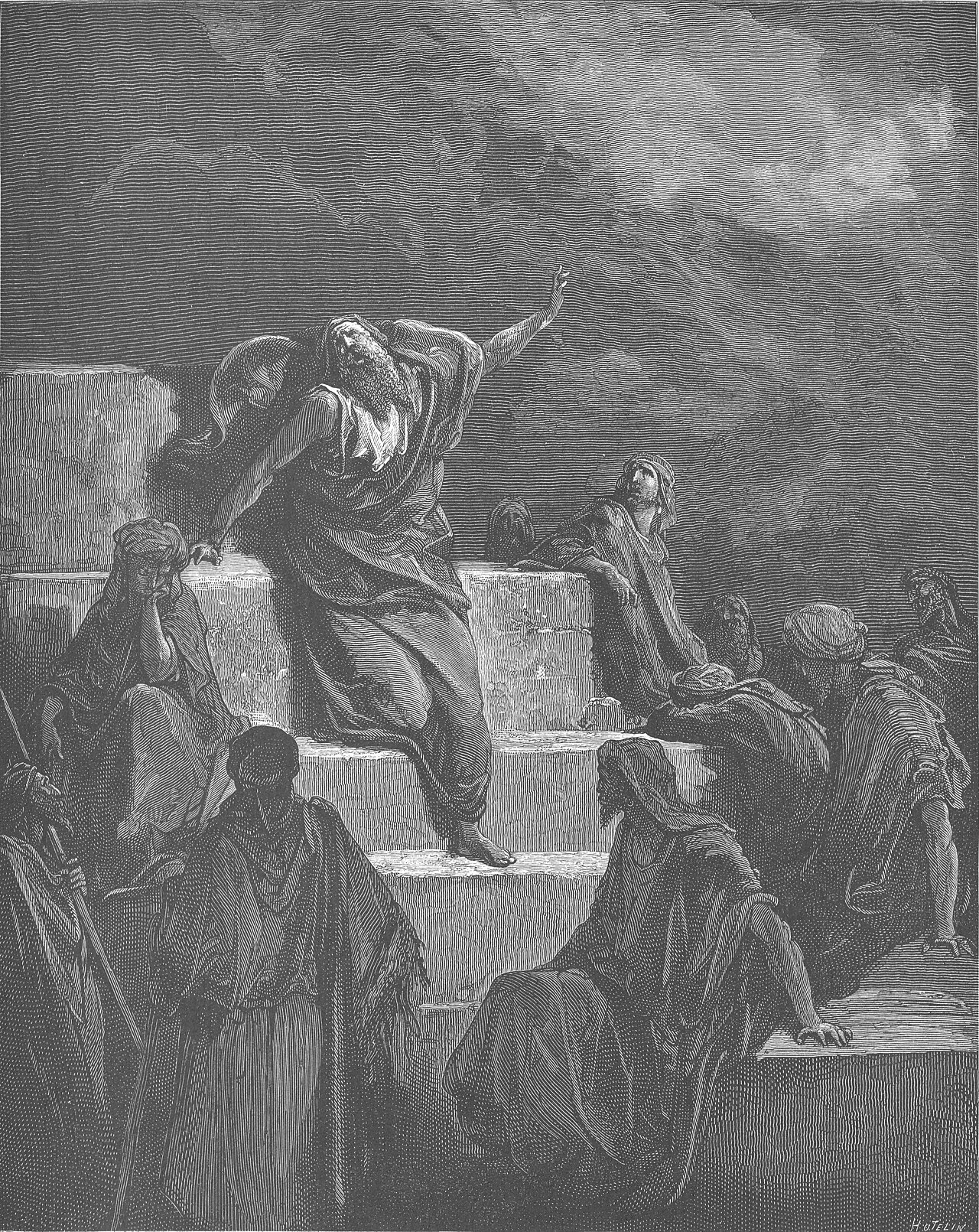
This page draws on Carl Friedrich Keil, The Prophecies of Jeremiah; Jerome, Commentary on Jeremiah; John Gill, Exposition of the Old Testament (1748-1763); John Wesley, Explanatory Notes upon the Old Testament and Matthew Henry, Commentary on the Whole Bible.