
Genesis 22:3
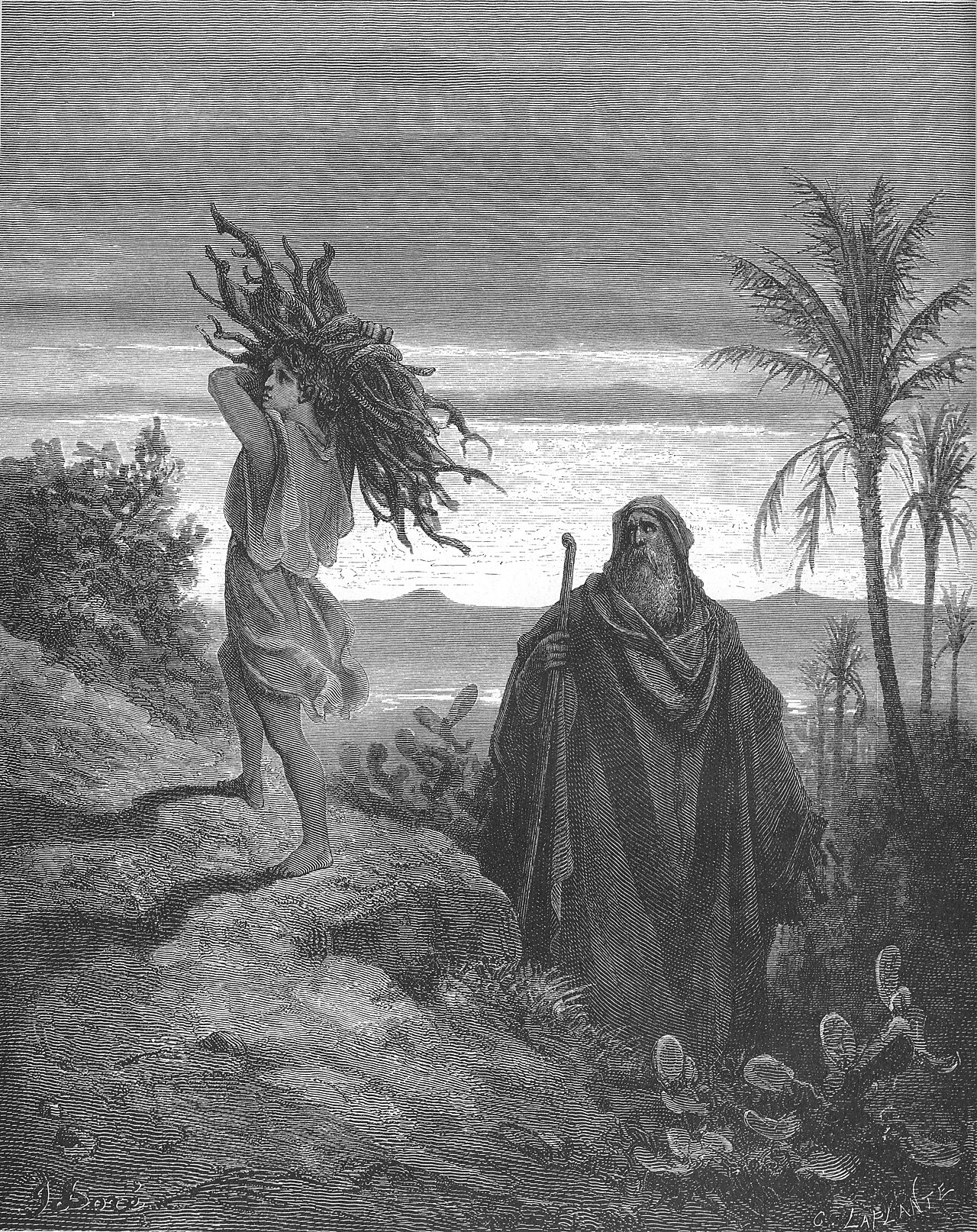
in Genesis 22So Abraham got up early the next morning, saddled his donkey, and took along two of his servants and his son Isaac. He split the wood for a burnt offering and set out for the place God had designated.
BSB
The same verse in ASV and KJV ▾
ASV
And Abraham rose early in the morning, and saddled his ass, and took two of his young men with him, and Isaac his son; and he clave the wood for the burnt-offering, and rose up, and went unto the place of which God had told him.
KJV
And Abraham rose up early in the morning, and saddled his ass, and took two of his young men with him, and Isaac his son, and clave the wood for the burnt offering, and rose up, and went unto the place of which God had told him.
⋯
This verse in Genesis 22
Commentary
11 notes on this verse(Verse 3) And he went to the place which God had told him about, on the third day. It should be noted that from Gerar to Mount Moriah, that is, the site of the temple, is a three-day journey, and consequently it is said that he arrived there on the third day. Therefore, some people mistakenly think that Abraham lived at the oak tree in Mamre during that time, when in fact the journey from there to Mount Moriah is barely a full day's journey.
This site's exposition
Abraham got up early the next morning
on Genesis 22:3-4
Abraham gets up early and splits the wood himself, so he carries the means of his son's death for three days. Genesis gives no word of the night before and never says what he told Sarah, a silence Henry leaves standing. Gill puts Beersheba about forty miles from Moriah, which fills the two days before the third. Jerome reads the same three days as a start from Gerar.
The record, by era
The Church Fathers1 voice
Abraham arose in the morning (because the text adds "in the morning," perhaps it wished to show that the beginning of light shone in his heart), saddled his ass, prepared wood, took along his son. He does not deliberate, he does not reconsider, he does not take counsel with any man, but immediately he sets out on the journey."And he came," the text says, "to the place which the Lord had said to him, on the third day." I omit now what mystery the "third day" contains. I consider the wisdom and intention of the one who tests him. Since everything was done in the mountains, was there thus no mountain nearby. But a journey is prolonged for three days, and during the whole three days the parent's heart is tormented with recurring anxieties, so that the father might consider the son in this whole lengthy period, that he might partake of food with him, that the child might weigh in his father's embraces for so many nights, might cling to his breast, might lie in his bosom? Behold to what an extent the test is heaped up.
The Puritans and the Awakening4 voices
He gets things ready for a sacrifice, and, as if he himself had been a Gibeonite, it should seem, with his own hands he cleaves the wood for the burnt-offering, that it might not be to seek when the sacrifice was to be offered. Spiritual sacrifices must thus be prepared for. It is very probable that he said nothing about it to Sarah.
(2.) He gets things ready for a sacrifice, and it should seem, with his own hands, cleaves the wood for the burnt-offering. (3.) He left his servants at some distance off, left they should have created him some disturbance in his strange oblation. Thus when Christ was entering upon his agony in the garden, he took only three of his disciples with him.
And Abraham rose up early in the morning,....
He gets things ready for a sacrifice, and, as if he himself had been a Gibeonite, it should seem, with his own hands he cleaves the wood for the burnt-offering, that it might not be to seek when the sacrifice was to be offered. Spiritual sacrifices must thus be prepared for. It is very probable that he said nothing about it to Sarah.
4 more voices on this verse
The Nineteenth Century3 voices
Two of his young men - Eliezer and Ishmael, according to the Targum. Clave the wood - Small wood, fig and palm, proper for a burnt-offering - Targum.
A commentator
Jamieson, Fausset & Brown1802–1910
Commentary Critical and Explanatory on the Whole Bible (1871)
From Beer-sheba to Moriah, a journey of two days, he had the painful secret pent up in his bosom. So distant a place must have been chosen for some important reason. It is generally thought that this was one the hills of Jerusalem, on which the Great Sacrifice was afterwards offered.
A commentator
Jamieson, Fausset & Brown1802–1910
Commentary Critical and Explanatory on the Whole Bible (1871)
proposed
From Beer-sheba to Moriah, a journey of two days, he had the painful secret pent up in his bosom. So distant a place must have been chosen for some important reason. It is generally thought that this was one the hills of Jerusalem, on which the Great Sacrifice was afterwards offered.
Modern Voices1 voice
He obeys instantly, though it surely hurt him. Isaac was the fulfillment of God's promise in his life.
The words behind it
25 Hebrew wordsEvery Hebrew word of this verse in the order it stands, with what it means and the door to its own study. The last column counts the times a word stands in the whole Bible: the rarer the word, the more the places it appears belong together.
| Hebrew | Sound | Meaning | Word study | In the Bible |
|---|---|---|---|---|
| וַיַּשְׁכֵּ֨ם | vaiyashkem | and he rose early | H7925 → | 65 times |
| אַבְרָהָ֜ם | ʾavraham | Abraham | H85 → | 175 times |
| בַּבֹּ֗קֶר | baboker | in the morning | H1242 → | 214 times |
| וַֽיַּחֲבֹשׁ֙ | vaiyachavosh | and he saddled | H2280 → | |
| אֶת־ | ʾet- | <obj.> | H853 → | 10935 times |
| חֲמֹר֔וֹ | chamoro | donkey his | H2543 → | 96 times |
| וַיִּקַּ֞ח | vaiyikach | and he took | H3947 → | 966 times |
| אֶת־ | ʾet- | <obj.> | H853 → | 10935 times |
| שְׁנֵ֤י | shenei | two of | H8147 → | 768 times |
| נְעָרָיו֙ | nearav | servants his | H5288 → | 239 times |
| אִתּ֔וֹ | ʾito | with him | H854 → | 929 times |
| וְאֵ֖ת | veet | and <obj.> | H853 → | 10935 times |
| יִצְחָ֣ק | yitzchak | Isaac | H3327 → | 108 times |
| בְּנ֑וֹ | beno | son his | H1121 → | 4930 times |
| וַיְבַקַּע֙ | vayvaka' | and he cut | H1234 → | |
| עֲצֵ֣י | ʾatzei | wood<s> of | H6086 → | 328 times |
| עֹלָ֔ה | ʾolah | burnt offering | H5930 → | 287 times |
| וַיָּ֣קָם | vaiyakom | and he arose | H6965 → | 628 times |
| וַיֵּ֔לֶךְ | vaiyelekh | and he went | H1980 → | 1546 times |
| אֶל־ | ʾel- | to | H413 → | 5510 times |
| הַמָּק֖וֹם | hamakom | the place | H4725 → | 401 times |
| אֲשֶׁר־ | ʾasher- | which | H834 → | 5497 times |
| אָֽמַר־ | ʾamar- | he had said | H559 → | 5305 times |
| ל֥וֹ | lo | to <the> him | ||
| הָאֱלֹהִֽים׃ | haelohim | <the> God | H430 → | 2601 times |
וַיַּשְׁכֵּ֨םand he rose early
vaiyashkemH7925 →65 times
אַבְרָהָ֜םAbraham
ʾavrahamH85 →175 times
בַּבֹּ֗קֶרin the morning
babokerH1242 →214 times
וַֽיַּחֲבֹשׁ֙and he saddled
vaiyachavoshH2280 →
אֶת־<obj.>
ʾet-H853 →10935 times
חֲמֹר֔וֹdonkey his
chamoroH2543 →96 times
וַיִּקַּ֞חand he took
vaiyikachH3947 →966 times
אֶת־<obj.>
ʾet-H853 →10935 times
שְׁנֵ֤יtwo of
sheneiH8147 →768 times
נְעָרָיו֙servants his
nearavH5288 →239 times
אִתּ֔וֹwith him
ʾitoH854 →929 times
וְאֵ֖תand <obj.>
veetH853 →10935 times
יִצְחָ֣קIsaac
yitzchakH3327 →108 times
בְּנ֑וֹson his
benoH1121 →4930 times
וַיְבַקַּע֙and he cut
vayvaka'H1234 →
עֲצֵ֣יwood<s> of
ʾatzeiH6086 →328 times
עֹלָ֔הburnt offering
ʾolahH5930 →287 times
וַיָּ֣קָםand he arose
vaiyakomH6965 →628 times
וַיֵּ֔לֶךְand he went
vaiyelekhH1980 →1546 times
אֶל־to
ʾel-H413 →5510 times
הַמָּק֖וֹםthe place
hamakomH4725 →401 times
אֲשֶׁר־which
ʾasher-H834 →5497 times
אָֽמַר־he had said
ʾamar-H559 →5305 times
ל֥וֹto <the> him
lo
הָאֱלֹהִֽים׃<the> God
haelohimH430 →2601 times
A shaded row is a word that stands 400 times or fewer in the Bible.
The walk
8 stopsEach card is a verse this one points to, and under it the verses that one points to in turn. Where several paths arrive at the same place, that place is listed first: the text keeps returning to it.
Through
Luke 14:26“If anyone comes to Me and does not hate his father and mother and wife and children and brothers and sisters—yes, even his own life—he cannot be My disciple.
it leads to
- Matthew 10:37
Anyone who loves his father or mother more than Me is not worthy of Me; anyone who loves his son or daughter more than Me is not worthy of Me;
- John 12:25
Whoever loves his life will lose it, but whoever hates his life in this world will keep it for eternal life.
- Philippians 3:8
More than that, I count all things as loss compared to the surpassing excellence of knowing Christ Jesus my Lord, for whom I have lost all things. I consider them rubbish, that I may…
- Acts 20:24
But I consider my life of no value to me, if only I may finish my course and complete the ministry I have received from the Lord Jesus—the ministry of testifying to the good…
- Psalms 73:25–26
Whom have I in heaven but You? And on earth I desire no one besides You.
- Matthew 10:37
Through
Matthew 10:37Anyone who loves his father or mother more than Me is not worthy of Me; anyone who loves his son or daughter more than Me is not worthy of Me;
it leads to
- Luke 14:26
“If anyone comes to Me and does not hate his father and mother and wife and children and brothers and sisters—yes, even his own life—he cannot be My disciple.
- Matthew 22:37
Jesus declared, “‘Love the Lord your God with all your heart and with all your soul and with all your mind.’
- Philippians 3:7–9
But whatever was gain to me I count as loss for the sake of Christ.
- Luke 14:26
Where this verse is studied
On this page
Studies12
About Genesis
Who and where
2 names in this verse with a page on the site.
This page draws on 9 works. Open the list of works
This page draws on Adam Clarke, Commentary on the Bible; Jamieson, Fausset & Brown, Commentary Critical and Explanatory on the Whole Bible; Jerome, Hebrew Questions on Genesis; John Bevere, The Test to Determine if You Really Fear God (blog article); John Gill, Exposition of the Old Testament; John Gill, Exposition of the Old Testament (1748-1763); John Wesley, Explanatory Notes upon the Old Testament; Matthew Henry, Commentary on the Whole Bible and Origen of Alexandria, HOMILIES ON GENESIS 8.4.